

GMC Sierra 1500 B3055 Code (2015-2022): No Start, Security Light Causes & Fixes
Code B3055 on a 2015-2022 Sierra usually means the truck's security system can't read the key transponder. Before buying parts, try your spare key, remove other RFID cards from your keychain, and if you have a flip key (common on 2015-2018 models), make sure it's fully extended before turning the ignition. Aftermarket phone chargers and LED lights are also known culprits for causing interference.
- B3055 means your truck's security system can't recognize your key.
- The easiest and most common fixes cost nothing: try your spare key, remove other fobs from your keychain, and make sure your flip key is fully extended.
- Do not immediately suspect expensive parts like the starter or battery; the security light is the key clue that this is an immobilizer issue.
- If a new key is needed, it must be professionally programmed to the vehicle; it will not work out of the box.
- This is not a DIY-friendly repair beyond the initial simple checks, as it involves specialized security system programming.
What's Unique About the 2015-2022 Gmc SIERRA 1500
The 2015-2022 Sierra spans two generations: the K2XX (2015-2018) and the T1XX (2019-2022). The earlier K2XX models often used a flip-style key, which has a known issue where not fully extending the key can cause a B3055 code and a no-start condition, as documented in GM TSB PIT5030E. The later T1XX generation moved more toward push-button start systems, where interference from other electronic devices (like phone chargers or aftermarket LEDs) is a more common complaint, as detailed in TSB PIC5650M. Both systems, however, are sensitive to key health and radio frequency interference.
Diagnostic Flowchart
Tap your situation to follow the diagnostic path that matches what you're seeing on this vehicle.
Generation note: This range covers the third generation (K2XX; 2015-2018) and the fourth generation (T1XX; 2019-2022). The K2XX models frequently use a flip key, which can cause this code if not fully extended. T1XX models more commonly use keyless start, where fob battery life and RF interference from aftermarket accessories are primary concerns, as noted in TSB PIC5650M.
Symptoms You May Notice
- Engine will not crank (no-crank, no-start).
- Engine starts but immediately stalls.
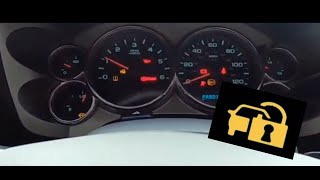
- Security indicator light is illuminated or flashing on the instrument cluster.
- "Service Theft Deterrent System" or "Theft Attempted" message may appear on the driver information center. 🎬 Watch: How to perform a fast vehicle key relearn
- Replacing the battery or starter motor without checking for security-related trouble codes first. A no-crank condition caused by the immobilizer will not be fixed by replacing these parts. Multiple forum threads show owners replacing starters only to find the security light was on and the issue was related to the key or BCM.
Most Likely Causes
- Radio Frequency (RF) Interference 🔴 High Probability The immobilizer system operates at 125 kHz, a frequency easily disrupted by aftermarket phone chargers, LED lights, dash cams, or even other key fobs on the same keychain. GM has issued multiple TSBs (PIC5650 series) about this specific issue.
How to confirm: Remove all other keys, fobs, and RFID cards from the keychain. Unplug all aftermarket accessories (especially those plugged into the 12V outlets or USB ports). Try starting the vehicle with the key isolated. If it starts, interference was the issue.
Typical fix: Keep the ignition key on a separate ring. Avoid using cheap, unshielded aftermarket electronics. This is a no-cost fix.
Est. part cost: $0 - Improper Flip Key Position (2015-2018) 🔴 High Probability A GM Technical Service Bulletin (PIT5030E) specifically calls out this issue on models with flip keys. If the key is not fully locked in the straight, extended position, the transponder chip may not align correctly with the reader coil in the ignition.
How to confirm: Remove the key, ensure it is fully extended and locked, then re-insert it and attempt to start the vehicle.
Typical fix: Ensure the key is fully extended before use. No parts required.
Est. part cost: $0 - Defective or Damaged Key 🟡 Medium Probability The transponder chip inside the key head is passive and unpowered, but it can be damaged from being dropped, exposed to moisture, or can fail electronically. A technician on a forum shared a story of a B3055 caused by a key that was physically broken.
How to confirm: Attempt to start the vehicle with a known-good spare key. If the spare key works reliably, the primary key is faulty.
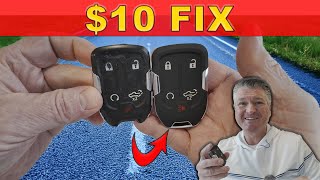
Typical fix: Replace the faulty key. A new key must be cut and programmed to the vehicle by a dealer or qualified locksmith with a subscription 🎬 See how to fix a broken key fob for cheap to GM's programming service.
Est. part cost: $75-$250 - Weak Key Fob Battery 🟡 Medium Probability → Shop Vehicle Battery While the transponder is often passive, a weak battery in the key fob can cause communication errors, especially in push-to-start models. For these models, a weak battery may prevent the passive entry/start system from detecting the fob.
How to confirm: Replace the battery inside the key fob (typically a CR2032). On push-to-start models, if a 'No Remote Detected' message appears, try placing the fob in the designated transmitter pocket (often in the center console cup holder or storage bin) which allows the system to read the fob even with a dead battery.
Typical fix: Replace the key fob battery.
Est. part cost: $5-$15 - Faulty Immobilizer Antenna/Exciter Coil ⚪ Low Probability → Shop Antenna The antenna ring around the ignition lock cylinder (or receiver for push-to-start) energizes and reads the key's transponder. This component can fail, though it's less common than key issues.
How to confirm: This requires a professional scan tool to monitor data from the Theft Deterrent Module. If the 'Transponder Key' parameter reads 'Not Present' even with a known-good key, the antenna is suspect.
Typical fix: Replace the immobilizer antenna ring. This part often requires programming by a dealer or locksmith.
Est. part cost: $50-$150 - Wiring Harness or Connector Fault ⚪ Low Probability Intermittent issues are often caused by loose connections or damaged wires between the BCM and the immobilizer antenna, as noted in TSB PIC5650M. A Reddit user with a similar no-start issue traced their problem to a loose wiring harness connector near the transmission.
How to confirm: Visually inspect the wiring around the steering column and BCM. A technician would perform continuity and resistance checks on the relevant circuits as outlined in service manuals.
Typical fix: Repair the damaged wiring or reseat the loose connector.
Est. part cost: $0-$100
Rare But Worth Checking
- Faulty Body Control Module (BCM): → Shop Body Control Module While rare, the BCM is the brain of the security system. If all other components (key, antenna, wiring) test good, the BCM itself may have failed. This is an expensive last resort. Replacement requires professional installation and programming to learn the vehicle's keys and other options. Forum discussions for similar GM trucks suggest a dealer replacement can cost between $800 and $1200.
Diagnosis Steps
- Check for other trouble codes in the BCM and other modules.
- Remove all aftermarket electronic devices (phone chargers, dash cams, etc.) from the vehicle.
- Remove all other keys and RFID devices from the key ring and try starting again.
- If you have a flip key, ensure it is fully extended and locked straight before inserting it into the ignition.
- Try starting the vehicle with your spare key. If it works, the first key is faulty.
- Replace the battery in the key fob (typically CR2032).
- For push-to-start models, if a 'No Remote' message appears, place the fob in the transmitter pocket (check owner's manual for location, usually in the center console) and try to start.
- If the problem persists, use a professional scan tool to view live data from the Theft Deterrent Module to see if the 'Transponder Key' parameter reads 'Present' or 'Not Present'.
- Inspect the wiring and connectors between the ignition switch/immobilizer antenna and the Body Control Module for any visible damage or looseness.
- If a key is not being detected at all, test the immobilizer antenna/exciter coil circuit.
- If all components and wiring test good, the Body Control Module may be the issue, requiring advanced diagnostics.
Parts You'll Likely Need
- Ignition Key (Flip Key)
(OEM #ACDelco 23388209 (Example for some K2XX models, verify by VIN))— The transponder chip in the key is a common point of failure. Physical damage from drops or internal electronic failure can render it unreadable.
Trusted brands: ACDelco, Strattec
OEM price range: $150-$250
Aftermarket price range: $75-$150 - Key Fob Battery
(OEM #CR2032)— A weak battery can cause intermittent communication issues, especially on push-to-start models. It's the cheapest and easiest part to replace.
Related Codes That Often Appear With This One
- B3060 — This code often relates to an unprogrammed transponder or a failure in the security system's internal data, frequently appearing with B3055 during a key recognition failure.
- B3935 — This code indicates a transponder circuit failure, which is closely related to the BCM not being able to read the key's signal (B3055).
- B2955 — This code points to a fault in the security sensor data circuit, which can be set when the BCM fails to communicate with the key transponder.
Technical Service Bulletins (TSBs) & Recalls
- PIC5650M: This bulletin addresses intermittent no-crank/no-start or start/stall conditions with security lights on and DTCs like B3055. It strongly points to Radio Frequency Interference (RFI) from aftermarket devices like LED lights, cell phone chargers, or even other keys on the same ring. It advises technicians to check for and remove any non-factory electronic devices before replacing parts.
- PIT5030E: This bulletin (referenced in pass 1) specifically targets the flip-style keys used on 2015-2018 K2XX models. It confirms that if the key is not fully extended and locked in the straight position, the transponder chip may not align with the immobilizer antenna, causing a B3055 code and a no-start condition.
- PIE0232: An earlier engineering bulletin for 2013 models that also applies to the K2XX platform, investigating the root cause of B3055, B3060, or B3935 with a no-crank/security light on symptom, again highlighting RF interference as a primary area of investigation.
Platform-Specific Known Issues
- Owner Misdiagnosis: Starter vs. Security System: A common real-world scenario found in forums involves owners replacing the starter motor when faced with a no-crank, no-start situation. A technician on Reddit shared an experience where a vehicle with B3055 was towed in, and the owner was convinced the starter had failed. The actual cause was a severely damaged key that the theft deterrent system could not read. Replacing the key resolved the problem entirely, demonstrating how a security issue can perfectly mimic a failed starter.
- Intermittent Failure and Battery Disconnect 'Fix': → Shop Vehicle Battery An owner of a 2017 Sierra reported a frustrating intermittent no-start that could be temporarily fixed by disconnecting the vehicle's battery for several hours. This points directly to an electronic module issue, likely within the theft deterrent system. The battery disconnect forces a hard reset of the modules, including the BCM, temporarily clearing the fault state that prevents the engine from starting. This is a strong indicator that the issue is not a simple mechanical failure like a starter.
Scan Tool Commands That Help
- GDS2 / Professional Scan Tool: Immobilizer Data Display — Use this to view live data from the Theft Deterrent Module (TDM). Check parameters like 'Environment Identification' to see if it reads 'Key Detected' or 'No Key Detected' to confirm if the key is being seen at all.
- GDS2 / AutoProPAD / Autel IM608: Add/Replace Keys or Immobilizer Learn — This function is required after replacing a key or the Body Control Module (BCM). It involves a 10-minute security relearn procedure that programs the new component to the vehicle.
- Manual Procedure (No Scan Tool): 30-Minute Key Relearn Procedure — On some older GM systems, if you replace the ignition switch or BCM without a scan tool, you can perform a manual relearn. This involves cycling the key to 'ON' for 10 minutes, then 'OFF' for 10 seconds, repeating this three times. This may apply to some vehicles in the specified range, but a scan tool is the preferred method.
Wiring & Ground Locations
- G218 — Located on the driver's side, behind the dash panel, near the A-pillar and speaker.. This is a major body ground connection for the BCM. A poor connection at G218 is a well-documented cause of numerous intermittent electrical issues, including no-start conditions and communication codes. The factory installation can sometimes trap sound-deadening material under the ground lug, causing a poor connection over time. Cleaning and tightening this ground has resolved a wide range of electrical problems.
- BCM Connectors (X1-X7) — The Body Control Module is typically located behind the driver's side or passenger's side of the dashboard. It has multiple large connectors, often labeled X1 through X7.. The wiring for the immobilizer antenna (exciter coil) runs to one of these BCM connectors. A loose pin or corrosion in the specific connector that carries the immobilizer circuit can cause an intermittent B3055 code. A wiring diagram is needed to identify the exact pin for testing.
- Engine Block to Chassis Ground — A braided ground strap typically runs from the rear of the engine block (driver's side) to the firewall/chassis.. While less directly related to the BCM's key-reading function, a poor main engine ground can introduce significant electrical noise and voltage drops throughout the vehicle, potentially affecting sensitive modules like the BCM and causing a variety of unpredictable codes, including communication faults.
Real Owner Repair Stories
- YouTube Channel 'Dustin Turner' (2014 GMC Sierra) — Flickering headlights and dash lights, park assist disabled message, power steering disabled message, and vehicle shutting off at low speeds.
❌ Tried (didn't work) Testing the battery and alternator, which both tested fine.
✅ What actually fixed it The problem was a poor ground connection at G218, located behind the driver's side dash near the speaker. Sound-deadening material was trapped under the ground nut, causing an intermittent connection. Cleaning the connection and re-tightening the nut resolved all electrical issues. - YouTube Channel 'Hands On Auto Training' (2015 Chevrolet Malibu (similar GM system)) — No-crank, no-start with security light on and DTC B3055 (No Transponder Modulation) and B2955 (Security Sensor Data Circuit).
❌ Tried (didn't work) Clearing codes (B3055 returned immediately).
✅ What actually fixed it The original key's transponder had failed. A new key was programmed to the vehicle using an AutoProPAD scan tool, which involved a 10-minute security learn procedure. After the new key was learned, the vehicle started and operated normally.
Model Year Variations Within This Range
- 2015-2018 (K2XX Generation): These models predominantly use a flip-style ignition key. A known issue, documented in GM TSB PIT5030E, is that if the key is not fully extended and locked in the straight position, it can fail to communicate with the immobilizer antenna, setting code B3055.
- 2019-2022 (T1XX Generation): These models more commonly feature push-button start and keyless entry. For these systems, the B3055 code is more frequently associated with Radio Frequency Interference (RFI) from aftermarket electronics or a weak battery in the key fob, as the vehicle needs to detect the fob's presence passively.
Helpful Videos


We Have This Part in Stock


The information in this article is provided for general reference and educational purposes only. Vehicle specifications, procedures, and part compatibility can vary by production date, trim level, and region. Always consult your vehicle's factory service manual and verify part numbers before purchasing or performing repairs. Safety-critical components such as airbags, seat belts, and braking systems should be installed by a qualified professional.
- Gmc SIERRA 1500:
- 🧭 Diagnostic Flowchart
- 🎬 Helpful Videos
- 🛍️ Shop This Part
- What's Unique About the 2015-2022 Gmc SIERRA 1500
- Symptoms You May Notice
- Most Likely Causes
- Rare But Worth Checking
- Diagnosis Steps
- Parts You'll Likely Need
- Related Codes That Often Appear With This One
- Technical Service Bulletins (TSBs) & Recalls
- Platform-Specific Known Issues
- Scan Tool Commands That Help
- Wiring & Ground Locations
- Real Owner Repair Stories
- Model Year Variations Within This Range
- 🎟️ Get 5% Off