

B3055 on 2007 Saturn RELAY: No Start, Security Light Causes & Fixes
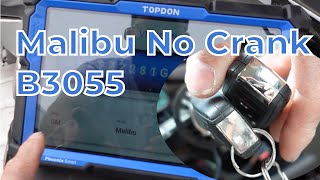
On a 2007 Saturn Relay, code B3055 means the anti-theft system can't read your key, causing a no-start or start-and-stall condition. The most likely cause is a faulty ignition lock cylinder, which contains the key reader, or a bad transponder key. A new lock cylinder costs about $40-$180 for the part, plus labor and potential key programming. Trying a spare key is the first and most important diagnostic step.
- B3055 on your Saturn Relay is an anti-theft code that means the vehicle can't read your key, causing a no-start or immediate stall.
- Before any expensive repairs, try your spare key. If it works, the problem is your primary key.
- The most common failed part is the ignition lock cylinder, which contains the electronic reader for the key.
- Do not replace the starter or battery if the security light is on; the issue is electronic, not mechanical.
- Repair almost always requires professional programming for a new key or lock cylinder, so a trip to a dealer or qualified locksmith is likely necessary.
What's Unique About the 2007-2007 Saturn RELAY
The Saturn Relay, along with its GM U-body siblings (Buick Terraza, Chevrolet Uplander, Pontiac Montana SV6), uses the GM Pass-Key III+ (PK3+) immobilizer system. This system was known for issues related to the ignition lock cylinder and the small, delicate wires connecting its reader coil to the Body Control Module (BCM). Over time, the components can wear out or the wires can chafe within the steering column, leading to intermittent signal loss and the B3055 code, which is a common complaint for these vans.
Diagnostic Flowchart
Tap your situation to follow the diagnostic path that matches what you're seeing on this vehicle.
Symptoms You May Notice
- Vehicle will not crank (no-crank, no-start)
- Engine starts and immediately stalls
- Security light on the dashboard is illuminated or flashing
- A single 'click' sound may be heard when turning the key, but the starter does not engage
- "Service Theft System" or "Starting Disabled" message may appear on the Driver Information Center (DIC).
- Replacing the starter motor. A B3055 code indicates the no-start is a security command from the BCM, not a mechanical failure of the starter.
- Replacing the battery. While a weak battery can cause a no-start, it won't typically set the B3055 code on its own. If the security light is on, the problem is with the anti-theft system.
Most Likely Causes
- Faulty Ignition Lock Cylinder/Housing 🔴 High Probability → Shop Ignition Switch The reader coil (transceiver) that energizes and reads the key's transponder chip is housed with the ignition lock cylinder. This component and its wiring are known failure points on GM vehicles of this era due to wear and tear.
How to confirm: If a spare key does not solve the problem and there is no radio frequency interference, the lock cylinder is the next most likely culprit. A technician can use a scan tool to monitor key data; if no key is ever detected ('Transponder Key: Not Present'), the reader is likely bad. A real-world repair on a related GM platform confirmed that replacing the lock cylinder assembly fixed a B3055 after a new key failed to solve it.
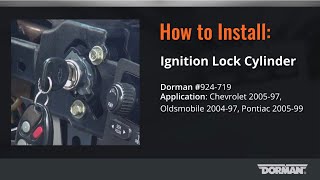
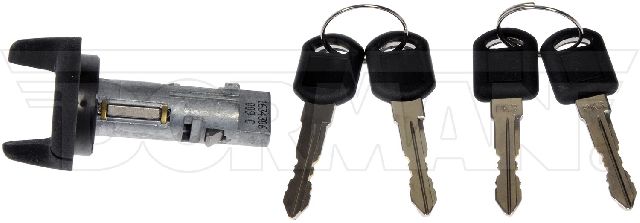
Typical fix: Replace the ignition lock cylinder and perform a security relearn procedure. The Dorman 924-719 is a common aftermarket replacement part. 🎬 Watch: Step-by-step guide to replacing the ignition lock cylinder.
Est. part cost: $40-$180 - Defective or Damaged Ignition Key 🟡 Medium Probability → Shop Ignition Switch The Pass-Key III+ (PK3+) transponder chip inside the key head can be damaged if the key is dropped, or it can fail electronically over time.
How to confirm: The easiest way to check is to try starting the vehicle with a spare key. If the spare key works consistently, the original key is faulty.
Typical fix: Replace the faulty key. A new key (such as a GM B111-PT blank) must be cut and programmed to the vehicle by a dealership or an automotive locksmith.
Est. part cost: $75-$200 - Radio Frequency Interference (RFI) ⚪ Low Probability As noted in GM TSB #PIC5650M, aftermarket devices like phone chargers, dash cams, or even other RFID cards on the keychain can interfere with the 125 kHz signal between the key and the reader coil.
How to confirm: Remove all aftermarket electronic devices from the vehicle. Unplug any chargers and remove all other keys or access cards from the keychain. Attempt to start the vehicle again with the key isolated from other devices.
Typical fix: Identify and remove the source of the interference. No parts replacement is needed.
Est. part cost: $0 - Wiring Harness Issue ⚪ Low Probability The wires running from the ignition lock cylinder down the steering column can become chafed, pinched, or develop loose connections, causing intermittent signal loss. This is more likely on vehicles with tilt steering due to repeated movement.
How to confirm: Visually inspect the wiring harness for any signs of damage, particularly around the steering column pivot points. A user on a GM truck forum with a B3055 found a chafed wire in the steering column harness that was causing an intermittent short. A technician can check for continuity and proper voltage at the BCM connector from the lock cylinder.
Typical fix: Repair the damaged section of the wiring harness and protect it with loom or tape.
Est. part cost: $5-$50
Rare But Worth Checking
- Failing Body Control Module (BCM): → Shop Body Control Module While rare, the BCM itself can fail. This is usually the last item to suspect after all other causes (key, lock cylinder, wiring) have been ruled out. A failing BCM often causes other strange electrical issues in the vehicle. On these vans, the Theft Deterrent Module (TDM) is typically integrated into the BCM.
- Low Vehicle Battery Voltage: → Shop Vehicle Battery A weak battery can cause communication errors between modules, potentially triggering a B3055 code. However, this is less common and usually accompanied by other codes or slow cranking. A stable voltage is required for the security system to function correctly.
Diagnosis Steps
- Verify the security light is on or flashing on the dashboard when the no-start condition occurs.
- Try starting the vehicle with a known-good spare key. If it starts, the primary key is the issue.
- Remove all other keys, fobs, and RFID cards from the keychain. Unplug all aftermarket chargers and accessories to eliminate Radio Frequency Interference (RFI), as recommended by TSB PIC5650M.
- Check the vehicle's battery voltage to ensure it is above 12.4 volts. A low battery can cause erratic electronic behavior.
- If the problem persists, inspect the wiring harness leading from the ignition switch down the steering column for any visible damage, especially near tilt-wheel pivot points.
- If other steps fail, the most likely cause is a faulty ignition lock cylinder/reader coil. Replacement is the next logical step.
- After replacing the key or lock cylinder, attempt the '30-Minute Security Relearn Procedure'. Turn the key to 'ON' (without starting) and wait for the security light to turn off (approx. 10 minutes). Turn the key off for 5 seconds. Repeat this process two more times for a total of three 10-minute cycles. After the third cycle, turn the key off and then try to start the vehicle. 🎬 See a demonstration of the 30-minute security relearn procedure. This may sync the new component without a scan tool.
- If a new lock cylinder and key do not resolve the issue, the Body Control Module (BCM) may need to be professionally diagnosed.
Parts You'll Likely Need
- Ignition Lock Cylinder
(OEM #ACDelco D1432D (Switch/Cylinder Assembly))— This assembly contains the reader coil (transceiver) that reads the key's security chip. It is the most common hardware failure for this code after the key itself has been ruled out.
Trusted brands: ACDelco, Dorman (p/n 924-719), Standard Motor Products
OEM price range: $80-$150
Aftermarket price range: $35-$80 - Transponder Ignition Key
(OEM #GM B111-PT (Key Blank))— The PK3+ chip inside the key can fail, preventing it from sending a valid security code to the vehicle.
Trusted brands: ACDelco, Strattec
OEM price range: $60-$120
Aftermarket price range: $25-$50
Related Codes That Often Appear With This One
- B3060 — This code for 'Unlearned Key Detected' can appear with B3055 if the system sees a key but doesn't recognize its programming. It is also mentioned in TSB PIC5650M.
- B3935 — This code for 'Transponder Authentication Error' is also part of the same security system and can be set when communication is faulty.
Technical Service Bulletins (TSBs) & Recalls
- PIC5650M: Addresses an intermittent no crank, no start, or start stall concern with the security light coming on. It lists B3055 as a potential code and highlights checking for Radio Frequency Interference (RFI) from aftermarket accessories before replacing any parts.
Platform-Specific Known Issues
- The GM Pass-Key III+ system used in the Saturn Relay and its platform mates is known for intermittent failures that can leave a driver stranded. The issue is often heat-sensitive, appearing after the vehicle has been running and is then shut off and restarted.
- Some owners on RepairPal have noted numerous electrical issues with these vans, including problems with the wiring harness and ABS/Traction control systems, which can sometimes be related to BCM or grounding problems that could potentially influence the security system.
Scan Tool Commands That Help
- GM Tech2 / Professional Scan Tool: Immobilizer Data / Security Data Display — When diagnosing a B3055, use this function to view live data from the security system. Look for parameters like 'Key in Ignition', 'Transponder Key State', and 'Immobilizer Fuel Inhibit'. A status of 'No Key Detected' or 'Invalid Key' points directly to a key or reader coil issue.
- GM Tech2 / Professional Scan Tool: Add/Replace Keys — This function is required after replacing an ignition key or the BCM. It guides the technician through programming the new key's transponder value to the vehicle's immobilizer memory. This is often a more reliable method than the manual 30-minute relearn.
Wiring & Ground Locations
- BCM (Body Control Module) — Below the left side of the dashboard, to the left of the steering column.. The BCM houses the theft deterrent module logic for the Pass-Key III+ system. It receives the signal from the ignition key reader and decides whether to allow the engine to start. All relevant wiring from the ignition switch terminates here.
- G201 — On the left side of the dash support beam, above the BCM.. This is a primary ground connection for the Body Control Module. A loose or corroded G201 can cause intermittent BCM operation, leading to false B3055 codes and other bizarre electrical problems.
- SP205 (Splice Pack) — Located in the dash harness near the headlamp switch connector, behind the left dash access panel.. This splice pack is a junction for multiple Class 2 Serial Data lines, which modules like the BCM use to communicate. A poor connection here can disrupt communication between the BCM and the PCM, potentially causing security system errors.
- BCM C1 Connector — One of the main connectors at the Body Control Module.. This connector contains several key circuits for the anti-theft system. Specifically, Pin 40 (Lt. Green wire) is the 'Key In Ignition Switch Signal', and Pin 21 (Yellow wire) is the 'Starter' signal. Testing for correct voltage at these pins can help diagnose the system.
Real Owner Repair Stories
- Chevy HHR Network forum post (2007 Chevrolet HHR (uses a similar PassKey III system)) — Vehicle would not start and the security light would not turn off during the 30-minute relearn procedure.
❌ Tried (didn't work) Performing the 30-minute relearn procedure multiple times., Leaving the key in the 'ON' position for an extended period., Disconnecting the battery to reset modules.
✅ What actually fixed it The root cause was damage to the wiring harness leading to the ignition switch and transponder pickup coil, which was intentionally cut. Although the user reconnected the wires with butt connectors, the forum discussion highlighted that improper repair (introducing resistance) or other damage done during the initial vandalism could prevent the relearn from completing, often necessitating a professional scan tool (Tech2) to diagnose and program the modules.
Helpful Videos

We Have This Part in Stock

The information in this article is provided for general reference and educational purposes only. Vehicle specifications, procedures, and part compatibility can vary by production date, trim level, and region. Always consult your vehicle's factory service manual and verify part numbers before purchasing or performing repairs. Safety-critical components such as airbags, seat belts, and braking systems should be installed by a qualified professional.
- Saturn RELAY:
- 🧭 Diagnostic Flowchart
- 🎬 Helpful Videos
- 🛍️ Shop This Part
- What's Unique About the 2007-2007 Saturn RELAY
- Symptoms You May Notice
- Most Likely Causes
- Rare But Worth Checking
- Diagnosis Steps
- Parts You'll Likely Need
- Related Codes That Often Appear With This One
- Technical Service Bulletins (TSBs) & Recalls
- Platform-Specific Known Issues
- Scan Tool Commands That Help
- Wiring & Ground Locations
- Real Owner Repair Stories
- 🎟️ Get 5% Off