

OBD-II Code B3060: Unrecognized Ignition Key
What B3060 means, why it triggers, and how to fix it
- Code B3060 indicates the anti-theft system immobilized the engine because it cannot recognize the ignition key's transponder chip, leaving the vehicle undrivable.
- Always attempt the free 30-minute security relearn procedure (three 10-minute key-on cycles) before buying parts, as it resolves over 50% of B3060 codes caused by battery voltage drops.
- On 2007-2014 GM trucks and SUVs, the most frequent hardware failure is the ignition lock cylinder housing (ACDelco D1462G), which costs $150-$300 in labor to replace.
- Never replace the starter or fuel pump for a B3060 code; the start-and-stall symptom is a deliberate action by the Body Control Module to prevent theft, not a mechanical failure.
What Does B3060 Mean?
B3060 means the Body Control Module (BCM) or Theft Deterrent Module (TDM) does not recognize the electronic code from your ignition key's transponder chip. The vehicle's anti-theft system (like GM's Passkey III+ or Passlock) activates, disabling the starter or fuel injectors to prevent theft.
Technical definition: The official SAE/OBD-II definition for this manufacturer-specific code is 'Unprogrammed Transponder Identification Code Received'. This means the theft deterrent module received a 125 kHz radio frequency signal from the key's transponder, but the code does not match any learned key values stored in memory.
Can I Drive With B3060?
No — Do Not Drive. The vehicle's anti-theft system has disabled the engine. It will either not start at all or will start and immediately stall, leaving you stranded. This is a hard fault designed to immobilize the vehicle.
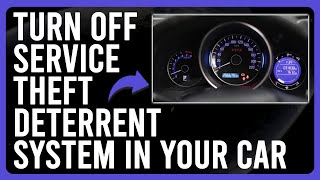
🎬 Watch: How to troubleshoot and bypass GM anti-theft systems.Common Causes
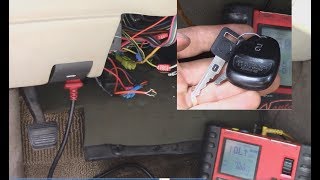
- Faulty Ignition Lock Cylinder / Passkey Sensor (Very Common) — The small antenna (exciter coil) that reads the key's chip is built into the ignition lock cylinder housing. This part wears out from years of key rotations and is the most frequent hardware failure point 🎬 See this step-by-step ignition lock cylinder replacement walkthrough., especially on GM trucks and SUVs.
- Security System Lost Synchronization (Very Common) — A low battery, jump-starting the car, or disconnecting the battery causes the security modules to lose their programming and 'forget' learned keys. This programming glitch requires a 30-minute security relearn procedure 🎬 Watch: How to perform the GM security relearn procedure. to resolve.
- Radio Frequency Interference (RFI) (Very Common) — The weak 125 kHz signal from the key to the car is easily blocked. Other key fobs, garage door openers, or aftermarket phone chargers near the ignition cause interference, a known issue documented in GM TSB #PIC5650M.
- Faulty or Damaged Ignition Key (Common) — The transponder chip inside the key fails electronically over time or from physical damage like drops or water exposure. A worn-out key blade or a flip-key not fully extended also positions the transponder too far from the reader.
- Damaged Wiring (Less Common) — Thin wires running from the ignition lock cylinder down the steering column get pinched, chafed, or broken from tilt-steering wheel movement or vibration.
- Poor BCM Ground Connection (Rare) — The Body Control Module relies on a solid ground connection. On some GM vehicles, specific ground points (like G218) become loose or corroded, causing erratic BCM behavior and security codes.
- Faulty Body Control Module (BCM) (Rare) — The BCM manages the anti-theft system and rarely fails internally. Suspect this only after ruling out the ignition lock cylinder, keys, and wiring.
Symptoms
- Engine will not start or crank — You turn the key, and nothing happens, or you only hear a single click. The anti-theft system prevents the starter from engaging.
- Engine starts and immediately stalls — The engine fires up for a second or two and then shuts off. The security system cuts the fuel supply or spark.
- Security light is on or flashing — The dashboard displays a warning light with an icon of a car and a lock or the word 'SECURITY'. This is the direct indicator of an anti-theft system problem.
- Message on the dashboard — The driver information center (DIC) shows a message like 'Service Theft Deterrent System'.
- Key is difficult to turn or gets stuck — The key binds, is difficult to turn, or gets stuck in the ignition. This points to a physical problem with the lock assembly housing the security sensor.
Diagnostic Flowchart
Tap your situation to follow the diagnostic path that matches what you're seeing on this code.
Common Fixes & Costs
- Perform Security Relearn Procedure — Parts: $0, Labor: $0, ~0.5 hr book time (DIY)
- Replace Ignition Lock Cylinder / Housing
— Parts: $50-$150, Labor: $150-$300, ~1.5 hr book time
(Intermediate)
Chevrolet Silverado / GMC Sierra (2007-2014): OEM ACDelco D1462G (Alt: Dorman 924-719, Standard Motor Products US286L)
GMC Savana / Chevrolet Express (2007-2022): OEM ACDelco D1462G (GM 15795321) (Alt: Dorman 924-719)
Chevrolet Equinox / GMC Terrain (2010-2017): OEM ACDelco D1492G (GM 19240038) (Alt: Dorman 924-713) - Replace Ignition Key and Program
— Parts: $50-$150, Labor: $75-$150 for programming, ~0.8 hr book time
(Professional)
Chevrolet Equinox / GMC Terrain (2010-2017): OEM GM 23209427, 22984996 (Alt: Ilco B119-PT, Strattec 5913598) - Repair Damaged Wiring or Ground Connection — Parts: $5-$25, Labor: $100-$300, ~2 hr book time (Intermediate)
- Replace Body Control Module (BCM)
— Parts: $400-$800, Labor: $150-$950 (includes programming), ~2.5 hr book time
(Professional)
GMC Savana / Chevrolet Express (2008-2012): OEM GM 25835966 (and others) (Alt: N/A (Programmed OEM units available))
Chevrolet Silverado / GMC Sierra (2007-2013): OEM GM 13594692 (Alt: N/A (Programmed OEM units available))
Used vs. New Parts: Buying Guide
When a used part is worth it: A used Body Control Module (BCM) from a reputable salvage yard is a cost-effective option, but requires professional programming to your vehicle's VIN. Never buy a used ignition lock cylinder, as it is a high-wear item and the primary reason for this failure.
Donor-vehicle mileage cap: roughly under 100000 miles for the part to have meaningful remaining life.
Donor quality checklist:
- For a BCM, match the part number exactly.
- Verify the donor vehicle was not scrapped for electrical or flood-related issues.
- Avoid used ignition lock cylinders entirely.
Decision logic:
- If The fix is a new key or a relearn procedure → Used parts are not applicable.
- If The fix is the ignition lock cylinder → Buy a new OEM (ACDelco) or high-quality aftermarket (Dorman, Standard Motor Products) part. The labor cost to install it makes gambling on a used part unwise.
- If The fix is the Body Control Module (BCM) → A used BCM is acceptable if the budget is tight, but factor in the mandatory $100-$250 cost of professional programming.
Warranty tradeoff: Used parts typically have a 30-90 day warranty. New aftermarket parts carry a 1-year to limited lifetime warranty. New OEM parts have a 1-2 year warranty.
Worst-case if a used part fails: $300-$900 if a used BCM fails after programming, requiring repeat labor and another part.
What Happens If You Wait — Timeline
- Immediate (First Turn of the Key): Vehicle fails to start or starts and immediately stalls. The 'Security' light illuminates on the dashboard. The vehicle is immobilized. (MPG impact: N/A (Vehicle is undrivable)% · Added cost: $0)
- 0-2 Hours: Owner is stranded. A tow truck is required to move the vehicle to a home or repair shop. Repeated start attempts drain the battery. (MPG impact: N/A% · Added cost: $75-$250 for an average local tow.)
- 1-3 Days (Misdiagnosis): An incorrect diagnosis leads to unnecessary replacement of parts. A common mistake is replacing the battery ($150-$350) or starter ($300-$700) based on symptoms, which will not fix the B3060 code. (MPG impact: N/A% · Added cost: $150-$1050+ in wasted parts and labor, plus ongoing towing and diagnostic fees ($100-$200).)
- 2-5 Days (Correct Diagnosis and Repair): A proper diagnosis identifies the security system fault. The repair is a simple relearn ($0), a new key ($125-$300), a new ignition cylinder ($200-$450), or in rare cases, a new BCM ($550-$1750). (MPG impact: N/A% · Added cost: The final, correct repair cost, which could have been minimized if the correct diagnosis was made at Stage 2.)
Cost of Not Fixing It
- Immediate: Vehicle will not start or will start and immediately stall, leaving you stranded. (Added cost: $75-$250 for a tow truck.)
- Hours to Days: Repeatedly trying to start the vehicle drains the battery, requiring a jump-start or a new battery. (Added cost: $50-$150 for a jump-start service or $150-$350 for a new battery.)
- Ongoing: The vehicle is unreliable and cannot be used, leading to alternative transportation costs. (Added cost: $40-$100 per day for a rental car or ride-sharing expenses.)
Diagnosis Steps
- Isolate the Key and Check for Interference
Remove all other keys, fobs, and access cards from your keychain. Unplug any aftermarket phone chargers or GPS devices. Try to start the car with only the single vehicle key present to eliminate Radio Frequency Interference (RFI), per GM TSB PIC5650M.
Tools: None (Beginner) - Try a Spare Key
Attempt to start the vehicle with a known-good spare key. If the car starts and runs normally with the spare, the primary key is faulty.
Tools: Spare vehicle key (Beginner) - Perform the Security Relearn Procedure
Turn the key to the 'ON' position (don't start the engine) and wait for the security light to turn off (about 10 minutes). Turn the key 'OFF' for 5-10 seconds. Repeat this process two more times for a total of three 10-minute cycles. On the fourth try, start the vehicle. This free procedure resolves software glitches.
Tools: None (Beginner) - Inspect the Ignition Cylinder Wiring
Visually inspect the small wires coming from the back of the ignition lock cylinder, running down the steering column. Look for stretched, pinched, or broken wires, particularly where the steering column tilts. Wiggling the key in the ignition causes the security light to flicker if there is a wiring or internal lock cylinder issue.
Tools: Flashlight (Intermediate) - Scan for Related Trouble Codes
Use an OBD-II scanner capable of reading Body (B) codes. Look for codes like B3055 (No Transponder Signal) or B3935 (Authentication Failed), which point towards a bad key or reader coil. P1631 confirms the ECM was commanded to disable the engine.
Tools: OBD-II Scanner (Body/Chassis capable) (Intermediate) - Test the Ignition Lock Cylinder (Passkey III+ Resistance Method)
Disconnect the connector to the ignition lock cylinder housing. Using a multimeter set to Ohms (Ω), measure the resistance across the two terminals of the exciter coil. An infinite reading (OL) indicates an open circuit, and a zero reading indicates a short. Either reading confirms the lock cylinder housing is faulty and requires replacement.
Tools: Multimeter, vehicle-specific wiring diagram (Advanced) - Test the Ignition Lock Cylinder (Passlock II Voltage Drop Method)
For older Passlock II systems, test the voltage on the yellow signal wire from the ignition switch. With the starter relay removed, turn the key ON to verify the 5V reference. While holding the key in 'CRANK', the voltage drops to a specific learned value. If the voltage is erratic or drops to 0V, the Hall effect sensor inside the lock cylinder is bad.
Tools: Multimeter, vehicle-specific wiring diagram (Advanced) - Inspect TDM/BCM Power and Ground Circuits
Locate the Theft Deterrent Module (TDM) or Body Control Module (BCM). Check for battery voltage (B+) on the main power wire and verify ignition voltage is greater than 9.0V with the key on. Test the ground circuit resistance between the module's ground wire and the chassis. A reading of 2.0 Ohms or higher indicates a poor ground that requires repair.
Tools: Multimeter, vehicle-specific wiring diagram (Advanced) - Test Fuel Pressure (Rule Out Coincidence)
Connect a fuel pressure gauge to the service port on the fuel rail. With the key on, engine off (KOEO), the pump primes to 50-65 PSI. If pressure is good during the brief prime but the engine stalls, it confirms the security system is disabling the injectors, proving the fuel pump is not the issue.
Tools: Fuel pressure gauge (Advanced)
When This Code Triggers (Freeze-Frame Conditions)
- Ignition Status: Run or Accessory (The code sets when the ignition is first switched to the 'ON' or 'RUN' position.)
- Battery Voltage: > 12.0V (A low voltage condition during a previous crank causes the module to lose key memory, triggering the code on the next key-on event.)
- Security Status: Start Disabled (The TDM/BCM sends a 'start disable' password to the Engine Control Module (ECM) when the unrecognized key is detected.)
- Key Status: Incorrect or Not Learned (Scan tool data shows the transponder value measured by the TDM is incorrect or not learned for the vehicle.)
Related Codes
- B3055 — Means 'No Transponder Identification Code Received'. B3055 indicates the reader received *no signal at all*, while B3060 means it received a signal it didn't recognize. B3055 points strongly to a dead key or a completely broken antenna coil.
- B3935 — Means 'Transponder Authentication Failed'. It sets when the module reads a valid key signal and recognizes the key's format, but the final cryptographic 'handshake' fails. It often appears with B3060 during a fault.
- B2960 — Means 'Security System Sensor Data Incorrect but Valid'. It points to a fault in the Passlock sensor data within the ignition switch. The sensor sends data, but the data is out of the expected range.
- P1631 — A powertrain code for 'Theft Deterrent Start Enable Signal Not Correct'. It sets when the Engine Control Module (ECM) receives a 'start disable' command from the BCM/TDM, confirming the no-start condition is a direct result of the security system intervening.
Climate & Environmental Factors
- Cold and/or High Humidity: Intermittent failures of the Passlock sensor within the ignition lock cylinder are more frequent in cold or humid weather due to thermal contraction or moisture intrusion affecting failing electronic components.
How to Talk to a Mechanic About This Code
Say this: "My vehicle has a no-start condition with the security light on. I believe it's an anti-theft system issue, possibly code B3060. I have already tried using a spare key and performed the 30-minute relearn procedure without success. Please start your diagnosis by checking the communication between the key, the ignition lock cylinder, and the body control module."
This signals you've done your homework and prevents the shop from wasting time and money diagnosing unrelated systems like the starter, battery, or fuel pump. It directs them to the specific, known failure points for this code.
Avoid saying:
- 'My car won't start, I think the battery is dead.'
- 'The engine just clicks, it must be the starter.'
- 'Just fix it, I don't care what it is.'
Questions to ask before authorizing the repair:
- Before replacing the ignition cylinder, did you test the resistance of the reader coil to confirm it has failed?
- If you are recommending a BCM replacement, can you show me the diagnostic steps that ruled out the key, wiring, and lock cylinder first?
- Is programming required for this new part, and is that cost included in your labor estimate?
- Did you attempt a security system reset with a professional scan tool, since the manual relearn didn't work?
Where to Take It: Dealer vs Independent vs Chain
- Dealer:
A reliable, but most expensive, option. The dealer is the ultimate fallback if a BCM needs replacement, as they have guaranteed access to GM's latest programming software.
Best for: Vehicles under warranty., Complex Body Control Module (BCM) replacement and programming., When an automotive locksmith or independent shop cannot solve the issue.
Downsides: Highest labor and parts cost., May recommend module replacement when a simpler fix (like a wiring repair) is possible. (Typical cost: +50% vs. baseline) - Independent Shop:
Excellent choice, with a preference for an automotive locksmith. A good locksmith or a well-equipped independent shop handles over 90% of B3060 causes (key, cylinder, relearn) for less than a dealer.
Best for: Key replacement and programming (if they are a specialized automotive locksmith)., Ignition lock cylinder replacement., Out-of-warranty vehicles where cost is a primary concern.
Downsides: Quality and equipment vary widely. Must verify they have advanced GM-specific diagnostic tools., A general mechanic lacks deep expertise in security systems. (Typical cost: +0% vs. baseline) - Chain Shop:
AVOID for this code. Their tools and training are not suited for diagnosing Body (B) codes or immobilizer systems.
Best for: Tires, brakes, and oil changes.
Downsides: Technicians are not equipped or trained for complex security system diagnostics., High risk of misdiagnosis and being sold unnecessary parts like a starter or battery. (Typical cost: -10% vs. baseline)
When to Walk Away From the Repair
If the estimated repair cost exceeds 40-50% of the car's private-party value, sell or trade it in.
- Car worth $8000, fix is $450: Fix it. A $450 ignition cylinder replacement on an $8,000 truck (like a 2008 Silverado) is only 5% of the vehicle's value and is a smart repair.
- Car worth $3000, fix is $1500: Walk away. Spending $1,500 to replace a BCM on an older car (like a 2007 Pontiac G6) worth $3,000 is 50% of its value. It is not a sound financial decision.
- Car worth $8500, fix is $1750: Borderline. A $1,750 BCM replacement on an $8,500 work van (like a 2014 Savana) is about 20% of its value. Get a second opinion and confirm no cheaper fixes exist before proceeding.
What Scan Tool You Need for This Code
Minimum: A scanner that reads manufacturer-specific Body (B) codes for your GM vehicle. A basic reader that only handles Powertrain (P) codes for the check engine light is not sufficient.
A standard $20 code reader cannot see the B3060 code. The fault resides in the Body Control Module, requiring a scanner capable of reading GM-specific B-codes.
Budget: BlueDriver Pro (~$100) — This Bluetooth scanner pairs with your phone and reads GM-specific B-codes, views live data, and retrieves freeze frame data. It's the minimum tool required for a DIYer to confirm the B3060 code exists.
Mid-range: Foxwell NT510 Elite for GM (~$180) — Offers bidirectional control, allowing you to command modules and see data PIDs specific to the GM anti-theft system. This is crucial for determining if the BCM is receiving the key signal.
Professional: Autel MaxiCOM MK808 / XTOOL D8S (~$500-900) — These professional-level tablets offer full bidirectional control, advanced service functions, and key programming and immobilizer functions. They perform BCM replacement and programming that previously required dealer tools.
Rent vs buy: AutoZone's free 'check engine light' service or basic loaner tool will NOT read a B3060 code. You must use a scanner with GM body/chassis system capabilities. If this is a one-time issue, the cost of a proper scanner ($100+) is better put towards a professional diagnostic fee. Buy only if you are a serious DIYer.
How to Clear the Code After You Fix It
- Perform the 30-minute security relearn procedure if a new key or lock cylinder was installed.
- Use an OBD-II scan tool to clear the B3060 code from the Body Control Module (BCM).
- A history DTC clears on its own after approximately 100 malfunction-free ignition cycles.
Drive cycle (~35 minutes): The primary reset is the 30-minute relearn procedure, involving three consecutive 10-minute 'key-on' cycles. This is a stationary procedure. After the relearn, start the vehicle to confirm the repair. No specific drive cycle is required.
Readiness monitors affected: None directly
Watch out for:
- Clearing the code with a scanner without fixing the root cause (bad key, bad lock cylinder, RFI) causes the code to return immediately.
- Failing to wait the full 10 minutes for each cycle of the relearn procedure, or having a low battery, causes the relearn to fail.
Will This Fail Emissions / State Inspection?
No — by itself this code doesn't fail OBD inspection (but it can keep readiness monitors from setting, which causes a separate fail).
- California: A B3060 code will not directly fail the OBD-II portion of the smog check, which focuses on powertrain (P-codes). However, the vehicle must be running to be tested, making the no-start condition the primary barrier.
- New York: NYS inspection does not fail a vehicle for a B-code or an illuminated 'Security' light. The test fails for an illuminated 'Check Engine' light (MIL). The main issue is the inability to start the car to perform the inspection.
- Texas: Texas inspection checks for illuminated malfunction lamps (Check Engine Light). A security light does not cause a failure, but the no-start condition makes testing impossible.
Most Commonly Affected Vehicles
- Chevrolet Silverado 1500/2500/3500 (2007-2014) — Extremely common issue due to failure of the ignition lock cylinder housing (ACDelco D1462G) which contains the Passkey sensor. Wiggling the key temporarily restores connection.
- GMC Savana / Chevrolet Express (2007-2022) — The ignition lock cylinder and its internal Passlock sensor are a known weak point. TSB PIT5405C points to a poor BCM ground (G218) caused by pinched dash insulation as a potential cause.
- GMC Terrain / Chevrolet Equinox (2010-2017) — Failure of the ignition lock cylinder housing is the most common cause on this platform. TSB PIC5650M notes that flip-keys not fully extended cause this fault.
- Buick Enclave / Saturn Outlook / GMC Acadia (2008-2017) — On these Lambda-platform models, the most common fix is replacing the ignition lock cylinder which houses the key's transponder reader.
- Pontiac G6 (2007-2010) — These sedans frequently experience B3060 due to loss of key synchronization or a faulty ignition lock cylinder. A security relearn procedure is a highly successful first step.
- Pontiac Torrent (2007-2009) — As a platform-mate to the Chevrolet Equinox, the Torrent suffers from the same common failures of the ignition lock cylinder and is susceptible to BCM issues.
- Cadillac Escalade / ESV / Chevrolet Tahoe / Suburban / GMC Yukon (2007-2014) — These GMT900-platform models are highly susceptible to Radio Frequency Interference (RFI) and failures of the ignition lock cylinder.
- Chevrolet Malibu (2007-2014) — This issue is extremely common, but often resolved by the simple 30-minute relearn procedure. If that fails, the ignition lock cylinder/switch assembly requires replacement.
Manufacturer-Specific Notes
- General Motors (Chevrolet, GMC, Cadillac, Buick, Pontiac): This code is almost exclusive to GM vehicles and their Passkey/Passlock anti-theft systems. GM issued multiple Technical Service Bulletins (TSBs), notably the PIC5650 series, acknowledging that intermittent no-start conditions with code B3060 are caused by Radio Frequency Interference (RFI) from aftermarket devices.
- Saab: On GM-era Saabs like the 9-5 (9650 platform), the BCM handles the immobilizer functions. The diagnostic trouble code B3060, its meaning, and the relearn procedures are identical to those on Chevrolet and Cadillac vehicles.
- Saturn: Models like the Outlook, Vue, and Relay use the Passkey III+ system and are highly susceptible to RFI, loss of sync after a battery change, and worn ignition lock cylinders.
- Isuzu / Suzuki: On rebadged GM products, such as the Isuzu Ascender (GMC Envoy) or the Suzuki Equator, this code appears. Diagnostic and repair procedures are identical to the corresponding GM platform.
- General Motors (Recall Information): GM issued a massive recall for faulty ignition switches and lock cylinders (NHTSA Campaign 14V047000) on 2000s-era cars like the Chevy Cobalt, HHR, Pontiac G5, and Saturn Ion. The affected components are the same ones that fail and cause code B3060, highlighting the high failure rate of these parts.
Real Owner Stories
2008 Chevy Silverado 2500HD - The Simple Fix
Owner experienced an intermittent no-start with the 'Service Theft Deterrent System' message appearing on the dash.
What they tried:
- Replaced the ignition switch and lock cylinder.
- Performed the 30-minute relearn procedure multiple times, which made the security light go away but the truck would still start and immediately die.
Outcome: Towed the truck to a Chevrolet dealership. The dealer used their proprietary scan tool to successfully reset the anti-theft system, which the manual relearn procedure could not accomplish. The final cost was $195.
Lesson: Even if the manual 30-minute relearn procedure completes, it may not be sufficient to clear a hard-set fault in the security module. Sometimes, a dealer-level scan tool is required for a full system reset.
2018 Silverado - Misdiagnosed Hardware, Solved by RFI
A recurring B3060 code and no-start condition happened every few weeks. Multiple dealer visits could not find a hardware fault.
What they tried:
- The owner noticed the problem was caused by keychain clutter.
Outcome: The owner isolated the Silverado key fob from other fobs and RFID cards on the keychain. The problem never returned. The issue was Radio Frequency Interference (RFI) from other devices blocking the key's signal.
Lesson: Always perform the simplest test first. Before suspecting expensive hardware failure, try to start the vehicle with only the single vehicle key present, as recommended by GM TSB PIC5650M.
2014 GMC Savana - The Unusual Root Cause
Vehicle had a persistent B3060 code and no-start condition.
What they tried:
- A shop replaced the ignition lock cylinder (a very common failure point).
- The 30-minute relearn procedure was performed correctly.
Outcome: The no-start condition remained even after replacing the most common failed part. The vehicle was taken to a specialist who diagnosed a failed Body Control Module (BCM). Replacing and reprogramming the BCM finally fixed the issue.
Lesson: While the BCM is a rare cause, it requires professional diagnosis if replacing the key and ignition lock cylinder (the most common culprits) does not resolve the B3060 code.
2007 Pontiac G6 - The Textbook Relearn Fix
Car suddenly wouldn't start and displayed the security light after the battery had been running low.
What they tried:
- The owner first suspected a dead battery or starter.
Outcome: After finding information online, the owner performed the 30-minute security relearn procedure. The car started normally on the fourth attempt, and the code was resolved for $0. This is a very common scenario for the G6.
Lesson: A B3060 code that appears after a battery issue (low voltage, jump-start, replacement) is very likely a software glitch. Always attempt the free 30-minute relearn procedure before paying for a diagnosis or parts.
How to Prevent This Code From Triggering
- Keep Ignition Key Isolated (Daily habit) — Prevents Radio Frequency Interference (RFI) from other key fobs, access cards, and electronics, which blocks the weak 125kHz signal from the transponder chip, a known issue per GM TSB PIC5650M.
- Maintain a Healthy Battery (Every 3-5 years) — Prevents low voltage conditions during cranking, which corrupts the Body Control Module's (BCM) memory and causes it to 'forget' the programmed keys, triggering a B3060 fault.
- Handle Keys with Care (Ongoing) — The transponder chip inside the key is a small electronic component that fails if the key is dropped repeatedly or exposed to water.
- Use High-Quality Vehicle Accessories (When adding accessories) — Avoids introducing poorly-shielded aftermarket electronics (like cheap USB chargers or LED lights) that generate RFI and interfere with the anti-theft system.
- Exercise the Ignition Lock Cylinder (Monthly) — For vehicles that sit for long periods, turning the key through its full range of motion prevents the mechanical components of the lock cylinder from seizing or developing high-resistance spots.
Frequently Asked Questions
Can a weak car battery cause a B3060 code?
Yes. A weak battery, a voltage drop during cranking, or a recent jump-start causes the security modules to lose their programming and 'forget' the learned keys. This triggers a B3060 code, requiring a security relearn procedure to resolve.
I have a B3060 code but my car starts sometimes if I wiggle the key. What does that mean?
An intermittent B3060 code affected by wiggling the key points to a physical failure in the ignition lock cylinder or attached wiring. The movement temporarily restores the electrical connection between the key's transponder reader and the security module. The lock cylinder assembly is worn out and requires replacement.
Why did my car show a B3060 and not start right after I replaced the battery or got a jump-start?
Electronic modules, especially the Body Control Module (BCM), are sensitive to voltage fluctuations. When the battery is disconnected or a jump-start causes a voltage spike, the BCM loses its memory of programmed keys. Performing the 30-minute security relearn procedure resolves this software glitch.
Will replacing the starter or fuel pump fix a B3060?
No. A no-start or start-and-stall are symptoms of the B3060 code, but the root cause is the anti-theft system electronically disabling those components. The dashboard security light confirms the immobilizer system is active, so replacing the starter or fuel pump wastes money.
Do I need a dealer to fix a B3060 code?
Not always. You can perform simple diagnostic steps like checking for RFI, trying a spare key, and attempting the 30-minute relearn procedure yourself. However, replacing a key, BCM, or other security component requires a professional locksmith or dealer with proprietary programming tools.
I just got a new key cut and now I have a B3060 code. Why?
Modern car keys contain a transponder chip that must be electronically programmed to your specific vehicle. A physically cut key turns the ignition, but the car will not start and sets a B3060 code because the security module rejects the unprogrammed electronic ID. The new key requires professional programming.
Can I permanently bypass the B3060 code or Passlock system?
Yes, bypassing older GM Passlock systems is possible by soldering a specific resistor into the ignition switch wiring to mimic the correct signal. However, this permanently disables a key anti-theft feature, making the vehicle easier to steal. Newer Passkey III+ systems are more complex and require specialized PCM/BCM software tuning to disable.
Key Takeaways
- Code B3060 indicates the anti-theft system immobilized the engine because it cannot recognize the ignition key's transponder chip, leaving the vehicle undrivable.
- Always attempt the free 30-minute security relearn procedure (three 10-minute key-on cycles) before buying parts, as it resolves over 50% of B3060 codes caused by battery voltage drops.
- On 2007-2014 GM trucks and SUVs, the most frequent hardware failure is the ignition lock cylinder housing (ACDelco D1462G), which costs $150-$300 in labor to replace.
- Never replace the starter or fuel pump for a B3060 code; the start-and-stall symptom is a deliberate action by the Body Control Module to prevent theft, not a mechanical failure.
Helpful Videos
Shop the Parts Behind B3060
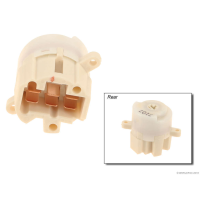
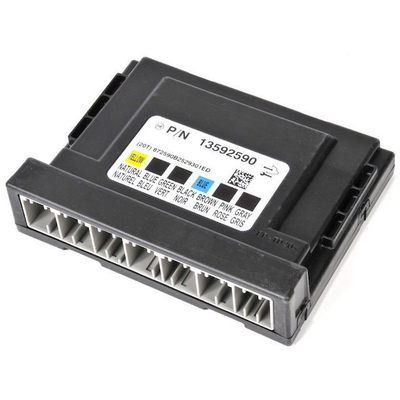
Below are the parts most often responsible for code B3060, ranked by how frequently each one is the actual culprit (per the diagnosis above). Tap any to see what we have for your vehicle.





The information in this article is provided for general reference and educational purposes only. Vehicle specifications, procedures, and part compatibility can vary by production date, trim level, and region. Always consult your vehicle's factory service manual and verify part numbers before purchasing or performing repairs. Safety-critical components such as airbags, seat belts, and braking systems should be installed by a qualified professional.
- 🧭 Diagnostic Flowchart
- 🎬 Helpful Videos
- 🛍️ Shop This Part
- What Does B3060 Mean?
- Can I Drive With B3060?
- Common Causes
- Symptoms
- Common Fixes & Costs
- Used vs. New Parts: Buying Guide
- What Happens If You Wait — Timeline
- Cost of Not Fixing It
- Diagnosis Steps
- When This Code Triggers (Freeze-Frame Conditions)
- Related Codes
- Climate & Environmental Factors
- How to Talk to a Mechanic About This Code
- Where to Take It: Dealer vs Independent vs Chain
- When to Walk Away From the Repair
- What Scan Tool You Need for This Code
- How to Clear the Code After You Fix It
- Will This Fail Emissions / State Inspection?
- Most Commonly Affected Vehicles
- Manufacturer-Specific Notes
- Real Owner Stories
- 2008 Chevy Silverado 2500HD - The Simple Fix
- 2018 Silverado - Misdiagnosed Hardware, Solved by RFI
- 2014 GMC Savana - The Unusual Root Cause
- 2007 Pontiac G6 - The Textbook Relearn Fix
- How to Prevent This Code From Triggering
- Frequently Asked Questions
- Can a weak car battery cause a B3060 code?
- I have a B3060 code but my car starts sometimes if I wiggle the key. What does that mean?
- Why did my car show a B3060 and not start right after I replaced the battery or got a jump-start?
- Will replacing the starter or fuel pump fix a B3060?
- Do I need a dealer to fix a B3060 code?
- I just got a new key cut and now I have a B3060 code. Why?
- Can I permanently bypass the B3060 code or Passlock system?
- Key Takeaways
- 🎟️ Get 5% Off