

B3060 on 2016-2023 Buick Enclave: Security System Fault, Causes and Fixes
Code B3060 on a Buick Enclave means the immobilizer system has a fault, often due to a bad key or a failing Body Control Module (BCM). This will cause a no-start or start-and-stall condition. The most common fix is replacing the faulty key, but if that doesn't work, a BCM replacement and programming may be needed. Ruling out radio interference and trying a simple key relearn procedure are important first steps.
- B3060 means your Enclave's anti-theft system is preventing it from starting.
- The first and easiest diagnostic step is to try your spare key.
- Remove other electronic fobs from your keychain to rule out radio frequency interference.
- This is not a DIY-friendly repair if it goes beyond a simple key issue, as module and key programming requires special tools.
- Do not immediately assume the starter or battery is bad; the security light is the key symptom pointing to the immobilizer.
What's Unique About the 2016-2023 Buick ENCLAVE
The Buick Enclave, like many GM vehicles of this era, uses a Pass-Key III+ or similar immobilizer system that is sensitive to interference and component failure. The system integrates the key, ignition switch, and Body Control Module (BCM). A known issue, documented in TSB PIC5650M, points to intermittent no-start conditions related to this system. The bulletin specifically warns that radio frequency interference (RFID) from other devices on the user's keychain (like office key cards or gas station fobs) or even aftermarket electronics inside the car (like LED lights and USB chargers) can 'jam' the signal from the key.
Diagnostic Flowchart
Tap your situation to follow the diagnostic path that matches what you're seeing on this vehicle.
Generation note: This year range covers the end of the first generation (2016-2017) and the beginning of the second generation (2018-2023). While the B3060 code has the same meaning for both, the specific part numbers for keys and the Body Control Module (BCM) will differ between generations. Diagnostic approaches are similar, but component locations and designs may vary. Notably, a DIY 30-minute key relearn procedure is possible on first-generation models.
Symptoms You May Notice
- Engine will not crank or turn over
- Engine starts briefly and then immediately shuts off (start-stall)
- Security or anti-theft light is illuminated or flashing on the dashboard.
- "Service Theft Deterrent System" message may appear on the driver information center
- Parasitic battery drain if the BCM is failing and keeping other modules awake.
- Replacing the battery when it is not the root cause. While a no-start can be a battery issue, the presence of a security light points specifically to the immobilizer system.
- Replacing the starter motor. If the starter is not engaging, it may be because the BCM has disabled the starter relay due to a security fault, not because the starter itself has failed.
Most Likely Causes
- Defective Ignition Key Transponder 🔴 High Probability → Shop Ignition Switch The transponder chip in the key can be damaged from being dropped or from normal wear and tear, leading to a communication failure with the vehicle's immobilizer.
How to confirm: Try starting the vehicle with a spare, known-good key. If the vehicle starts and runs normally with the second key, the first key is faulty. This is the most definitive test.
Typical fix: Replace the faulty key. A new key must be cut and programmed to the vehicle by a dealer or automotive locksmith. For 2016-2017 models, an owner may be able to perform the 30-minute relearn procedure themselves if all keys were lost.
Est. part cost: $75-$200 - Failing Body Control Module (BCM) 🟡 Medium Probability → Shop Body Control Module The BCM is the central computer for the theft deterrent system. Internal electronic failure, such as cracked solder joints or corrosion, can cause intermittent operation and prevent it from recognizing an otherwise valid key.
How to confirm: If multiple known-good keys fail to start the vehicle, and wiring is intact, the BCM is the likely culprit. This requires a professional scan tool to check for communication and internal BCM faults. Widespread, unrelated electrical glitches (windows, locks, lights) are also a strong indicator of BCM failure.
Typical fix: Replace the Body Control Module. The new module must be programmed to the vehicle's VIN and existing keys using specialized equipment.
Est. part cost: $200-$600 - Radio Frequency Interference (RFI) ⚪ Low Probability As mentioned in GM TSB PIC5650M, other RFID-emitting devices on the keychain (office key cards, other car fobs) or aftermarket electronics in the cabin (USB chargers, LED lights) can interfere with the 125kHz signal from the ignition key.
How to confirm: Remove all other keys and electronic fobs from the Buick key ring. Unplug any aftermarket chargers or accessories. Try to start the vehicle with the ignition key by itself.
Typical fix: Keep other RFID devices on a separate keychain and avoid using low-quality aftermarket electronics to prevent signal interference.
Est. part cost: $0 - Faulty Ignition Lock Cylinder/Reader ⚪ Low Probability → Shop Ignition Switch The antenna (exciter ring) that reads the key's transponder is located in the ignition lock cylinder. Damage to the cylinder or its wiring can cause a communication breakdown.
How to confirm: A technician can use a scan tool to monitor the key signal data. If no signal is detected from any key, and the keys are known to be good, the reader/wiring is suspect. Visual inspection of the wiring harness is also necessary.
Typical fix: Replace the ignition lock cylinder and inspect/repair the associated wiring.
Est. part cost: $60-$150
Rare But Worth Checking
- Faulty Crank/Start Relay:
Diagnosis Steps
- Scan the BCM for all stored trouble codes. Note any other codes besides B3060, such as B3055.
- Attempt to start the vehicle with a second, known-good key. If it starts, the primary key is the issue.
- Remove all other keys, fobs, and RFID cards from the keychain. Unplug any aftermarket phone chargers or accessories. Try starting with the Buick key alone to rule out RFI.
- Check the under-hood fuse box. Swap the 'CRANK' or 'START' relay with an identical relay from a less critical circuit (e.g., 'REAR DEFOG') and attempt to start. If it works, the relay is bad.
- For 2016-2017 models, if you have a new key or suspect a system glitch, attempt the 30-Minute Key Relearn Procedure: 1. Turn the key to ON for 10 minutes and 30 seconds (or until the security light turns off). 2. Turn OFF, then back ON for another 10 minutes 30 seconds. 3. Turn OFF, then back ON for a final 10 minutes 30 seconds. 4. Turn OFF, then start the vehicle.
- If the vehicle still won't start, use a professional scan tool to monitor the immobilizer data in the BCM. Verify if the BCM is detecting a key and if it recognizes its status.
- Inspect the wiring and connectors between the ignition lock cylinder and the BCM for any visible damage or loose connections. Also check the main B+ battery terminal connection at the fuse box for looseness or corrosion.
- If all keys fail, no interference is present, and wiring/relays are intact, the Body Control Module (BCM) is the most likely point of failure. Professional confirmation is recommended before replacement.
- Diagnostic testing of the BCM itself may cost between $49 and $72.
Parts You'll Likely Need
- Ignition Key Fob
(OEM #ACDelco 22936101 (for 2016-2017 Gen 1))— The transponder chip inside the key is the most common failure point for this code. If a spare key works, this is the definitive fix.
Trusted brands: ACDelco
OEM price range: $100-$200
Aftermarket price range: $50-$120 - Body Control Module (BCM)
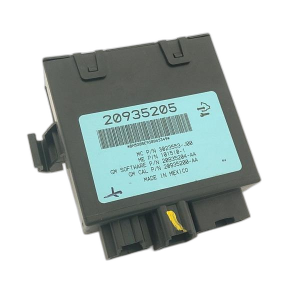
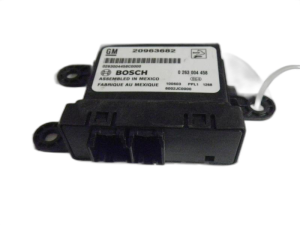
(OEM #ACDelco 13534190 (for 2018-2019 Gen 2); ACDelco 22860591 (for 2016-2017 Gen 1))— If all keys fail to work and there are no wiring or RFI issues, the BCM has likely failed internally and can no longer perform the security handshake. Part numbers vary by generation and must be programmed.
Trusted brands: ACDelco, Dorman (Remanufactured)
OEM price range: $300-$600
Aftermarket price range: $200-$450
Related Codes That Often Appear With This One
- B3055 — This code also relates to a problem with the key transponder. They often appear together as they both point to a failure in the key authentication process.
- B3935 — This code indicates a transponder circuit malfunction, further specifying a problem within the immobilizer hardware.
Technical Service Bulletins (TSBs) & Recalls
- PIC5650M (and newer revisions): Addresses intermittent no crank, no start, or start stall with security light on. It lists DTCs B3055 and B3060 and points to RFI as a primary cause to investigate, listing numerous potential sources of interference and the relevant frequencies (125kHz, 315MHz, 433MHz).
Platform-Specific Known Issues
- A Technical Service Bulletin (TSB #PIC5650, with multiple revisions up to 'K') was issued by GM for a range of vehicles, including the Enclave, for an intermittent no-crank or start-stall condition with security codes B3055 and B3060. It strongly emphasizes diagnosing Radio Frequency Interference (RFI) from sources like aftermarket LED lights, USB phone chargers, and other fobs on the keychain before replacing any parts.
Mechanic-Grade Diagnostic Values
- Immobilizer System Operating Frequency — expected: 125 kHz. Failure: Interference from other devices operating in the 120-135 kHz range can disrupt communication.
Hidden / Shadow Codes Worth Checking
- B3060 00: The '00' is a symptom byte indicating 'No Sub Type Information'. This means the primary code description ('Unprogrammed Transponder') is the complete fault information available. Some aftermarket tools or YouTube videos may incorrectly assign other meanings to this symptom byte. (see via GM GDS2 or other professional scan tools that can read GM-specific symptom bytes.)
Scan Tool Commands That Help
- GDS2: Immobilizer Data Display — Use this function to monitor parameters like 'TDM Valid Key'. When testing each vehicle key, this parameter should read 'Yes'. If it reads 'No' for a specific key, that key's transponder is faulty.
- GDS2: Immobilizer Learn / Key Programming — This function is required after replacing the BCM or adding new keys. It requires online access via GM's Service Programming System (SPS) and security credentials.
- GDS2: Configure/Reset Functions — After replacing a BCM, a function such as 'Setup SDM Primary Key in BCM' may be required to ensure the airbag system (SIR) communicates correctly with the new BCM and avoids setting additional faults.
Wiring & Ground Locations
- G218 — Located on the driver's side under the dash, often behind the kick panel or dash insulator mat.. This is a primary ground point for the Body Control Module (BCM). A loose or corroded G218 ground can cause a wide range of electrical issues, including intermittent no-start conditions and communication faults that could be misdiagnosed as a failed BCM. A GM TSB notes that the dash insulator mat can become trapped under the ground eyelet, causing a poor connection.
- Underhood Fuse Block — Located in the engine compartment, typically above the right front wheel well.. The BCM receives its main power from this fuse block. A poor connection at the main B+ terminal or corrosion within the block can cause low voltage to the BCM, leading to unpredictable behavior including immobilizer faults.
Real Owner Repair Stories
- JustAnswer technician post (2017 Buick Enclave) — No start condition with code B3060 present.
❌ Tried (didn't work) Not specified, but the context implies that basic checks like keys and RFI were likely performed before escalating to a module replacement.
✅ What actually fixed it The Body Control Module (BCM) was faulty and required replacement and programming to resolve the issue.
OEM Part Supersession History
13519672→13534190— Part revision or manufacturer change for the BCM used in 2nd generation (2018+) models.
Heads up: Part numbers are generation-specific. Using a Gen 1 BCM (e.g., 22860591) on a Gen 2 vehicle, or vice-versa, will not work.Multiple (e.g., 15948438, 20839063, 25892622)→22860591— Consolidation of part numbers for the BCM used across many GM platforms for 1st generation (pre-2017) models.
Heads up: While 22860591 fits a 2016-2017 Enclave, it is not compatible with 2018 and newer models which use a completely different architecture.
Model Year Variations Within This Range
- 2016-2017 (First Generation): Uses BCM part number family like 22860591. Features a 6-speed automatic transmission and the older Buick IntelliLink infotainment system. The physical interior design, dashboard, and key fob style are distinct from the second generation.
- 2018-2023 (Second Generation): Underwent a major redesign. Uses BCM part number family like 13534190. Features a 9-speed automatic transmission and the newer Buick Infotainment System with a different screen. The exterior and interior, including the center console and electronic shifter, are completely different. These changes mean electronic modules are not interchangeable between generations.
Helpful Videos

We Have This Part in Stock

The information in this article is provided for general reference and educational purposes only. Vehicle specifications, procedures, and part compatibility can vary by production date, trim level, and region. Always consult your vehicle's factory service manual and verify part numbers before purchasing or performing repairs. Safety-critical components such as airbags, seat belts, and braking systems should be installed by a qualified professional.
- Buick ENCLAVE:
- 🧭 Diagnostic Flowchart
- 🎬 Helpful Videos
- 🛍️ Shop This Part
- What's Unique About the 2016-2023 Buick ENCLAVE
- Symptoms You May Notice
- Most Likely Causes
- Rare But Worth Checking
- Diagnosis Steps
- Parts You'll Likely Need
- Related Codes That Often Appear With This One
- Technical Service Bulletins (TSBs) & Recalls
- Platform-Specific Known Issues
- Mechanic-Grade Diagnostic Values
- Hidden / Shadow Codes Worth Checking
- Scan Tool Commands That Help
- Wiring & Ground Locations
- Real Owner Repair Stories
- OEM Part Supersession History
- Model Year Variations Within This Range
- 🎟️ Get 5% Off