

B3060 on 2023-2025 Cadillac Escalade ESV: No-Start Causes and Fixes
Code B3060 on a 2023-2025 Cadillac Escalade ESV means the anti-theft system has detected an unrecognized key fob, causing a no-start or stall. The most common cause is radio frequency interference (RFI) from other devices. Before repairs, remove other fobs or electronics from the keychain and try again.
- B3060 means your Escalade's anti-theft system has locked the vehicle due to a key recognition failure.
- The most likely cause is Radio Frequency Interference (RFI). Always start by removing other electronics from your keychain and car before trying anything else.
- The next most likely cause is a dead key fob battery (CR2032), which is a simple and cheap replacement.
- Do not drive the vehicle, as it will not start or will stall, leaving you stranded.
- If simple fixes don't work, professional service is needed for diagnosis and potential key or module programming.
What's Unique About the 2023-2025 Cadillac ESCALADE ESV
For the 2023-2025 Escalade and its platform mates (GMC Yukon, Chevy Tahoe/Suburban), the anti-theft system is highly sensitive to radio frequency interference (RFI). Unlike older vehicles where a failed part was the most common culprit, these newer GM SUVs frequently set a B3060 code due to RFI from aftermarket USB chargers, other key fobs on the same keychain, or even building access cards. This interference can jam the 125 kHz, 315 MHz, or 433 MHz signals the keyless system uses to communicate. This specific issue is highlighted in GM Technical Service Bulletin #PIC5650M, which addresses intermittent no-start or stall conditions related to this code and other communication faults. These vehicles use GM's latest Vehicle Intelligence Platform (VIP) or Global B electrical architecture, which involves more complex module communication and security handshakes compared to previous generations.
Diagnostic Flowchart
Tap your situation to follow the diagnostic path that matches what you're seeing on this vehicle.
Symptoms You May Notice
- Engine will not crank or start
- Engine starts and immediately stalls
- Security indicator light is illuminated or flashing on the dashboard
- "No Remote Detected" or "No Key Found" message on the driver information center.
- Start/Stop button is unresponsive.
- Replacing the starter motor. A no-crank symptom can point to a bad starter, but the presence of code B3060 and the security light strongly indicates an anti-theft system issue, not a mechanical starter failure.
- Replacing the main vehicle battery. While a low battery can cause issues, simply replacing it may not resolve the B3060 code if the security system has lost its key memory and requires a relearn procedure.
Most Likely Causes
- Radio Frequency Interference (RFI) 🔴 High Probability The sensitive anti-theft systems in modern GM SUVs are susceptible to interference from other electronic devices, a known issue addressed in service bulletins. Sources can include aftermarket LED lights, phone chargers, other keys, building access cards, and even phones with active NFC.
How to confirm: Remove all other key fobs, access cards, and aftermarket electronics (like phone chargers) from the vehicle and from the Escalade's key ring. Try starting the vehicle with the isolated key fob. If it starts, RFI was the cause.
Typical fix: Keep the key fob isolated from other electronic devices. No parts are required.
Est. part cost: $0 - Weak or Dead Key Fob Battery 🟡 Medium Probability → Shop Vehicle Battery
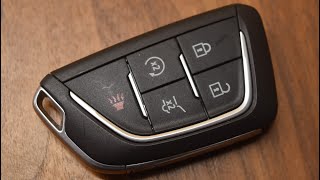
How to confirm: Try using the vehicle's spare key fob. If the spare key works reliably, the battery in the primary fob is the likely issue. You can also try placing the non-working fob in the designated transmitter pocket (usually in the center console cup holder) which can often start the car even with a weak battery.
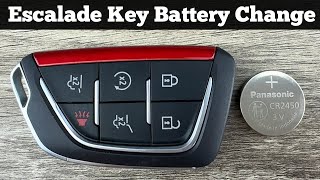
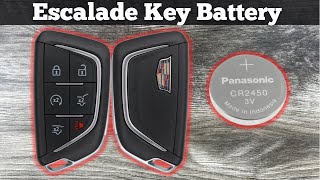
Typical fix: Replace the CR2450 or CR2032 battery inside the key fob. Check the existing battery for the correct type.
Est. part cost: $5-$10 - Faulty Key Fob ⚪ Low Probability → Shop Keyless Entry Transmitter
How to confirm: If a new battery doesn't fix the issue and the spare key works perfectly, the internal electronics of the primary key fob have likely failed.
Typical fix: The faulty key fob must be replaced and the new one programmed to the vehicle by a dealer or qualified automotive locksmith.
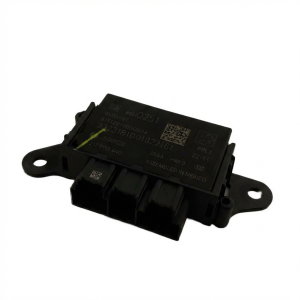
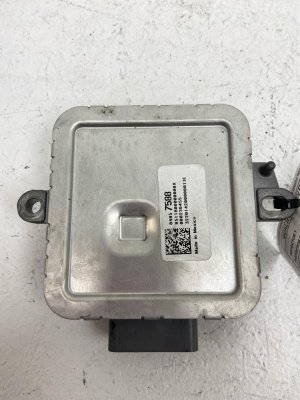
Est. part cost: $150-$400 - Body Control Module (BCM) or Wiring Issue ⚪ Low Probability → Shop Body Control Module As noted in TSB #PIC5650M, intermittent no-start conditions can be caused by underlying module or wiring problems. This can also include the Remote Control Door Lock Receiver (RCDLR) or its antenna connections.
How to confirm: This requires professional diagnosis with a scan tool to check for communication errors between the BCM, the key reader (RCDLR), and other modules. A technician will also inspect wiring harnesses for damage or loose connections, particularly at the RCDLR which is often in the rear of the vehicle.
Typical fix: Repairing the faulty wiring or replacing and reprogramming the Body Control Module.
Est. part cost: $500-$950
Rare But Worth Checking
- Low Vehicle Battery Voltage: → Shop Vehicle Battery A weak main vehicle battery can cause a wide range of unpredictable electronic issues, including communication errors within the security system that may trigger a false B3060 code. Always ensure the 12V battery is fully charged and healthy before proceeding with more complex diagnostics.
- BCM/RCDLR Software Glitch: On some modern GM SUVs, the security modules can enter a locked state that does not resolve with standard procedures. A full disconnect of the main vehicle battery for several minutes may be required to force a hard reset of all modules, which can clear the glitch and restore normal operation.
Diagnosis Steps
- Verify B3060 is present using an OBD-II scanner capable of reading Body (B-prefix) codes.
- Question the driver about symptoms. Note if the issue is intermittent and if the security light is on. Ask about any aftermarket electronics plugged into the vehicle, as recommended by GM.
- Perform the simplest test first: Remove ALL other electronic items from the keychain and from inside the vehicle (other fobs, garage openers, access cards, aftermarket chargers). Retest with the isolated key fob.
- If the issue persists, try starting the vehicle with a known-good spare key. If the spare key works, the issue is with the primary key fob (likely the battery or the fob itself).
- If using a spare key does not work, try placing the key fob in the vehicle's transmitter pocket (check owner's manual for location, usually in the center console cup holder) and attempt to start the engine. This bypasses remote signal issues and can work if the fob battery is weak.
- Check the vehicle's main 12V battery to ensure it is fully charged (above 12.4V) and healthy. Low voltage can cause various module communication errors.
- If all the above steps fail, the vehicle requires professional diagnosis. A technician will use an advanced scan tool to monitor data from the BCM and Theft Deterrent Module to check for key recognition signals and diagnose potential module or wiring faults as suggested by TSB #PIC5650M.
Parts You'll Likely Need
- Key Fob Battery
(OEM #CR2450 or CR2032)— This is the most common and inexpensive cause for a key fob to stop communicating with the vehicle. Some fobs use a CR2450, others a CR2032; check the existing battery before purchasing.
Trusted brands: Energizer, Duracell, Panasonic
OEM price range: $5-$10
Aftermarket price range: $2-$8 - Key Fob (Transmitter)
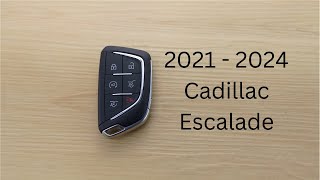
(OEM #13541571 / 13538864 / 13546300 (434 MHz) or 13546301 / 13538866 (315 MHz))— If the key fob's internal electronics fail, it will need to be replaced and programmed to the vehicle. It is critical to verify the correct frequency (434 MHz or 315 MHz) with a dealer using the VIN before ordering.
Trusted brands: ACDelco, GM Genuine Parts
OEM price range: $150-$400
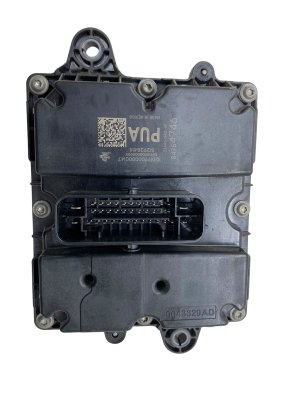
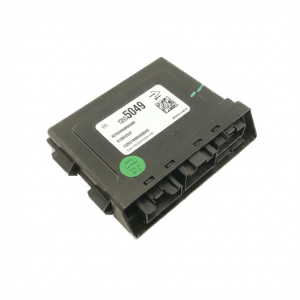
Aftermarket price range: $70-$200 - Body Control Module (BCM) — In rare cases, an internal fault in the BCM can prevent it from recognizing valid keys, requiring module replacement and programming. This is a last resort after all other causes are ruled out.
Trusted brands: ACDelco, GM Genuine Parts
OEM price range: $400-$600
Aftermarket price range: $250-$450
Related Codes That Often Appear With This One
- B3055 — This code means 'No Transponder Key'. It often appears with B3060 because the system either can't detect a key at all (B3055) or detects one it doesn't recognize (B3060). Both are cited together in TSB #PIC5650M.
- B3935 — This code means 'Transponder Authentication Failed'. It indicates the security 'handshake' between the key and vehicle failed, which is a closely related fault also mentioned in TSB #PIC5650M.
- C0750, C0755, C0760, C0765, C0775 — These codes are related to the tire pressure monitoring system (TPMS). Their appearance alongside B3060 in TSB #PIC5650M suggests a potential broader network communication issue or a problem within a shared module, like the RCDLR, that could be causing the security fault.
Technical Service Bulletins (TSBs) & Recalls
- PIC5650M: Addresses an intermittent no crank, no start, or start/stall concern with the security light on, and lists B3060 as a potential Diagnostic Trouble Code. It emphasizes checking for RFI from aftermarket accessories.
Platform-Specific Known Issues
- As per TSB #PIC5650M, these vehicles can experience an intermittent no crank, no start, or a start/stall condition with the security light on, which is directly related to code B3060 and other communication codes. The bulletin strongly advises technicians to investigate for sources of Radio Frequency Interference (RFI) from aftermarket devices before replacing any parts.
Mechanic-Grade Diagnostic Values
- Scan Tool Live Data: 'TDM Valid Key' or similar parameter — expected: Should switch to 'Yes' or 'True' when a learned key fob is present and the start button is pressed.. Failure: Parameter remains 'No' or 'False' even with a known-good key fob, indicating a problem with the key, antenna, RCDLR, or BCM.
Hidden / Shadow Codes Worth Checking
- B3060 00: This is the most common symptom byte, meaning 'Unprogrammed Transponder Identification Code Received'. It confirms the security module received a valid signal from a key transponder, but the ID of that transponder is not stored in the vehicle's memory. This helps rule out a dead key or antenna issue. (see via A professional scan tool capable of reading manufacturer-specific symptom bytes, such as the GM GDS2 (Global Diagnostic System 2).)
Scan Tool Commands That Help
- GM GDS2: Module Diagnostics > Remote Control Door Lock Receiver (RCDLR) > Configuration/Reset Functions > Add/Replace Key Fobs — This function is used to program new or existing key fobs to the vehicle after a key, RCDLR, or BCM replacement, or if a key has lost its programming. It guides the technician through the security learn process.
- GM GDS2: Module Diagnostics > Body Control Module (BCM) > Immobilizer Learn — Used when a major security component like the BCM is replaced. This procedure synchronizes all security modules (BCM, ECM, RCDLR) and learns the key passwords, which is more extensive than simply adding a fob.
Wiring & Ground Locations
- Remote Control Door Lock Receiver (RCDLR) — The RCDLR is the primary module for key fob communication. On modern SUVs, it is typically located in the rear of the vehicle, often behind interior trim panels, rather than in the dashboard.. The RCDLR receives the signal from the key fob via multiple antennas. A loose connection, wiring damage, or internal failure of this module will directly cause B3060 and related codes. Its location makes it less susceptible to dash-related RFI but potentially vulnerable to issues in the rear of the vehicle.
- Keyless Entry Antennas — These vehicles use multiple low-frequency antennas to detect the key fob. Part diagrams for the 2023 Escalade show antenna locations in the rear door, rear floor area, and rear bumper.. A failure or disconnected wiring at any of these antennas can create dead zones where the key fob is not detected, leading to intermittent no-start conditions and B3060. Diagnosis may involve testing each antenna circuit individually.
- Body Control Module (BCM) — Typically located on the left side of the dashboard, near or to the left of the steering column.. The BCM is the master computer for the security system. It stores the learned key information and makes the final decision to authorize engine start. All communication from the RCDLR is routed through the BCM.
Real Owner Repair Stories
- Go-Parts.com research on a similar platform (2022 GMC Yukon Denali (T1 Platform, shared with Escalade)) — Persistent 'No Key Detected' message, vehicle would not start.
❌ Tried (didn't work) Using the spare key fob., Placing the key fob in the designated backup slot/transmitter pocket.
✅ What actually fixed it Disconnecting the negative terminal of the main vehicle battery for several minutes. This forced a hard reset of the vehicle's modules, clearing a software glitch that was preventing key recognition.
When the Usual Fixes Don't Work
- In some documented cases on vehicles with the same modern GM platform, the standard diagnostic path for B3060 (checking for RFI, trying a spare key, replacing the fob battery) fails to resolve the no-start condition. The root cause was found to be a temporary software lock-up in the security modules. The only effective, non-dealer solution was to perform a hard reset by disconnecting the main 12V battery for several minutes, which forced the modules to reboot and re-establish proper communication.
OEM Part Supersession History
Varies by Frequency/Feature→Varies— Part revision or consolidation.
Heads up: It is critical to verify the correct key fob part number using the vehicle's VIN. Fobs for this platform are available in 433 MHz and 315 MHz frequencies. Using the wrong frequency will result in a programming failure and a B3060 code.
Model Year Variations Within This Range
- 2021-2025: These model years use GM's new Global B electrical architecture, also known as the Vehicle Intelligence Platform (VIP). Security and module communication protocols are more complex than in the prior generation (pre-2021). Diagnosing communication issues often requires checking the Serial Data Gateway Module and being aware of security 'handshake' codes like U1962 that can accompany a B3060.
Helpful Videos
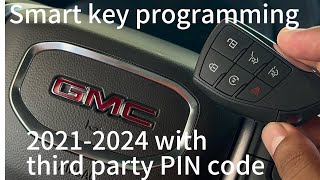
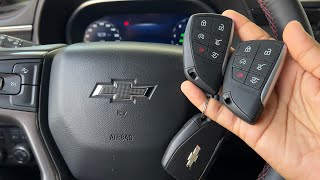
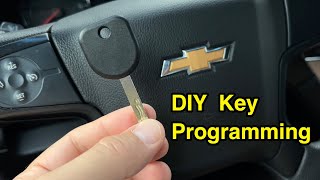
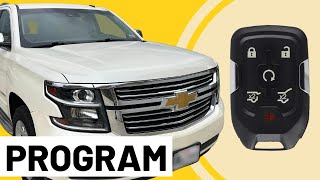
We Have This Part in Stock

The information in this article is provided for general reference and educational purposes only. Vehicle specifications, procedures, and part compatibility can vary by production date, trim level, and region. Always consult your vehicle's factory service manual and verify part numbers before purchasing or performing repairs. Safety-critical components such as airbags, seat belts, and braking systems should be installed by a qualified professional.
- Cadillac ESCALADE ESV:
- 🧭 Diagnostic Flowchart
- 🎬 Helpful Videos
- 🛍️ Shop This Part
- What's Unique About the 2023-2025 Cadillac ESCALADE ESV
- Symptoms You May Notice
- Most Likely Causes
- Rare But Worth Checking
- Diagnosis Steps
- Parts You'll Likely Need
- Related Codes That Often Appear With This One
- Technical Service Bulletins (TSBs) & Recalls
- Platform-Specific Known Issues
- Mechanic-Grade Diagnostic Values
- Hidden / Shadow Codes Worth Checking
- Scan Tool Commands That Help
- Wiring & Ground Locations
- Real Owner Repair Stories
- When the Usual Fixes Don't Work
- OEM Part Supersession History
- Model Year Variations Within This Range
- 🎟️ Get 5% Off