

B3060 on 2013-2019 Cadillac XTS: Security System Fault, No-Start Causes and Fixes
Code B3060 on a Cadillac XTS means the car's security system doesn't recognize the key, causing a no-start or stall. The most common causes are a weak key fob battery, radio frequency interference, or a faulty security module. Often, the fix requires professional reprogramming of the key or a module.
- B3060 means your Cadillac XTS won't start because of a security system issue, usually related to the key.
- Before calling a mechanic, try the simple fixes: use your spare key, replace the key fob battery, and remove other electronic cards from your keychain.
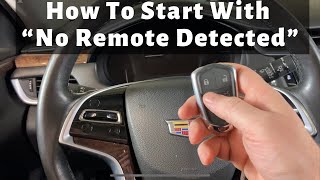
- If you see a 'No Remote Detected' message, place the fob in the special pocket inside the center console to start the car and get to a safe location.
- A permanent fix for a faulty key or module requires expensive, specialized programming tools, making this a job for a dealer or qualified locksmith.
What's Unique About the 2013-2019 Cadillac XTS
The Cadillac XTS uses a sophisticated passive keyless entry and start system. This system is sensitive to radio frequency (RF) interference, which can disrupt communication between the key fob and the car. A GM Technical Service Bulletin (TSB) highlights that devices like toll passes, building access cards, or even other vehicle keys on the same keychain can interfere with the system and trigger codes like B3060, leading to an intermittent no-start condition that can be difficult to duplicate. TSB PIC5650C further expands the list of potential RFI sources to include aftermarket LED lighting and various USB or 12-volt chargers.
Diagnostic Flowchart
Tap your situation to follow the diagnostic path that matches what you're seeing on this vehicle.
Symptoms You May Notice
- Engine will not crank or start.
- Engine starts and immediately stalls.
- "Security" or anti-theft light is illuminated on the dashboard.
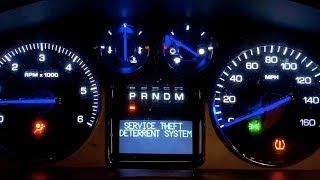
- "Service Theft Deterrent System" message appears on the driver information center.
- "No Remote Detected" message appears, even with the key in the car.
- Replacing the starter motor when the engine doesn't crank.
- Replacing the vehicle's main battery without diagnosing the security system first.
Most Likely Causes
- Radio Frequency Interference (RFI) 🔴 High Probability The passive keyless system is sensitive to external radio signals. Multiple GM TSBs (PIC5650B, C, K, and M) call this out as a common cause that is often overlooked because the interfering item may be removed before service.
How to confirm: Remove all other keys, access cards, aftermarket LED lights, phone chargers, and electronic devices from the keychain and away from the vehicle. Try starting the car with only the single XTS key fob present. If the car starts, RFI was the likely cause.
Typical fix: Keep the key fob separate from other RFID-emitting devices like toll passes, other car keys, or security access cards. Identify and remove any low-quality aftermarket electronics that may be causing interference.
Est. part cost: $0 - Weak or Dead Key Fob Battery 🟡 Medium Probability → Shop Vehicle Battery
How to confirm: Try using the vehicle's backup starting method. Place the key fob in the dedicated transmitter pocket, which is located inside the center console storage area, and then try to start the engine. If it starts, the fob battery is almost certainly the problem. You can also try your spare key fob.
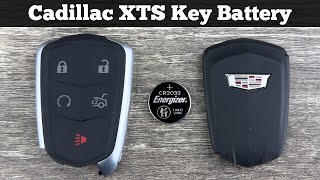
Typical fix: Replace the battery in the key fob (typically a CR2032 coin cell).
Est. part cost: $5-$10 - Faulty or Unprogrammed Key 🟡 Medium Probability
How to confirm: Try starting the vehicle with a spare key. If the spare key works reliably, the primary key is faulty. A professional will need a diagnostic tool to check if the Theft Deterrent Module recognizes the key's transponder. Worn-out physical keys on related GM models have also been known to cause intermittent starting issues.
Typical fix: The faulty key must be replaced and the new key programmed to the vehicle using a specialized scan tool or by following a specific 10-minute relearn procedure.
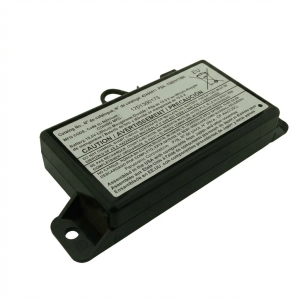
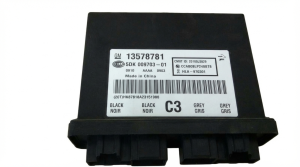
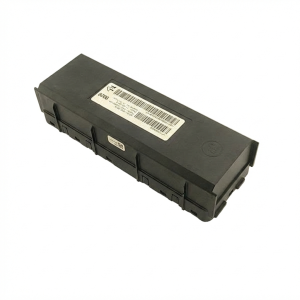
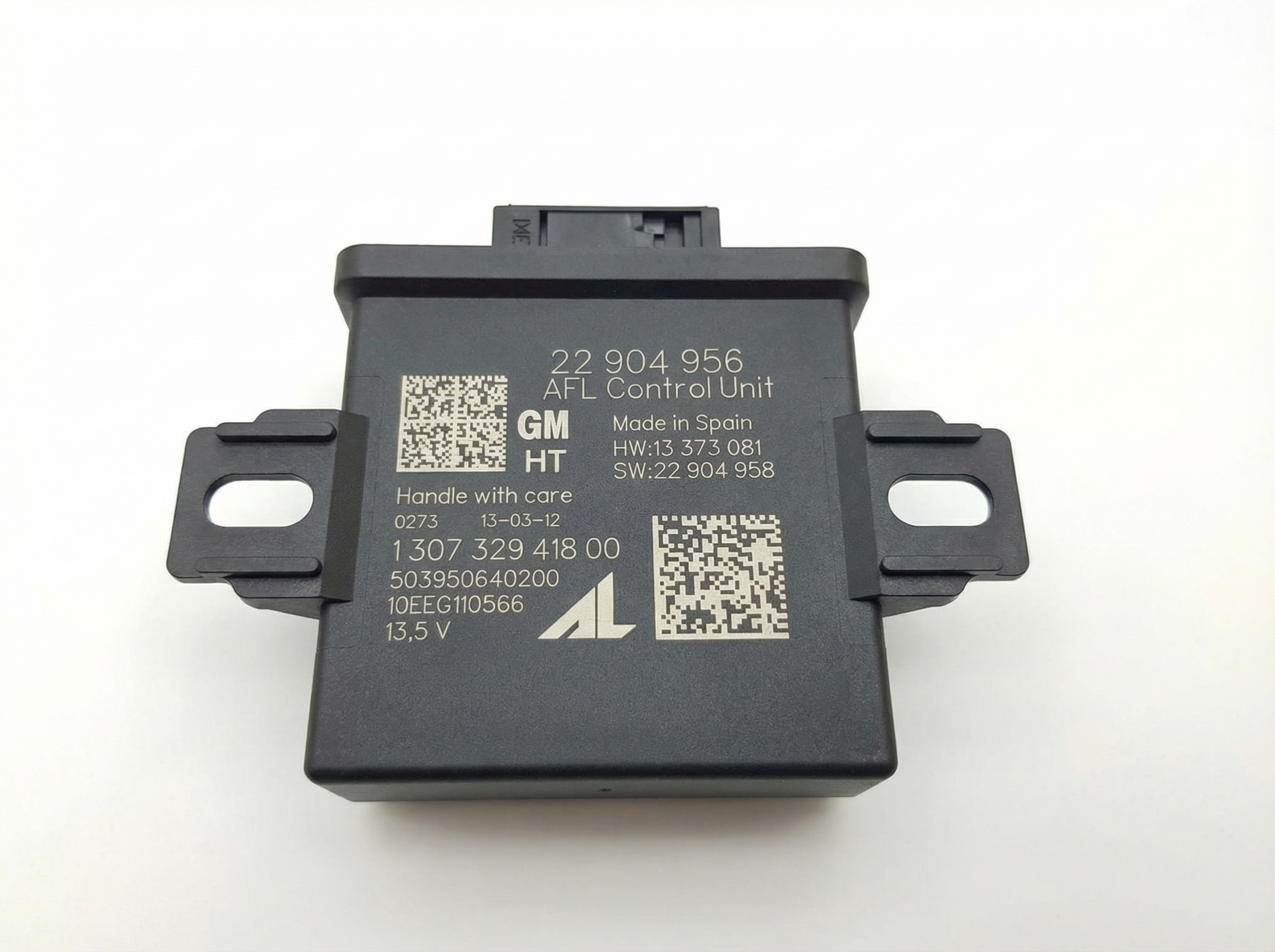
Est. part cost: $150-$400 - Theft Deterrent Module (TDM) or Body Control Module (BCM) Fault ⚪ Low Probability → Shop Anti-Theft Control Module
How to confirm: This requires a professional diagnosis. A technician will use a scan tool to check for communication with the TDM/BCM and look for other related trouble codes. In some cases, corrosion or cracked solder joints on the module's circuit board can be the cause. A complete lack of communication with the BCM is a strong indicator of failure.
Typical fix: The module may need to be reprogrammed (reflashed) or, if it has failed internally, replaced and then programmed to the vehicle. Sometimes, simply disconnecting the vehicle's main battery for several minutes can reset the BCM and clear the fault temporarily.
Est. part cost: $400-$1000
Rare But Worth Checking
- Corroded Wiring or Connectors: In some cases, corrosion on the wiring for the alarm sensor or immobilizer system can cause intermittent signal loss, leading to this code. A visual inspection of the related harnesses and connectors is worthwhile if the issue persists.
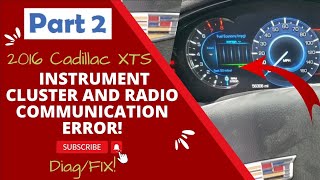
- Faulty Side Detection System Module: A real-world repair video on a 2016 XTS showed that a faulty rear driver's side radar sensor (part of the blind spot detection system) was grounding out the low-speed communication bus. This brought down communication with multiple modules, including the BCM and instrument cluster, causing a no-start condition. Unplugging the faulty module restored vehicle operation.
Diagnosis Steps
- Check the dashboard for a security light or a 'Service Theft Deterrent System' message.
- Try your spare key fob. If it works, the problem is with your primary key.
- Remove all other electronic devices and keys from your keychain to eliminate Radio Frequency Interference (RFI). This includes toll passes, other fobs, and even aftermarket phone chargers.
- If the car displays a 'No Remote Detected' message, place the key fob in the transmitter pocket inside the center console and attempt to start the car. If it starts, replace the fob battery (CR2032).
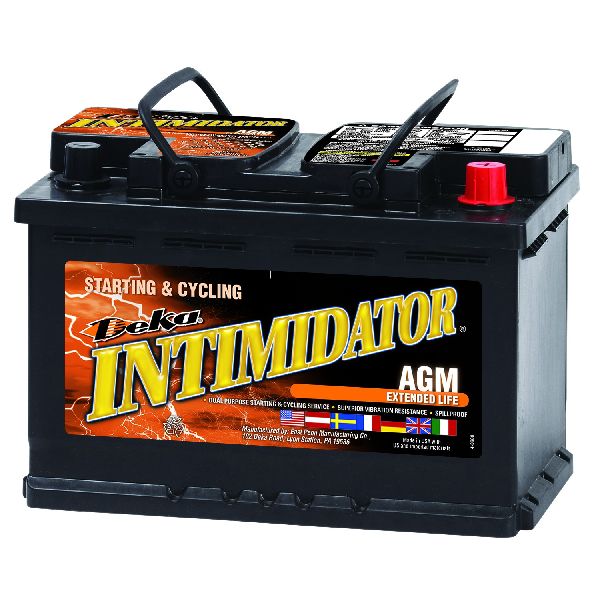
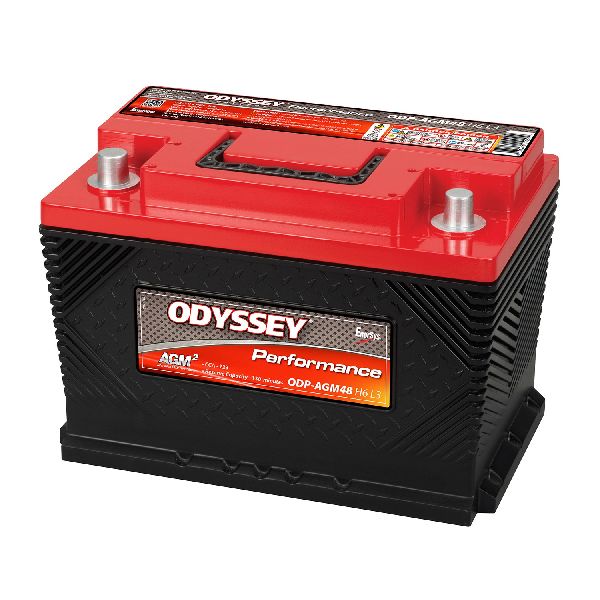
- Inspect the main vehicle battery terminals for a secure connection and ensure the battery has a full charge. Low voltage can cause issues with various electronic modules.
- If other seemingly unrelated modules are also malfunctioning (e.g., instrument cluster, radio), suspect a communication bus issue. A technician may need to unplug modules one by one to find which one is grounding the network.
- If the issue persists, the vehicle needs to be diagnosed by a professional with a GM-compatible scan tool to read data from the Theft Deterrent Module and determine if a key, module, or wiring is at fault.
Parts You'll Likely Need
- Key Fob Battery
(OEM #CR2032)— This is the most common and cheapest failure point for a 'no remote detected' issue.
Trusted brands: Energizer, Duracell
OEM price range: $5-$10
Aftermarket price range: $2-$5 - Keyless Entry Remote (Key Fob)
(OEM #22856930 (2013-2014), 13598506 / 13544033 (2015-2019))— If the transponder chip inside the key fob fails, the entire unit must be replaced and programmed. Part numbers vary by year and features.
Trusted brands: ACDelco (OEM)
OEM price range: $150-$300
Aftermarket price range: $50-$150 - Body Control Module (BCM)
(OEM #13592590 (supercedes 13580689))— In rare cases, the BCM, which manages the security system, can fail. It requires replacement and professional programming. This part is shared with other GM vehicles like the Impala and ATS.
Trusted brands: ACDelco (GM Genuine)
OEM price range: $300-$500
Aftermarket price range: $200-$400
Related Codes That Often Appear With This One
- B3055 — This code relates to a problem with the key transponder. It often appears with B3060 as part of the same security system fault.
- B3935 — This code indicates a transponder authentication error, directly related to the security handshake failure that also triggers B3060.
- C0750, C0755, C0760, C0765 — These are tire pressure monitor sensor codes. While not directly related in function, a TSB mentions they can appear alongside B3060, possibly due to a broader issue with Radio Frequency Interference (RFI) or a fault within the Body Control Module (BCM). [⭐ MANUFACTURER TSB — highest authority]
Technical Service Bulletins (TSBs) & Recalls
- PIC5650M: Addresses an intermittent no crank, no start, or start stall concern with the security light on, potentially caused by DTC B3060 among others. [⭐ MANUFACTURER TSB — highest authority]
- PIC5650B/C/K: A series of diagnostic tip bulletins that point to Radio Frequency Interference (RFI) from other devices on the key ring (toll passes, other fobs) and in the car (aftermarket LEDs, chargers) as a potential cause for intermittent security light and no-start/stall issues.
- PIE0232: An early engineering information bulletin for 2013 models requesting data on new vehicles exhibiting no-start conditions with codes B3055, B3060, or B3935 to find the root cause, highlighting that this was a known issue from the platform's launch.
Platform-Specific Known Issues
- A known issue, documented in TSB PIC5650M, describes an intermittent no-crank or start-stall condition with the security light on, which can be caused by B3060. [⭐ MANUFACTURER TSB — highest authority]
- Another TSB, PIC5650B, warns that Radio Frequency ID (RFID) devices like toll passes or building access cards on the keychain can interfere with the Passkey theft system and cause this code across a wide range of GM vehicles, including the XTS.
- A diagnostic video of a 2016 XTS with starting problems and no communication with the cluster/radio traced the fault to a bad rear radar sensor module, which was grounding out the serial data bus and preventing the BCM from functioning correctly.
Helpful Videos
Used OEM Parts in Stock
New Aftermarket Parts Available



The information in this article is provided for general reference and educational purposes only. Vehicle specifications, procedures, and part compatibility can vary by production date, trim level, and region. Always consult your vehicle's factory service manual and verify part numbers before purchasing or performing repairs. Safety-critical components such as airbags, seat belts, and braking systems should be installed by a qualified professional.
- Cadillac XTS:
- 🧭 Diagnostic Flowchart
- 🎬 Helpful Videos
- 🛍️ Shop This Part
- What's Unique About the 2013-2019 Cadillac XTS
- Symptoms You May Notice
- Most Likely Causes
- Rare But Worth Checking
- Diagnosis Steps
- Parts You'll Likely Need
- Related Codes That Often Appear With This One
- Technical Service Bulletins (TSBs) & Recalls
- Platform-Specific Known Issues
- 🎟️ Get 5% Off