

B3060 on 2011-2018 Chevrolet Camaro: Security Light, No-Start Causes and Fixes
Code B3060 on a 2011-2018 Camaro means the car's security system doesn't recognize the key. This causes a no-start or start-and-stall condition with the security light on. The most common fix is to perform the 30-minute key relearn procedure. Other causes include a bad key transponder, radio frequency interference, a faulty ignition switch/immobilizer coil, or a failing Body Control Module (BCM).
- B3060 means your Camaro's security system has locked you out due to a key recognition failure.
- Before spending any money, try starting the car with all other fobs removed from your keychain, and then try a spare key.
- The most common DIY fix is the 30-minute key relearn procedure, which involves cycling the ignition on and off in 10-minute intervals three times.
- If the relearn procedure doesn't work, the problem is more likely a faulty key or a failing Body Control Module (BCM), which will require professional service.
What's Unique About the 2011-2018 Chevrolet CAMARO
The 2011-2018 Camaro range spans two distinct generations: the 5th Gen (2010-2015) on the Australian-developed Zeta platform and the 6th Gen (2016-onward) on the lighter, more modern Alpha platform. While both use a BCM-controlled transponder key system, the electronics are different. The 5th Gen typically uses a traditional switchblade key, while the 6th Gen moved to a keyless access (push-button start) system as standard on more trims. Despite these hardware differences, the logic for code B3060—a key/security mismatch—is common to both. The issue is widespread enough that GM issued TSB PIC5650M, covering models up to 2018, confirming the persistence of this fault across the generation change.
Diagnostic Flowchart
Tap your situation to follow the diagnostic path that matches what you're seeing on this vehicle.
Generation note: This range covers the end of the 5th generation (2011-2015) and the beginning of the 6th generation (2016-2018). The underlying cause and symptoms of B3060 are consistent across both generations, as both rely on a BCM-controlled immobilizer system. However, the specific BCM part numbers, key fob designs, and some diagnostic procedures differ. For example, 6th Gen models with keyless start may have a specific pocket to place the fob in for emergency starting when the battery is low or interference is present.
Symptoms You May Notice
- Engine will not crank or start.
- Engine starts briefly then immediately stalls.
- Security indicator light is illuminated or flashing on the dashboard.
- "Service Theft Deterrent System" message may appear on the driver information center.
- On keyless start models, a "No Remote/Fob Detected" message may be displayed.
- Replacing the starter motor when the engine won't crank. The no-crank condition is commanded by the security system; it is not a failure of the starter itself. A user on Camaro5.com replaced their starter only to find the no-start issue persisted.
- Replacing the battery without addressing the underlying key programming issue. While a low battery can cause the problem, simply replacing it won't reprogram the key. A relearn procedure is still needed.
Most Likely Causes
- Key Has Lost Programming / Faulty Key 🔴 High Probability This can happen due to a low car battery, disconnecting the battery for service, a dead battery in the key fob, or internal failure of the transponder chip inside the key fob. A significant voltage drop can cause the BCM to lose its memory of the programmed keys.
How to confirm: Try starting the vehicle with a known-good spare key. If the spare key works, the original key is faulty or has lost its programming. If no spare is available, attempting the key relearn procedure is the next step.
Typical fix: Perform the 30-minute key relearn procedure. If the key itself is bad, it will need to be replaced and then programmed to the vehicle. If all keys are lost, this procedure will program a new key, but it will erase any previously programmed keys.
Est. part cost: $50-$200 for a new key and cutting/programming. - Radio Frequency (RF) Interference 🟡 Medium Probability The immobilizer system operates at 125 kHz. Other electronic devices on the keychain or in the car, like building access fobs, other car keys, aftermarket LED lights, or even some phone chargers plugged into the 12V outlet, can interfere with the signal. GM TSB PIC5650M specifically calls out this issue as a common cause for intermittent no-starts.
How to confirm: Remove all other fobs and electronic devices from the keychain so only the car key is present. Unplug any aftermarket chargers or devices from the car's power outlets. Attempt to start the vehicle again. If it starts, RF interference was the cause.
Typical fix: Keep other RFID-emitting devices separate from the car key when starting the vehicle. Avoid using cheap, unshielded aftermarket electronic accessories.
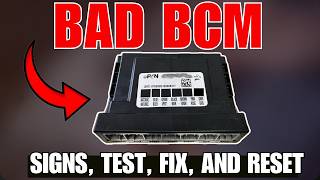
Est. part cost: $0 - Failing Body Control Module (BCM) ⚪ Low Probability → Shop Body Control Module The BCM is the central computer for the security system. Internal electronic failure, sometimes caused by voltage spikes, water intrusion, or age, can cause it to lose key memory or fail to communicate properly. On 5th Gen Camaros, there are reports of water leaking from a cowl seam and dripping onto connectors, causing corrosion and BCM issues.
How to confirm: This is typically a diagnosis of exclusion. If key relearn procedures fail repeatedly and there are no wiring issues, the BCM is the likely culprit. A professional scan tool may show other communication codes (U-codes) when the BCM is failing.
Typical fix: The BCM must be replaced and programmed to the vehicle's VIN and security information by a dealer or a specialized shop using GM's Service Programming System (SPS). Alternatively, some services offer BCM cloning, where the data from your old module is transferred to a replacement, avoiding dealer programming.
Est. part cost: $150-$400 for a new BCM, plus programming costs.
Rare But Worth Checking
- Faulty Ignition Lock Cylinder/Immobilizer Coil: → Shop Ignition Switch The exciter coil that energizes the key's transponder chip is located around the ignition cylinder. A break in this coil's wiring or an internal failure can prevent the key from being read, triggering a B3060 code. Diagnosis involves checking for continuity and proper resistance of the coil windings.
- Wiring Harness Damage: Damage to the wiring between the BCM, ignition switch, and immobilizer components can cause intermittent communication loss and trigger this code. This is less common but should be checked before replacing expensive modules, especially if there has been recent work done under the dash or steering column.
Diagnosis Steps
- Verify the battery is fully charged (above 12.4V) and connections are clean and tight. Low voltage is a primary cause of electronic glitches.
- Scan all vehicle modules for codes. Note any other B-codes, U-codes, or C-codes present, especially B3055 and B3935.
- Remove all other fobs, keys, or RFID devices from the keychain and unplug any aftermarket chargers from the vehicle's power outlets.
- Attempt to start the vehicle with a known-good spare key. If it starts, the primary key is the issue.
- If no spare key is available or if the spare also fails, perform the 30-minute key relearn procedure: 1. Turn the key to the ON position (do not start the engine). 2. The security light will illuminate. Wait for approximately 10 minutes until the light turns off. 3. Turn the key to OFF for 5 seconds. 4. Repeat steps 1-3 two more times for a total of 3 cycles (30 minutes). 5. After the third cycle, turn the key off, then attempt to start the engine. It should now be programmed.
- If the relearn procedure fails, inspect the wiring and connectors at the steering column (ignition switch/immobilizer coil) and the Body Control Module (BCM) for any visible damage, corrosion, or signs of water intrusion.
- If all other steps fail, the issue is likely a faulty BCM or a bad ignition lock cylinder/immobilizer coil, which requires professional diagnosis with specialized tools for replacement and programming.
Parts You'll Likely Need
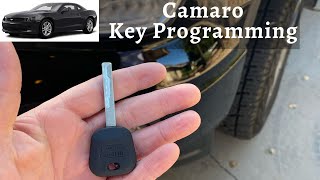
- Transponder Ignition Key (5th Gen)
(OEM #ACDelco 13504199 (Supersedes older numbers, FCC ID: OHT01060512))— The transponder chip inside the key can fail, or the key can lose its programming. This is for the common switchblade-style key.
Trusted brands: ACDelco
OEM price range: $80-$150
Aftermarket price range: $30-$80 - Keyless Entry Remote (6th Gen)
(OEM #ACDelco 13529660 or 13518372)— For keyless start models, the entire fob contains the transponder. Failure or a dead battery can cause a no-start.
Trusted brands: ACDelco
OEM price range: $90 - $160
Aftermarket price range: $50 - $90
Related Codes That Often Appear With This One
- B3055 — Stands for 'No Transponder Modulation or No Transponder'. It often appears with B3060, indicating a complete failure to read any signal from the key, possibly due to a bad key, faulty immobilizer coil, or severe RF interference.
- B3935 — 'Transponder Authentication Failed'. This code indicates the security module read the key but rejected its code as invalid. It is often set alongside B3060 and points to a key that is for the wrong vehicle or has corrupted data.
- U0140 — 'Lost Communication With Body Control Module'. If you see this code, it points more strongly toward a failing BCM or a network wiring issue as the root cause, rather than a problem with just the key.
Technical Service Bulletins (TSBs) & Recalls
- PIC5650M: Mentions intermittent no crank, no start, or start stall with security light on, and lists B3060 as a potential DTC. It strongly points to Radio Frequency Interference (RFI) from aftermarket accessories as a primary cause that should be investigated before replacing parts. [⭐ MANUFACTURER TSB — highest authority]
- EI-10190: An older engineering information bulletin where GM was investigating the root cause of B3055, B3060, and B3935 on low-mileage vehicles, indicating this has been a long-standing issue.
Platform-Specific Known Issues
- The provided TSB PIC5650M confirms that an intermittent no-crank or start/stall with security light and code B3060 is a recognized issue on these vehicles, frequently caused by RF interference from aftermarket devices. [⭐ MANUFACTURER TSB — highest authority]
- On Camaro5 forums, a user reported a no-crank, no-start situation where they suspected the BCM after a key relearn failed. Another user pointed out that water intrusion in the cowl area can lead to connector corrosion and similar symptoms. URL: https://www.camaro5.com/forums/showthread.php?t=552431
- A user on the Camaro6 forums described a no-start condition after replacing the battery, which was resolved by a specific reset procedure involving putting the car in service mode and clearing codes, indicating how sensitive the 6th Gen's electronics are to power interruptions. URL: https://www.camaro6.com/forums/showthread.php?t=618485
Scan Tool Commands That Help
- GDS2 (GM Diagnostic Software): Immobilizer Learn — Used to program new or existing keys to the BCM/TDM after a key replacement, BCM replacement, or if keys have lost programming. This is the software-driven alternative to the manual 30-minute relearn procedure.
- GDS2 (GM Diagnostic Software): Add/Replace Key Fobs — Specifically for programming the remote lock/unlock functions of the key fob, which is a separate function from the immobilizer transponder programming. This is found under the 'Remote Control Door Lock Receiver' module diagnostics.
- GDS2 (GM Diagnostic Software): Replace and Program (BCM) — This function, used within the Service Programming System (SPS/TIS2Web), is required when installing a new, blank BCM. It flashes the module with the correct VIN, firmware, and RPO codes for the vehicle.
- GDS2 (GM Diagnostic Software): Set SDM Primary Key in BCM — After programming a new BCM, this function must be run to configure the relationship between the new BCM and the existing Sensing and Diagnostic Module (airbag controller), preventing an airbag warning light.
Wiring & Ground Locations
- G203 (5th Gen) — Under the center console.. This is a primary ground point for the Body Control Module (BCM). A loose or corroded G203 can cause a host of intermittent electrical issues, including the BCM losing key memory or failing to communicate, triggering B3060.
- G201 (5th Gen) — Located at the left (driver's side) kick panel.. Another ground point that serves the BCM and other dash electronics. Problems here can interrupt power or reference signals to the theft deterrent system.
- BCM Location (5th Gen) — Located on the passenger side, under the dash, accessible after removing the glove box and passenger knee panel.. Knowing the physical location is critical for inspecting connectors for damage, corrosion, or water intrusion, which are known causes of BCM failure on this platform.
- BCM Location (6th Gen) — The primary BCM functions are integrated into multiple modules. A key control module is located in the trunk, on the right side, under the floor cover and near the fuse block.. The location change between generations is significant. On 6th Gen models, issues like water leaks in the trunk can directly affect the security system module.
- BCM Fuses (6th Gen) — Multiple fuses for the BCM are located in the luggage compartment fuse block (e.g., F2, F3, F8) and the under-hood fuse block (e.g., F18, F21, F26, F28).. Before diagnosing a faulty BCM, checking these specific fuses is a crucial first step. A single blown fuse can mimic the symptoms of a complete module failure.
Real Owner Repair Stories
- LS1Tech Forum User (4th Gen Camaro (similar VATS/BCM logic)) — Car would not start, no power from the relay to the starter.
❌ Tried (didn't work) Initially suspected the BCM's anti-theft function., Grounded wires related to the Content Theft Deterrent (CTD) system, which made the security light behave normally but did not fix the no-start.
✅ What actually fixed it The user discovered a disconnected wiring harness connector along the passenger side inner fender well. This connector was in the circuit between the starter relay and the starter motor. Reconnecting it solved the problem entirely. - Camaro5 Forum User (2010 Camaro SS (5th Gen)) — Persistent hot-start issue, where the car would not crank after being driven and sitting for a short period. This is a common symptom of a poor ground connection.
❌ Tried (didn't work) Tried various fixes over several years without success.
✅ What actually fixed it The user added an additional, heavy-gauge ground cable from a ground point on the engine block (just below the head, behind the alternator) to a ground location on the frame across from the steering shaft knuckle. Ensuring a clean, bare-metal connection finally resolved the long-standing issue.
Model Year Variations Within This Range
- 2011-2015 (5th Gen): The BCM is a single module located behind the passenger side dashboard. Key system is typically a switchblade-style key with a Passkey III+ transponder. Grounds G201 and G203 are critical points to check.
- 2016-2018 (6th Gen): The BCM's functions are more distributed, with a key control module located in the trunk on the right side. The system uses keyless entry with push-button start as the more common configuration. The fuse layout is completely different, with BCM-related fuses in both the trunk and under-hood fuse boxes.
Helpful Videos


The information in this article is provided for general reference and educational purposes only. Vehicle specifications, procedures, and part compatibility can vary by production date, trim level, and region. Always consult your vehicle's factory service manual and verify part numbers before purchasing or performing repairs. Safety-critical components such as airbags, seat belts, and braking systems should be installed by a qualified professional.
- Chevrolet CAMARO:
- 🧭 Diagnostic Flowchart
- 🎬 Helpful Videos
- What's Unique About the 2011-2018 Chevrolet CAMARO
- Symptoms You May Notice
- Most Likely Causes
- Rare But Worth Checking
- Diagnosis Steps
- Parts You'll Likely Need
- Related Codes That Often Appear With This One
- Technical Service Bulletins (TSBs) & Recalls
- Platform-Specific Known Issues
- Scan Tool Commands That Help
- Wiring & Ground Locations
- Real Owner Repair Stories
- Model Year Variations Within This Range
- 🎟️ Get 5% Off