

B3060 on 2019-2024 Chevrolet Camaro: No Start & Security Fault Guide
Code B3060 on a 2019-2024 Camaro means there's a security system problem, usually related to the key fob. The most common causes are a dead key fob battery or a faulty key fob itself, leading to a no-start condition. Trying the spare key or replacing the battery is the first step. If that fails, placing the fob in the designated transmitter pocket in the rear cupholder can often start the car.
- B3060 is a security code meaning your Camaro doesn't recognize your key, preventing it from starting.
- The easiest and most common fix is to replace the battery in your key fob (CR2032).
- Always try your spare key to quickly determine if the problem is with the key or the car.
- If the key fob battery is dead, you can still start the car by placing the fob in the rear cupholder.
- Due to the need for specialized programming tools, replacing a key fob or the Body Control Module is a job for a professional shop or dealership.
What's Unique About the 2019-2024 Chevrolet CAMARO
On the sixth-generation Camaro, built on the GM Alpha platform, the anti-theft components are highly integrated with the Body Control Module (BCM). A B3060 code is often part of a larger pattern of intermittent electrical issues. A GM Technical Service Bulletin (TSB) for this platform, #PIC5650M, specifically notes that B3060 can appear with a host of other codes during intermittent no-start or start-and-stall situations. The bulletin points to the system's sensitivity to Radio Frequency Interference (RFI) as a key diagnostic challenge, advising technicians to investigate aftermarket electronics before replacing any parts.
Diagnostic Flowchart
Tap your situation to follow the diagnostic path that matches what you're seeing on this vehicle.
Symptoms You May Notice
- Intermittent no-crank, no-start condition
- Engine starts and immediately stalls
- Security indicator light is illuminated or flashing on the dashboard
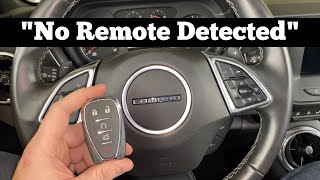
- "No Fob Detected" or "No Remote Key Was Detected Place Key In Transmitter Pocket Then Start Your Vehicle" message on the Driver Information Center (DIC).
- Keyless entry functions (door locks) may be inoperative
- "Service Theft Deterrent System" message on the DIC.
- Replacing the starter motor when the issue is a security system lockout.
- Replacing the vehicle's main 12V battery when the issue is with the key fob or anti-theft system. A low main battery can cause a host of electrical issues, but B3060 specifically points to the key transponder.
Most Likely Causes
- Weak or Dead Key Fob Battery 🔴 High Probability → Shop Vehicle Battery Key fobs constantly emit a low-power signal and batteries have a finite life, typically 2-4 years. This is the most common and simplest failure point.
How to confirm: Try using the vehicle's spare key fob. If the spare key works, the battery in the primary key is the likely culprit. You can also try placing the 'dead' fob in the vehicle's transmitter pocket, which for the 6th Gen Camaro is the rear cupholder in the center console. 🎬 See how to start your Camaro with a dead fob. This allows the car to read the fob's passive transponder chip even with a dead battery.
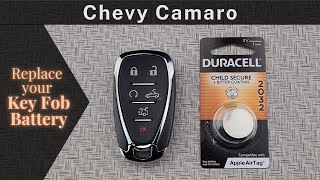
Typical fix: Replace the CR2032 coin battery inside the key fob. 🎬 Watch: Step-by-step guide to replacing your key fob battery.
Est. part cost: $2-$10 - Faulty Key Fob (Transmitter) 🟡 Medium Probability → Shop Keyless Entry Transmitter Key fobs can be damaged by being dropped, exposed to moisture, or from internal electronic failure over time. The internal transponder can fail even if the remote lock/unlock buttons still work.
How to confirm: If a new battery does not solve the issue and the spare key works perfectly, the original key fob has likely failed. A dealership or locksmith can test the fob's signal output.
Typical fix: The faulty key fob must be replaced and the new fob programmed to the vehicle. This may require a professional, although a DIY procedure exists if you have two other functional keys.
Est. part cost: $100-$350 - Radio Frequency (RF) Interference ⚪ Low Probability The immobilizer system operates at 125 kHz, while the remote functions use 315 MHz or 433 MHz. These can be disrupted by other electronic devices, aftermarket chargers, or even other keys on the same ring. GM TSB PIC5650-series specifically calls this out as a common cause of intermittent, hard-to-diagnose security issues.
How to confirm: Remove any other RFID-enabled items from the keychain, such as office key cards, other car keys, or certain payment fobs. Also remove any aftermarket phone chargers or dash cams. If the car starts consistently after removing these items, interference was the cause.
Typical fix: Keep other RFID devices separate from the Camaro's key fob and use high-quality, shielded aftermarket electronics.
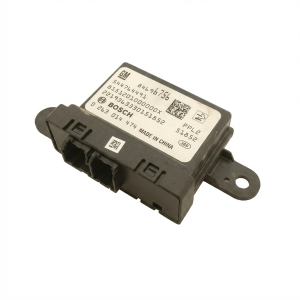
Est. part cost: $0 - Faulty Body Control Module (BCM) ⚪ Low Probability → Shop Body Control Module While not common, the BCM is the central computer for the security system and can fail like any electronic component, causing a wide range of issues. Water intrusion in the trunk area has been known to damage electronics on this platform, potentially affecting the BCM or related wiring.
How to confirm: This is a diagnosis of exclusion. If keys, batteries, and wiring have all been confirmed as good, the BCM is the next suspect. A professional scan tool is needed to check for internal BCM faults and communication errors with other modules.
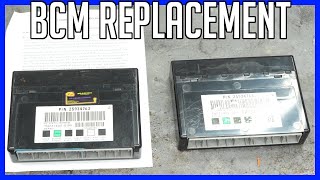
Typical fix: Replace the Body Control Module and program it to the vehicle, which also requires programming the existing keys to the new module. This must be done by a qualified shop or dealership. 🎬 Watch this walkthrough on how a BCM is replaced.
Est. part cost: $300-$700
Rare But Worth Checking
- Faulty Immobilizer Antenna: → Shop Antenna
Diagnosis Steps
- Attempt to start the vehicle with the spare key. If it works, the issue is isolated to the primary key fob or its battery.
- If the primary key fob is suspect, replace the CR2032 battery.
- If the battery change doesn't work, place the key fob flat in the rear cupholder (this is the designated transmitter pocket for the 6th Gen Camaro) and attempt to start the engine. This uses a low-power antenna to read the key directly, bypassing most wireless signal issues.
- Remove all other keys and RFID-enabled cards from the keychain to eliminate potential radio frequency interference, as noted in GM TSB PIC5650M.
- Check for any aftermarket devices plugged into the car (phone chargers, dash cams, etc.) and unplug them to rule out RFI.
- If the vehicle still won't start, use a capable OBD-II scanner to read codes from the Body Control Module (BCM). Confirm B3060 is present and note any other codes (e.g., B3055, B3935).
- If a new key or BCM is required, the component must be installed and then programmed to the vehicle using a GM-specific scan tool and security access. This typically requires a professional technician or a locksmith with advanced tools.
Parts You'll Likely Need
- Key Fob Battery
(OEM #CR2032)— This is the most frequent failure point and the easiest and cheapest to fix.
Trusted brands: Energizer, Duracell, Panasonic
OEM price range: $5-$10
Aftermarket price range: $2-$8 - Keyless Entry Transmitter (Key Fob)
(OEM #13598517 (Supersedes 13594437), 13522891 (FCC ID: HYQ4ES))— If the internal transponder fails, the entire fob must be replaced and programmed. Part numbers can vary by year and options (e.g., convertible top button). Always verify with VIN.
Trusted brands: ACDelco, Dorman
OEM price range: $120-$350
Aftermarket price range: $40-$150 - Body Control Module (BCM)
(OEM #84538239 (Example, verify with VIN))— In rare cases where all other components are verified good, the BCM itself may have failed and requires replacement and programming.
Trusted brands: ACDelco (GM Genuine)
OEM price range: $300-$600
Aftermarket price range: $200-$450 (Remanufactured)
Related Codes That Often Appear With This One
- B3055 — Relates to a problem with the key transponder. Often set together with B3060 as part of the same anti-theft diagnostic event.
- B3935 — Indicates a transponder-related failure, also part of the Pass-Key III+ system diagnostics.
Technical Service Bulletins (TSBs) & Recalls
- PIC5650M: Addresses an intermittent no crank, no start, or start/stall concern with the security light on, specifically mentioning DTCs B3060, B3055, and B3935. It emphasizes diagnosing RFI from aftermarket devices.
Platform-Specific Known Issues
- Per TSB #PIC5650M, this model range can experience intermittent no-start conditions that are difficult to duplicate, often accompanied by codes B3060, B3055, and B3935. The issue is directly related to the vehicle's anti-theft (Pass-Key) system. The TSB strongly advises checking for Radio Frequency Interference (RFI) from aftermarket devices before replacing any modules.
- The transmitter pocket for emergency starting is located in the rear cupholder of the center console, a detail that can be confusing for owners.
Hidden / Shadow Codes Worth Checking
- B3060 00: The '00' is a standard GM symptom byte that specifies the fault as 'Unprogrammed Transponder Identification Code Received'. Seeing this on a dealer scan tool confirms the BCM has received a signal from a key that is not in its learned memory. (see via A professional scan tool capable of reading manufacturer-specific codes and symptom bytes, such as the GM GDS2 (Global Diagnostic System 2).)
Scan Tool Commands That Help
- GM GDS2: Module Diagnostics > BCM > Data Display > Valid Key — Use this function to see if the Body Control Module is recognizing the key being used as valid ('Yes' or 'No'). This is a primary step to confirm if the BCM is receiving and accepting the key's transponder signal.
- GM GDS2: Module Diagnostics > BCM > Configuration/Reset Functions > Immobilizer Learn — This function is required to program new keys, or to reprogram existing keys after a BCM or Theft Deterrent Module replacement. It guides the technician through the security process.
- Manual Procedure (No Scan Tool): 30-Minute Key Relearn Procedure — This procedure can be used to relearn the security system to the key if a scan tool is not available, or after certain component replacements. It involves a sequence of turning the key to 'ON' for 10 minutes, 'OFF' for 30 seconds, and repeating this three times. A stable, fully charged battery is critical for this procedure to succeed.
Wiring & Ground Locations
- BCM Location — Under the driver's side dashboard, typically above the pedals and towards the left kick panel.. The BCM is the central module for the anti-theft system. Physical access is needed for inspection of connectors, replacement, and to check nearby grounds.
- Primary Dash Grounds — Located behind the driver and passenger side lower kick panels. These are often star-shaped grounding points where multiple circuits connect to the chassis.. A poor ground at these locations can cause a host of intermittent electrical issues, including BCM communication failures and false anti-theft events. Cleaning these grounds to bare metal is a common diagnostic step for unexplained electrical gremlins.
- Engine Bay Grounds — Key grounds are located on the inner fenders under the hood and on the engine block itself, often near the alternator or starter.. A loose engine block ground is a known cause of multiple communication (U-prefix) codes and erratic tachometer behavior, which can accompany BCM faults. These grounds provide the main return path for many modules.
- Trunk/Battery Grounds — In the trunk, on the right side near the battery and rear fuse block.. Some modules, including the Remote Control Door Lock Receiver (RCDLR) and potentially a secondary BCM on some trims, are located in the trunk. Poor grounding in this area can affect key fob recognition and other BCM-related functions.
- K9 BCM X1 Connector — This is one of the main connectors on the Body Control Module.. Pin 26 on this connector is specifically designated for the 'Security Indicator Control' on some GM models, directly linking it to the anti-theft system's communication with the instrument panel. A TSB for older models even details re-pinning wires at this connector to solve interference issues.
Real Owner Repair Stories
- Camaro6 Forums user MSU120 (2018 Camaro SS 1LE) — Tachometer bouncing erratically, multiple communication codes including U0126, U0136, U0151.
❌ Tried (didn't work) Shop visually inspected 3 main engine grounds and reported they were good., Checked for melted wiring harnesses near headers.
✅ What actually fixed it The owner found and tightened a loose ground bolt near the alternator, which resolved all symptoms and codes. - YouTube channel 'Track Carz LLC' (6th Gen Camaro (specific year not stated)) — Car went into limp mode on a racetrack with a 'litany of errors' and communication codes after a session in hot weather.
❌ Tried (didn't work) Checking wiring harnesses under the car.
✅ What actually fixed it The BCM located in the trunk was found to be extremely hot from radiant heat from the exhaust. After cooling it with a bag of ice, the issues disappeared. The long-term fix was installing nylon spacers to lift the BCM off the trunk floor, creating an air gap for cooling. - Camaro6 Forums user Nitefall17 (2017 Camaro 1SS Convertible) — Windows would not re-index properly, intermittent no-start like a dead battery, significant battery drain overnight.
❌ Tried (didn't work) Getting a jump start (dash lights went crazy, no start)., Having the main 12V battery tested (it tested good)., Replacing starter and relays.
✅ What actually fixed it The Body Control Module (BCM) was replaced and programmed by the dealer. This resolved the window indexing, starting, and battery drain issues.
"I Checked Everything" — The Actual Cause
- In cases involving a host of intermittent electronic issues and communication codes (U-codes) alongside B3060, a common misstep is a simple visual inspection of ground points. A real-world repair on a Camaro showed that even though a shop reported grounds 'appeared good,' the issue was a loose ground bolt near the alternator that required physical tightening to fix. This highlights that grounds must be mechanically verified (cleaned and tightened) rather than just visually inspected.
OEM Part Supersession History
13594437→13598517— Standard part revision or manufacturer change.
Heads up: The new part number (13598517) is the correct service replacement for the original.
Model Year Variations Within This Range
- 2019-2023 (check by VIN): A 'Body Control Module Enhancement' customer satisfaction program (N232414180) was issued for some vehicles. This involved a software update/reflash of the BCM. If a vehicle exhibits strange electrical behavior, it's critical to check if this or other software updates are pending, as a reflash may solve the issue without hardware replacement.
Helpful Videos

Used OEM Parts in Stock
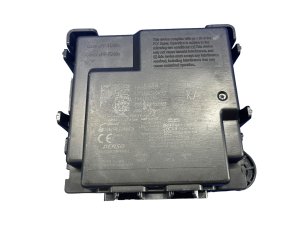
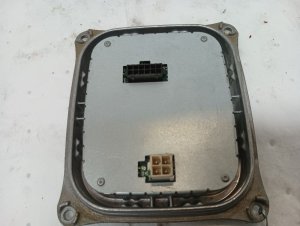
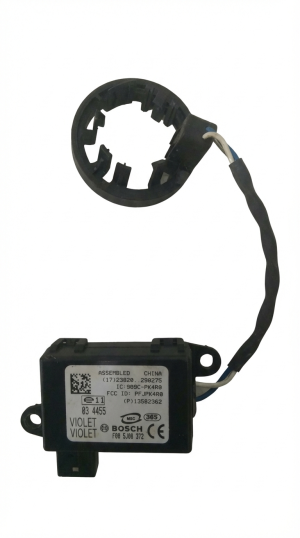
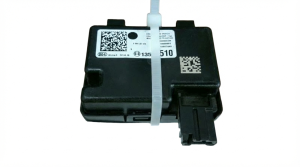
New Aftermarket Parts Available


The information in this article is provided for general reference and educational purposes only. Vehicle specifications, procedures, and part compatibility can vary by production date, trim level, and region. Always consult your vehicle's factory service manual and verify part numbers before purchasing or performing repairs. Safety-critical components such as airbags, seat belts, and braking systems should be installed by a qualified professional.
- Chevrolet CAMARO:
- 🧭 Diagnostic Flowchart
- 🎬 Helpful Videos
- 🛍️ Shop This Part
- What's Unique About the 2019-2024 Chevrolet CAMARO
- Symptoms You May Notice
- Most Likely Causes
- Rare But Worth Checking
- Diagnosis Steps
- Parts You'll Likely Need
- Related Codes That Often Appear With This One
- Technical Service Bulletins (TSBs) & Recalls
- Platform-Specific Known Issues
- Hidden / Shadow Codes Worth Checking
- Scan Tool Commands That Help
- Wiring & Ground Locations
- Real Owner Repair Stories
- "I Checked Everything" — The Actual Cause
- OEM Part Supersession History
- Model Year Variations Within This Range
- 🎟️ Get 5% Off