

B3060 on 2005-2012 Chevrolet Corvette: Causes for 'No Fob Detected' and Fixes
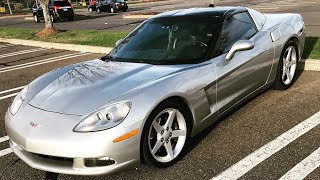
Code B3060 on a C6 Corvette means the car's security system can't recognize your key fob, causing a 'No Fob Detected' message and preventing it from starting. The most common fix is replacing the CR2032 battery in the key fob. If that fails, the issue is often a faulty Remote Control Door Lock Receiver (RCDLR) module, a known weak point on this platform.
- B3060 on a C6 Corvette means your car doesn't recognize the key fob, usually causing a 'No Fob Detected' message and preventing the engine from starting.
- Always start with the easiest and cheapest fix: replace the CR2032 battery in your key fob.
- If a new fob battery doesn't work, try starting the car by placing the fob in the dedicated slot in the glove box. If it starts, the problem is signal reception.
- The most likely component to fail is the Remote Control Door Lock Receiver (RCDLR) located behind the radio. A single click from this area when trying to start is a key symptom of its failure.
- Replacing the RCDLR requires a mandatory 30-minute key fob relearn procedure, which can be done by the owner without special tools.
What's Unique About the 2005-2012 Chevrolet CORVETTE
The C6 Corvette uses a keyless entry and start system that relies on constant communication between the key fob and the Remote Control Door Lock Receiver (RCDLR). This RCDLR module is a known failure point on this platform, often due to internal component failure like transistors or cold solder joints. Unlike cars with a traditional key, where the problem might be the ignition cylinder, on the C6 the issue almost always traces back to the fob, the RCDLR, or radio frequency interference. A GM TechLink article specifically details how an internal RCDLR transistor failure can cause the 'No Fob Detected' message while still allowing the car to start via the glove box slot.
Diagnostic Flowchart
Tap your situation to follow the diagnostic path that matches what you're seeing on this vehicle.
Symptoms You May Notice
- "No Fob Detected" message on the Driver Information Center (DIC).
- Engine will not crank or start when pressing the start button normally.
- Security indicator light is illuminated or flashing.
- Passive entry (doors unlocking as you approach) does not work.
- Remote lock/unlock buttons on the fob are unresponsive.
- Engine starts only when the fob is placed in the glove box slot.
- Audible clicking from the dash area when trying to start, which may be a single click (indicating RCDLR failure) or a series of clicks (normal operation).
- Replacing the starter motor when the issue is a security system no-crank command.
- Replacing the key fob when only the battery is dead or has poor internal contacts.
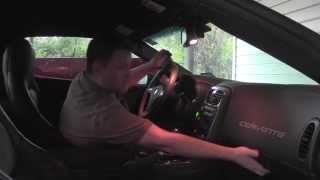
- Assuming the car needs to be towed to a dealer immediately without first trying the glove box slot, which is the designed backup method. 🎬 Watch: How to start your Corvette using the glove box slot.
Most Likely Causes
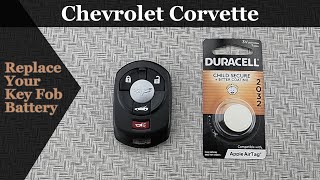
- Weak or Dead Key Fob Battery 🔴 High Probability → Shop Vehicle Battery The CR2032 battery in the fob has a limited lifespan (2-4 years) and its signal strength is critical for the passive entry system. A voltage drop below 3.0V can cause issues.
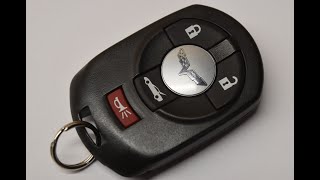
How to confirm: Try the spare key fob. If it works, the battery in the primary fob is the likely culprit. You can also test the battery with a multimeter; it should read above 3.0 volts (a new one is often 3.1-3.3V). Some owners report that simply squeezing the fob case makes a better connection and allows it to work, indicating a poor internal contact.
Typical fix: Replace the CR2032 battery inside the key fob, ensuring the positive side faces down.
Est. part cost: $1-$5 - Faulty Remote Control Door Lock Receiver (RCDLR) 🔴 High Probability → Shop Keyless Entry Receiver The RCDLR module is a known weak point on the C6 Corvette. Internal components like transistors and solder joints can fail over time, often exacerbated by heat cycles in the dashboard. This is documented in GM communications and is a frequent topic in owner forums.
How to confirm: With a known good fob, press the start button and listen for clicks from the RCDLR behind the radio/center console. A single click strongly suggests the RCDLR has failed internally. The car will often start when the fob is in the glove box slot but not from your pocket. The issue can also be temperature-sensitive, failing when cold and working again when the cabin warms up.
Typical fix: Replace the RCDLR module and perform the necessary programming, which includes a module setup with a Tech 2 scanner and a 30-minute security relearn procedure to sync the BCM. Some specialists can repair the board by reflowing solder joints or replacing failed transistors.
Est. part cost: $150-$300 for a used or refurbished module. The part has become difficult to find new. 🎬 Watch: Step-by-step walkthrough for replacing the RCDLR module.
- Radio Frequency (RF) Interference 🟡 Medium Probability The fob operates on a 125 kHz frequency that can be disrupted by other electronics. GM TSB PIC5650 specifically calls out aftermarket devices like cell phone chargers, USB power banks, and even non-OEM LED interior lights as potential sources of RFI that can 'jam' the signal.
How to confirm: Remove all other electronics from the car, especially cell phones, chargers, aftermarket radios (SiriusXM), and radar detectors, then try starting the car again. If it works, one of those devices was causing interference. The problem may also occur only in specific locations, like near radio towers.
Typical fix: Keep interfering devices away from the center console and ignition area. Relocate chargers to different power outlets if possible.
Est. part cost: $0 - Low or Weak Vehicle Battery ⚪ Low Probability → Shop Vehicle Battery C6 Corvettes are known to have a parasitic battery drain when sitting for extended periods. Low system voltage (below 12.4V) can cause unpredictable behavior in various electronic modules, including the BCM and RCDLR, leading to communication errors. A TSB also addresses a software anomaly in the RCDLR that could cause a 30mA parasitic drain, which can be fixed with a reflash.
How to confirm: Test the main vehicle battery voltage. If it is below 12.4 volts, it may not have enough power to operate all modules correctly. Check for clean, tight battery terminals. A dead battery can cause the car to 'forget' the fobs.
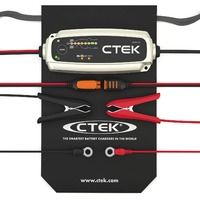
Typical fix: Charge or replace the vehicle's main battery. Using a battery tender is highly recommended if the car is not driven daily. After replacement, a window indexing relearn may be required.
Est. part cost: $150-$250
Rare But Worth Checking
- Corrupted Fob Programming: This can happen randomly but is most common after the vehicle's main battery has been disconnected, replaced, or gone completely dead. The car essentially 'forgets' the fobs. Performing the 30-minute 'long' relearn procedure will resolve this by erasing all fobs and reprogramming them.
- Faulty Body Control Module (BCM): → Shop Body Control Module While less common than an RCDLR failure, the BCM is the central computer that processes the signal from the RCDLR. A failing BCM can cause a no-start and a blank screen on the DIC. A bad run/crank relay on the BCM itself can also be a culprit. This requires advanced diagnostics.
- Loose Fuse Box Terminal: Some owners have traced a no-start condition to a loose female pin terminal for the fuel pump relay in the under-hood fuse block. The pin can get pushed down, causing an intermittent connection. Reseating the pin from underneath the fuse block can solve the issue.
Diagnosis Steps
- Attempt to start the car using your spare key fob. If it works, the issue is with your primary fob (likely the battery or internal contacts).
- Replace the CR2032 battery in the non-working key fob. Ensure it's installed correctly (positive side down) and has a voltage above 3.0V.
- Try starting the car by placing the fob in the slot inside the glove box (buttons facing the passenger door). If the car starts, this confirms the fob's transponder is okay but its long-range signal is not being received.
- Remove all cell phones, chargers, USB devices, and other aftermarket electronics from the car to rule out RF interference, as detailed in TSB PIC5650.
- Check the main vehicle battery. Ensure it is fully charged (above 12.4V) and the terminals are clean and tight. A weak car battery is a common source of electronic gremlins.
- Listen for clicks from the RCDLR (behind the radio) when you press the start button with a known good fob. A single click points to a faulty RCDLR module. A series of clicks is normal.
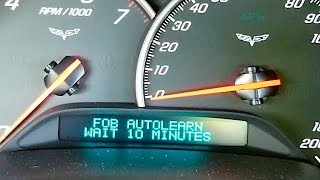
- If a new fob was purchased or the main battery was recently replaced, perform the 30-minute 'long' relearn procedure to reprogram all fobs to the car. This erases all previously known fobs.
- If all else fails, the RCDLR module is the most likely failed component and will need to be replaced. This requires programming with a GM Tech 2 or equivalent scan tool.
Parts You'll Likely Need
- Key Fob Battery
(OEM #CR2032)— This is the most frequent and cheapest fix for the 'No Fob Detected' message due to its limited lifespan.
Trusted brands: Energizer, Duracell, Panasonic
OEM price range: $2-$5
Aftermarket price range: $1-$3 - Remote Control Door Lock Receiver
Related Codes That Often Appear With This One
- B3055 — This code relates to a problem with the key transponder. It is often set alongside B3060 as part of the same anti-theft system fault, as noted in TSB #PIC5650M.
- B3935 — This code indicates a transponder authentication error, directly related to the security system failing to validate the key fob, also mentioned in TSB #PIC5650M.
- U-series codes — If communication is lost between the RCDLR and BCM, or if low vehicle voltage is present, various U-codes (Network/CAN codes) may also be present, indicating a module communication failure.
Technical Service Bulletins (TSBs) & Recalls
- PIC5650M: Mentions B3060 in relation to intermittent no crank/no start and security light issues, primarily caused by Radio Frequency Interference (RFI) from aftermarket devices.
- PIC5961: (Referenced in forums and TechLink articles) Details the 'No Fob Detected' message caused by a faulty RCDLR and provides the diagnostic test of listening for a single click vs. a series of clicks.
- PIC3225J: Provides a guide for the setup procedure after replacing the RCDLR on the related Cadillac XLR platform, outlining the need for Tech 2 programming, theft deterrent relearn, and TPM sensor learn.
- Bulletin 07-06-03-001A (Superseded): Addressed a parasitic battery drain caused by a software issue in the RCDLR, fixed by a re-flash.
Platform-Specific Known Issues
- RCDLR Transistor Failure: A known issue, documented in GM TechLink articles and TSB PIC5961, involves the failure of an internal transistor in the RCDLR module. The key diagnostic sign is hearing only a single click from the module (behind the radio) instead of a series of clicks when attempting to start. The car will still start using the glove box slot. Some owners have noted this failure is sensitive to temperature, occurring in the cold and resolving when the interior warms up.
- Radio Frequency Interference (RFI) Sensitivity: The C6 Corvette is particularly sensitive to RF interference from devices like cell phone chargers and aftermarket LED lights, which can block the key fob signal and trigger this code. TSB PIC5650 provides a long list of potential aftermarket devices that can cause this 'jamming' effect.
- RCDLR Software Update for Parasitic Drain: A separate TSB (superseding 07-06-03-001A) addresses a software anomaly in the RCDLR that can cause a 30mA parasitic battery drain when passive locking is enabled, leading to a dead battery over time. The fix is to reprogram the RCDLR, not replace it.
Mechanic-Grade Diagnostic Values
- Key Fob Battery Voltage — expected: 2.0V - 3.0V. Failure: Voltage below 2.0V indicates a need for replacement.
- RCDLR Connector - Battery Positive Voltage (Circuit 2440) — expected: ~12.4V (matches battery voltage). Failure: Significantly lower voltage (e.g., 11.89V as seen in one case) indicates a power supply issue to the module.
- RCDLR Connector - Ignition 1 Voltage (Circuit 3) — expected: Should be near battery voltage when ignition is commanded ON (by holding start button).. Failure: Reading near 0V (e.g., 0.05V) when ignition should be on points to a problem with the ignition signal from the BCM or wiring.
Scan Tool Commands That Help
- GM Tech 2: Body and Accessories > Keyless Entry > Module Setup — This function is required after installing a new or used RCDLR to begin the process of programming the module to the vehicle's BCM.
- GM Tech 2: Vehicle Control Systems > RCDLR Section > 30-minute code reset — Used to perform the security relearn process that syncs the BCM, RCDLR, and key fobs. This is necessary after RCDLR replacement or if the fobs have been 'forgotten' by the car.
- GM Tech 2: Diagnostics > 2006 > Passenger Car > Y (for Corvette) > Body and Accessories — This is the specific navigation path within a Tech 2 scanner to access the RCDLR and other body modules for a C6 Corvette.
- GM Tech 2: Security Module > Flash and Relearn — If a used RCDLR resists programming via the standard RCDLR setup, this alternative path in the SPS (Service Programming System) can sometimes force the module into relearn mode.
Wiring & Ground Locations
- G202 — At the bottom of the right (passenger side) A-pillar, behind the plastic floor kick-up panel.. This is a major interior ground point. While not directly listed for the RCDLR in all schematics, poor grounding here can cause a host of unpredictable electronic issues in the BCM and other nearby modules that communicate with the RCDLR.
- G104 — On the frame next to the battery in the engine compartment.. This ground point is specifically listed as serving the Remote Control Door Lock Receiver (RCDLR) and the Body Control Module (BCM). Corrosion or looseness at this point is a direct and highly probable cause of RCDLR communication issues.
- SP208 — A splice pack connected to ground G104.. The ground wire from the RCDLR runs to this splice pack before terminating at the main chassis ground G104. A fault within this splice pack can isolate the RCDLR from its ground path.
- RCDLR Connector — Located behind the center of the dashboard, above the radio and climate controls.. This is the main electrical connector for the RCDLR module. Probing specific pins here for battery voltage (Circuit 2440) and ignition voltage (Circuit 3) is a key diagnostic step.
Real Owner Repair Stories
- CorvetteForum user (2006 Corvette Convertible) — No TPMS, fobs won't work remotely, car only starts with fob in the glove box slot.
❌ Tried (didn't work) Installing a used RCDLR which then locked the module and bricked the car temporarily., Attempting the theft deterrent relearn process with a Tech 2, which failed to communicate or showed the module as locked.
✅ What actually fixed it The owner discovered that both key fobs they received with the car were faulty with no RF output. After ordering a new key fob, they were able to successfully complete the 30-minute security relearn procedure using the Tech 2, which solved the problem. The original RCDLR may have been fine all along. - CorvetteForum user (2007 Corvette Z06) — 'No FOB detection' issue lasting for 6 months.
❌ Tried (didn't work) A GM dealer initially stated it was not an RCDLR issue., Purchasing two different used RCDLR modules that could not be programmed by the dealer.
✅ What actually fixed it The owner purchased two more used RCDLRs from a recommended source (eBay). A GM dealer was able to successfully install and program one of the newly acquired used modules, resolving the issue completely. This highlights that even used RCDLRs can be faulty and unprogrammable. - CorvetteForum user (Unknown C6 Corvette) — Intermittent no-start, 'No Fob Detected' message.
❌ Tried (didn't work) Replacing the RCDLR module., Programming new fobs.
✅ What actually fixed it The owner could get the car to start every time by giving the dashboard a 'little tap'. This pointed to a cold solder joint on the RCDLR's circuit board. The ultimate fix was to remove the RCDLR, open the case, and reflow the solder on the header pins connecting the main board. This repaired the intermittent connection without needing to program a new module.
OEM Part Supersession History
Varies by year, e.g., 15853335→Multiple numbers exist. For example, 25821056 was superseded by 25882862, which was then superseded by 25938511.— GM updated the RCDLR module multiple times during the C6 production run to address reliability issues. Some updates were also for use in other GM models.
Heads up: There are different RCDLR units for different model year groups (e.g., 2005, 2006-2007, 2008-2009, 2010-2013). While some claim any C6 unit will work, dealers and forum experience suggest it is critical to match the part number or use the latest superseded part number for your specific model year to ensure it can be programmed correctly.
Model Year Variations Within This Range
- 2005-2007: These early C6 models used a separate key and key fob. The engine was the 6.0L LS2. The RCDLR part numbers are specific to these earlier years.
- 2008-2013: Starting in 2008, the Corvette received the 6.2L LS3 engine and an updated keyless system featuring a new integrated key-and-fob design. The interior trim and RCDLR modules were also revised, meaning parts are not always interchangeable with earlier models.
Helpful Videos

We Have This Part in Stock

The information in this article is provided for general reference and educational purposes only. Vehicle specifications, procedures, and part compatibility can vary by production date, trim level, and region. Always consult your vehicle's factory service manual and verify part numbers before purchasing or performing repairs. Safety-critical components such as airbags, seat belts, and braking systems should be installed by a qualified professional.
- Chevrolet CORVETTE:
- 🧭 Diagnostic Flowchart
- 🎬 Helpful Videos
- 🛍️ Shop This Part
- What's Unique About the 2005-2012 Chevrolet CORVETTE
- Symptoms You May Notice
- Most Likely Causes
- Rare But Worth Checking
- Diagnosis Steps
- Parts You'll Likely Need
- Related Codes That Often Appear With This One
- Technical Service Bulletins (TSBs) & Recalls
- Platform-Specific Known Issues
- Mechanic-Grade Diagnostic Values
- Scan Tool Commands That Help
- Wiring & Ground Locations
- Real Owner Repair Stories
- OEM Part Supersession History
- Model Year Variations Within This Range
- 🎟️ Get 5% Off