

B3060 on 2007-2014 Chevrolet Tahoe: Causes and Fixes for Security System Faults
Code B3060 on a 2007-2014 Tahoe almost always means there's a problem with the Passkey III+ anti-theft system, preventing the vehicle from starting. The most common cause is broken wires inside the ignition lock cylinder housing due to wear and tear from turning the key. Other causes include a faulty key or RF interference. A new ignition lock housing is the most frequent repair.
- B3060 is a security code that will prevent your Tahoe from starting; it is not a mechanical engine problem.
- Before attempting any expensive repairs, try your spare key and remove all other electronic fobs from the keychain to rule out simple fixes.
- The most likely culprit is a broken wire inside the ignition lock cylinder housing; wiggling the key while trying to start can often confirm this diagnosis.
- This is a very common problem across all GM trucks and SUVs from the 2007-2014 era (GMT900 platform).
What's Unique About the 2007-2014 Chevrolet TAHOE
The GMT900 platform, which includes the 2007-2014 Tahoe, uses GM's Pass-Key III+ immobilizer system. This system is known for issues related to the wiring that runs from the ignition lock cylinder to the security module. Over years of use, the simple act of turning the key can cause these thin wires to fatigue and break, leading to intermittent no-start conditions that can be frustrating for owners and technicians to diagnose. This issue is common across the entire GMT900 lineup, including the GMC Yukon, Cadillac Escalade, and Chevrolet Silverado.
Diagnostic Flowchart
Tap your situation to follow the diagnostic path that matches what you're seeing on this vehicle.
Symptoms You May Notice
- Engine does not crank or turn over
- Engine starts and immediately stalls
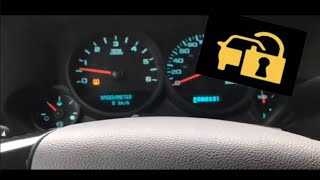
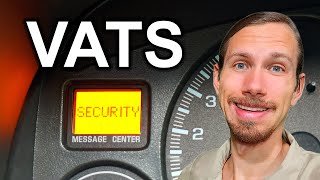
- Security indicator light (a car with a lock symbol) is illuminated or flashing on the dashboard.
- Intermittent no-start condition that may seem random.
- Gauges and door locks may act erratically in some cases, pointing to broader electrical or module communication issues.
- Replacing the battery, starter, or fuel pump without checking for security codes first. The symptoms of a no-crank or start-stall are classic signs of an active anti-theft system.
- Replacing the BCM or TDM before thoroughly checking the ignition lock cylinder wiring, which is a much more common and less expensive failure.
Most Likely Causes
- Worn or Damaged Ignition Lock Cylinder Wiring 🔴 High Probability → Shop Ignition Switch The wires that read the key's transponder are thin and pass through the rotating ignition cylinder. Years of turning the key cause metal fatigue, leading to intermittent breaks in the circuit. This is a well-documented failure point on this platform and its siblings like the Yukon and Escalade.
How to confirm: With the key in the ignition, gently wiggle the key or the wiring harness under the steering column. If the security light goes out or the vehicle suddenly starts, it confirms an intermittent connection. This is the most common diagnostic step mentioned in owner forums.
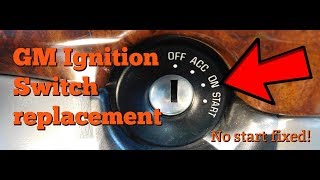
Typical fix: Replacement of the ignition lock cylinder housing, which includes the transponder reader and its wiring pigtail. The part is often sold as an assembly with the ignition switch.
Est. part cost: $50-$150 - Defective or Unprogrammed Ignition Key 🟡 Medium Probability → Shop Ignition Switch The transponder chip embedded in the key head can fail, or a newly cut key may not have been properly programmed to the vehicle. Keys can also be damaged from being dropped.
How to confirm: Attempt to start the vehicle with a different, known-good key. If the vehicle starts and runs normally with the spare key, the original key is the problem.
Typical fix: Replace the faulty key and perform the key relearn procedure. 🎬 Watch: How to program a new anti-theft key for free. This can be done via a 30-minute manual process or with a scan tool at a locksmith or dealer.
Est. part cost: $40-$120 - Radio Frequency (RF) Interference ⚪ Low Probability The Passkey system operates at 125 kHz and can be disrupted by other electronic devices on the keychain, such as office key cards, other vehicle fobs, or even aftermarket accessories like LED lights or phone chargers inside the car. TSB PIC5650M specifically calls this out as a potential cause that should be investigated before replacing parts.
How to confirm: Remove all other keys and electronic devices from the keychain, leaving only the single vehicle key. Attempt to start the vehicle. If it starts consistently, interference was the issue.
Typical fix: Keep RFID-emitting devices separate from the vehicle key.
Est. part cost: $0
Rare But Worth Checking
- Faulty Theft Deterrent Module (TDM) or Body Control Module (BCM): → Shop Anti-Theft Control Module While possible, the control module itself is rarely the point of failure. All other causes, especially wiring and keys, should be exhaustively ruled out before condemning the module. In some cases, a bad ground connection to the BCM can mimic a failed module.
- Poor Ground Connections: Multiple forum users report that corroded or loose ground wires, particularly the main grounds on the frame under the driver's side and on the firewall, can cause a host of electrical issues, including no-start conditions and communication codes like U0100 that may appear with B3060.
Diagnosis Steps
- Scan the Theft Deterrent Module (TDM) and Body Control Module (BCM) for codes. Confirm B3060 is present, and note any other codes like B3055.
- Try starting the vehicle with a known-good spare key. If it works, the primary key is faulty.
- Remove all other fobs, cards, and electronic devices from the keychain to eliminate Radio Frequency (RF) interference as described in TSB PIC5650.
- Observe the security light on the dashboard. A solid or flashing light indicates the anti-theft system is active.
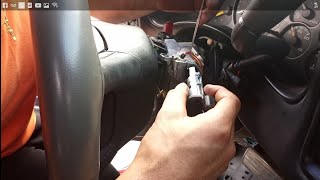
- With the key in the ignition, gently wiggle the key and the attached wiring harness under the steering column cover. If the vehicle starts or the security light flickers, this strongly points to an intermittent connection in the ignition lock cylinder wiring.
- Visually inspect the wiring harness connected to the ignition lock cylinder under the steering column cover for any obvious damage, chafing, or poor previous repairs.
- If the wiggle test is inconclusive, use a multimeter to test for continuity on the two small wires (often white) leading from the transponder reader coil back to the module. An open circuit (OL) when wiggling the harness confirms a broken wire.
- Check major ground points. Ensure the battery cables are clean and tight, and inspect the main chassis ground under the driver's door (G300) and the grounds on the firewall (G103) for corrosion.
- If all wiring, keys, and grounds are confirmed to be good, attempt the 30-minute key relearn procedure. If this fails, the final step is to suspect a faulty TDM or BCM, which requires advanced diagnostics.
Parts You'll Likely Need
- Ignition Lock Cylinder Housing
(OEM #ACDelco D1498E (Switch), ACDelco 15794826 (Cylinder))— This is the most common failure point. The housing contains the transponder reader coil and the fragile wires that break over time, causing the B3060 code. Often sold as a kit with the switch or cylinder.
Trusted brands: ACDelco, Dorman (e.g., 924-716, 924-796), Standard Motor Products (e.g., US618L)
OEM price range: $100-$180
Aftermarket price range: $50-$100 - Transponder Ignition Key — If the chip inside the key has failed, a new key will be required. It must be cut and programmed for the vehicle.
Trusted brands: ACDelco
OEM price range: $60-$120
Aftermarket price range: $30-$70
Related Codes That Often Appear With This One
- B3055 — This code means 'No Transponder Modulation or No Transponder,' indicating the TDM/BCM is not receiving any signal from the key at all, often pointing to a completely broken wire in the ignition lock housing.
- B3935 — This code, 'Transponder Authentication Failed,' can also appear alongside B3060 during security system faults.
Technical Service Bulletins (TSBs) & Recalls
- PIC5650M: Notes an intermittent no crank, no start, or start/stall concern with security light on, listing B3060, B3055, and B3935 as related codes. It specifically advises checking for Radio Frequency Interference (RFI) from aftermarket devices, key fobs, and even LED lights before replacing any parts.
- PIE0232: An engineering information bulletin for 2013 models to gather data on the root cause of no-crank conditions with codes B3055, B3060, or B3935 set.
Platform-Specific Known Issues
- A recall (GM #14696, NHTSA #14V753000) was issued for some 2011-2012 Tahoes for a defective ignition lock actuator that could cause the key to get stuck or move into the accessory position while driving, though this is a separate mechanical issue from the B3060 electronic fault.
- Some owners on forums report success performing a "30-Minute Relearn Procedure" without a scan tool after replacing parts. This involves cycling the key to 'ON' for three consecutive 10-minute intervals.
Hidden / Shadow Codes Worth Checking
- B3060 00: Unprogrammed Transponder Identification Code Received. The '00' is a symptom byte that indicates no additional sub-type information is available, meaning the base code description is the complete failure description. (see via A professional scan tool like a GM Tech2 or GDS2 will display the code with its symptom byte.)
Scan Tool Commands That Help
- GM Tech2/GDS2: Immobilizer/Key Learning — Used to program new keys to the vehicle's Theft Deterrent Module (TDM) after a key or module replacement.
- GM GDS2/SPS2: BCM Programming/Setup — When a new Body Control Module (BCM) is installed, it must be programmed with the vehicle's VIN and configuration using the Service Programming System (SPS).
- GM GDS2: Brake Pedal Position Sensor Learn — This is a required setup procedure after programming a new BCM to calibrate the brake pedal sensor.
- GM GDS2: Setup SDM Primary Key in BCM — This procedure is required after BCM replacement to synchronize the BCM with the Sensing and Diagnostic Module (airbag module), which can prevent an airbag light from illuminating.
Wiring & Ground Locations
- G103 — Located at the left rear of the engine compartment on the cowl, above the brake booster.. This is a primary ground point for the Body Control Module (BCM), Instrument Panel Cluster (IPC), and the Data Link Connector (DLC). A poor connection here can cause a wide range of communication issues, including theft system faults.
- G201 — Located inside the cabin, behind the instrument panel on the driver's side, in the upper corner near the A-pillar.. This is another critical interior ground. Intermittent issues with grounds in this area can cause various electrical gremlins affecting modules located inside the dash.
- G300 — Located under the vehicle at the driver's door, on a body mount.. This chassis ground is often exposed to the elements and can corrode. While not a direct BCM ground, poor chassis grounds can create voltage differentials that affect sensitive electronics.
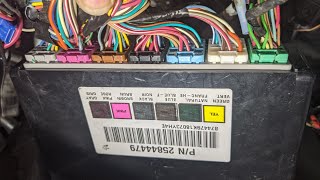
- BCM Connectors — The BCM is typically located under the driver's side dashboard, to the left of the steering column.. The ignition key reader circuit wires run to one of the BCM's several large connectors (often labeled X1 through X7). Checking for backed-out pins or corrosion at these connectors is a valid diagnostic step.
Real Owner Repair Stories
- YouTube channel 'Hands On Auto Training' (2008 Chevrolet Tahoe) — No communication with the Theft Deterrent Module, entire low-speed data bus was down, no PRNDL indicator on the dash.
❌ Tried (didn't work) Attempting to program the module via GM's Service Programming System (SPS) resulted in an error.
✅ What actually fixed it The technician identified that an aftermarket radio was on the same low-speed data bus as the theft module. Pulling the fuse for the aftermarket radio immediately restored communication with the theft module and brought the data bus back online. - Tahoe Yukon Forum user (2008 Yukon Denali) — After 5-10 minutes of driving, the door chime would ring, check engine light on, stabilitrak off, gauges jumping, and transmission locked in limp mode. Multiple codes present.
❌ Tried (didn't work) Multiple attempts to diagnose, issue became progressively worse.
✅ What actually fixed it After subscribing to Alldata, the owner diagnosed a bad ground through the OBD port. By resistance-checking ground cables, the fault was traced and resolved. This highlights how a bad ground can cause widespread, seemingly unrelated module communication failures.
OEM Part Supersession History
15943678 (BCM for 2007 models)→25835966, 20939137, 22860591, among others.— Part has been updated multiple times by GM over the years.
Heads up: A new or used BCM is NOT plug-and-play. It must be programmed with the vehicle's specific VIN and RPO codes using a GM Tech2 or GDS2 scan tool with an active SPS subscription. Failure to program will result in a no-start condition or incorrect operation of vehicle features.
Model Year Variations Within This Range
- 2007-2012 vs 2013-2014: The diagnostic software used at the dealer level changes. Models up to 2013 are typically serviced with the Tech2 scan tool (or its PC-based version, Tech2Win). Newer models from 2013-2014 onwards primarily use the GDS2 (Global Diagnostic System 2) software. While the underlying Passkey III+ system is similar, the tool and interface for diagnostics and programming differ.
Helpful Videos
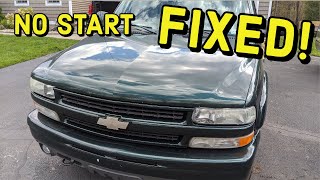
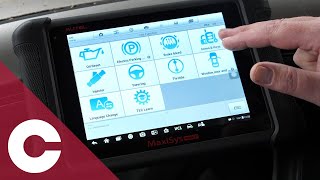
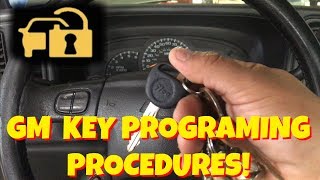


The information in this article is provided for general reference and educational purposes only. Vehicle specifications, procedures, and part compatibility can vary by production date, trim level, and region. Always consult your vehicle's factory service manual and verify part numbers before purchasing or performing repairs. Safety-critical components such as airbags, seat belts, and braking systems should be installed by a qualified professional.
- Chevrolet TAHOE:
- 🧭 Diagnostic Flowchart
- 🎬 Helpful Videos
- What's Unique About the 2007-2014 Chevrolet TAHOE
- Symptoms You May Notice
- Most Likely Causes
- Rare But Worth Checking
- Diagnosis Steps
- Parts You'll Likely Need
- Related Codes That Often Appear With This One
- Technical Service Bulletins (TSBs) & Recalls
- Platform-Specific Known Issues
- Hidden / Shadow Codes Worth Checking
- Scan Tool Commands That Help
- Wiring & Ground Locations
- Real Owner Repair Stories
- OEM Part Supersession History
- Model Year Variations Within This Range
- 🎟️ Get 5% Off