

B3060 on 2007-2014 GMC Acadia: Understanding and Fixing the No-Start Security Code
This code means your Acadia's anti-theft system doesn't recognize your key, causing a no-start or start-and-stall condition. The most common fixes involve checking for interference from other devices on your keychain, trying a spare key, or having a new key programmed. Less common is a faulty ignition switch or Body Control Module (BCM).
- B3060 means your Acadia's anti-theft system has locked you out due to an unrecognized key.
- Before calling a tow truck, try this simple fix: remove all other fobs and cards from your keychain and try starting with just the ignition key.
- If you have a spare key, try it. If the spare works, your primary key is the problem.
- This is not a DIY-friendly repair beyond the simple steps above. Key and module programming requires special tools.
- Do not mistakenly replace the battery or starter; the security light and B3060 code are clear pointers to the immobilizer system.
What's Unique About the 2007-2014 Gmc ACADIA

For the first-generation GMC Acadia and its GM Lambda siblings (Buick Enclave, Chevy Traverse, Saturn Outlook), this B3060 code is a well-documented issue, often presenting as a frustrating, intermittent no-start problem. The Passkey III+ system used is known to be highly sensitive to Radio Frequency Interference (RFI). GM has issued multiple Technical Service Bulletins (TSBs) that highlight how easily the system can be disrupted by other fobs, RFID tags on the owner's keychain, or even aftermarket electronics like LED lights and phone chargers. Before suspecting major component failure, the official diagnostic path for this vehicle strongly emphasizes isolating and removing these potential interference sources.
Diagnostic Flowchart

Tap your situation to follow the diagnostic path that matches what you're seeing on this vehicle.
Symptoms You May Notice

- Engine will not crank or turn over (no-start).
- Engine starts briefly and then immediately shuts off (start-and-stall).
- The security light (an icon of a car with a lock) is illuminated or flashing on the instrument cluster.
- A "Service Theft Deterrent System" message may appear on the Driver Information Center (DIC).
- Rapid clicking noise from relays when trying to start, even with a good battery.
- Replacing the battery. While a no-start can be a battery issue, the presence of a security light and code B3060 points specifically to the anti-theft system.
- Replacing the starter. A bad starter will typically result in a click but no crank, but it will not trigger a security-related DTC like B3060.
- Replacing the fuel pump. A start-and-stall can feel like a fuel issue, but with B3060, the stall is commanded by the security system disabling the fuel injectors, not a lack of fuel pressure.
Most Likely Causes

- Radio Frequency Interference (RFI) 🔴 High Probability The Passkey system's exciter coil in the ignition has a short range and can be easily overpowered by other signals operating near its 125 kHz frequency. TSBs PIC5650M and PIC5650C specifically call this out, listing items like toll passes, other vehicle fobs, work access cards, and even aftermarket LED lighting or USB chargers as potential sources of interference.
How to confirm: Remove all other keys, fobs, and RFID cards from the Acadia's key ring. Try starting the vehicle with the key completely isolated. If it starts reliably, RFI was the cause. This is the first step recommended by GM technicians.
Typical fix: Keep the vehicle key on its own ring or ensure no other RFID-emitting devices are near the ignition switch when starting. Instructing the customer on this is a key part of the official repair procedure.
Est. part cost: $0 - Unprogrammed or Faulty Key 🔴 High Probability Using a newly cut key that hasn't been through the vehicle's key relearn procedure, or damage to the transponder chip in an existing key (e.g., from being dropped), are common triggers.
How to confirm: Try starting the vehicle with a known-good spare key. If the spare key works reliably, the original key is faulty or unprogrammed.
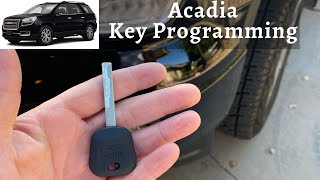
Typical fix: The faulty key needs to be replaced and/or a key relearn procedure must be performed. A DIY 30-minute relearn procedure is available: Turn the key to 'ON' for 10 minutes until the security light turns off, turn the key off for 5-10 seconds, and repeat this for a total of three 10-minute cycles. After the third cycle, the key should be learned. 🎬 Watch: A step-by-step walkthrough of the DIY key programming process. A locksmith or dealer can also program keys with a scan tool.
Est. part cost: $50-$150 for a new transponder key and programming. - Worn or Faulty Ignition Lock Cylinder 🟡 Medium Probability → Shop Ignition Switch The ignition lock cylinder houses the exciter coil that reads the key's transponder. Over time, the wiring or the coil itself can fail, leading to an inability to read the key. This is a known failure point on GM vehicles of this era.
How to confirm: A technician can test the resistance and signal output from the exciter coil circuit. Wiggling the key in the ignition may also cause the fault to appear or disappear, pointing to a connection issue within the cylinder or its wiring.
Typical fix: Replacement of the ignition lock cylinder and performing a key relearn procedure.
Est. part cost: $100-$250 - Failing Body Control Module (BCM) ⚪ Low Probability → Shop Body Control Module The BCM is the brain of the immobilizer system on this platform. While less common, internal BCM failure due to electrical issues or age can cause this code and other bizarre electrical gremlins.
How to confirm: This is a diagnosis of exclusion. If the keys, RFI, and ignition cylinder circuitry all check out as good, the BCM is the likely culprit. A technician can use a scan tool to check for communication errors with the BCM and see if it is commanding the security system active.
Typical fix: Replacement and programming of the Body Control Module. This must be programmed with the vehicle's VIN.
Est. part cost: $300-$600
Rare But Worth Checking
- Damaged Wiring or Poor Connections:
Diagnosis Steps
- Check for a security light on the dashboard. Its presence is a key indicator.
- Scan for DTCs to confirm B3060 and any other related codes like B3055 or B3935.
- Isolate the key. Remove all other keys, fobs, and RFID tags from the ignition key ring and try to start the vehicle again.
- Try a spare key. Attempt to start the vehicle with a known-good spare key. If it starts, the first key is the problem.
- Perform the 30-minute key relearn procedure. This can reprogram a key that has lost its sync. It involves three 10-minute cycles of turning the key to 'ON' until the security light goes out.
- Inspect the ignition lock cylinder wiring. Check for any visible damage to the wires running from the ignition cylinder down the steering column.
- Test the ignition lock cylinder's exciter coil circuit for proper resistance and signal with a multimeter.
- If all other components are verified as good, the final step is to diagnose the Body Control Module (BCM) for internal failure, which typically requires a professional scan tool.
Parts You'll Likely Need
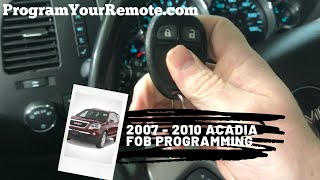
- Transponder Ignition Key — The most common cause is a faulty or unprogrammed key. A new key must be cut and electronically programmed to the vehicle. 🎬 Watch: How to program a replacement remote key fob yourself.
Trusted brands: ACDelco, JMA, GM Genuine Parts
OEM price range: $60-$100
Aftermarket price range: $25-$50 - Ignition Lock Cylinder with Passkey
(OEM #22739738)— If the exciter coil within the cylinder fails, it cannot read the key. This part contains that reader.
Trusted brands: ACDelco, Standard Motor Products, Locksmart LC63830
OEM price range: $150-$200
Aftermarket price range: $80-$130 - Body Control Module (BCM)
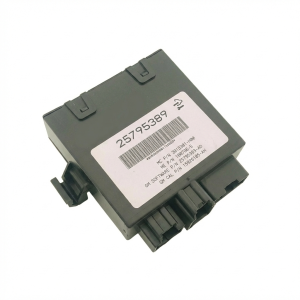
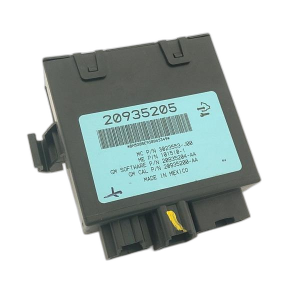
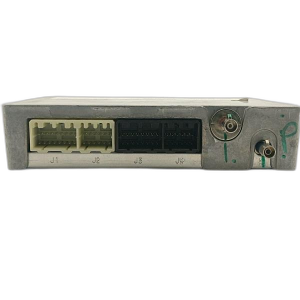
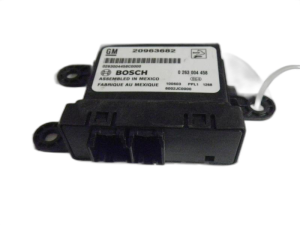
(OEM #20864767, 13512679, 84922494)— As a last resort, the BCM, which controls the security logic, may have failed. It requires programming by a dealer or qualified shop upon installation, though some vendors sell pre-programmed units.
Trusted brands: ACDelco (GM Genuine), Dorman (Remanufactured)
OEM price range: $300-$500
Aftermarket price range: $250-$400 (Remanufactured)
Related Codes That Often Appear With This One
- B3055 — B3055 (No Transponder Modulation or No Transponder) is often set alongside B3060. It indicates a problem with the key itself or the signal from it, which is a precursor to the B3060 'unprogrammed' logic. They are frequently mentioned together in TSBs.
- B3935 — B3935 (Transponder Authentication Error) is another related security code that can appear with B3060, indicating a failure in the handshake process between the key and the vehicle's security module.
Technical Service Bulletins (TSBs) & Recalls
- PIC5650M: Mentions intermittent no crank/no start with security light on, and lists B3060 as a potential code. It advises checking for RFI from a long list of devices including toll passes, other fobs, and aftermarket LEDs.
- PIC5650B/C: Earlier versions of the same TSB, confirming this has been a known issue for many years across a wide range of GM vehicles including the Acadia, Enclave, and Traverse.
- PIE0232: An engineering information bulletin asking technicians to gather data on low-mileage vehicles with codes B3055, B3060, or B3935, showing that GM was actively investigating the root cause.
Platform-Specific Known Issues
- This vehicle platform is known for intermittent security system issues that can be difficult for technicians to duplicate, as noted in TSB PIC5650M. The bulletin advises technicians to ask the customer about RFID devices on their keychains if the problem cannot be reproduced at the dealership.
- A user on acadiaforum.net reported a recurring B3060 code that was ultimately traced to a faulty igniti
Mechanic-Grade Diagnostic Values
- Ignition Lock Cylinder Transponder Reader Coil Resistance — expected: 18 to 24 Ohms. Failure: A reading outside this range, or an open circuit (OL), indicates a faulty coil.
- Scan Tool Live Data: 'TDM Valid Key' Parameter — expected: Should read 'Yes' when a known good, programmed key is in the ignition and turned to ON.. Failure: If the parameter reads 'No' or 'Not Detected' with a key that should be programmed, it points to a problem with the key's transponder, the reader coil, or the BCM's ability to process the signal.
Scan Tool Commands That Help
- GM Tech 2 / GDS2: Immobilizer Data / TDM Data — Use this function to view live data parameters related to the theft deterrent system, such as 'TDM Valid Key', 'Number of Learned Keys', and 'Key Status' to determine if the BCM is recognizing the key being used.
- GM Tech 2 / GDS2: Setup SDM Primary Key in BCM — This function is mandatory after replacing the Body Control Module (BCM). Failure to perform this step will result in a no-start condition and likely set security-related DTCs, as the new BCM will not be synchronized with the vehicle's other security modules.
- GM Tech 2 / GDS2: Add/Replace Keys — This is the professional method for programming new keys to the vehicle. It is faster and more reliable than the 30-minute manual relearn procedure and is required if all keys are lost and a manual relearn is not possible or fails.
Wiring & Ground Locations
- G218 — Under the driver's side of the instrument panel, often near the base of the A-pillar.. This is a primary ground for the Body Control Module (BCM). A GM Technical Service Bulletin (PIT5405C) identifies a poor connection at G218 as a cause for no-start conditions. The failure can be a loose nut or, more subtly, the dash insulator mat getting trapped between the ground eyelet and the body, preventing a solid connection.
- G103 — On the left side of the engine compartment, on the cowl/firewall, often above the brake booster.. On earlier models (approx. 2007-2012), this serves as a key ground point for the BCM and Instrument Panel Cluster (IPC). A poor connection here can cause a wide range of electrical issues, including communication problems within the theft deterrent system.
- G300 — Behind the right-side kick panel in the passenger footwell.. On later models (approx. 2013-2014), this is a specified ground location for the Body Control Module. Corrosion or looseness at this point can interrupt BCM function and trigger security faults.
- Ignition Switch Connector — On the steering column, connected to the ignition lock cylinder housing.. This connector contains the two wires for the transponder reader coil (exciter coil). A visual inspection for pushed-out pins, corrosion, or damage to this harness is a critical step before replacing the lock cylinder itself.
Real Owner Repair Stories
- Reddit user in r/MechanicAdvice (2000 Chevy Impala (uses similar Passlock/Passkey system)) — Solid security light on, no crank, no start. The usual 10-minute relearn procedure did not work, even when repeated.
❌ Tried (didn't work) 30-minute key relearn procedure (repeatedly), Using a spare key, Starting in Neutral, Manually unlocking the door with the key
✅ What actually fixed it The user was advised to attempt a resistor bypass of the Passlock system, indicating a failure in the lock cylinder's sensor that the relearn procedure could not fix. The final outcome was not posted, but it highlights a scenario where the relearn is ineffective. - Car Talk Community user (2011 GMC Acadia) — No start from key after an engine replacement. The security system appeared to be active. The engine could be started by a mechanic by bypassing the system, but not with the key.
❌ Tried (didn't work) Key programming by multiple locksmiths
✅ What actually fixed it The owner was advised that the issue was likely a module mismatch between the new engine's components and the vehicle's original BCM/security system that locksmiths could not resolve. The recommended solution was to go to a GM dealer for specialized programming to sync the modules. - Reddit user in r/ChevyTrucks (GM Truck with Passlock system) — After replacing the ignition cylinder, the truck started but had a solid security light. Four days later, it developed a no-crank, no-start with a single click. The security light remained solid and would not flash or go away.
❌ Tried (didn't work) 30-minute key relearn procedure (multiple times), Disconnecting the battery overnight
✅ What actually fixed it The user replaced the entire steering column, and the truck started immediately without a relearn. However, the problem returned the next day. This unresolved story is valuable because it demonstrates a persistent issue where even major component replacement and standard relearn procedures fail, pointing towards an underlying wiring or BCM communication fault.
OEM Part Supersession History
15901388, 25835966, 25934762, and others→20864767, 22860591— GM consolidates part numbers over time, with newer revisions offering software updates and potentially more robust hardware components to address known failure points.
Heads up: When replacing a BCM, it is critical to have the new module programmed to the vehicle's VIN. An unprogrammed module, even if it is the correct part number, will not allow the vehicle to start and will set security codes.
Model Year Variations Within This Range
- 2007-2012 vs 2013-2014: The specific location of the primary BCM ground point may differ. Wiring diagrams for earlier models often point to G103 on the firewall as a key BCM ground. Diagrams for the facelifted 2013+ models show G300 behind the passenger kick panel as a BCM ground. While G218 under the dash is a common ground point across the generation, technicians should verify the correct diagram for the specific year they are working on.
Helpful Videos
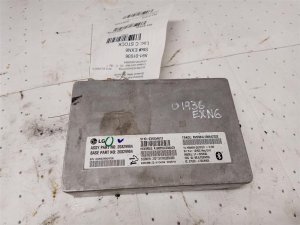
We Have This Part in Stock

The information in this article is provided for general reference and educational purposes only. Vehicle specifications, procedures, and part compatibility can vary by production date, trim level, and region. Always consult your vehicle's factory service manual and verify part numbers before purchasing or performing repairs. Safety-critical components such as airbags, seat belts, and braking systems should be installed by a qualified professional.
- Gmc ACADIA:
- 🧭 Diagnostic Flowchart
- 🎬 Helpful Videos
- 🛍️ Shop This Part
- What's Unique About the 2007-2014 Gmc ACADIA
- Symptoms You May Notice
- Most Likely Causes
- Rare But Worth Checking
- Diagnosis Steps
- Parts You'll Likely Need
- Related Codes That Often Appear With This One
- Technical Service Bulletins (TSBs) & Recalls
- Platform-Specific Known Issues
- Mechanic-Grade Diagnostic Values
- Scan Tool Commands That Help
- Wiring & Ground Locations
- Real Owner Repair Stories
- OEM Part Supersession History
- Model Year Variations Within This Range
- 🎟️ Get 5% Off