

B3060 on 2015-2022 GMC Acadia: Unprogrammed Key, No Start Causes & Fixes
Code B3060 on a GMC Acadia means the vehicle's security system doesn't recognize the key being used. This results in a no-start and a security light. The most common cause is using a new, unprogrammed key or interference from other devices on your keychain. Trying a spare key or removing other fobs from the ring often resolves the issue.
- B3060 means your Acadia's anti-theft system has locked you out because it doesn't recognize the key.
- Before calling a mechanic, try this: remove all other fobs and cards from your keychain and try the key by itself. This solves interference issues.
- If you have a spare key, try it. If the spare works, your primary key is likely broken and needs replacement.
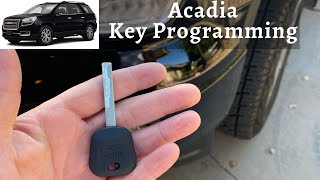
- Any new key MUST be electronically programmed to the vehicle by a locksmith or dealer; simply cutting the key is not enough.
What's Unique About the 2015-2022 Gmc ACADIA
For the GMC Acadia and its platform mates (like the Chevy Traverse and Buick Enclave), the Pass-Key III+ immobilizer system is highly sensitive to radio frequency interference (RFI). A widely circulated GM Technical Service Bulletin (PIC5650 and its revisions) explicitly warns that RFID devices like building access cards, gas station speed-pass fobs, or even other car keys on the same keychain can block the key's 125 kHz signal. This makes 'keychain clutter' a surprisingly common cause of a no-start condition that can be misdiagnosed as a faulty key or module.
Diagnostic Flowchart
Tap your situation to follow the diagnostic path that matches what you're seeing on this vehicle.
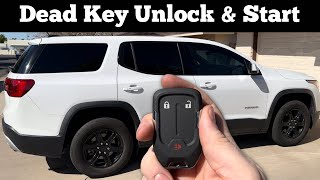
Generation note: This range covers two generations of the GMC Acadia. The 1st Gen (2015-2016) uses a traditional bladed key with a 'Circle Plus' PK3+ transponder chip. The 2nd Gen (2017-2022) more commonly uses a keyless fob with push-button start. For 2nd Gen models, a dead fob battery is a common cause; a workaround is to place the fob in a specific transmitter pocket, usually in the bottom of the center console cupholder 🎬 Watch: How to start your Acadia with a dead fob battery., to allow the vehicle to start.
Symptoms You May Notice
- Engine will not crank or start.
- Engine starts briefly and then immediately shuts off.
- Security light is on solid or flashing on the instrument cluster.
- On keyless models, the Driver Information Center may show a 'No Remote Detected' or 'Place Key In Transmitter Pocket' message.
- On some models, the door locks may cycle erratically when the fault occurs.
- Replacing the battery
- Replacing the starter motor
- Replacing the Engine Control Module (ECM)
Most Likely Causes
- Radio Frequency Interference (RFI) from other devices 🔴 High Probability As noted in GM TSB PIC5650M, the vehicle's immobilizer system is sensitive to interference from other RFID-enabled cards or fobs on the keychain. These devices can operate in a similar frequency range (120-135 kHz) and disrupt the key's signal.
How to confirm: Remove all other keys, access cards, and fobs from the keychain so you are only holding the single vehicle key. Attempt to start the vehicle again. If it starts, RFI was the cause.
Typical fix: Keep the vehicle key separate from other RFID devices to prevent future interference. No parts are required.
Est. part cost: $0 - Using a new, unprogrammed, or incorrect key 🔴 High Probability
How to confirm: This code will appear immediately if you attempt to use a newly cut key that has not been electronically programmed to the vehicle. Confirm if the key in question is a recent replacement or copy.
Typical fix: The new key must be programmed to the vehicle's immobilizer system using a compatible diagnostic scan tool. This is typically done by an automotive locksmith or a dealership.
Est. part cost: $0 (if key is already owned) - Defective or damaged key transponder 🟡 Medium Probability
How to confirm: Try starting the vehicle with a known-good spare key. If the spare key works consistently and the primary key does not (even when isolated from other fobs), the transponder chip in the primary key is likely faulty or damaged.
Typical fix: Replace the faulty key. The new key will need to be cut and programmed to the vehicle.
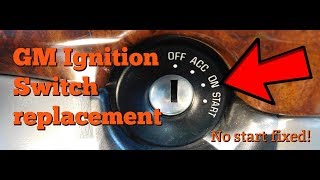
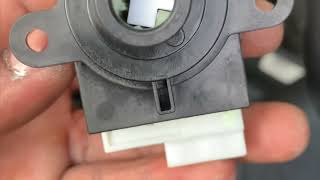
Est. part cost: $70-$250 - Faulty Ignition Switch / Reader Coil ⚪ Low Probability → Shop Ignition Switch On 1st generation models (up to 2016), the ignition switch which contains the reader coil can fail, causing intermittent starting issues and sometimes stalling while driving.
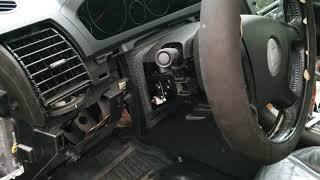
How to confirm: If multiple known-good keys fail to start the vehicle, the problem may be with the reader coil (exciter) that surrounds the ignition cylinder. A technician can use a scan tool to check if the Theft Deterrent Module is receiving any signal from the key. A user on YouTube documented replacing the switch to fix 🎬 Watch: Step-by-step guide to replacing the ignition switch assembly. stalling and starting issues.
Typical fix: Replace the ignition switch assembly. The system may need to be relearned afterward.
Est. part cost: $20-$50 for the switch, plus labor.
Rare But Worth Checking
- Failing Body Control Module (BCM) or Theft Deterrent Module (TDM): → Shop Anti-Theft Control Module While uncommon, the module responsible for reading the key and enabling the start can fail. This is usually suspected only after all key, interference, and wiring issues have been ruled out. Symptoms often include other bizarre electrical issues like flickering lights, random warning messages, or a parasitic battery drain. A scan tool showing no communication with the BCM/TDM would point to this.
Diagnosis Steps
- Verify B3060 is the primary code. Check for other codes like B3055 or B3935.
- Isolate the Key: Remove the vehicle key from the keychain, separating it from ALL other keys, fobs, and RFID cards. Try to start the engine. This is the most common and easiest fix.
- Try the Spare Key: If the isolated key fails, try the vehicle's spare key (also isolated). If the spare key works, the first key is defective and needs replacement.
- Check Keyless Fob Battery/Pocket (2017+ models): For push-to-start models, a 'No Remote Detected' message may indicate a weak fob battery. Place the key fob in the designated transmitter pocket (usually at the bottom of the center console cupholder) and attempt to start.
- Attempt a 'Security Relearn' procedure. There are two common GM methods: 1) 30-Minute Relearn: Turn the ignition to ON (do not start) for 10-11 minutes, or until the security light turns off. Turn the ignition OFF for 30 seconds. Repeat this cycle two more times for a total of three 10-minute ON cycles and three OFF cycles. After the third cycle, try to start the engine. 2) 10-Minute Relearn: Insert a working master key and turn to ON. The security light will illuminate. When it turns off (after about 10 mins), turn the key OFF. Within 10 seconds, insert the new key and turn to ON. The security light should turn off quickly, indicating the new key is learned.
- If the code persists, professional diagnosis is required. An automotive locksmith or dealer will need to use a scan tool to attempt to program the key(s) to the vehicle's BCM/TDM.
- If programming fails, a technician must diagnose the ignition reader coil, associated wiring, and the BCM/TDM itself for faults.
Parts You'll Likely Need
- Transponder Key (1st Gen, 2015-2016)
(OEM #23372322, 15824471, 89024363)— For the earlier generation, the transponder chip in the bladed key can fail. This key uses the PK3+ 'Circle Plus' system.
Trusted brands: ACDelco, Strattec
OEM price range: $40-$80 (unprogrammed)
Aftermarket price range: $15-$30 (unprogrammed) - Keyless Smart Fob (2nd Gen, 2017-2022)
(OEM #13508275, 13584513 (FCC ID: HYQ1EA))— For the later generation, the entire fob may fail or require replacement if lost. A dead battery (CR2032 or CR2450) is also a common issue but is a much cheaper fix.
Trusted brands: ACDelco (GM Genuine), Various aftermarket
OEM price range: $100-$200 (unprogrammed)
Aftermarket price range: $50-$90 (unprogrammed) - Ignition Switch (1st Gen, 2015-2016)
(OEM #20965947)— If multiple keys fail and RFI is ruled out, the ignition switch containing the reader coil may be faulty. This is more common on the 1st gen models.
Trusted brands: ACDelco, Standard Motor Products
OEM price range: $20-$40
Aftermarket price range: $19-$25
Related Codes That Often Appear With This One
- B3055 — This code means 'No Transponder Identification Code Received'. It often appears with B3060, indicating the module either received no signal or an incorrect one. Both are cited in TSB PIC5650M.
- B3935 — This code means 'Transponder Authentication Failed'. It is another closely related security code that can be set along with B3060 during a key recognition failure, as cited in TSB PIC5650M.
Technical Service Bulletins (TSBs) & Recalls
- PIC5650M: Addresses intermittent no crank, no start, or start stall with security light on and DTCs B3055, B3060, or B3935, often related to RFI.
- PIC5650B: An earlier version of the same TSB, which explicitly lists the 2007-2015 Acadia, Traverse, Enclave, and many other GM models as being affected by potential RFI issues causing these codes.
- 21-NA-183: Addresses potential water intrusion into the BCM on 2017-2022 Acadias from a leaking HVAC drain, which can cause various electrical faults including immobilizer issues.
Platform-Specific Known Issues
- A Technical Service Bulletin (PIC5650M and its predecessors like PIC5650B) was issued for a wide range of GM vehicles, including the Acadia, for an intermittent no-crank/no-start with security light on and DTCs B3055, B3060, or B3935. The bulletin highlights radio frequency interference as a primary cause that dealers should investigate before replacing parts. It advises service technicians to ask customers about any RFID cards or devices on their keychains.
- For 2nd Gen Acadias (2017-2022), GM issued service bulletin 21-NA-183 regarding water intrusion into the Body Control Module (BCM) from a leaking HVAC drain hose. This can cause a host of electrical issues, including immobilizer problems and various 'U' (communication) codes, which could potentially be a root cause for a B3060 if the BCM is damaged.
Hidden / Shadow Codes Worth Checking
- B3060 00: The '00' is a symptom byte indicating 'No Sub Type Information'. This means the main fault code 'B3060' provides the complete description of the failure, which is 'Unprogrammed Transponder Identification Code Received'. It confirms the issue is a direct key recognition failure rather than a circuit fault. (see via A professional scan tool like GM GDS2 or a high-end aftermarket scanner capable of reading manufacturer-specific codes and symptom bytes.)
Scan Tool Commands That Help
- GDS2 (GM Diagnostic Software): Immobilizer Learn / Key Programming — This function is required after replacing a key, the BCM, or the TDM. It guides the technician through the process of adding new keys to the vehicle's memory. Access is typically required through the TIS2Web online portal for security.
- GDS2 (GM Diagnostic Software): Module Diagnostics > BCM > Data Display — To monitor live data from the Body Control Module. A technician can view parameters like 'Immobilizer Key Status' or 'Number of Programmed Keys' to see if the module is recognizing key-on events and how it's classifying the key being presented.
- GDS2 (GM Diagnostic Software): Vehicle DTC Information > Clear All DTCs — After a repair (like isolating the key from RFI or successfully reprogramming), this command is used to clear the B3060 code. A history DTC will clear on its own after 100 malfunction-free ignition cycles, but clearing it with a scan tool provides immediate confirmation of the fix.
Wiring & Ground Locations
- G218 — For 1st Gen models (2015-2016), this critical ground for the BCM is located under the driver's side of the dash, to the left of the steering column. A similar ground location (G218) on related GM truck platforms is behind the driver's side kick panel, where insulation can get trapped under the ground nut, causing a poor connection.. A poor BCM ground can cause a multitude of intermittent electrical issues, including no-start conditions and false security system activation. TSB PIT5405C on related GM models lists a poor G218 as a primary cause for stalling, no-start, and various communication DTCs.
- BCM Location (2nd Gen) — For 2nd Gen models (2017-2022), the Body Control Module (BCM) is typically located in the center console area, accessible from the passenger side footwell after removing trim panels.. This is the location to inspect for water damage as described in TSB 21-NA-183. Water intrusion from a leaking HVAC drain can directly damage the BCM, causing this code and other failures.
- Theft Deterrent Module (TDM) Connector — On 1st Gen models, the TDM is located under the driver's side of the dash. A wiring diagram for a 2011 Acadia shows it has a connector with a Pink (Ignition Voltage) wire, a Black/White (Ground) wire, and a Dark Green (Low Speed GMLAN Serial Data) wire.. A technician would test these pins to verify the module is receiving power, has a good ground, and is able to communicate on the vehicle's data network before condemning the module itself.
Real Owner Repair Stories
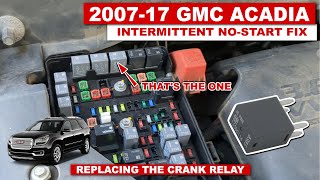
- YouTube user 'Greasy Finger Garage' (GMC Acadia (1st Gen platform)) — Intermittent no-start. Sometimes it starts fine, other times turning the key does absolutely nothing; no clicking, no cranking, but dash lights come on.
❌ Tried (didn't work) The owner assumed the battery was good and did not have a dying battery issue.
✅ What actually fixed it The owner identified the 'crank' relay in the underhood fuse box as a common failure point for these symptoms. He replaced the crank relay (a cheap, plug-and-play part) to resolve the intermittent no-start condition. He also noted that as a quick test, one could swap the crank relay with the identical rear defroster relay to see if the problem follows the relay.
OEM Part Supersession History
92184907→20965947— Part was updated/revised by the manufacturer.
Heads up: Part 20965947 is the correct replacement ignition switch for the 1st Gen Acadia (2015-2016).13508275→13523305— Part was updated/revised by the manufacturer for 2nd Gen Acadia key fobs.
Heads up: Both part numbers are often listed as compatible for the 2017-2023 Acadia, along with Strattec P/N 5944135. They share the same FCC ID (HYQ1EA) and frequency (433 MHz).
Model Year Variations Within This Range
- 2017-2022: The Body Control Module (BCM) is susceptible to water damage from a leaking HVAC drain hose, a condition not documented for the 1st generation. GM issued TSB 21-NA-183 to address this, which requires inspection and potential replacement of the BCM, which is located in the passenger side of the center console.
- 2015-2016: The primary BCM ground point, G218, is a known issue on this platform. It is located under the driver's side dash and can cause a no-start if the connection is loose or corroded.
Helpful Videos
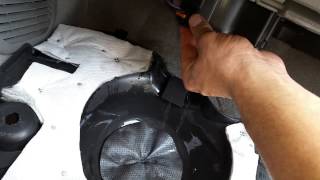
We Have This Part in Stock
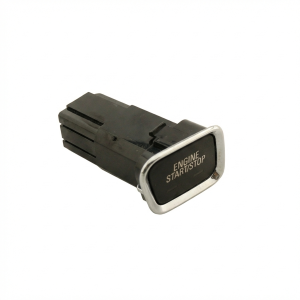

The information in this article is provided for general reference and educational purposes only. Vehicle specifications, procedures, and part compatibility can vary by production date, trim level, and region. Always consult your vehicle's factory service manual and verify part numbers before purchasing or performing repairs. Safety-critical components such as airbags, seat belts, and braking systems should be installed by a qualified professional.
- Gmc ACADIA:
- 🧭 Diagnostic Flowchart
- 🎬 Helpful Videos
- 🛍️ Shop This Part
- What's Unique About the 2015-2022 Gmc ACADIA
- Symptoms You May Notice
- Most Likely Causes
- Rare But Worth Checking
- Diagnosis Steps
- Parts You'll Likely Need
- Related Codes That Often Appear With This One
- Technical Service Bulletins (TSBs) & Recalls
- Platform-Specific Known Issues
- Hidden / Shadow Codes Worth Checking
- Scan Tool Commands That Help
- Wiring & Ground Locations
- Real Owner Repair Stories
- OEM Part Supersession History
- Model Year Variations Within This Range
- 🎟️ Get 5% Off