

B3060 on 2007-2011 GMC Yukon Denali: Causes of Security Light and No-Start Issues
On a 2007-2011 GMC Yukon Denali, code B3060 means the anti-theft system doesn't recognize the ignition key, causing a no-start and security light. The most common fix is trying a spare key or performing the 30-minute key relearn procedure. If that fails, check for RF interference from accessories, then suspect the ignition switch assembly. A failing BCM is a less common but possible cause.
- B3060 means your Yukon's security system has locked you out because it doesn't recognize your key.
- Before spending any money, try starting the truck with all other fobs and electronics removed from your keychain.
- Your next step should be to try a spare key. If that doesn't work, attempt the 30-minute key relearn procedure found online.
- If a relearn doesn't work, the problem is likely a physical part, with the ignition lock cylinder/reader being the most common failure point.
- Do not replace the starter or fuel pump; they are almost certainly not the cause of this specific code.
What's Unique About the 2007-2011 Gmc YUKON DENALI
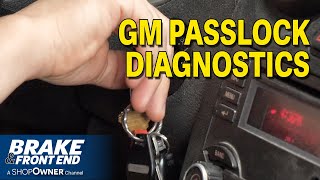
The 2007-2011 Yukon Denali uses GM's PassKey III+ (PK3+) immobilizer system. Unlike older PassLock systems that used a resistor in the key or ignition switch, PK3+ relies on a radio-frequency transponder chip embedded in the head of the key. This means troubleshooting focuses on key programming, signal interference, and the components that read the key, rather than measuring resistance values. The system is sensitive, and even interference from other fobs, aftermarket LED lights, or phone chargers on a keychain can trigger this fault. The immobilizer system operates at a frequency of 125 kHz, and other devices operating in or near this range can cause interference.
Diagnostic Flowchart
Tap your situation to follow the diagnostic path that matches what you're seeing on this vehicle.
Symptoms You May Notice
- Engine does not crank when the key is turned
- Engine starts but shuts off after one or two seconds
- The "SECURITY" light on the instrument panel is illuminated solid or flashing.
- A "Starting Disabled" or similar message may appear on the Driver Information Center (DIC)
- No response from the starter, just a single click from the engine bay when turning the key.
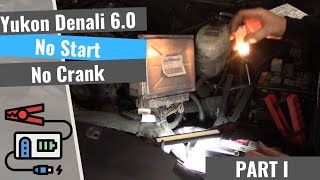
- Replacing the starter motor when the engine doesn't crank. The security system prevents the crank signal; the starter is usually not the problem. 🎬 Watch: Diagnosing a no-start no-crank issue on a Yukon
- Replacing the fuel pump. The security system disables the fuel system electronically; the pump itself is likely fine.
- Assuming a faulty ECM. While the ECM receives the disable command, it is rarely the source of a B3060 code. The fault originates in the key, reader coil, or BCM.
Most Likely Causes
- Using a New or Unprogrammed Key 🔴 High Probability This is the direct trigger for the code by design. Any key not learned by the vehicle's TDM will be rejected.
How to confirm: The code appears immediately after attempting to start the vehicle with a newly cut key.
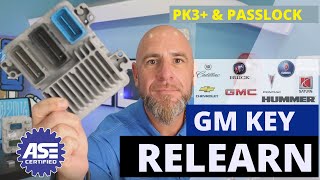
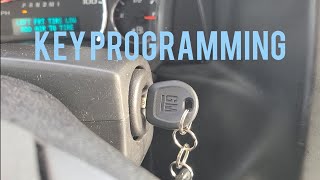
Typical fix: The new key must be programmed to the vehicle using the 30-minute key relearn procedure. 🎬 Watch: How to perform the 30-minute key relearn process Note that this erases all previously learned keys.
Est. part cost: $0 - Radio Frequency (RF) Interference 🟡 Medium Probability The PassKey III+ system operates at 125 kHz and can be disrupted by other electronic devices. TSB PIC5650M specifically warns that aftermarket accessories, especially LED interior lights, can cause enough RFI to trigger this fault. The TSB also notes that RFID devices like Speedpass or gym access cards can interfere.
How to confirm: Remove all other keys, electronic devices, and aftermarket chargers from the keychain and vehicle interior. If the vehicle starts, interference was the cause.
Typical fix: Keep other RF-emitting devices separate from the ignition key when starting the vehicle. Remove problematic aftermarket accessories.
Est. part cost: $0 - Faulty Ignition Key Transponder 🟡 Medium Probability → Shop Ignition Switch The transponder chip in the key head can be damaged from being dropped or from age, causing it to stop communicating.
How to confirm: Try starting the vehicle with a known-good spare key. If the spare key works without issue, the original key is faulty.
Typical fix: Replace the faulty key and perform the 30-minute relearn procedure to program the new key to the vehicle.
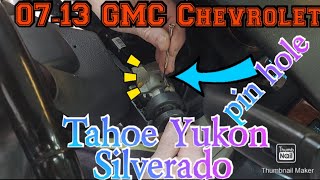
Est. part cost: $40-$150 - Defective Ignition Lock Cylinder / Reader Coil ⚪ Low Probability → Shop Ignition Switch The exciter coil (antenna) that reads the key's transponder is part of the ignition lock cylinder assembly. 🎬 See this walkthrough on removing the ignition lock cylinder Failure of this coil or its wiring prevents the key from being read.
How to confirm: If the key relearn procedure fails with multiple known-good keys, and RFI has been ruled out, the reader coil is suspect. A technician can test the wiring and component for continuity and signal.
Typical fix: Replace the ignition lock cylinder assembly. A key relearn procedure must be performed after replacement.
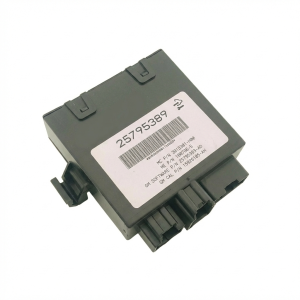
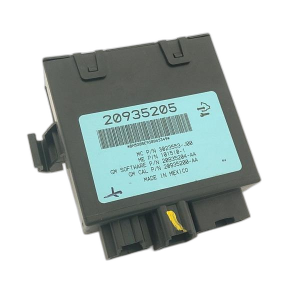
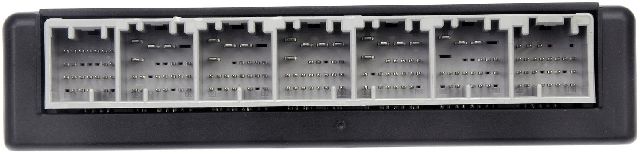
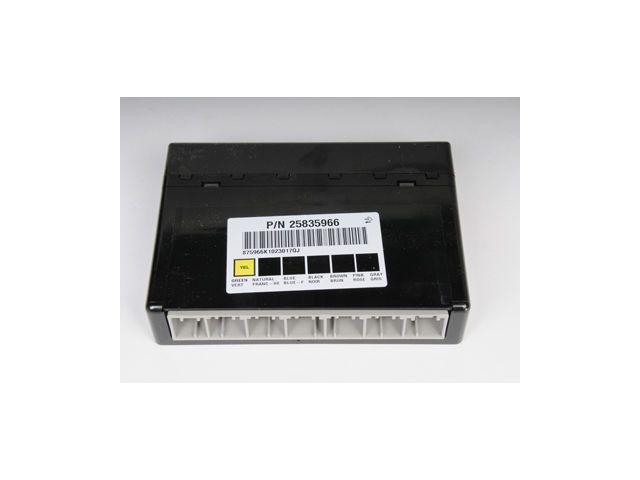
Est. part cost: $100-$250 - Failing Body Control Module (BCM) ⚪ Low Probability → Shop Body Control Module The BCM houses the theft deterrent logic. These modules can fail due to internal faults, poor ground connections, or voltage spikes, causing a wide range of electrical issues including security system failure. A GM bulletin warns that removing a BCM ground while the battery is connected can damage the module.
How to confirm: This is typically a diagnosis of exclusion. A key symptom is the inability for a professional scan tool to communicate with the BCM. Multiple unrelated electrical faults occurring simultaneously can also point to the BCM.
Typical fix: Replace the Body Control Module. The new BCM must be programmed to the vehicle's VIN by a dealer or qualified shop with a Tech 2 or similar tool.
Est. part cost: $250-$500
Rare But Worth Checking
- Low Vehicle Battery Voltage or Poor Connection: → Shop Vehicle Battery A very low or dead battery can cause the BCM to lose key programming data or behave erratically. A user on a forum traced a persistent no-start issue to a loose negative battery cable, which can cause voltage drops that mimic a security fault. Another owner found the main ground for the ECM, which bolts to the front passenger side of the engine block, had corroded and nearly broken inside the crimped terminal, causing multiple intermittent issues.
- Aftermarket Alarm System Conflict: If the vehicle has an aftermarket remote start or alarm system, it may interfere with the factory Passkey III+ system. Improper installation or a failure within the aftermarket unit can lead to intermittent no-start conditions and security codes.
Diagnosis Steps
- Ensure the vehicle battery is fully charged and that the positive and negative battery terminals are clean and tight. A loose or internally corroded connection can cause voltage drops that trigger security faults.
- Verify B3060 is the primary active code using an OBD-II scanner capable of reading Body Control Module (BCM) codes. Standard engine code readers may not see this fault.
- Per TSB PIC5650M, check for and remove sources of Radio Frequency Interference (RFI). Unplug any aftermarket phone chargers, dash cams, and especially LED interior lights. Remove all other keys and fobs from the keychain.
- Attempt to start the vehicle with only the single Yukon key. If it starts, RFI was the issue.
- If available, try starting the vehicle with a known-good spare key. If it starts, the primary key is faulty.
- Attempt the 30-minute key relearn procedure. It is highly recommended to connect a battery charger during this process. Turn the key to ON (don't start), wait for the security light to go out (approx. 10 mins), turn the key OFF for 5-10 seconds. Repeat this two more times for a total of three 10-minute cycles. After the third cycle, turn the key off, then try to start the engine.
- If the relearn fails, inspect the wiring and connector at the ignition lock cylinder for damage or looseness.
- If keys are good and the relearn fails, the ignition lock cylinder/reader coil is the most likely cause. Test or replace the component.
- If all other steps fail, the Body Control Module (BCM) should be professionally diagnosed. A failure to communicate with the BCM using a scan tool is a strong indicator that the module has failed.
Parts You'll Likely Need
- Ignition Key with Transponder
(OEM #GM B111-PT, Strattec 5903128)— The original key's transponder chip may have failed, or a new key is needed.
Trusted brands: ACDelco, Strattec
OEM price range: $60-$100
Aftermarket price range: $30-$60 - Ignition Lock Cylinder with Passkey Sensor
(OEM #ACDelco D1492C / GM 15841209)— This assembly contains the reader coil (antenna) that communicates with the key. The coil or its wiring can fail, preventing the key from being recognized. Note: Part number 25832354 is for older models and will not work.
Trusted brands: ACDelco, Dorman, Standard Motor Products
OEM price range: $150-$250
Aftermarket price range: $80-$150 - Body Control Module (BCM) — As a last resort, the BCM itself can fail, causing this security fault. It is the 'brain' of the anti-theft system and requires professional programming to the vehicle's VIN upon replacement.
Trusted brands: ACDelco
OEM price range: $300-$500
Aftermarket price range: $200-$400
Related Codes That Often Appear With This One
- B3055 — This code means 'No Transponder Modulation or No Transponder,' indicating the TDM received no signal at all, often due to a faulty key or reader coil. It frequently appears with B3060.
- B3935 — This code means 'Transponder Authentication Failed.' It indicates a signal was received, but the 'handshake' between the key and module failed. It is also commonly seen with B3060.
Technical Service Bulletins (TSBs) & Recalls
- PIC5650M: Mentions B3060 as a potential DTC for intermittent no crank/no start conditions. Crucially, it instructs technicians to investigate and remove any sources of RFI, such as aftermarket LED lights or chargers, before replacing any parts for the concern.
- PIE0232: An engineering bulletin for similar models that highlights B3060 and instructs technicians to check for RF interference from devices on the keychain or in the vehicle, especially on low-mileage vehicles, before proceeding with repairs.
Platform-Specific Known Issues
- The provided NHTSA TSB PIC5650M specifically lists B3060 in relation to an intermittent no crank, no start, or start/stall concern with the security light on for this vehicle platform. The bulletin strongly advises investigating for sources of Radio Frequency Interference (RFI) from aftermarket accessories before replacing parts.
Hidden / Shadow Codes Worth Checking
- B3060 00: The '00' is a symptom byte indicating 'No Sub Type Information'. This means the base DTC text string provides the complete description of the failure. It's the most common variant of this code. (see via A professional scan tool like a GM Tech 2 or GDS2 that can read manufacturer-specific codes and symptom bytes.)
Scan Tool Commands That Help
- GM Tech 2: View 'TDM Valid Key' parameter — After performing the key relearn procedure, use this function to verify that the Theft Deterrent Module (TDM) recognizes each available key. The parameter should read 'Yes' for all programmed keys.
- GM Tech 2: Immobilizer Data — This data list allows a technician to see the state of the immobilizer system, including key status and communication signals between the BCM and ECM, which is critical for diagnosing if the fault lies with the key, the reader, or the module itself.
Wiring & Ground Locations
- BCM Location — Under the driver's side dashboard, near the steering column.. This is the location of the Theft Deterrent Module (TDM) logic. Physical access is needed to check connectors and diagnose the module itself.
- Primary BCM Ground — A black wire bolted to the chassis near the BCM, under the driver's side dash. Another BCM ground is located inside the cab beside the front left A-pillar speaker.. A poor BCM ground is a common cause of intermittent and difficult-to-diagnose electrical issues, including security system faults. Cleaning this ground is a critical first step before replacing the BCM.
- BCM Ground Path (Junction Block) — For 2007 models, the BCM ground path passes through the Left Instrument Panel Junction Block.. A GM service bulletin warns that the negative battery cable MUST be disconnected before removing this junction block to avoid damaging the BCM.
- BCM Connector X3, Pin 7 — On the BCM under the driver's dash.. This pin (Gray wire, circuit 728) is for the 'Security Indicator Control'. A technician can probe this wire to see if the BCM is commanding the security light on.
- BCM Connector X3, Pin 10 — On the BCM under the driver's dash.. This pin (Dark Green wire, circuit 5060) is the Low Speed GMLAN Serial Data line, which the BCM uses to communicate with other modules, including sending the fuel disable command.
Real Owner Repair Stories
- Tahoe Yukon Forum user 'Denali207' (2008 Yukon Denali, 165,000 miles) — Intermittent no crank no start, door locks going crazy, gauge cluster cycling, Stabilitrak and ABS lights on, getting stuck in 1st gear. Codes U0100 and P2544 were also present.
❌ Tried (didn't work) Clearing codes, cleaning grounds on the firewall, cleaning the ground on the frame under the driver's seat, cleaning the engine ground, cleaning the positive cable and mega fuse connections.
✅ What actually fixed it Another user advised upgrading the ground straps. The original poster did not confirm the final fix, but the strong consensus pointed to a bad ground or internally corroded battery cable causing widespread electrical havoc that mimicked module failure. - Tahoe Yukon Forum user (2009 Tahoe, 171,000 miles) — Intermittent no crank, no start where the vehicle acts as if the battery is completely disconnected (no remote unlock, no interior lights). A 'pop' in the radio and cycling gauges would precede the failure.
❌ Tried (didn't work) Cleaning both ends of the main ground cable, disconnecting and cleaning the ECM connector.
✅ What actually fixed it The owner found that disconnecting both battery terminals and shorting them together would temporarily reset the vehicle and make it work again for a period. Another user suggested the negative battery cable was likely broken internally, a common issue causing intermittent problems.
When the Usual Fixes Don't Work
- While Pass 2 correctly identifies the ignition lock cylinder (reader coil) as a common cause, it lists part number 15841209. Multiple parts sources indicate 15841209 is for older or different models like the 2005-2006 Equinox. The correct ACDelco part number for the lock cylinder assembly on this platform appears to be D1492C. This is a significant distinction, as installing the wrong part would not resolve the issue.
OEM Part Supersession History
Multiple (e.g., 15208980, 89022872)→15841209— Part consolidation and updates.
Heads up: Part number 15841209 is listed for 2000-2007 GM vehicles, primarily the Equinox, and is NOT compatible with the 2007-2011 Yukon Denali, despite being mentioned in the Pass 2 data. The correct part for the Yukon is D1492C. This is a critical correction as 15841209 fits different models.
Helpful Videos
Used OEM Parts in Stock
New Aftermarket Parts Available

The information in this article is provided for general reference and educational purposes only. Vehicle specifications, procedures, and part compatibility can vary by production date, trim level, and region. Always consult your vehicle's factory service manual and verify part numbers before purchasing or performing repairs. Safety-critical components such as airbags, seat belts, and braking systems should be installed by a qualified professional.
- Gmc YUKON DENALI:
- 🧭 Diagnostic Flowchart
- 🎬 Helpful Videos
- 🛍️ Shop This Part
- What's Unique About the 2007-2011 Gmc YUKON DENALI
- Symptoms You May Notice
- Most Likely Causes
- Rare But Worth Checking
- Diagnosis Steps
- Parts You'll Likely Need
- Related Codes That Often Appear With This One
- Technical Service Bulletins (TSBs) & Recalls
- Platform-Specific Known Issues
- Hidden / Shadow Codes Worth Checking
- Scan Tool Commands That Help
- Wiring & Ground Locations
- Real Owner Repair Stories
- When the Usual Fixes Don't Work
- OEM Part Supersession History
- 🎟️ Get 5% Off