

B3060 on 2007-2010 Pontiac G6: No-Start Causes and Security System Fixes
On a 2007-2010 Pontiac G6, code B3060 means the Pass-Key III+ anti-theft system doesn't recognize your key's transponder, causing a no-start and a flashing security light. The most common fix is a simple 30-minute 'key relearn' procedure, which is free. If that fails, the ignition lock cylinder which contains the reader coil, or the key itself, is the next likely culprit.
- B3060 on a Pontiac G6 means the anti-theft system has locked the car due to a key recognition error.
- Before any repairs, ALWAYS attempt the 30-minute key relearn procedure; it is free and fixes the issue in a majority of cases.
- Try a spare key and remove all other fobs from your keychain to rule out a bad key or signal interference.
- If the relearn procedure fails, the most likely failed part is the ignition lock cylinder assembly, which contains the key's signal reader.
- Do not waste money on a new starter or fuel pump; the security light is the critical clue that the problem is with the anti-theft system.
What's Unique About the 2007-2010 Pontiac G6
🎬 Watch: Common mechanical and electrical problems for this generation.The Pontiac G6, built on the GM Epsilon platform alongside the Chevy Malibu and Saturn Aura, uses the Pass-Key III+ (PK3+) anti-theft system. This system is known for being sensitive to voltage drops (like from a weak battery) and for the ignition lock cylinder's reader coil being a common failure point. Furthermore, as noted in multiple versions of TSB #PIC5650, these vehicles can experience intermittent no-start conditions due to this system, often accompanied by a cluster of security-related codes. A unique issue on the G6 is the potential for poor connections at the Body Control Module (BCM) itself, which can cause a variety of strange electrical problems, including this security fault.
Diagnostic Flowchart
Tap your situation to follow the diagnostic path that matches what you're seeing on this vehicle.
Symptoms You May Notice
- No crank, no start condition.
- Engine starts briefly then immediately stalls.
- Solid or flashing security light on the dashboard (often a car icon with a lock).
- Message on the driver information center like "Service Theft System".
- Key is difficult to turn or feels worn in the ignition.
- Replacing the starter motor. A bad starter will not cause the security light to illuminate or a start-and-stall symptom.
- Replacing the battery without attempting a key relearn. A new battery can trigger the B3060 code if the system loses sync, but the battery itself is not the root cause.
- Replacing the fuel pump. A start-and-stall symptom can seem like a fuel issue, but the security light points directly to the anti-theft system.
Most Likely Causes
- Key Has Lost Synchronization 🔴 High Probability The Pass-Key system is notoriously sensitive to voltage drops. A weak or recently replaced battery, jump-starting, or disconnecting the battery can cause the key to lose sync with the BCM.
How to confirm: Attempt the 30-minute key relearn procedure. If the car starts afterward, this was the cause. This is a very common experience after a battery dies.
Typical fix: Perform the 30-minute key relearn procedure. Insert the key, turn to 'ON' (run position), and wait about 10 minutes for the security light to turn off or stop flashing. Turn the key off for 5-10 seconds. Repeat this process two more times for a total of three 10-minute cycles. On the fourth attempt, the car should start. A battery charger is recommended during this process.
Est. part cost: $0 - Worn or Faulty Ignition Key 🟡 Medium Probability → Shop Ignition Switch The transponder chip embedded in the plastic head of the key can fail over time, be damaged from drops, or the key itself can become worn, leading to poor contact.
How to confirm: Try starting the vehicle with a known-good spare key. If the spare key works consistently (after a relearn if necessary), the original key is faulty.
Typical fix: Replace the faulty key. A new key must be cut to match and then programmed to the vehicle using the 30-minute relearn procedure.
Est. part cost: $40-$100 - Faulty Ignition Lock Cylinder / Reader Coil 🟡 Medium Probability → Shop Ignition Switch The exciter coil that reads the key's transponder is part of the ignition lock cylinder housing. This component is a well-documented failure point on the Epsilon platform due to wear, tear, and heat cycles causing internal breaks in the coil wiring.
How to confirm: If the key relearn procedure fails with multiple known-good keys, the reader coil is suspect. Wiggling the key in the ignition may cause the security light to flicker or change state, indicating a bad connection. A Reddit user with a 2009 G6 experienced a situation where the relearn would start but then fail, which can point to this component.
Typical fix: Replace the ignition lock cylinder assembly. The key relearn procedure must be performed after replacement.
Est. part cost: $60-$180 - Poor Connection at Body Control Module (BCM) ⚪ Low Probability → Shop Body Control Module The BCM on the G6 is located behind the passenger side of the center console. Its main connectors can develop poor terminal contact, leading to various electrical issues, including security system faults. This was common enough to prompt a recall for brake light issues related to the same connectors.
How to confirm: With the battery disconnected, inspect the main connectors (often gray, green, or blue) at the BCM for corrosion, looseness, or fretting. A scan tool may show communication loss (U-codes) with the BCM or other modules.
Typical fix: Disconnect the battery, then unplug and reseat the BCM connectors multiple times to clean the contacts. Applying a specific dielectric grease for low-voltage electronics can help ensure a good long-term connection.
Est. part cost: $5-$15
Rare But Worth Checking
- Radio Frequency Interference (RFI): As detailed in GM TSB #PIC5650M and its successors (like PIC5650K), other electronic devices can 'jam' the 125 kHz signal from the key. Items on the same keychain (other car fobs, office access cards) or even aftermarket devices plugged into the car (USB chargers, LED lights) can cause this. Always try starting with only the G6 key, isolated from other items, to rule this out.
- Failing Body Control Module (BCM): → Shop Body Control Module If all other steps fail and the car exhibits other strange electrical behavior (erratic lights, gauges, etc.), the BCM itself may have an internal fault. This is less common but can happen, especially if the car has a history of water leaks into the passenger footwell. Replacement requires programming by a dealer or a well-equipped independent shop.
Diagnosis Steps
- Verify the security light is on or flashing on the dashboard.
- Scan the Body Control Module (BCM) for codes to confirm B3060 and check for B3055 or B3935.
- Remove all other keys, fobs, and RFID cards from the keychain to eliminate Radio Frequency Interference (RFI). Move any aftermarket chargers or electronics away from the ignition area.
- Try starting the car with a known-good spare key. If it works, the primary key is the problem.
- Attempt the 30-minute, 3-cycle key relearn procedure. This is the most common fix and costs nothing. Ensure the battery is fully charged or connected to a charger.
- If the relearn fails, gently wiggle the key in the ignition while it's in the 'ON' position. If the security light flickers, the ignition lock cylinder/reader coil is the likely failure point.
- If keys and the relearn process fail, the ignition lock cylinder/reader coil is the most likely failed component and should be replaced.
- If a new lock cylinder doesn't solve the issue, inspect the wiring and connectors at the BCM in the passenger footwell for corrosion or damage.
- As a final step, the Body Control Module (BCM) itself may need to be professionally diagnosed and possibly replaced and reprogrammed.
Parts You'll Likely Need
- Ignition Lock Cylinder Housing
(OEM #15841209)— This part contains the reader coil (exciter) that reads the key's transponder chip. It is the most common hardware failure for this code on this platform.
Trusted brands: ACDelco (GM OE), Standard Motor Products (SMP) US646L, Dorman 924-719
OEM price range: $100-$180
Aftermarket price range: $60-$120 - Transponder Key (PK3+)
(OEM #B111-PT)— If a spare key works and the primary key does not, the transponder chip in the original key has failed. All previously learned keys are erased during a relearn, so all keys must be present.
Trusted brands: ACDelco, Strattec
OEM price range: $70-$150
Aftermarket price range: $40-$80 - Ignition Switch
(OEM #ACDelco D1462F)— While not the direct cause of B3060, this electrical switch attaches to the back of the lock cylinder. It is often replaced at the same time due to s
Related Codes That Often Appear With This One
- B3055 — This code means 'No Transponder Modulation' and often appears with B3060. It indicates the system is not receiving any signal from the key, pointing directly to a bad key or faulty reader coil.
- B3935 — This code for 'Transponder Authentication Failed' is also part of the same security handshake process and is frequently logged alongside B3055 and B3060 during an immobilizer fault event, as cited in TSB PIC5650M.
- U0100 — Lost Communication with ECM/PCM. While not directly a security code, this can appear if a failing BCM or major wiring issue is the root cause of the B3060, as it disrupts communication between essential modules.
Technical Service Bulletins (TSBs) & Recalls
- PIC5650M: Addresses intermittent no crank, no start, or start/stall with the security light on and codes B3055, B3060, B3935. Highlights RFI as a potential cause.
- PIC5650K/J/C: Successive versions of the same TSB, updated over the years to include more models and examples of RFI-producing devices like aftermarket LED lights and USB power banks.
Platform-Specific Known Issues
- TSB #PIC5650M (and successors): GM issued this bulletin for an intermittent no crank, no start, or start/stall concern with the security light on, specifically mentioning code B3060. It advises checking for Radio Frequency Interference from aftermarket devices (phone chargers, other fobs, toll passes) before replacing parts.
Mechanic-Grade Diagnostic Values
- Pass-Key III+ Exciter Coil Frequency — expected: 125 kHz. Failure: No signal or incorrect frequency from the coil around the ignition cylinder.
- Scan Tool 'Valid Key' Parameter — expected: Yes. Failure: Parameter reads 'No' when a known-good key is in the ignition and turned to ON.
- CAN Bus Network Resistance — expected: ~60 Ohms between Pin 6 and Pin 14 of the OBD-II port (with battery disconnected).. Failure: A reading of 120 Ohms indicates one of the two terminating resistors (in the ECM or BCM) is offline. An open or shorted reading indicates a wiring fault in the data lines.
Scan Tool Commands That Help
- GM Tech2 / GDS2: Immobilizer Learn / Key Programming — Used after replacing the BCM or when adding new keys. This function guides the technician through the key relearn process, which is required for the BCM to recognize the transponder codes of the keys.
- GM Tech2 / GDS2: Theft Deterrent Module (TDM) Data Display — To diagnose the fault, a technician can monitor the 'Valid Key' parameter. When a known-good key is turned in the ignition, this should display 'Yes'. If it displays 'No', it confirms a key recognition problem.
Wiring & Ground Locations
- BCM (Body Control Module) — Located with the fusebox on the passenger side of the center console, accessible by removing a panel.. The BCM is the brain of the Pass-Key III+ system. It receives the key data, validates it, and allows the engine to start. All relevant wiring for the ignition cylinder reader and data communication terminates here.
- BCM Connectors C1, C2, C3 — At the BCM. C1 and C2 are 72-pin connectors, C3 is a 40-pin connector.. The wires from the ignition lock cylinder's reader coil connect to the BCM through one of these main connectors. A poor pin fit or corrosion here can cause B3060.
- G201 — Under the center console, on a front support bracket.. This is a primary ground point for the Body Control Module (BCM). A loose or corroded G201 can cause the BCM to malfunction, leading to a host of electrical issues including security system faults.
- G105 — On the left rear side of the engine compartment, on an engine/transmission stud, below the upper coolant hose.. This is a critical ground point for the Engine Control Module (ECM) and Transmission Control Module (TCM). A poor connection here can cause a no-crank or no-communication issue that may be misdiagnosed as a B3060 root cause.
Real Owner Repair Stories
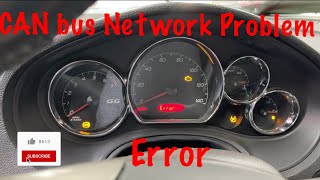
- YouTube channel 'Auto & Truck Repair' (2007 Pontiac G6 3.5L) — No crank, no start condition. CAN bus network problems.
❌ Tried (didn't work) Initial diagnosis pointed towards module communication issues.
✅ What actually fixed it The ultimate cause was a broken ground wire at the G105 ground stud on the transmission housing. The wire had corroded and broken off inside the terminal lug, causing a loss of ground for the engine and transmission control modules.
Helpful Videos




We Have This Part in Stock


The information in this article is provided for general reference and educational purposes only. Vehicle specifications, procedures, and part compatibility can vary by production date, trim level, and region. Always consult your vehicle's factory service manual and verify part numbers before purchasing or performing repairs. Safety-critical components such as airbags, seat belts, and braking systems should be installed by a qualified professional.
- Pontiac G6:
- 🧭 Diagnostic Flowchart
- 🎬 Helpful Videos
- 🛍️ Shop This Part
- What's Unique About the 2007-2010 Pontiac G6
- Symptoms You May Notice
- Most Likely Causes
- Rare But Worth Checking
- Diagnosis Steps
- Parts You'll Likely Need
- Related Codes That Often Appear With This One
- Technical Service Bulletins (TSBs) & Recalls
- Platform-Specific Known Issues
- Mechanic-Grade Diagnostic Values
- Scan Tool Commands That Help
- Wiring & Ground Locations
- Real Owner Repair Stories
- 🎟️ Get 5% Off