

B3060 on 2008-2009 Pontiac G8: Unprogrammed Key and No-Start Fixes
Code B3060 on a Pontiac G8 means the car's anti-theft system doesn't recognize the ignition key, causing a no-start and illuminating the security light. The most common causes are using a new, unprogrammed key, a faulty key transponder, or radio frequency interference from other devices on your keychain. A DIY 30-minute key relearn procedure often resolves this without a trip to the dealer.
- B3060 means your G8's security system has locked the engine because it doesn't recognize the key.
- Before any repairs, try your spare key and remove all other electronic fobs or cards from your keychain to rule out simple causes.
- If you are using a new or copied key, it must be professionally programmed to the car.
- This code will cause a definite no-start or immediate stall; the car cannot be driven until the issue is resolved.
- Do not immediately suspect expensive components like the BCM or ECM; the problem is almost always with the key or interference.
What's Unique About the 2008-2009 Pontiac G8
The Pontiac G8, based on the Australian Holden Commodore VE, has a sensitive vehicle immobilizer system. A GM Technical Service Bulletin (TSB #PIC5650 series) specifically notes that intermittent no-start conditions with code B3060 can be caused by Radio Frequency Identification (RFID) devices on the same keychain, such as other car keys or building access cards. A recall was also issued for the G8's flip-key design, as it could be bumped out of the 'run' position, causing the engine to shut off, though this is a separate mechanical issue from the B3060 electronic code. The immobilizer system on these vehicles is also known to be sensitive to low battery voltage, which can cause the BCM to lose synchronization with the keys after a jump-start or battery replacement, triggering the B3060 code.
Diagnostic Flowchart
Tap your situation to follow the diagnostic path that matches what you're seeing on this vehicle.
Symptoms You May Notice
- Engine will not crank or start.
- Engine starts briefly and then immediately stalls.
- Security indicator light is on or flashing on the instrument cluster.
- Radio display may show a 'Security Lockout' or 'Vehicle Immobilised' message.
- A single 'click' sound may be heard from the rear of the car when trying to start.
- Replacing the battery or starter. While these can cause a no-start, they will not set the B3060 code or illuminate the security light.
- Replacing the Engine Control Module (ECM). The B3060 code originates from the body/theft module, not the ECM. The ECM is only following the 'no-start' command from the security system.
Most Likely Causes
- Using an Unprogrammed or Cloned Key 🔴 High Probability This is the direct trigger for the code by design. It often happens when using a newly cut key or a cheap aftermarket copy that hasn't been properly programmed to the vehicle's immobilizer system.
How to confirm: Try starting the vehicle with a known-good spare key. If the spare key works, the problem is with the first key.
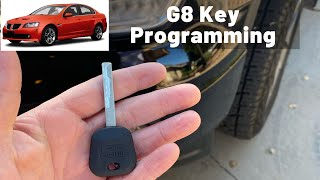
Typical fix: The new key must be programmed to the vehicle using a specific key relearn procedure. For an 'all keys lost' scenario, a 30-minute procedure can be performed by the owner. 🎬 Watch: Step-by-step DIY transponder chip programming guide.
Est. part cost: $50-$200 for key and programming - Radio Frequency Interference (RFI) 🟡 Medium Probability A GM TSB (PIC5650 series) specifically calls out this issue. The immobilizer system operates at 125 kHz, and other electronic devices on a keychain (other car keys, gate passes, speed passes, building access cards) can interfere with the signal between the key and the car.
How to confirm: Remove all other keys and electronic devices from the keychain. Try starting the car with only the Pontiac G8 key near the ignition. This is the first step recommended by GM technicians.
Typical fix: Keep the G8 key isolated from other RFID devices to prevent signal jamming. No parts are required.
Est. part cost: $0 - Faulty Ignition Key Transponder 🟡 Medium Probability → Shop Ignition Switch The transponder chip embedded in the key head can be damaged from being dropped or from age, causing it to send a corrupted or no signal. The chip is often glued into the key fob, making it difficult to transfer to a new shell without damaging it.
How to confirm: If a spare key works reliably and the problematic key fails even when isolated from other devices, the key itself is likely faulty.
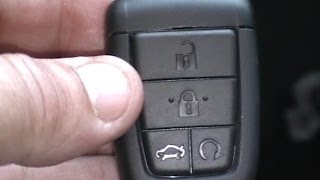
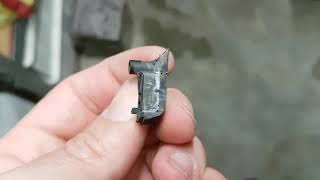
Typical fix: Replace the faulty key. A new key will need to be cut and programmed to the vehicle. Swapping the internal components into a new key shell is a common DIY repair but risks damaging the transponder. 🎬 Watch: How to safely repair your G8 flip key.
Est. part cost: $100-$250 - Faulty Immobilizer Exciter Coil (Antenna) ⚪ Low Probability The exciter coil is a ring around the ignition lock cylinder that powers the key transponder. A break in its wiring or an internal failure will prevent it from communicating with the key. This can also be caused by a poor ground connection.
How to confirm: This requires testing the coil's resistance and checking for continuity in the wiring between the coil and the Theft Deterrent Module/BCM. A simple, inexpensive induction tester can also be used to quickly verify if the coil is being energized when the key is turned.
Typical fix: Replacement of the ignition lock cylinder housing or the exciter coil itself.
Est. part cost: $75-$150
Rare But Worth Checking
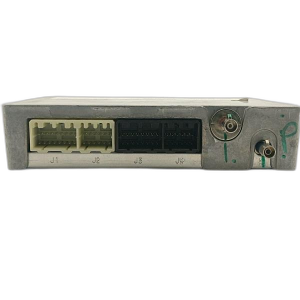
- Failing Body Control Module (BCM) or Theft Deterrent Module (TDM): → Shop Anti-Theft Control Module While less common, the module that reads the key data can fail. This is usually the last item to suspect after all keys, wiring, and the exciter coil have been ruled out. A failed BCM often causes other seemingly unrelated electrical issues. On platform-mate Holden Commodores, BCM failure has been noted after battery jump-starts. A replacement BCM must be programmed to the vehicle's VIN.
- Poor Ground Connection: A crank-no-start condition that mimics an immobilizer issue can sometimes be traced to a poor or corroded main engine or chassis ground. One owner on a forum fixed a persistent no-start issue by cleaning the main ground points in the engine bay. 🎬 See how a bad ground causes immobilizer issues.
Diagnosis Steps
- Verify the B3060 code is present using an OBD-II scanner capable of reading B-codes (Body codes).
- Isolate the Key: Remove all other keys, fobs, and electronic cards from the keychain. Attempt to start the car with only the G8 key. This eliminates Radio Frequency Interference (RFI) as per TSB PIC5650M.
- Test a Spare Key: Try starting the vehicle with a known-good spare key. If it starts, the original key is the problem (damaged transponder).
- Perform the 30-Minute Relearn Procedure (All Keys Lost): This can be done without a scan tool. 1. Insert the new/unprogrammed key and turn the ignition to ON (do not start). 2. Leave it ON for approximately 10 minutes, until the security light turns off. 3. Turn the ignition OFF for 5-10 seconds. 4. Repeat steps 1-3 two more times for a total of 3 cycles (about 30-35 minutes). 5. After the third cycle, turn the key OFF, then ON. The key should now be programmed.
- Inspect the wiring and connector at the ignition lock cylinder for any signs of damage or looseness.
- If the problem persists with all keys and with no interference, the issue may be the exciter coil or the Theft Deterrent Module/BCM itself, which requires professional diagnosis.
Parts You'll Likely Need
- Transponder Ignition Key
(OEM #GM OUC6000083)— This is the most common failure point, either because the internal transponder chip has failed or because it's a new, unprogrammed key.
Trusted brands: ACDelco, Strattec
OEM price range: $80-$150
Aftermarket price range: $30-$70 - Immobilizer Exciter Coil / Antenna Ring — This part powers the transponder in the key. If it fails, the key cannot send its code to the car, resulting in a no-start and codes like B3055 or B3060.
Trusted brands: ACDelco
OEM price range: $75-$150
Aftermarket price range: $50-$100 - Body Control Module (BCM)
(OEM #92252947 (supersedes multiple previous numbers))— A rare but possible cause of B3060 if all other components check out. The BCM is the central computer for body electronics, including the theft deterrent system.
Trusted brands: GM Genuine
OEM price range: $250-$500
Related Codes That Often Appear With This One
- B3055 — This code means 'No Transponder Modulation or No Transponder,' indicating the security module received no signal at all, often due to a dead key or faulty exciter coil. It's commonly seen with B3060.
- B3935 — This code means 'Transponder Authentication Failed.' It indicates the module received a signal but the cryptographic 'handshake' failed. This can also be caused by interference or a faulty key.
- U0140 — This code means 'Lost Communication with Body Control Module'. It often appears with B3060 when there is a wider network problem, a failing BCM, or a bad ground connection affecting multiple modules.
Technical Service Bulletins (TSBs) & Recalls
- PIC5650M
Platform-Specific Known Issues
- A GM Technical Service Bulletin (TSB #PIC5650M and its revisions) directly addresses intermittent no-crank/no-start or stalling conditions with the security light on, specifically citing DTCs B3055, B3060, and B3935.
- The TSB suggests that interference from Radio Frequency Identification (RFID) devices on the keychain is a likely cause for these intermittent issues and advises checking for this before replacing any parts.
- A safety recall was issued for the 2008-2009 G8 because the driver's knee could bump the flip-key and turn the engine off. While this is a mechanical design flaw of the key housing, it highlights the sensitivity of the ignition system area.
- The 30-minute key relearn procedure is a well-documented, owner-doable fix for this platform when a key has lost its programming or a new one is introduced.
Hidden / Shadow Codes Worth Checking
- U0073: Control Module Communication Bus Off. This indicates a general GMLAN network failure, which can cause multiple modules, including the BCM, to stop communicating. (see via A professional scan tool like a MaxiSys or the dealer Tech2/GDS2 is required; these codes often do not set a Check Engine Light.)
- U0140: Lost Communication With Body Control Module. This code is set by other modules (like the ECM or TCM) when they can no longer hear from the BCM. (see via Professional scan tool. Often found stored with B3060 when the BCM itself is failing or has a bad power/ground connection.)
- U0100: Lost Communication With ECM/PCM. Can be set during a widespread communication bus failure that also triggers immobilizer faults. (see via Professional scan tool.)
Scan Tool Commands That Help
- GDS2/Tech2: BCM Programming/Setup — This function is required after replacing the Body Control Module (BCM). It 'marries' the new module to the vehicle's VIN and other onboard systems, including the immobilizer.
- GDS2/Tech2: Immobilizer Learn — Used to program new keys or relearn existing keys to the Theft Deterrent Module (TDM) or BCM. This is a more direct method than the 30-minute manual relearn and is necessary when replacing modules.
- GDS2/Tech2: Copy and Paste TPM Information — When replacing the Remote Control Door Lock Receiver (RCDLR), this function allows a technician to copy tire pressure sensor data from the old module and paste it to the new one, preventing the need to relearn all TPMS sensors. This is relevant as RCDLR failure can cause BCM communication issues.
Wiring & Ground Locations
- BCM (Body Control Module) — Under the driver's side of the dash, to the right of the steering column.. The BCM is the central module for the theft deterrent system. Checking its connectors for corrosion or looseness is a key diagnostic step.
- G201 — Behind the right kick panel.. This is a major interior ground point. A wiring diagram lists the BCM, airbags, and other critical interior components using this ground. A poor connection here can cause intermittent BCM issues.
- G103 — In the engine compartment, on the ABS bracket. This serves as the primary engine block ground.. A poor engine block ground can cause a variety of electrical issues, including no-start conditions that can be misdiagnosed as an immobilizer fault.
- RCDLR (Remote Control Door Lock Receiver) — In the rear parcel shelf area.. The RCDLR communicates directly with the BCM over the GMLAN bus. A fault in this module or its wiring can disrupt BCM communication and potentially trigger security-related faults.
Real Owner Repair Stories
- YouTube user video (Pontiac G8 (similar to Chevrolet Caprice)) — Intermittent no-start, dash lights flickering, car would sometimes turn off when hitting a bump, eventually a complete no-start with security light.
❌ Tried (didn't work) Replacing the key, Performing PCM relearn procedures, Replacing the battery, Cleaning battery terminals
✅ What actually fixed it The ground wires in the engine bay, specifically the one for the fuse box and another nearby chassis ground, were dirty. Cleaning the contact surfaces of these grounds resolved all issues. - Reddit user r/Pontiac (2008 Pontiac G8 GT) — Ignition key stuck between ACC and RUN, could be removed while car was powered on. After disconnecting/reconnecting the battery, the engine would not crank and displayed an "Engine Immobilized" message.
❌ Tried (didn't work) Letting the car sit with the battery disconnected.
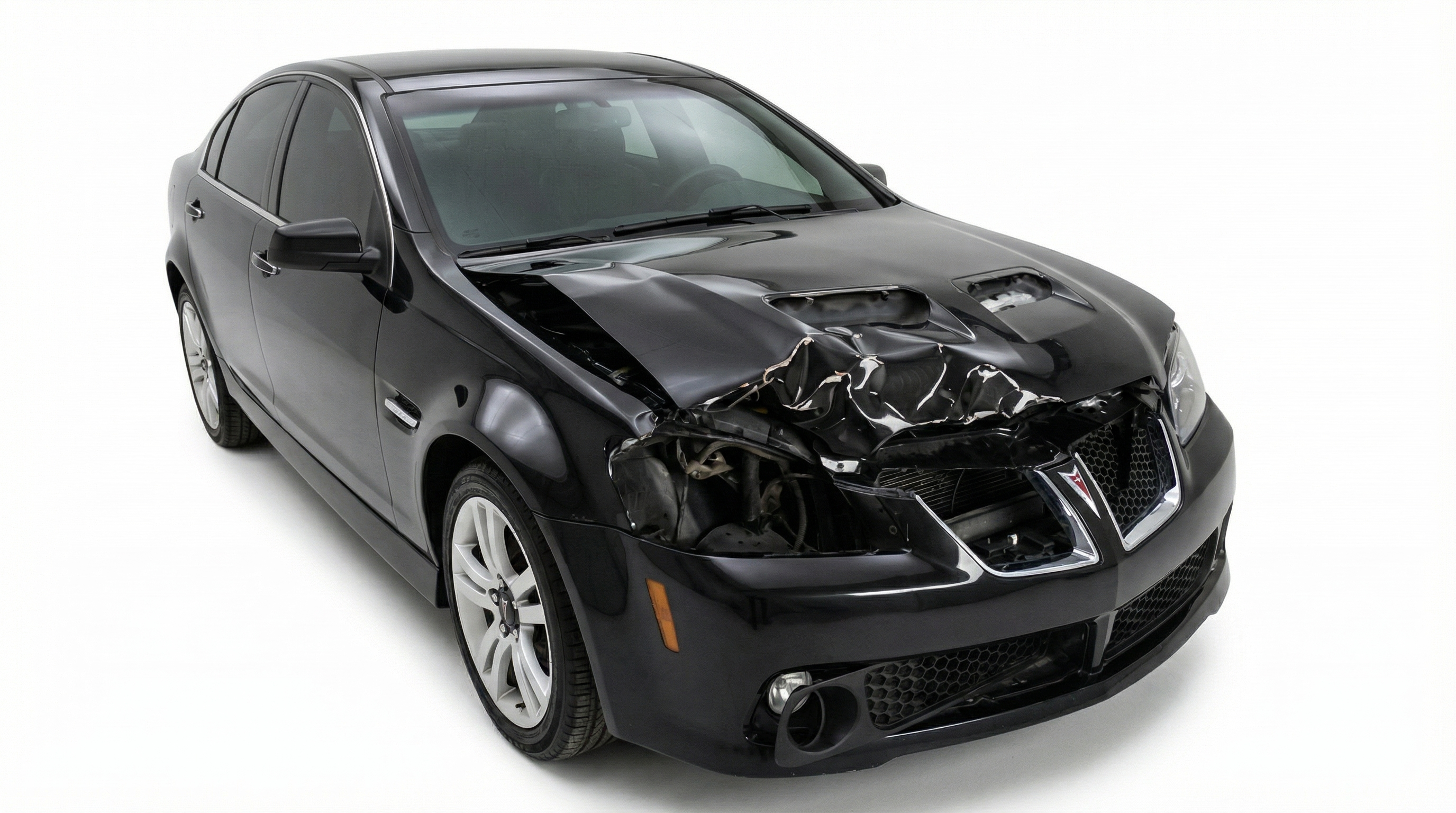
✅ What actually fixed it The vehicle was towed to a mechanic who gave it a jump start, which released the ignition lock and cleared the immobilizer message. The root cause was diagnosed as a combination of a very worn ignition lock cylinder and a failing battery. - g8board.com forum user (Pontiac G8) — After being rear-ended and repaired, numerous electrical issues appeared: TPMS fault, turn signals not working, headlight switch inoperative, and others. The car was drivable but many BCM-controlled functions failed.
❌ Tried (didn't work) Visually inspecting wiring in the trunk., Disconnecting the battery for a period of time.
✅ What actually fixed it The body shop took the car to a dealer who diagnosed a failed Body Control Module (BCM). Replacing the BCM resolved all 10-15 different electrical problems at once.
OEM Part Supersession History
Multiple previous part numbers→92252947— Standard part revision and consolidation by the manufacturer.
Heads up: Any replacement BCM, regardless of part number, must be programmed to the vehicle's VIN using a dealer-level scan tool (like a Tech2 or GDS2) to function correctly and communicate with the other modules. It is not a plug-and-play part.
Model Year Variations Within This Range
- 2009: The high-performance GXP model was introduced with a 6.2L LS3 V8 and optional manual transmission. While the engine and transmission differ, the fundamental Body Control Module and immobilizer architecture (Pass-Key III+ system) remained the same across the base V6, GT V8, and GXP V8 trims.
Helpful Videos

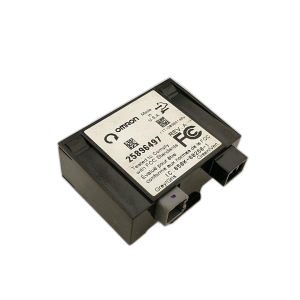
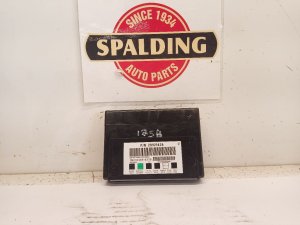
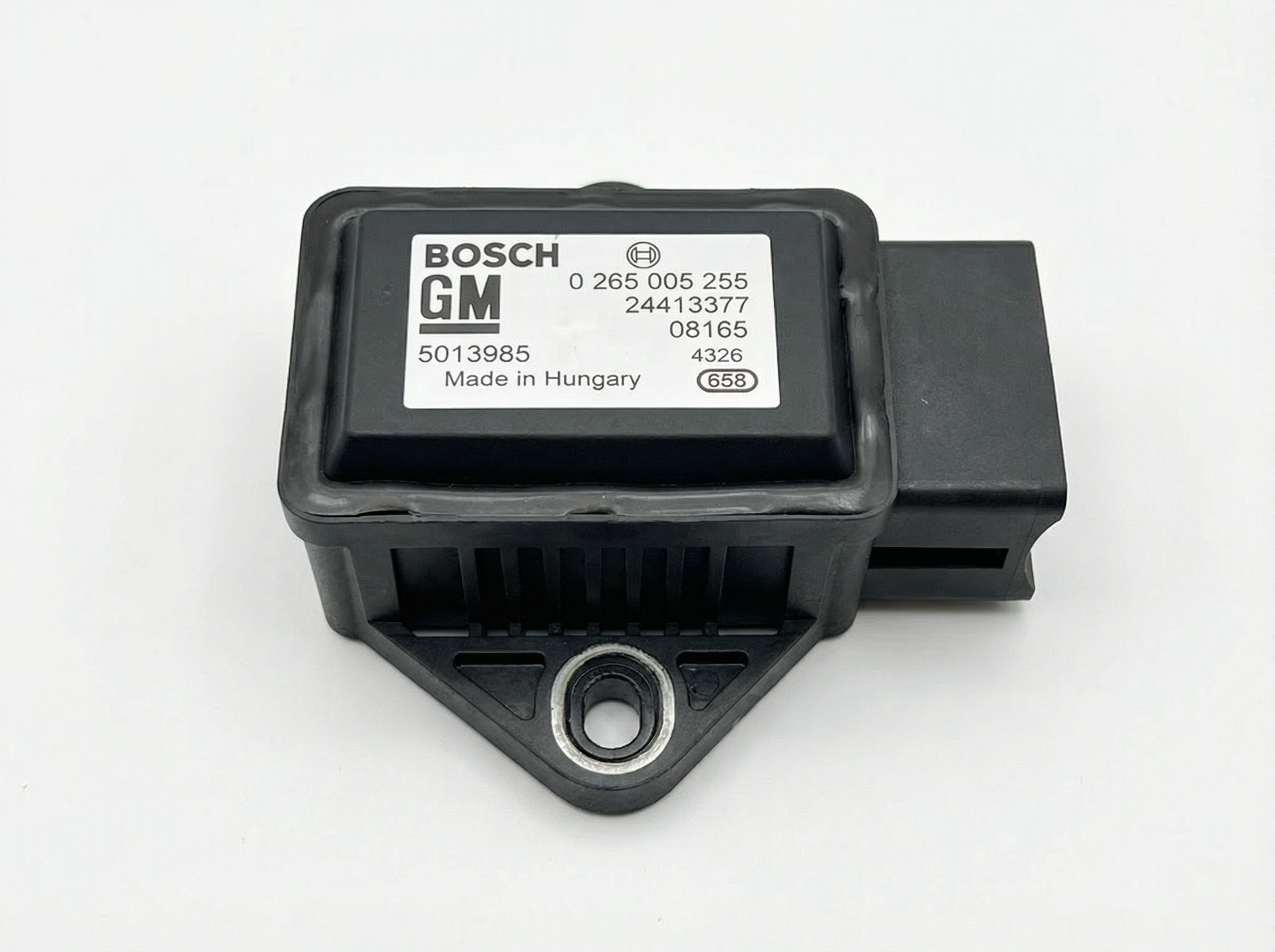
We Have This Part in Stock

The information in this article is provided for general reference and educational purposes only. Vehicle specifications, procedures, and part compatibility can vary by production date, trim level, and region. Always consult your vehicle's factory service manual and verify part numbers before purchasing or performing repairs. Safety-critical components such as airbags, seat belts, and braking systems should be installed by a qualified professional.
- Pontiac G8:
- 🧭 Diagnostic Flowchart
- 🎬 Helpful Videos
- 🛍️ Shop This Part
- What's Unique About the 2008-2009 Pontiac G8
- Symptoms You May Notice
- Most Likely Causes
- Rare But Worth Checking
- Diagnosis Steps
- Parts You'll Likely Need
- Related Codes That Often Appear With This One
- Technical Service Bulletins (TSBs) & Recalls
- Platform-Specific Known Issues
- Hidden / Shadow Codes Worth Checking
- Scan Tool Commands That Help
- Wiring & Ground Locations
- Real Owner Repair Stories
- OEM Part Supersession History
- Model Year Variations Within This Range
- 🎟️ Get 5% Off