

B3060 on 2007 Saturn RELAY: Security System Fault, No-Start Causes & Fixes
On a 2007 Saturn Relay, code B3060 means the anti-theft system doesn't recognize the key, causing a no-start or start-and-stall condition. The most common cause is a faulty ignition switch or lock cylinder, which contains the key reader. A security relearn procedure is often required after replacement.
- B3060 on a 2007 Saturn Relay means the anti-theft system has disabled the engine due to a key recognition failure.
- Do not immediately replace the battery or starter; the problem is almost certainly in the security system, indicated by the security light.
- Before buying parts, try simple fixes: use a spare key and remove all other electronic devices from your keychain to rule out RFI.
- The most common failed part is the ignition switch or the lock cylinder housing it sits in, not the key itself.
- Replacement of security components will require a 30-minute security relearn procedure, and professional service is often needed.
What's Unique About the 2007-2007 Saturn RELAY
The 2007 Saturn Relay uses a GM anti-theft system called Passkey III+ (PK3+), which is common across its U-body platform mates like the 2007-2009 Chevrolet Uplander, Buick Terraza, and Pontiac Montana SV6. These systems are known for issues related to the ignition lock cylinder assembly, where the key reader sensor (exciter coil) is housed. As noted in GM Technical Service Bulletin #PIC5650M, intermittent no-start conditions with this code are a recognized issue across many GM models of this era. The problem often lies with the components in the steering column rather than the key itself, a frequent topic in owner forums.
Diagnostic Flowchart
Tap your situation to follow the diagnostic path that matches what you're seeing on this vehicle.
Symptoms You May Notice
- Intermittent no-crank, no-start condition. [⭐ MANUFACTURER TSB — highest authority]
- Engine starts and then immediately stalls. [⭐ MANUFACTURER TSB — highest authority]
- Security light is illuminated or flashing on the dashboard. [⭐ MANUFACTURER TSB — highest authority]
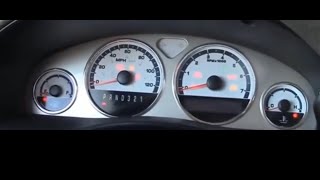
- A single click is heard when turning the key, but the engine does not turn over. 🎬 Watch: Troubleshooting a Saturn Relay that only clicks when starting.
- Message on the driver information center such as "Service Theft Deterrent System" or "Starting Disabled".
- Replacing the starter motor. A security fault can mimic a bad starter (no crank), but if the security light is on, the anti-theft system is the primary suspect.
- Replacing the battery. While low battery voltage can cause various electrical issues, it's unlikely to be the root cause of a persistent B3060 code unless the battery is completely dead. A new battery won't solve the code until a relearn is performed.
Most Likely Causes
- Faulty Ignition Switch or Lock Cylinder Housing 🔴 High Probability → Shop Ignition Switch The sensor (exciter coil) that reads the key's transponder chip is integrated into the ignition lock cylinder housing. Wear and tear on the internal contacts or wiring within the steering column is a very common failure point on these GM vans. The electrical portion of the switch also fails due to internal contact corrosion. GM was aware of ignition switch torque and contact issues as early as 2001-2002 on other models, indicating a history of problems with these components.
How to confirm: A professional technician would use a scan tool to monitor the key data being sent to the BCM. If the data is intermittent or absent while wiggling the key in the ignition, the switch/housing is likely faulty. If a spare key doesn't work and the relearn procedure fails, this becomes the primary suspect.
Typical fix: Replace the ignition lock cylinder housing and/or the electrical portion of the ignition switch. 🎬 See how to replace the ignition switch to fix starting issues. A 30-minute security relearn procedure is necessary after replacement.
Est. part cost: $35-$150 - Radio Frequency Interference (RFI) 🟡 Medium Probability As highlighted in TSB #PIC5650M, the GM Passkey III+ system is sensitive to RFI from other keys, key fobs, aftermarket chargers, toll passes, or even some LED lighting systems. The key's 125 kHz signal is relatively weak and can be easily overpowered.
How to confirm: Remove all other keys, fobs, and electronic devices from the keychain. Unplug any aftermarket devices from the power outlets. Try starting the vehicle with only the single Saturn key. If it starts consistently, RFI was the issue.
Typical fix: Keep other electronic devices and keys separate from the vehicle's ignition key when starting and driving.
Est. part cost: $0 - Damaged or Worn Key ⚪ Low Probability The transponder chip embedded in the key head can be damaged from being dropped or can fail over time, though this is less common than the ignition switch failing. A YouTube video with a Chevy Uplander owner demonstrated that using a non-chip knockoff key caused the "Starting Disabled" message, which was resolved by using the proper GM key with the embedded chip.
How to confirm: Try starting the vehicle with a spare key. If the spare key works reliably, the original key is faulty.
Typical fix: Replace the faulty key. A new key will need to be cut and programmed to the vehicle. This can be done via the 30-minute relearn procedure.
Est. part cost: $70-$200 - Failing Body Control Module (BCM) ⚪ Low Probability → Shop Body Control Module The BCM is the computer that manages the anti-theft system. While not a common failure, it can be the cause if other electrical systems controlled by the BCM (e.g., interior lights, power locks) are also malfunctioning. In some documented cases on platform mates, a faulty BCM created a 'broadcast storm' of bad data, causing this code and many others. A forum user with an '05 Uplander reported that their theft light issues, which also affected gauges and power doors, were worse in hot weather, suggesting a temperature-sensitive failure within the BCM.
How to confirm: This requires advanced diagnostics with a scan tool to check for communication errors with the BCM and rule out all other possibilities. A technician may also check BCM power and ground connections.
Typical fix: Replace and program the Body Control Module. This must be done by a qualified shop with the correct programming tools.
Est. part cost: $250-$500
Rare But Worth Checking
- Damaged Wiring: The wires running from the ignition switch down the steering column can chafe or break over time, especially with frequent use of a tilt steering wheel. This can cause an intermittent connection and trigger B3060 or B3055. Technicians have found broken wires in the harness between the ignition switch and BCM as the root cause.
- Key Data Corruption / Loss of Synchronization: Sometimes, particularly after a battery has been disconnected or has died, the BCM can simply 'forget' the learned key values. In these cases, no parts are actually broken, and the system just needs to be reset. A successful 30-minute relearn procedure will fix this.
Diagnosis Steps
- Verify the battery is fully charged (above 12.4V) and the terminals are clean.
- Scan for all diagnostic trouble codes in the Body Control Module (BCM). Note any other codes that appear with B3060, especially B3055 or B3935.
- Isolate the Key: Remove all other keys, fobs, and electronic devices from the keychain and unplug any aftermarket chargers to rule out Radio Frequency Interference (RFI).
- Try starting the vehicle with a known-good spare key. If it starts, the primary key is faulty.
- Attempt the 30-minute security relearn procedure. This can sometimes resynchronize the key and BCM, especially after a dead battery. The procedure involves three 10-minute cycles of turning the key to 'ON' until the security light goes out.
- Inspect the wiring and connector at the ignition lock cylinder inside the steering column for any signs of damage, chafing, or loose connections.
- If the above steps fail, the most likely cause is a faulty ignition switch or lock cylinder housing. Use a scan tool to monitor the key data signal while wiggling the key to confirm an intermittent failure.
- If all else fails, the Body Control Module (BCM) should be professionally tested.
Parts You'll Likely Need
- Ignition Switch
(OEM #ACDelco D1404F (or D1426D for other GM models, which had an updated design to prevent contact failure))— This is the electrical component that fails most often, causing the vehicle to lose communication with the key's transponder. The original designs were prone to internal corrosion.
Trusted brands: ACDelco, Standard Motor Products (SMP), Dorman
OEM price range: $40-$70
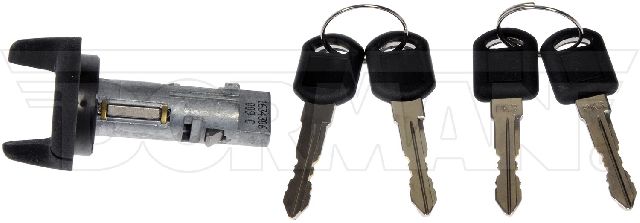
Aftermarket price range: $20-$50 - Ignition Lock Cylinder
(OEM #ACDelco D1462G (or GM Genuine 15795321 for platform mates))— The lock cylinder housing contains the Passkey III+ sensor/exciter coil that reads the key. This component is a known failure point and is often replaced with the ignition switch.
Trusted brands: ACDelco, Dorman, Standard Motor Products
OEM price range: $80-$150
Aftermarket price range: $60-$120
Related Codes That Often Appear With This One
- B3055 — This code means 'No Transponder Modulation,' indicating the system received no signal from the key at all. It often appears with B3060 and points strongly to a bad key or a faulty reader coil in the ignition cylinder.
- B3935 — Meaning 'Transponder Authentication Failed,' this code indicates the module read the key but could not authenticate it. It is frequently set alongside B3060 as part of the same security fault event, as mentioned in TSB PIC5650M.
Technical Service Bulletins (TSBs) & Recalls
- PIC5650M: Addresses an intermittent no crank, no start, or start stall concern with the security light coming on, potentially with codes B3055, B3060, and B3935. It strongly advises checking for Radio Frequency Interference (RFI) first. [⭐ MANUFACTURER TSB — highest authority]
- PIE0232: An engineering information bulletin asking technicians to gather data on low-mileage vehicles with codes B3055, B3060, or B3935 before performing repairs, to help GM 'root cause' the issue.
Platform-Specific Known Issues
- A GM Technical Service Bulletin (TSB #PIC5650M) exists for the 2007 Saturn Relay that addresses an intermittent no crank, no start, or start/stall concern with the security light on, which may be associated with code B3060. [⭐ MANUFACTURER TSB — highest authority]
Scan Tool Commands That Help
- GM Tech 2 / GDS2: Live Plot — To graphically monitor data parameters from the BCM or TDM in real-time. This is useful for diagnosing an intermittent condition by wiggling the key or wiring harness to see if the key signal drops out, which would appear as a spike or drop on the graph.
- GM Tech 2 / GDS2: View 'TDM Valid Key' or 'BCM Key Part Number' Parameter — Use this live data parameter to instantly determine if the vehicle's theft deterrent module is successfully reading and identifying the transponder chip in the key. If the parameter shows 'No' or is blank with a key that should be programmed, it points directly to a bad key, RFI, or a faulty reader coil/antenna.
- GM Tech 2 / GDS2: Immobilizer Learn — This service function is required to program new keys or to relearn existing keys after a component like the BCM or ignition lock cylinder has been replaced. While a manual 30-minute relearn exists, the scan tool function is faster and provides confirmation of the process.
Wiring & Ground Locations
- Body Control Module (BCM) — Located below the left side of the dashboard, to the left of the steering column.. The BCM is the central computer for the Passkey III+ anti-theft system. All signals from the key and ignition switch are processed here. Poor connections or a faulty BCM will directly cause code B3060.
- G201 / G203 — These are primary interior ground points located behind the lower left side of the dash, near the steering column and BCM.. The BCM relies on these grounds to function correctly. A loose or corroded G201 or G203 ground can cause intermittent and difficult-to-diagnose electrical issues, including security system faults like B3060. On similar GM platforms, a bad G201 ground is known to cause issues with the instrument cluster, HVAC controls, and data link connector, all of which can present with a B3060.
- BCM Connector C1 — This is one of the main connectors at the Body Control Module.. Specific pins on this connector are critical for the ignition and security system. Pin 21 (Yellow wire) is for the starter signal, Pin 22 (Pink wire) is for Ignition 1 power, and Pin 40 (Lt. Green wire) is for the KeySense circuit, which detects if the key is in the ignition. A poor connection at any of these pins can cause a no-start and trigger security codes.
Real Owner Repair Stories
- SaturnFans.com forum user 'bmetdave' (2007 Saturn Ion (similar GM platform with related electrical architecture)) — Intermittent no-crank, no-start condition with fuel system issues.
❌ Tried (didn't work) Initial troubleshooting of relays and fuses did not pinpoint the cause.
✅ What actually fixed it The user discovered that the three small bolts securing an inner cover on the under-hood fuse box were loose. These bolts are responsible for keeping the main electrical connectors (like connector C2) fully seated. After tightening these bolts, the intermittent no-crank and fuel issues were resolved. This was a self-induced problem from previous troubleshooting but highlights how a loose main connector can cause symptoms mimicking a component failure. - Chevrolet Forum user (2005 Chevrolet Uplander (platform mate)) — Service theft system light comes on, especially when it's hot outside. While driving, gauges and radio would sometimes fail. Sometimes the car wouldn't start. Power doors also stopped working when the theft light was on.
❌ Tried (didn't work) Popping the hood and closing it would sometimes allow the car to start, suggesting a connection issue., Another user with the same issue tried replacing battery terminals and checking the battery, fuses, relays, and alternator with no success.
✅ What actually fixed it The original poster did not report a final fix, but the symptoms strongly pointed to a failing Body Control Module (BCM) that was sensitive to temperature changes, or a poor ground/power connection to the BCM. The fact that multiple, unrelated body systems were failing simultaneously with the theft light points away from a simple key/ignition switch issue and towards a central module failure.
OEM Part Supersession History
15216929, 88964357→15795321 (Also sold as ACDelco D1462G)— Standard part evolution and consolidation for the ignition lock housing.
Heads up: Part number 15795321 is also used on other GM vehicles like the Chevy Colorado and Hummer H3, but it is the correct housing for the U-body vans.
Helpful Videos

We Have This Part in Stock


The information in this article is provided for general reference and educational purposes only. Vehicle specifications, procedures, and part compatibility can vary by production date, trim level, and region. Always consult your vehicle's factory service manual and verify part numbers before purchasing or performing repairs. Safety-critical components such as airbags, seat belts, and braking systems should be installed by a qualified professional.
- Saturn RELAY:
- 🧭 Diagnostic Flowchart
- 🎬 Helpful Videos
- 🛍️ Shop This Part
- What's Unique About the 2007-2007 Saturn RELAY
- Symptoms You May Notice
- Most Likely Causes
- Rare But Worth Checking
- Diagnosis Steps
- Parts You'll Likely Need
- Related Codes That Often Appear With This One
- Technical Service Bulletins (TSBs) & Recalls
- Platform-Specific Known Issues
- Scan Tool Commands That Help
- Wiring & Ground Locations
- Real Owner Repair Stories
- OEM Part Supersession History
- 🎟️ Get 5% Off