

OBD-II Code B3111: Comprehensive Guide for Key Fob & System Faults
What B3111 means, why it triggers, and how to fix it like a pro
- Code B3111 indicates a dying CR2032 battery in your third-programmed key fob, requiring a simple $5 replacement.
- Verify your specific vehicle's code definition first; on certain AWD Equinox and Terrain models, B3111 signals a failed Transfer Case Control Module, not a key fob.
- Replace the fob battery within 2 to 4 weeks of seeing this code to prevent complete lockout and a potential $150+ emergency locksmith bill.
- Clean the internal fob contacts with isopropyl alcohol and perform a 30-second battery disconnect to reset the Body Control Module if a new battery doesn't clear the code.
What Does B3111 Mean?
Code B3111 indicates your car's computer received a 'low battery' signal from the key fob programmed as 'Transmitter 3'. The Body Control Module (BCM) sets this code after detecting a weak signal on three consecutive button presses. It serves as an advance warning to replace the CR2032 battery. However, on specific Chevrolet and Buick models, B3111 signifies a mechanical fault with the gear shifter or all-wheel-drive system.
Technical definition: The SAE/OBD-II definition is "Keyless Entry Transmitter 3 Low Battery". The Body Control Module (BCM) triggers it after receiving three consecutive low-voltage signals from key number three. In specific GM applications, the definition changes to "Knob Release Switch - Signal Stuck High" or "Lost Communication With Transfer Case Control Module".
Can I Drive With B3111?
Yes. Your car is mechanically safe to drive. This code warns of a failing key fob battery. The primary risk is being stranded; if the battery dies completely, you cannot unlock or start your car.
Common Causes
- Weak or dead key fob battery (Very Common) — Key fob batteries (typically CR2032 lithium cells) last 2-5 years before their voltage drops below the 2.7V threshold monitored by the vehicle.
- Incorrect battery installation (Common) — If recently replaced, the battery is likely installed upside down. The positive (+) and negative (-) sides must orient correctly to contact the terminals.
- Dirty or corroded battery contacts (Less Common) — Moisture, skin oils, and dirt create an invisible film or visible corrosion on the metal contacts inside the fob, blocking voltage delivery.
- Glitched or Stored History Code (Less Common) — A temporary voltage drop stores this code in the BCM's memory. It becomes a 'history' code that requires manual clearing with an OBD-II scanner.
- Defective key fob (Rare) — Internal electronics fail from drops, water submersion, or component aging. Cracked solder joints cause intermittent failures that mimic a weak battery.
- Faulty Receiver Module or Wiring (Very Rare) — The Remote Control Door Lock Receiver (RCDLR) or Body Control Module (BCM) fails or suffers wiring damage, causing it to misinterpret incoming fob signals.
Symptoms
- 'Low Key Fob Battery' message on dash — The driver information center (DIC) or instrument cluster displays a plain-text warning.
- Reduced range and intermittent operation — You must stand significantly closer to the vehicle, or press buttons multiple times, for the remote functions to respond.
- Push-to-start failure / 'No Remote Detected' — The car fails to start and requires placing the key fob in a designated emergency backup slot (often in the center console or steering column).
- Service AWD or Service Shifter warning light — On specific GM models, this code triggers drivetrain or transmission warnings instead of key fob symptoms.
Diagnostic Flowchart
Tap your situation to follow the diagnostic path that matches what you're seeing on this code.
Common Fixes & Costs
- Replace key fob battery — Parts: $2-$10, Labor: $0, ~0.1 hr book time (DIY)
- Clean internal key fob contacts — Parts: $0-$5, Labor: $0, ~0.1 hr book time (DIY)
- Clear history codes and hard reset BCM — Parts: $0, Labor: $0, ~0.2 hr book time (DIY)
- Replace and program a new key fob — Parts: $70-$450, Labor: $50-$180, ~0.5 hr book time (Professional)
- Wiring Harness Repair (TSB PIT5288H) — Parts: $10-$50, Labor: $200-$600, ~4 hr book time (Professional)
Used vs. New Parts: Buying Guide
When a used part is worth it: Buying a used key fob is rarely a good idea. Modern fobs program only once to a vehicle. A 'virginized' fob from a reputable seller is the only viable used option.
Donor-vehicle mileage cap: roughly under 100000 miles for the part to have meaningful remaining life.
Donor quality checklist:
- Verify the FCC ID and IC# on the back of the fob EXACTLY matches the original.
- Ensure the seller guarantees the fob is 'unlocked' and ready for programming.
- Avoid fobs with cracked cases or water damage.
Decision logic:
- If The part is a simple battery (e.g., CR2032) → Always buy new.
- If Vehicle uses a modern smart/proximity key → Buy a new OEM or high-quality aftermarket fob. Used fobs frequently fail to program.
Warranty tradeoff: Used fobs have no warranty. New aftermarket fobs offer a 1-year warranty. New OEM fobs carry the manufacturer's warranty.
Worst-case if a used part fails: $150 for a useless used fob plus the locksmith's failed programming attempt.
What Happens If You Wait — Timeline
- 0-2 months: Code B3111 sets. A 'Low Key Fob Battery' message appears. Range reduces by 10-20 feet. (Added cost: $0)
- 2-4 months: The fob becomes intermittent. You must press buttons multiple times for the car to respond. (Added cost: $0)
- 4-6 months: Remote functions fail completely. You must use the physical key blade and the emergency push-to-start backup slot. (Added cost: $5 for a battery.)
- 6+ months / Sudden Failure: Complete lockout. The physical key is lost or the lock cylinder is seized, and the dead fob prevents entry. (Added cost: $150-$300 for an emergency automotive locksmith.)
Cost of Not Fixing It
- Immediate: Intermittent key fob function and reduced range. (Added cost: $0)
- Days to Weeks: Complete key fob failure. Inability to unlock doors remotely or use push-to-start. (Added cost: $0)
- Long-Term: Vehicle lockout requiring an emergency automotive locksmith for entry and programming. (Added cost: $150-$300)
Diagnosis Steps
- Verify Code Definition for Your Vehicle
Confirm what B3111 means for your exact Make, Model, and Year. For most GM vehicles, it's 'Transmitter 3 Low Battery'. For some Chevrolets, it means 'Knob Release Switch - Signal Stuck High', and for some Buicks, 'Lost Communication With Transfer Case Control Module'.
Tools: OBD-II scanner, vehicle-specific service information (Beginner) - Identify and Test the Correct Key Fob
This code targets 'Transmitter 3'. If you have multiple fobs and are unsure which is #3, replace the batteries in all of them simultaneously.
Tools: Masking tape and pen (to label fobs) (Beginner) - Replace the Key Fob Battery
Open the key fob case and replace the battery (usually a CR2032). Note the orientation (+/-) of the old battery before removing it.
Tools: Key fob battery (e.g., CR2032), small flathead screwdriver (Beginner) - Inspect and Clean Battery Contacts
Inspect the metal contacts inside the fob. Clean them with a pencil eraser or a cotton swab dipped in isopropyl alcohol to remove invisible resistance.
Tools: Pencil eraser, isopropyl alcohol, cotton swab (Beginner) - Clear the Code and Test Operation
Use an OBD-II scanner to clear B3111 from the Body Control Module. Operate the transmitter 3-4 consecutive times to ensure the code does not return.
Tools: OBD-II scanner (Beginner) - [PRO TIP] Perform BCM Hard Reset if Code Persists
If the code immediately returns with a new battery, the BCM is stuck in a protective state. Disconnect the negative terminal of the main car battery for 30 seconds, reconnect, and clear the DTC again.
Tools: Wrench for battery terminal, OBD-II scanner (Intermediate) - [PRO TIP] Measure Voltage Under Load
Measure the voltage on the fob's circuit board while pressing a button. If voltage drops below 2.7V, the new battery is faulty. If voltage remains above 3.0V but the fob fails, the fob electronics are defective.
Tools: Multimeter with fine-point probes (Advanced) - [ADVANCED] Inspect Vehicle-Specific Alternate Faults
If your vehicle defines B3111 as an AWD or shifter fault, inspect the rear differential clutch control module connector for corrosion, or test the shifter assembly for a stuck release button.
Tools: Flashlight, trim removal tools, multimeter (Advanced)
When This Code Triggers (Freeze-Frame Conditions)
- Condition Trigger: 3 consecutive signals (The BCM detects a low voltage signal from the same transmitter three times in a row.)
- System Voltage: 12.0 - 14.8V (Vehicle's main electrical system voltage is normal; the fault is isolated to the transmitter.)
- BCM Status: Active (The Remote Function Actuation (RFA) system must be active to set the code.)
Related Codes
- B3109 — Low Battery in Keyless Entry Transmitter 1. The diagnostic process is identical.
- B3110 — Low Battery in Keyless Entry Transmitter 2.
- B3112 — Low Battery in Keyless Entry Transmitter 4. Seeing B3109-B3112 together means all fob batteries are dying simultaneously.
Climate & Environmental Factors
- Cold Weather: Low temperatures slow the chemical reactions inside lithium batteries. A weak fob battery fails completely in freezing weather, triggering B3111.
- High Humidity: Sustained humidity promotes corrosion on the key fob's internal battery contacts, creating resistance that mimics a dead battery.
- Sudden Temperature Changes: Moving a fob from freezing outdoors to a warm pocket causes internal condensation, leading to short circuits.
How to Talk to a Mechanic About This Code
Say this: "I have a B3111 code on my vehicle. I've already replaced the key fob battery. I need a diagnostic to confirm if the code has an alternate meaning for my VIN, like a shifter or AWD issue, or if there's a deeper BCM problem."
This proves you've done basic troubleshooting and directs the technician to perform a proper module diagnosis rather than charging you for a redundant battery change.
Avoid saying:
- 'My key fob isn't working.'
- 'I think I need a new key fob.'
Questions to ask before authorizing the repair:
- What is the specific definition of B3111 for my vehicle's VIN?
- If recommending a new key fob, what tests confirmed the old one failed?
- If recommending a BCM or wiring repair, what exact voltage readings prove the fault?
Where to Take It: Dealer vs Independent vs Chain
- Dealer:
Recommended ONLY if the problem is an alternate shifter/AWD definition or complex wiring fault.
Best for: Diagnosing alternate code definitions ('Service Shifter', 'Service AWD')., Complex BCM or wiring issues.
Downsides: Highest labor rates., Unwilling to program aftermarket fobs. (Typical cost: +50% vs. baseline) - Independent Shop:
Good for second opinions, but ensure they can handle key programming before authorizing.
Best for: Clearing history codes., Diagnosing common electrical issues.
Downsides: May lack specialized tools for programming newer smart keys. (Typical cost: +0% vs. baseline) - Chain Shop:
AVOID for diagnosing B3111.
Best for: Selling you a key fob battery.
Downsides: Technicians lack training for diagnosing body electrical codes or programming modules. (Typical cost: -10% vs. baseline)
When to Walk Away From the Repair
If the estimated repair cost for a BCM replacement or wiring harness repair exceeds 40% of your car's value, consider selling it.
- Car worth $4000, fix is $1800: Walk away. A 45% repair cost on a lower-value car is a poor investment.
- Car worth $15000, fix is $1800: Fix it. The repair cost is 12% of the vehicle's value.
- Car worth $8000, fix is $150: Fix it. A new key fob is a minimal expense to restore full functionality.
What Scan Tool You Need for This Code
Minimum: A scanner that reads and clears manufacturer-specific Body ('B') codes.
A standard $20 code reader only reads Powertrain ('P') codes and will show 'No Codes' for a B3111 fault.
Budget: BlueDriver Pro Scan Tool (~$99) — Connects via Bluetooth. Reads and clears BCM codes on GM vehicles, which is the minimum needed to clear B3111 after a battery change.
Mid-range: Foxwell NT510 Elite for GM (~$180) — Provides full-system access to read/clear BCM codes and offers bidirectional controls to test components for alternate shifter/AWD faults.
Professional: Autel MaxiCOM MK808 (~$450) — Offers full diagnostics and key programming functions needed to purchase and program a new fob yourself.
Rent vs buy: Auto parts store loaner tools are basic code readers that cannot access B-codes. Buying a budget-friendly scanner like the BlueDriver is your best bet.
How to Clear the Code After You Fix It
- Replace the key fob battery.
- Use an OBD-II scanner capable of reading B-codes to clear the fault from the Body Control Module (BCM).
- Operate the repaired key fob 3-5 times to confirm the code does not return.
Drive cycle (~5 minutes): No drive cycle is required. The BCM clears the code as 'current' once a normal voltage signal is received. A BCM hard reset (disconnecting the car battery for 30 seconds) forces a clear.
Readiness monitors affected: None
Watch out for:
- Using a basic $20 OBD-II scanner that cannot read or clear 'B' (Body) codes.
- Failing to press the fob buttons enough times after the repair for the BCM to confirm the fix.
- Installing the new battery upside down.
Will This Fail Emissions / State Inspection?
No — by itself this code doesn't fail OBD inspection (but it can keep readiness monitors from setting, which causes a separate fail).
- California: This code will not cause a smog check failure. California focuses on powertrain (P-codes).
- New York: B3111 will not fail the NYS emissions inspection.
- Texas: This code will not fail the Texas state inspection.
Most Commonly Affected Vehicles
- Chevrolet Corvette (2014-2019) — Extremely common on the C7 Corvette. TSB 17-NA-117 addresses related BCM communication issues.
- Chevrolet Silverado (2008-2018) — For 2015+ models, if B3111 appears with U-codes, TSB PIT5288H points to a pinched wiring harness under the dash.
- Chevrolet Equinox / GMC Terrain (2008-2017) — On AWD models, B3111 means 'Lost Communication With Transfer Case Control Module'. Inspect the rear differential module connector.
- Chevrolet Malibu (2013-2016) — Service manuals confirm B3111 for Transmitter 3.
- Cadillac ATS, CTS, Escalade (2013-2018) — TSB 14-08-117-001 details the BCM hard reset procedure if codes won't clear after a fix.
- GMC Sierra, Yukon (2008-2018) — Shares the Silverado's pinched harness issue (2015+) and BCM hard reset requirements.
- Buick Enclave, Regal, LaCrosse (2010-2017) — CRITICAL: On AWD models, B3111 means 'Lost Communication With Transfer Case Control Module', requiring AWD system diagnosis.
Manufacturer-Specific Notes
- General Motors (Chevrolet, Buick, GMC, Cadillac): For most GM vehicles, this code specifically means the battery is low in 'Transmitter 3'. It sets after three consecutive low-voltage signals.
- Chevrolet: On certain automatic transmission variants, B3111 means 'Knob Release Switch - Signal Stuck High', indicating a fault in the electronic gear shifter.
- Buick / GMC: In AWD models, B3111 indicates 'Lost Communication With Transfer Case Control Module', pointing to a drivetrain network issue.
- GM K2XX Platform (2015+ Trucks/SUVs): TSB PIT5288H identifies a wiring harness near the parking brake pedal that gets pinched, causing keyless entry failure and B-codes.
Real Owner Stories
2015 C7 Corvette Z51 - The Simple Fix
Owner scanned a B3111 code. They replaced the key fob battery, but the code persisted.
What they tried:
- Replaced the battery in 'Transmitter 3'.
Outcome: Forum members advised clearing the history code with an OBD-II scanner. Once cleared, it never returned.
Lesson: Always clear B3111 with a scanner after a battery swap; the BCM rarely clears this code on its own.
2017 Chevy Silverado - Misdiagnosis & The Real Cause
Owner experienced multiple electrical failures (A/C, windows, locks) and B-codes immediately after a main battery replacement.
What they tried:
- Replaced the main car battery.
Outcome: The technician forgot to reconnect a small ground wire on the battery terminal. Reconnecting it restored all systems.
Lesson: Check main battery connections first if B3111 appears alongside a cluster of unrelated electrical faults.
2016 GMC Sierra - The Hidden Wiring Problem
Owner faced intermittent 'No Fob Detected' messages and B3111 alongside U-codes.
What they tried:
- Replaced key fob batteries and cleared codes.
Outcome: The root cause was a pinched wiring harness under the dash near the parking brake pedal (TSB PIT5288H). Freeing and repairing the wires fixed the issue.
Lesson: On 2015+ GM trucks, suspect a pinched harness near the parking brake if B3111 accompanies communication (U) codes.
Chevy Equinox AWD - The Alternate Definition
Owner scanned B3111 alongside a 'Service AWD' light on the dashboard.
What they tried:
- Replaced the key fob battery.
Outcome: The code actually meant 'Lost Communication With Transfer Case Control Module' due to a corroded rear differential connector.
Lesson: Always verify the exact B3111 definition for your VIN. On AWD models, it often points to the drivetrain, not the key.
How to Prevent This Code From Triggering
- Proactively replace key fob batteries. (Every 2-3 years) — CR2032 batteries have a 2-5 year lifespan. Scheduled replacement prevents low-voltage glitches and being stranded.
- Clean key fob contacts during battery change. (Every battery change) — Wiping the contacts with an isopropyl alcohol swab removes invisible skin oils and humidity buildup that mimic a dead battery.
- Use a protective silicone key fob cover. (Always) — A $10 silicone cover cushions against drops that crack solder joints and seals out moisture that causes corrosion.
- Store spare key fobs away from the vehicle. (Daily habit) — Storing keys too close to the car keeps the fob in an 'active' communication state, draining the battery rapidly.
Frequently Asked Questions
What does 'Transmitter 3' mean and how do I find it?
'Transmitter 3' is the third key fob programmed into the car's memory, often a spare key. If unsure which key is which, replace the batteries in all your fobs simultaneously.
What if B3111 isn't for the key fob on my Chevy or Buick?
Verify the code's definition for your specific VIN using a service manual. If it points to a 'Knob Release Switch' or 'Transfer Case Module', diagnose the gear shifter assembly or AWD system instead of the key fob.
Why did the code come back after I changed the battery?
The new battery might be defective, the internal fob contacts could be dirty, or the code is a stored 'history' code. Disconnect the car's main battery for 30 seconds to hard reset the Body Control Module (BCM) and clear the code.
Can I just ignore code B3111?
Ignoring B3111 risks complete key fob failure. You will eventually be unable to unlock or start your car, leading to a costly emergency locksmith call.
What are the most common mistakes when diagnosing B3111?
The biggest mistake is ignoring alternate manufacturer-specific definitions for Chevy and Buick, leading to wasted money on key fobs. Always use a scan tool to clear the code after replacing the battery to confirm the fix.
What kind of battery does my key fob need?
Most modern key fobs use a standard CR2032 3V lithium coin battery. Check your owner's manual or open the fob to confirm the exact size.
What is a BCM 'protective state' and how do I reset it?
When the Body Control Module (BCM) detects a fault, it shuts down the circuit to protect itself. Disconnect the vehicle's main battery for 30 seconds to force the BCM to power cycle, exit the protective state, and recognize your repair.
Key Takeaways
- Code B3111 indicates a dying CR2032 battery in your third-programmed key fob, requiring a simple $5 replacement.
- Verify your specific vehicle's code definition first; on certain AWD Equinox and Terrain models, B3111 signals a failed Transfer Case Control Module, not a key fob.
- Replace the fob battery within 2 to 4 weeks of seeing this code to prevent complete lockout and a potential $150+ emergency locksmith bill.
- Clean the internal fob contacts with isopropyl alcohol and perform a 30-second battery disconnect to reset the Body Control Module if a new battery doesn't clear the code.
Shop the Parts Behind B3111
Below are the parts most often responsible for code B3111, ranked by how frequently each one is the actual culprit (per the diagnosis above). Tap any to see what we have for your vehicle.

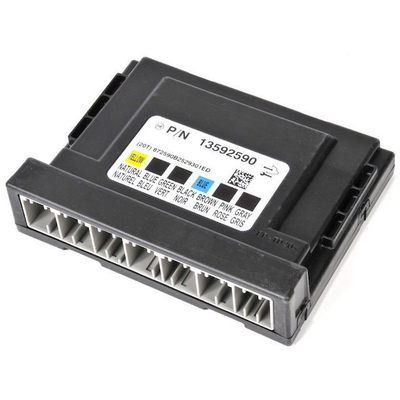


The information in this article is provided for general reference and educational purposes only. Vehicle specifications, procedures, and part compatibility can vary by production date, trim level, and region. Always consult your vehicle's factory service manual and verify part numbers before purchasing or performing repairs. Safety-critical components such as airbags, seat belts, and braking systems should be installed by a qualified professional.
- 🧭 Diagnostic Flowchart
- 🛍️ Shop This Part
- What Does B3111 Mean?
- Can I Drive With B3111?
- Common Causes
- Symptoms
- Common Fixes & Costs
- Used vs. New Parts: Buying Guide
- What Happens If You Wait — Timeline
- Cost of Not Fixing It
- Diagnosis Steps
- When This Code Triggers (Freeze-Frame Conditions)
- Related Codes
- Climate & Environmental Factors
- How to Talk to a Mechanic About This Code
- Where to Take It: Dealer vs Independent vs Chain
- When to Walk Away From the Repair
- What Scan Tool You Need for This Code
- How to Clear the Code After You Fix It
- Will This Fail Emissions / State Inspection?
- Most Commonly Affected Vehicles
- Manufacturer-Specific Notes
- Real Owner Stories
- 2015 C7 Corvette Z51 - The Simple Fix
- 2017 Chevy Silverado - Misdiagnosis & The Real Cause
- 2016 GMC Sierra - The Hidden Wiring Problem
- Chevy Equinox AWD - The Alternate Definition
- How to Prevent This Code From Triggering
- Frequently Asked Questions
- What does 'Transmitter 3' mean and how do I find it?
- What if B3111 isn't for the key fob on my Chevy or Buick?
- Why did the code come back after I changed the battery?
- Can I just ignore code B3111?
- What are the most common mistakes when diagnosing B3111?
- What kind of battery does my key fob need?
- What is a BCM 'protective state' and how do I reset it?
- Key Takeaways
- 🎟️ Get 5% Off