

OBD-II Code B3124: Keyless Entry Rear Antenna Circuit Fault
What B3124 means, why it triggers, and how to fix it
- Code B3124 indicates a fault in the rear keyless entry antenna circuit, meaning replacing your key fob battery will not fix the problem.
- Empty your trunk completely to remove metallic obstructions and check for an unplugged antenna connector under the carpet, which resolves over 50% of B3124 cases.
- This low-severity code disables passive entry, but you can safely drive the vehicle by placing the key fob in the center console backup slot to start the engine.
- On 2018 and newer GM vehicles, a B3124 code appearing immediately after a dead battery requires a dealer software reflash per TSB 23-NA-163, not a parts replacement.
What Does B3124 Mean?
B3124 means the car's Body Control Module (BCM) detects an electrical fault in the circuit for the rear keyless entry antenna. This antenna, often called 'Keyless Entry Antenna 6' by GM, detects when your key fob is in or near the trunk area. The BCM has determined the circuit is open (a broken wire), shorted to ground, or shorted to voltage, preventing communication with the fob.
Technical definition: The official definition for code B3124 is "Keyless Entry Antenna 6 Circuit Fault." A professional scan tool displays a specific sub-code: B3124 02 indicates a "Short to Ground," while B3124 05 indicates a "High Voltage/Open" 🎬 Watch: Diagnosing an antenna circuit high voltage fault circuit condition. The Keyless Entry Control Module has lost its expected signal from the rear antenna, disabling passive entry and start functions.
Can I Drive With B3124?
Yes. Yes, you can safely drive your car. This code affects convenience features like keyless entry and push-to-start but does not impact the engine's performance, reliability, or core safety systems. You must use the physical key or the backup slot procedure to start the vehicle, but there is no risk of mechanical damage from continued driving.
Common Causes
- Objects in Trunk Blocking Antenna (Very Common) — Large metal objects, toolboxes, luggage, or electronics placed directly over the antenna block its low-frequency signal. This is the most common cause on GM vehicles and is addressed in TSB PIC6149A. In documented cases, a magnet left in the trunk attached itself to the antenna module, causing the fault.
- Unplugged Antenna Connector (Common) — The antenna's electrical connector, located under the trunk floor or cargo area trim, is knocked loose. On models like the Chevy Tahoe, the connector lacks a strong locking tab, making it easy to unplug by shifting cargo or passengers' feet.
- Damaged Wiring, Corroded Connector, or Bad Ground (Common) — Wires leading to the antenna are pinched, frayed, or cut by cargo. Moisture from spills causes green or white corrosion on the connector pins, creating high resistance. Additionally, a loose or corroded chassis ground bolt in the trunk mimics a failed antenna.
- BCM Software Glitch After Low Voltage (Less Common) — On 2018 and newer GM vehicles, a dead battery, jump-start, or battery replacement triggers a software glitch in the Body Control Module (BCM), falsely setting this code. This known issue requires a dealer reflash per TSB 23-NA-163.
- Antenna Installed Upside Down (Less Common) — If the antenna was recently replaced or disturbed, it was likely installed upside down. GM TSB PIC6149A advises technicians to check for this condition, as it prevents the antenna from working correctly even if electrically sound.
- Interference from Aftermarket Electronics (Rare) — Poorly installed aftermarket devices like GPS trackers, remote start systems, or audio amplifiers emit radio frequency interference (RFI) that disrupts the keyless entry antenna's signal.
- Failed Rear Compartment Antenna (Rare) — The internal electronics of the antenna module itself have failed. This is not a common point of failure and should only be considered after ruling out obstructions, wiring, grounds, and software glitches.
- Failed Body Control Module (BCM) (Very Rare) — The driver circuit within the Body Control Module that powers and reads the antenna has failed. This is the most expensive and least likely cause, requiring advanced diagnostics to confirm before replacement.
Symptoms
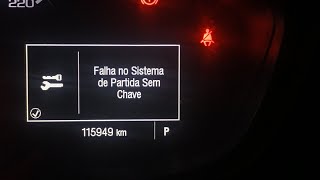
- "Service Keyless Entry" or "Service Keyless Start" Message 🎬 Watch: Troubleshooting keyless start failures on GM vehicles — A warning message appears on the driver information center (DIC) as soon as the vehicle is started.
- Push-to-Start Fails (Requires Backup Slot) — The car displays a "No Remote Detected" message and won't start. You must place the key fob in the designated backup slot (often in the center console) for the engine to start.
- Keyless Entry Door Buttons Don't Work — You cannot lock or unlock the doors by pressing the exterior door handle buttons. You must use the key fob remote buttons instead.
- Trunk Won't Detect Key Fob — The system fails to recognize the key fob inside the trunk, defeating the safety feature designed to prevent you from locking your keys in the car.
- Remote Start Fails — The factory remote start function is disabled because the system cannot confirm the vehicle's security status and key fob location.
Diagnostic Flowchart
Tap your situation to follow the diagnostic path that matches what you're seeing on this code.
Common Fixes & Costs
- Remove Obstructions from Trunk — Parts: $0, Labor: $0, ~0.1 hr book time (DIY)
- Reconnect Antenna Connector — Parts: $0, Labor: $80-$150 (shop diagnosis/access fee), ~0.2 hr book time (DIY)
- Reprogram Body Control Module (BCM) — Parts: $0, Labor: $150-$250 (dealer labor for software reflash), ~1.0 hr book time (Professional)
- Repair Damaged Wiring or Clean Ground Connection — Parts: $5-$20, Labor: $125-$250, ~1.5 hr book time (Intermediate)
- Replace Rear Keyless Entry Antenna (Module)
— Parts: $35-$75, Labor: $100-$150, ~0.8 hr book time
(Beginner)
: OEM
: OEM
: OEM
Used vs. New Parts: Buying Guide
When a used part is worth it: A used antenna makes sense if you are on a very tight budget and can source one from a low-mileage vehicle. However, given the low cost of new aftermarket parts (often $35-$50), the savings are minimal.
Donor-vehicle mileage cap: roughly under 100000 miles for the part to have meaningful remaining life.
Donor quality checklist:
- Match the part number exactly from your original antenna.
- Ensure the part comes from a reputable recycler with a functional warranty.
- Avoid parts from flood-damaged or high-corrosion areas.
Decision logic:
- If A new aftermarket (e.g., Dorman) or OEM part is available for under $75 → Buy new. The small cost premium is worth the assurance of a new part and a longer warranty.
- If The cost of a new part is prohibitive and a used part is less than 50% of the new price → A used part is a reasonable option, provided the part number matches and it has a short-term warranty.
- If The issue is intermittent or suspected to be wiring-related → Do not buy any part until you have performed full circuit diagnostics. The antenna itself is rarely the point of failure.
Warranty tradeoff: Used parts typically have a 30-90 day warranty. New aftermarket parts often have a 1-year to limited lifetime warranty. New OEM parts carry a 1-2 year warranty.
Worst-case if a used part fails: $100-$150 if a used part fails after installation, requiring you to pay for the labor a second time.
What Happens If You Wait — Timeline
- Immediate: Code B3124 sets, and a 'Service Keyless Entry System' message appears. Passive entry (door handle buttons) and passive start (push-button without backup slot) are disabled. (MPG impact: 0%% · Added cost: $0)
- Ongoing: Continued daily inconvenience. You must use the key fob buttons to lock/unlock and place the fob in the backup slot to start the car. The anti-lockout feature is defeated. (MPG impact: 0%% · Added cost: $75-$250 (potential cost for a locksmith if you accidentally lock your fob in the trunk).)
- 6+ months (if caused by wiring damage): If the cause is a wire shorting to ground or power, there is a small but persistent risk it eventually blows a fuse related to the Body Control Module, affecting other body-related electronic functions. (MPG impact: 0%% · Added cost: $5-$250 (cost to diagnose and repair a more complex electrical short or replace a fuse).)
- At time of sale/trade-in: An active warning message on the instrument cluster is a red flag for potential buyers or dealers, reducing the vehicle's perceived value. (MPG impact: 0%% · Added cost: $100-$500 (potential reduction in vehicle's resale or trade-in value due to an unresolved electronic fault).)
Cost of Not Fixing It
- Immediate: Loss of convenience features: passive door unlocking, push-button start (without using backup slot), and trunk proximity detection are disabled. (Added cost: $0)
- Ongoing: Daily inconvenience of needing to use the key fob buttons to unlock and using the backup procedure to start the vehicle. Potential security risk if the system fails to prevent locking the key fob in the trunk. (Added cost: $0)
- Long-term: There are no known mechanical consequences or escalating damage from ignoring this code. The only 'cost' is the continued loss of functionality. (Added cost: $0)
Diagnosis Steps
- Empty the Trunk Completely
Remove ALL items from the trunk, especially toolboxes, luggage, electronics, and anything metallic. After emptying it, clear the code and see if the warning message disappears. This resolves over 50% of B3124 cases.
Tools: None (Beginner) - Read the Code and Any Sub-codes
Use a professional OBD-II scanner to confirm B3124 is present. Check for specific sub-codes like '02' (Short to Ground) or '05' (Open/High Voltage) to guide your electrical testing. Also, check for center console antenna codes (B3123), which must be fixed first.
Tools: Professional OBD-II Scanner (Beginner) - Visually Inspect the Antenna and Connector
Lift the trunk floor cover to locate the antenna—a small plastic box near the rear seats. Check that its electrical connector is securely plugged in. Look for foreign objects, like magnets, stuck to the module and ensure it is installed right-side up.
Tools: Flashlight (Beginner) - Check for Technical Service Bulletins (TSBs)
Search online for your vehicle's TSBs. For a Chevy Cruze, look for "TSB PIC6149A". For newer GM cars with issues after a battery change, search for "TSB 23-NA-163", which requires a dealer software reflash.
Tools: Internet access (Intermediate) - Check Fuses for BCM/Keyless Entry
Consult your owner's manual to find the specific fuse for the Body Control Module (BCM) or Passive Entry Passive Start (PEPS) system. Pull the fuse and inspect it; if the metal strip is broken, replace it with a fuse of the exact same amperage.
Tools: Fuse puller, Owner's manual (Beginner) - Inspect Wiring and Ground Points
Trace the wires from the antenna connector. Look for pinching, cuts, or abrasions. Unplug the connector and inspect the pins for corrosion. Locate the chassis ground point for the circuit and ensure the bolt is tight and free of rust.
Tools: Flashlight, Socket set (Intermediate) - Pro Tip: Test for Short to Voltage (B3124 05)
Disconnect the harness at the rear antenna. Turn the ignition ON. Using a test light connected to a known good ground, probe the signal circuit wire (Pin 1) at the harness connector. The test light should NOT illuminate. If it does, trace and repair the short to voltage.
Tools: 12V Test Light, Service Manual (Advanced) - Pro Tip: Test for Short to Ground (B3124 02)
Disconnect the harness at the BCM. Set a multimeter to measure resistance (Ohms). Connect one probe to the signal circuit pin for antenna 6 at the BCM and the other to a clean chassis ground. A reading of less than 10 ohms indicates a short to ground.
Tools: Multimeter, Service Manual (Advanced) - Pro Tip: Test Antenna Signal with DMM
Disconnect the antenna harness. Set a multimeter to capture alternating voltage (AC Volts) using the MIN/MAX function. Connect the probes between the signal circuit (Pin 1) and low reference circuit (Pin 2). Have an assistant press the trunk release. The DMM must capture an alternating voltage signal.
Tools: Digital Multimeter (with MIN/MAX), Service Manual (Advanced) - Pro Tip: Use Scan Tool Actuation Test
Using a high-end scan tool, navigate to the Keyless Entry Control Module data. Select the 'Antenna Actuation Test' function. Command Antenna 6 to activate. A 'Success' result that still fails to detect the key points to a faulty antenna module. A 'Fail' result points to wiring or the BCM.
Tools: Professional Bi-Directional Scan Tool (Advanced)
When This Code Triggers (Freeze-Frame Conditions)
- System Voltage: 9-16 V (The BCM is powered and operating within normal voltage range.)
- Ignition Status: ON/RUN or Accessory (The fault is typically detected during a system self-check at startup.)
- System Command: Active (Code sets when a keyless function is requested, such as pressing a door handle button or the trunk release touchpad.)
- Circuit Status: Open, Short to Ground, or Short to Voltage (The BCM runs a diagnostic on the antenna circuit and detects an electrical anomaly.)
Related Codes
- B3124 02 / B3124 05 — These are sub-codes of B3124. '02' indicates a direct short to ground in the antenna circuit. '05' indicates an open circuit (broken wire) or a short to voltage.
- B3122 — Points to a fault with the keyless entry antenna in the driver's door ('Antenna 4'). This code does not relate to the trunk antenna but is part of the same system.
- B3123 — Indicates a fault with the keyless entry antenna in the rear center console ('Antenna 5'). GM diagnostic procedures explicitly state to diagnose and fix B3123 before addressing B3124.
- B3924 — A newer GM code for 'Incorrect Environmental Identifier.' On 2018+ vehicles, this code appears after a battery replacement and points to a BCM software glitch (TSB 23-NA-163).
Climate & Environmental Factors
- High Humidity / Moisture: Moisture and condensation penetrate non-weatherproofed connectors or seep into the antenna module, causing corrosion on the electrical pins or short circuits on the internal board.
- Road Salt (Winter Climates): Moisture carrying road salt gets into the trunk area and accelerates corrosion of wiring, connectors, and the chassis ground point for the antenna circuit.
- Extreme Cold: Extreme cold makes plastic wiring insulation brittle and more susceptible to cracking if disturbed, leading to a short or open circuit.
How to Talk to a Mechanic About This Code
Say this: "I have a 'Service Keyless Entry' message and my scanner shows a B3124 code. Before doing any major electrical diagnosis, could you please start by checking for obstructions in the trunk, verifying the rear antenna connector is secure, and inspecting the local ground wire?"
This signals you've done research and know the most common, simple fixes. It directs the technician to perform the cheapest and most likely repairs first, preventing them from immediately quoting an expensive part like an antenna or BCM.
Avoid saying:
- 'My keyless entry isn't working, just fix it.'
- 'The car has some electrical problem, can you look at it?'
- 'I think I need a new computer.'
Questions to ask before authorizing the repair:
- Did you find any items in the trunk or a disconnected plug? Can you show me?
- If the problem started after a battery change, did you check for GM TSB 23-NA-163 regarding a BCM reflash?
- If you are recommending an antenna replacement, can you confirm you tested the wiring for shorts and opens first?
- What is the warranty on this specific repair and the parts used?
Where to Take It: Dealer vs Independent vs Chain
- Dealer:
Necessary for software-glitch-related faults that require a dealer-only reflash. Otherwise, it is an expensive option for a simple physical fault.
Best for: Vehicles under warranty., Cases where the fault appeared immediately after a battery replacement or jump-start (requires a BCM software reflash per a TSB).
Downsides: Highest labor and diagnostic rates, typically $150-$250 per hour., Defaults to part replacement over a simpler wiring repair. (Typical cost: +75% vs. baseline) - Independent Shop:
Best fit for most B3124 scenarios. A good independent shop easily handles the common causes (loose plug, bad wire, antenna swap) at a fair price.
Best for: Out-of-warranty vehicles where the cause is likely physical (wiring, connector, obstruction)., Cost-conscious owners who want a thorough diagnosis without dealer prices.
Downsides: Quality varies; ensure the shop has a scanner capable of reading GM-specific Body (B) codes., Lacks the subscription required for a BCM software reflash if that is the root cause. (Typical cost: +0% vs. baseline) - Chain Shop:
AVOID. The risk of misdiagnosis and unnecessary parts replacement is high for this specific electrical fault.
Best for: Simple, unrelated maintenance like oil changes or tires.
Downsides: Technicians lack experience with specific diagnostic codes like B3124., Lacks advanced scanners that read body module codes or perform necessary diagnostics., High pressure to sell parts leads to misdiagnosis (e.g., selling a BCM when the plug was just loose). (Typical cost: -10% vs. baseline)
When to Walk Away From the Repair
If the repair cost exceeds 40% of the vehicle's private-party value, consider selling it as-is.
- Car worth $4000, fix is $250: Fix it. This is a minor, low-cost repair that improves functionality and is well below the threshold.
- Car worth $12000, fix is $450: Fix it. Even if it requires a dealer reflash, the cost is a small fraction of the vehicle's value.
- Car worth $2500, fix is $1200: Walk away. If diagnostics point to a rare BCM failure, the repair cost is too high for the car's value. Sell as-is or scrap.
What Scan Tool You Need for This Code
Minimum: A scanner that reads manufacturer-specific Body Control Module (BCM) or 'B-codes' for General Motors vehicles. It must also clear these codes after a repair.
A standard $20 code reader or the free service at auto parts stores only reads generic powertrain codes (P-codes) that trigger the Check Engine Light. They cannot see or diagnose body codes like B3124.
Budget: BlueDriver Pro Scan Tool (~$100) — Connects to your smartphone and reads/clears enhanced codes (ABS, Airbag, BCM) for GM vehicles. It confirms B3124 is present and clears it after a simple fix like plugging in a connector.
Mid-range: Foxwell NT510 Elite for GM (~$180) — A dedicated handheld scanner for GM. It offers full system diagnostics, reads specific sub-codes (like '02' or '05'), and provides bidirectional control to perform an 'Antenna Actuation Test,' confirming if the antenna or the BCM is at fault.
Professional: Autel MaxiCOM MK808BT (~$550) — A professional-level tablet scanner with full wireless diagnostics. It provides extensive bidirectional controls, reads all OEM-specific codes and sub-codes, graphs live data, and performs advanced service functions.
Rent vs buy: Rentals are not an option. The free scanners offered by auto parts stores do not read body codes. To diagnose B3124 yourself, you must buy a scanner with the ability to read enhanced GM codes.
How to Clear the Code After You Fix It
- Use an OBD-II scan tool to clear the code.
- Cycle the ignition off and then on.
- Test the passive entry and start functions to confirm the repair.
Drive cycle (~5 minutes): A specific 'drive cycle' is not required for this body code. After the repair, clear the code with a scan tool. The BCM re-runs its self-test the next time the ignition is turned on or a keyless function is used. If fixed, the code changes to 'history'.
Readiness monitors affected: None
Watch out for:
- Simply clearing the code without fixing the underlying electrical issue causes the code to return immediately.
- Disconnecting the battery clears the code but causes other modules to lose their settings and is not the recommended procedure.
Will This Fail Emissions / State Inspection?
No — by itself this code doesn't fail OBD inspection (but it can keep readiness monitors from setting, which causes a separate fail).
- California: This code will NOT cause a smog check failure. California's test focuses on powertrain codes (P-codes) that affect emissions and the status of emissions-related readiness monitors. B-codes are ignored.
- New York: This code will NOT cause an emissions inspection failure. The NYS inspection fails a vehicle if the Check Engine Light is on, but B3124 does not illuminate the CEL. It only triggers a message on the driver information center.
- Texas: This code will NOT cause a failure of the OBD-II portion of the state inspection. The test checks for P-codes and readiness monitors related to emissions. A body control module fault is not part of the emissions test.
Most Commonly Affected Vehicles
- Chevrolet Cruze / Cruze Limited (2011-2016) — Extremely common issue. TSB PIC6149A specifically addresses items in the trunk blocking the antenna or the antenna being installed upside down.
- Buick LaCrosse (2010-2016) — Shares the GM Epsilon II platform and keyless entry system. The antenna is located on the trunk floor near the seat back.
- Buick Verano (2012-2017) — A mechanical twin to the Cruze, it suffers from the identical B3124 fault. Real-world cases confirm magnets from trunk items attaching to the antenna module.
- Chevrolet Tahoe (2015-2020) — The antenna connector is located under the rear cargo area carpet and comes unplugged from passengers' feet or shifting cargo due to a weak locking tab.
- GMC Tracker (2017-2020) — Uses the GM Global Emerging Markets (GEM) platform and experiences a disconnected rear antenna, causing a 'Failure in the keyless start system' message.
- SAAB 9-5 (2010-2011) — Built on a GM platform, this model shares the same keyless entry control module (K84) and antenna system, making it prone to the B3124 fault code.
- Buick Regal (2011-2017) — Built on the shared GM Epsilon II platform, the Regal experiences the same keyless entry antenna circuit faults for the rear antenna.
- Cadillac XT5 (2018-2025) — Sets a similar code (B3924) due to a BCM software glitch after a battery change, requiring a dealer reflash per TSB 23-NA-163.
Manufacturer-Specific Notes
- General Motors (Chevrolet, GMC, Cadillac, Buick): The most common cause is a physical obstruction, not a broken part. Always check for objects in the trunk (especially magnets) or a disconnected plug under the carpet before attempting repairs.
- General Motors (Diagnostic Priority): Official GM service procedures advise technicians to diagnose and repair the center console antenna (B3123) before troubleshooting the rear antenna (B3124).
- General Motors (Newer Models, ~2018+): If this code appears immediately after the battery is replaced or jump-started, the cause is a BCM software glitch. The fix is a dealer-performed software reflash per TSB 23-NA-163.
- General Motors (Warranty Coverage): While there are no specific recalls for B3124, the repair is eligible for coverage under the optional GM Protection Plans (Vehicle Service Contracts) under 'Electrical' system coverage.
- All (GM-Specific Code): DTC B3124 is a manufacturer-specific code for General Motors. You will not find this exact code with the same meaning on vehicles from Ford, Toyota, Honda, or other manufacturers.
Real Owner Stories
2017 Chevy Tahoe with 'Service Keyless Entry' message
The 'Service Keyless Entry' warning appeared on the dash, and a scan revealed code B3124 with a symptom code '05' (Open/High Voltage).
Outcome: The owner lifted the rear cargo area carpet near the third-row seats and found the antenna connector was unplugged. After plugging it back in securely, the code cleared itself on the next startup.
Lesson: On GM SUVs like the Tahoe, the rear antenna connector is in a high-traffic area under the carpet and is easily kicked loose by passengers or shifting cargo. Always check for a simple disconnected plug before assuming a part has failed.
Buick Verano with B3124 after putting items in the trunk
A 'Service Keyless Start System' message appeared suddenly. The key fob buttons worked, but the passive entry buttons on the door handles did not.
Outcome: A mechanic scanned the vehicle and found code B3124. Upon inspecting the trunk, they found a magnet had fallen out of a bag and was stuck directly on top of the antenna module under the trunk floor. Removing the magnet and clearing the codes fixed the issue permanently.
Lesson: This is a textbook example of the most common cause for B3124. The antenna is highly sensitive to magnetic and metallic interference. Always empty the trunk completely and check for foreign objects before any other diagnostic step.
2017 GM Tracker with 'Failure in the keyless start system'
The vehicle displayed a keyless system failure message, and the passive entry buttons on the door handles stopped working. A scan showed code B3124 for an open/short circuit.
Outcome: After removing the trim near the spare tire, the technician found the rear antenna ('Antenna 6') was completely unplugged. Reconnecting it restored all keyless entry functions and cleared the warning message.
Lesson: Even on different GM platforms sold globally, the root cause is often the same: a disconnected rear antenna. Accessing it usually requires removing trunk floor panels or cargo liners.
2018+ GM Vehicle (e.g., Cadillac XT5) with keyless entry issues after a battery change
Immediately after a battery replacement or jump-start, the vehicle displayed a 'No Remote Detected' message and would not start. The scanner showed codes like B3924, B3925, etc.
Outcome: Following GM Technical Service Bulletin 23-NA-163, the issue was identified as a BCM memory corruption event caused by the voltage fluctuation. The fix was not parts replacement, but a specific BCM reprogramming procedure performed at a GM dealership.
Lesson: If keyless entry problems on a newer (2018+) GM vehicle start immediately after a battery event, do not replace parts. The cause is likely a known software glitch that requires a dealer reflash per TSB 23-NA-163.
How to Prevent This Code From Triggering
- Secure cargo in the trunk/cargo area (Every time you load the vehicle) — Prevents heavy objects like toolboxes or luggage from sliding into and disconnecting the antenna connector or pinching its wiring harness.
- Periodically inspect for trunk water leaks (Seasonally or after heavy rain) — A leaking trunk seal or tail light gasket allows water to pool under the floor mat, causing corrosion on the antenna connector and its ground wire.
- Apply dielectric grease to the antenna connector (Once, or if the connector is ever unplugged for service) — Dielectric grease is a non-conductive, waterproof sealant that protects the metal pins in the connector from moisture and oxygen, preventing corrosion.
- Be mindful of where you place electronics or magnets in the trunk (Always) — The low-frequency antenna is sensitive to interference. Placing large electronics, speakers, or items with magnets directly over the antenna blocks its signal.
- Use a battery tender during long-term storage (When storing the vehicle for more than a few weeks) — On newer GM vehicles, a low-voltage event from a dying battery corrupts the Body Control Module's memory, causing false keyless entry fault codes upon restart.
Frequently Asked Questions
What is the difference between code B3124 02 and B3124 05?
These are specific sub-types of the main fault. B3124 02 means the Body Control Module detects the antenna's signal wire is shorted directly to ground. B3124 05 means the BCM detects an open circuit or a short to voltage.
Can I still start my car with code B3124 active?
Yes. If the normal push-to-start button gives a 'No Remote Detected' error, you can start the car by placing the key fob in the designated transmitter pocket. Consult your owner's manual for the exact location, typically inside the center console.
Why didn't changing my key fob battery fix the 'Service Keyless Entry' message?
Code B3124 is not related to the key fob or its battery. The code indicates a fault with the car's antenna circuit that receives the signal. The problem lies within the vehicle's wiring, the antenna module, or the control module.
Could a blown fuse cause code B3124?
Yes. The Passive Entry Passive Start (PEPS) system and the Body Control Module (BCM) rely on fuses. Check your owner's manual for the relevant fuse location in the under-hood or interior panel.
What is the most common misdiagnosis for B3124?
The most common mistake is immediately replacing the rear antenna module. The actual cause is usually an object blocking the signal, a loose connector under the carpet, or a bad ground wire. Always perform the simple, no-cost visual checks first.
Can the antenna be installed upside down?
Yes. On vehicles like the Chevy Cruze, GM specifically noted in Technical Service Bulletin PIC6149A that an incorrectly installed (upside down) antenna causes code B3124. If the antenna was recently serviced, verify its orientation.
Will clearing the code with a scanner fix the problem?
No. Because B3124 indicates a persistent electrical fault, the Body Control Module detects the problem again on its next self-test, and the code returns immediately.
Where is the 'Keyless Entry Antenna 6' located?
It is located in the rear of the vehicle. On sedans like the Chevy Cruze, it sits on the trunk floor under the carpet near the rear seatbacks. On SUVs like the Chevy Tahoe, it rests under the cargo area carpet near the third-row seats.
Key Takeaways
- Code B3124 indicates a fault in the rear keyless entry antenna circuit, meaning replacing your key fob battery will not fix the problem.
- Empty your trunk completely to remove metallic obstructions and check for an unplugged antenna connector under the carpet, which resolves over 50% of B3124 cases.
- This low-severity code disables passive entry, but you can safely drive the vehicle by placing the key fob in the center console backup slot to start the engine.
- On 2018 and newer GM vehicles, a B3124 code appearing immediately after a dead battery requires a dealer software reflash per TSB 23-NA-163, not a parts replacement.
Helpful Videos
Shop the Parts Behind B3124
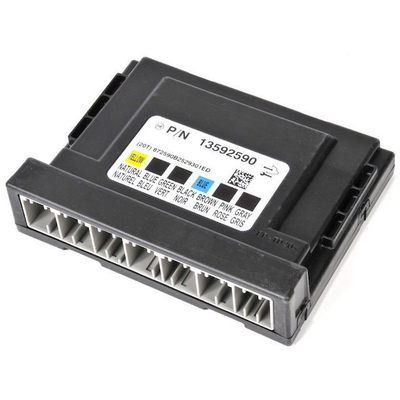
Below are the parts most often responsible for code B3124, ranked by how frequently each one is the actual culprit (per the diagnosis above). Tap any to see what we have for your vehicle.


The information in this article is provided for general reference and educational purposes only. Vehicle specifications, procedures, and part compatibility can vary by production date, trim level, and region. Always consult your vehicle's factory service manual and verify part numbers before purchasing or performing repairs. Safety-critical components such as airbags, seat belts, and braking systems should be installed by a qualified professional.
- 🧭 Diagnostic Flowchart
- 🎬 Helpful Videos
- 🛍️ Shop This Part
- What Does B3124 Mean?
- Can I Drive With B3124?
- Common Causes
- Symptoms
- Common Fixes & Costs
- Used vs. New Parts: Buying Guide
- What Happens If You Wait — Timeline
- Cost of Not Fixing It
- Diagnosis Steps
- When This Code Triggers (Freeze-Frame Conditions)
- Related Codes
- Climate & Environmental Factors
- How to Talk to a Mechanic About This Code
- Where to Take It: Dealer vs Independent vs Chain
- When to Walk Away From the Repair
- What Scan Tool You Need for This Code
- How to Clear the Code After You Fix It
- Will This Fail Emissions / State Inspection?
- Most Commonly Affected Vehicles
- Manufacturer-Specific Notes
- Real Owner Stories
- 2017 Chevy Tahoe with 'Service Keyless Entry' message
- Buick Verano with B3124 after putting items in the trunk
- 2017 GM Tracker with 'Failure in the keyless start system'
- 2018+ GM Vehicle (e.g., Cadillac XT5) with keyless entry issues after a battery change
- How to Prevent This Code From Triggering
- Frequently Asked Questions
- What is the difference between code B3124 02 and B3124 05?
- Can I still start my car with code B3124 active?
- Why didn't changing my key fob battery fix the 'Service Keyless Entry' message?
- Could a blown fuse cause code B3124?
- What is the most common misdiagnosis for B3124?
- Can the antenna be installed upside down?
- Will clearing the code with a scanner fix the problem?
- Where is the 'Keyless Entry Antenna 6' located?
- Key Takeaways
- 🎟️ Get 5% Off