

OBD-II Code B3125: Driver Door Unlock Circuit Malfunction
What B3125 means, why it triggers, and how to fix it
- Code B3125 is a General Motors-specific fault indicating a short or open circuit in the driver's door unlock wiring.
- Water damage to the Body Control Module (BCM) or the A-pillar wiring connector (X500) causes over 80% of B3125 codes on modern GM SUVs.
- Inspect the passenger footwell for wet carpet and the driver's door jamb connector for blue-green corrosion before buying replacement parts.
- The presence of companion codes like B3130, B3135, or U-codes confirms a systemic electrical failure rather than a single broken door lock actuator.
What Does B3125 Mean?

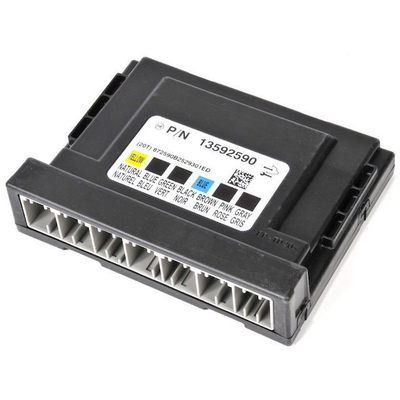
B3125 is a manufacturer-specific code, primarily used by General Motors, indicating the Body Control Module (BCM) detected a problem in the electrical circuit for the driver's door unlock function. The BCM is the computer for your car's body electronics. When it tries to send the signal to unlock the driver's door and sees an error like a short or a broken wire, it sets this code.
Technical definition: The official SAE/OBD-II definition is "Driver Door Only Unlock Circuit Malfunction." Depending on the vehicle, it includes suffixes like '01' (Short to Battery) or '02' (Short to Ground), readable by a professional scan tool. The BCM sets this code when it detects an incorrect voltage (outside the 9-16 Volt operating range), an open circuit, or a short to ground on the control circuit for the driver's door lock actuator.
Can I Drive With B3125?
Yes, But With Caution. The vehicle is mechanically safe to drive, but the faulty door lock is a security risk. More importantly, this code often points to underlying electrical issues that disable other systems, cause a 'no-start' condition, or create distracting behaviors like the horn sounding randomly. Ignoring the issue, especially if caused by water intrusion, destroys the Body Control Module (BCM), a repair costing over $1200.
Common Causes

- Water Intrusion into A-Pillar Wiring Connector (X500) (Very Common) — A faulty foam seal or body plug allows water to leak into the main wiring connector between the driver's door and the car's body. This causes corrosion on the pins, leading to a short or open circuit, as documented in GM TSBs 23-NA-046 and 23-NA-090.
- Water Intrusion into Body Control Module (BCM) (Very Common) — A leaking or improperly seated HVAC drain hose drips water directly onto the BCM in the passenger footwell. This water damage causes corrosion and triggers the B3125 code, addressed in TSB 21-NA-183.
- Broken Wires in Door Jamb (Common) — The wire bundle between the door and body flexes every time the door opens. Over thousands of cycles, individual wires fatigue and break inside their insulation, causing an open circuit.
- Chafed Instrument Panel Wiring Harness (Common) — The main wiring harness under the dashboard rubs against the steering column I-shaft on certain GM models. This chafing wears through the insulation and causes a short to ground (GM bulletin PIT5606F).
- Faulty Driver's Door Lock Actuator (Less Common) — The small electric motor inside the door lock mechanism wears out and fails. A grinding or buzzing noise from the door is a strong indicator of actuator failure.
- Clogged Sunroof Drains or Roof Leaks (Uncommon) — Clogged sunroof drains overflow into the A-pillars, and poor roof body seams allow water to run down to connectors or modules, causing electrical shorts.
- Faulty Ground Connection (Uncommon) — A loose or corroded ground wire for the BCM or door components causes high resistance in the circuit, leading to intermittent failures.
- Internal Body Control Module (BCM) Failure (Rare) — In rare cases without water damage, the BCM's internal driver circuit that sends power to the lock actuator burns out, requiring module replacement and programming.
Symptoms

- Wet carpet in the passenger footwell — A tell-tale sign of a leaking HVAC drain hose, which is a primary cause of BCM water damage on many GM SUVs.
- Driver's power door lock does not work — The driver's door will not lock or unlock using the interior switch or the key fob remote.
- All power door locks are inoperative or work intermittently — Because the underlying cause is often a system-wide electrical issue, none of the power locks function correctly.
- Key fob does not work — The keyless entry remote is unable to lock or unlock any of the doors.
- Unusual electrical behavior — You notice other strange problems like the horn sounding randomly, hazard lights flashing, power seats moving on their own, or instrument panel lights illuminating.
- No-start condition or 'Service Theft Deterrent System' message — If the Body Control Module is severely damaged by water, it affects the vehicle's immobilizer system and prevents the engine from starting.
Diagnostic Flowchart
Tap your situation to follow the diagnostic path that matches what you're seeing on this code.
Common Fixes & Costs

- Repair Corroded A-Pillar Connector (X500) and Replace Seal — Parts: $20-$150, Labor: $150-$250, ~1.5 hr book time (Professional)
- Replace Water-Damaged Body Control Module (BCM) and Secure HVAC Drain — Parts: $200-$400, Labor: $300-$600, ~2.5 hr book time (Professional)
- Repair Broken Wires in Door Jamb — Parts: $5-$25, Labor: $100-$200, ~1.2 hr book time (Intermediate)
- Replace Driver's Door Lock Actuator — Parts: $100-$250, Labor: $150-$300, ~1.5 hr book time (DIY)
- Repair Chafed Instrument Panel Harness — Parts: $5-$25, Labor: $200-$500, ~2.0 hr book time (Professional)
Used vs. New Parts: Buying Guide
When a used part is worth it: A used door lock actuator is a reasonable choice. For a Body Control Module (BCM), a used part only makes sense if it is from an identical vehicle and you have access to professional programming tools, as most GM BCMs are VIN-locked.
Donor-vehicle mileage cap: roughly under 100000 miles for the part to have meaningful remaining life.
Donor quality checklist:
- For a BCM, match the part number exactly. Superseded numbers may not work.
- Verify the donor vehicle was not scrapped due to electrical or flood damage.
- For actuators, ensure the part is from a vehicle with a similar mileage and climate history.
Decision logic:
- If The faulty part is the door lock actuator → A new aftermarket or used OEM part offers good value.
- If The faulty part is the BCM → Buy a new or professionally remanufactured, pre-programmed BCM. The risk and complexity of using a random used BCM are very high due to VIN locking.
- If The fault is wiring corrosion → Always use new connector pigtails and terminals. Do not attempt to reuse corroded components.
Warranty tradeoff: Used parts typically have a 30-90 day warranty. New aftermarket parts often carry a 1-year to limited lifetime warranty. A new OEM BCM installed by a dealer has a 12-24 month warranty.
Worst-case if a used part fails: $400-$1500 if a used BCM fails to program or fails shortly after installation, requiring repeat labor and the purchase of another module.
What Happens If You Wait — Timeline
- 0-1 month: Code B3125 is set. The driver's door lock becomes intermittent or fails completely. It's an inconvenience requiring manual key use. (MPG impact: 0%% · Added cost: $0)
- 1-4 months: Corrosion spreads within the X500 connector or BCM. Other codes like B3130/B3135 appear as other circuits fail. All door locks stop working. (MPG impact: 0%% · Added cost: $200-$600)
- 4-9 months: Severe corrosion causes network communication errors (U-codes). Symptoms become bizarre: random alarms, flickering lights, and potential no-start conditions. (MPG impact: 0%% · Added cost: $500-$900)
- 9+ months: Catastrophic failure of the Body Control Module. Prolonged water exposure destroys internal circuit traces. The vehicle is inoperable. (MPG impact: N/A% · Added cost: $1200-$2000+)
Cost of Not Fixing It
- Immediate: Inconvenience and security risk. The driver's door cannot be electronically locked or unlocked, requiring manual key use. (Added cost: 0)
- 1-6 months: Progressive electrical failure. Unaddressed water leaks cause corrosion to spread, disabling windows, mirrors, or causing a no-start condition. (Added cost: $500-$800)
- 6+ months: Catastrophic BCM failure. Prolonged water exposure destroys the Body Control Module, rendering the vehicle completely inoperable. (Added cost: $900-$2000+)
Diagnosis Steps

- Scan for All Trouble Codes
Use an OBD-II scanner capable of reading Body Control Module (BCM) codes. Note if B3125 appears with B3130, B3135, or any U-codes, as this points to a larger system-wide problem. Note any symptom bytes like '01' (Short to Battery) or '02' (Short to Ground).
Tools: OBD-II Scanner (capable of reading BCM codes) (Beginner) - Inspect for Water in Passenger Footwell (BCM Area)
Following GM TSB 21-NA-183, pull back the carpet in the passenger footwell and remove the side panel of the center console. Look and feel for any signs of moisture, water stains, or blue-green corrosion on the BCM and its connectors. Run the A/C on high to see if water drips from the HVAC drain hose connection.
Tools: Trim removal tools, flashlight (Intermediate) - Inspect the A-Pillar Connector (X500)
Open the driver's door fully and pull back the large rubber boot that covers the wires going between the door and the car body. Disconnect the large plastic connector (often called X500) and inspect both sides for blue-green corrosion or moisture, a common issue noted in TSB 23-NA-046.
Tools: Flashlight, small pick or screwdriver (Intermediate) - Inspect Wires in Door Jamb
With the rubber boot still pulled back, gently tug on each individual wire. A broken wire stretches or pulls apart, revealing the damage. Pay close attention to the Tan/White and Gray wires, which are commonly the unlock/lock control wires.
Tools: Flashlight (Intermediate) - [PRO TIP] Test the Driver Unlock Control Circuit Voltage
Using a multimeter set to DC Volts, connect the black probe to a known good ground. With the driver's door lock actuator connector unplugged, probe the Tan/White wire. Have an assistant press the UNLOCK button. You should see a brief pulse of voltage greater than 7V. If no voltage appears, the problem is upstream (wiring, BCM). If voltage is present, the actuator is faulty.
Tools: Multimeter, wiring diagram (Advanced) - [PRO TIP] Test the Control Circuit for a Short to Ground
Disconnect the negative battery terminal. Disconnect the relevant harness connector at the BCM. Set your multimeter to measure resistance (Ohms). Place one probe on the driver unlock control circuit pin (Tan/White wire) at the harness connector and the other probe on a clean chassis ground. The reading should be infinite resistance (OL). A reading of low resistance indicates a short to ground in the harness.
Tools: Multimeter, wiring diagram, trim removal tools (Advanced) - [PRO TIP] Perform a Voltage Drop Test on the Ground Circuit
Connect the red multimeter lead to the ground pin on the door lock actuator connector and the black lead to the negative battery terminal. Command the lock to unlock. A reading above 0.5V indicates excessive resistance in the ground circuit, pointing to a corroded or loose ground connection.
Tools: Multimeter (Advanced) - [PRO TIP] Check Scan Tool Live Data PIDs
Using a professional scan tool, monitor BCM live data. Key PIDs to watch are 'Driver Door Unlock Switch Status' and 'Driver Door Unlock Command'. When the physical door unlock switch is pressed, the 'Switch Status' changes to 'Active'. The BCM then changes the 'Unlock Command' PID to 'Yes'. If the switch status changes but the command does not, the BCM is at fault.
Tools: Professional Scan Tool (e.g., GM GDS2) (Advanced) - Test the Door Lock Actuator Circuit with a Test Light
If no water damage or broken wires are found, remove the interior driver's door panel. Connect a test light across the two terminals of the lock actuator's electrical connector. Have an assistant press the lock and unlock buttons. The test light illuminates briefly for both commands. If it lights for LOCK but not UNLOCK, the unlock circuit wire is open or the BCM driver failed.
Tools: Trim removal tools, 12V test light (Advanced) - Inspect Instrument Panel Harness
Look under the driver's side dashboard where the steering column shaft rotates. Inspect the wiring harnesses in that area for any signs of rubbing or chafing against the shaft, as noted in GM bulletin PIT5606F.
Tools: Flashlight, inspection mirror (Advanced)
When This Code Triggers (Freeze-Frame Conditions)
- Ignition Status: On (The fault is typically detected when the ignition is on.)
- Battery Voltage: 9-16 Volts (The BCM runs this diagnostic when system voltage is within the normal operating range.)
- Unlock Command: Active (The code is set at the moment the BCM attempts to send the unlock signal to the driver's door actuator and detects a circuit error.)
- Fault Status: Current (The code is set as a current, active fault as long as the short or open circuit condition exists.)
Related Codes
- B3130 — Indicates an 'All Doors Unlock Circuit' fault. Appearing with B3125 confirms a systemic issue like a water-damaged BCM or main wiring harness problem affecting multiple lock circuits.
- B3135 — Indicates an 'All Doors Lock Circuit' fault. Seeing both lock and unlock command faults simultaneously points directly to a common failure point like the BCM or X500 connector.
- U-codes (e.g., U0140) — Indicate communication errors between vehicle modules. They frequently accompany B3125 when water damage to the BCM or X500 connector disrupts the car's CAN bus data network.
- B3979 / B3980 — Indicate 'Keyless Entry Antenna' faults. Mentioned alongside B3125 in TSB 21-NA-183, these codes strongly reinforce the diagnosis of a water-damaged BCM disrupting the keyless entry system.
Climate & Environmental Factors
- High Humidity: High humidity accelerates corrosion when water enters connectors or gets on modules. Moisture in the air slows evaporation, keeping electrical components wet and increasing the risk of short circuits.
- Freeze-Thaw Cycles: Water that seeps into body seams or rubber seals expands when it freezes, widening gaps and breaking down seals. This repeated cycle worsens existing water leaks.
Where to Take It: Dealer vs Independent vs Chain
- Dealer:
Best for: Vehicles under warranty or covered by GM's Special Coverage Adjustment (N232411380)., Complex repairs requiring BCM replacement and programming., Guaranteed access to correct TSB procedures and parts.
Downsides: Highest labor rates, typically $150-$250+ per hour., May default to expensive module replacement without exhausting all wiring repair options. (Typical cost: +50% vs. baseline) - Independent Shop:
Good fit, but you MUST vet the shop. Ask them specifically if they are equipped to diagnose body electrical issues and if they have the capability to program a new GM BCM if necessary.
Best for: Out-of-warranty vehicles where cost is a major factor., Diagnosing and repairing known wiring issues (broken wires, corroded connectors)., Shops specializing in automotive electronics or specific GM models.
Downsides: Quality and expertise vary widely., May not have the expensive subscription-based tools required for BCM programming. (Typical cost: +0% vs. baseline) - Chain Shop:
AVOID. This code requires diagnostic expertise beyond the scope of most chain shops. The likelihood of a correct diagnosis and repair is very low.
Best for: Simple, unrelated maintenance like oil changes or tires.
Downsides: Technicians often lack the specialized training for complex electrical diagnostics., High risk of misdiagnosis, leading to unnecessary replacement of parts like the door lock actuator., Generally not equipped for module programming. (Typical cost: -10% vs. baseline)
When to Walk Away From the Repair
If the estimated repair cost exceeds 40-50% of the car's current private-party value, seriously consider selling the vehicle as-is or trading it in.
- Car worth $15000, fix is $1500: Fix it. A BCM replacement and leak repair, while expensive, is only 10% of the vehicle's value and restores critical functionality.
- Car worth $4000, fix is $1800: Walk away. The repair cost is 45% of the car's value. It's not economically sensible to invest this much into an older vehicle for this type of repair.
What Scan Tool You Need for This Code
Minimum: A scanner that reads manufacturer-specific Body (B-prefix), Chassis (C-prefix), and Network (U-prefix) codes. A basic code reader that only shows Powertrain (P-prefix) codes is insufficient.
A $20 generic OBD-II reader shows 'No Codes Found' because it cannot communicate with the Body Control Module (BCM). To see the B3125 code, you need a tool that accesses the body systems.
Budget: BlueDriver Pro (~$100) — Reads and clears enhanced codes, including BCM codes like B3125, for GM vehicles. It allows you to confirm the fault code and see freeze-frame data.
Mid-range: Foxwell NT510 Elite (with GM software) (~$180) — Offers full system diagnostics and powerful bi-directional controls. This allows you to command the door locks to lock and unlock directly from the scanner.
Professional: Autel MaxiCOM MK808S (~$450) — Provides full bi-directional control, all-system scanning, and access to special functions. Its advanced active tests and live data graphing are invaluable for professionally diagnosing complex wiring shorts.
Rent vs buy: For this code, renting is not a viable option as parts store loaner tools are typically basic readers that cannot access BCM codes. Buying a budget or mid-range scanner is a wise investment.
How to Clear the Code After You Fix It
- Reconnect the negative battery terminal if it was disconnected for the repair.
- Use an OBD-II scan tool capable of reading BCM codes to clear the fault.
- Cycle the ignition off, then on, and test the door lock functions with both the key fob and the interior switch to verify the repair.
Drive cycle (~5 minutes): A specific drive cycle is not required. After clearing the code, the BCM re-runs the self-test the next time the unlock function is commanded. If the fault is fixed, the code does not return.
Readiness monitors affected: None
Watch out for:
- Simply clearing the code with a scanner does not fix the problem; the code returns immediately if the underlying electrical fault is not repaired.
- Disconnecting the battery clears the active code, but it resets as soon as the unlock function is attempted again if the fault persists.
Will This Fail Emissions / State Inspection?
No — by itself this code doesn't fail OBD inspection (but it can keep readiness monitors from setting, which causes a separate fail).
- California: This code does not cause a smog check failure. California's test focuses on powertrain (P-prefix) codes that affect emissions.
- New York: B3125 does not cause a failure of the emissions inspection. The NY VIP2 inspection checks for OBD-II powertrain codes and readiness monitors.
- Texas: The OBD-II scan looks for emissions-related trouble codes. A BCM code like B3125 does not cause the vehicle to fail the emissions inspection.
Most Commonly Affected Vehicles
- GMC Acadia (2017-2022) — Highly prone to water leaks affecting the BCM and A-pillar connectors, documented in TSBs 21-NA-183 and 23-NA-046. The 2017-2019 models are also mentioned in PIT5606F for chafed IP harnesses.
- Chevrolet Traverse (2018-2022) — Commonly experiences water intrusion at the driver's door harness connector (X500) due to a faulty foam seal, per TSB 23-NA-090. Also susceptible to BCM water damage from the HVAC drain.
- Buick Enclave (2018-2022) — Shares the same platform and vulnerabilities as the Traverse and Acadia, with TSBs pointing to water leaks at the BCM and A-pillar connectors.
- Chevrolet Blazer (2019-2022) — Strongly affected by water from the HVAC drain leaking onto the BCM, causing this code and other electrical failures. The replacement HVAC drain hose is GM part #23171645.
- Cadillac XT5 (2017-2022) — Known issues include water damage to the BCM from the HVAC drain and a chafed wiring harness near the steering column.
- Cadillac XT6 (2020-2022) — Highly susceptible to BCM water damage from the HVAC drain hose, as specified in TSB 21-NA-183.
- Chevrolet Equinox (2018-2023) — Experiences issues with water leaking past A-pillar body plugs causing corrosion in the door harness connectors (X500/X600).
- GMC Terrain (2018-2023) — Shares the same platform and wiring vulnerabilities as the Chevrolet Equinox, making it susceptible to water intrusion at the A-pillar connectors.
- Chevrolet Silverado (2008-2013) — The BCM directly controls the lock relays. A fault within the BCM's internal relay control circuit triggers B3125. Diagnosis involves testing the control circuit at the BCM connector.
Manufacturer-Specific Notes
- General Motors: On 2017+ C1XX platform SUVs, this code is overwhelmingly caused by water leaks. Diagnosis MUST start by inspecting for water at the BCM and the A-pillar connector X500 before replacing parts.
- General Motors: GM issued Special Coverage Adjustment N232411380 related to TSB 23-NA-046. This extends warranty coverage for repairs to the corroded A-pillar connector (X500) on eligible vehicles.
- Saab: On models like the 9-4X and 9-5, the BCM tests the circuit by applying voltage and sets the code if it detects a short. The system disables all power locks as a fail-safe.
- Ford: Ford uses code B1338 for the same issue. Diagnosis focuses on broken wires in the door jamb or a faulty Driver Door Module (DDM) rather than widespread water intrusion.
- Chrysler/Dodge/Jeep: These brands use code B210D or specific door module codes. Diagnosis focuses on broken door jamb wires and testing the output of the Totally Integrated Power Module (TIPM).
Real Owner Stories
2018 GMC Acadia with ~200,000 km
All power door locks suddenly stopped working, both from the key fob and the interior switches. Codes B3125 and B3130 were present.
What they tried:
- Owner performed a visual inspection of accessible wiring but found no obvious damage.
Outcome: A professional shop diagnosed a 'defective plug connection' in the driver's door jamb (the X500 connector). They repaired the corroded connector, and all functions were restored. The repair cost was approximately $100.
Lesson: Even if you can't see the problem, the door jamb connector is a top suspect. A professional repair is surprisingly affordable if it's just a connector issue and not a full BCM replacement.
2019 Chevrolet Silverado after a flood
Vehicle was in a flood, causing massive electrical problems and 25 fault codes, including B3125. The push-button start was non-functional.
What they tried:
- The owner replaced the visibly water-damaged BCM with a new one.
- Attempted to program the new BCM using GM's TDS software, but the procedure failed because it required cycling the ignition, which was disabled.
Outcome: The programming could not be completed. The owner suspected that other modules damaged by the flood were still reporting critical faults, preventing the BCM from initializing correctly.
Lesson: In cases of severe water damage, multiple modules are often compromised. Simply replacing the BCM is not enough, as communication failures from other damaged modules prevent the new BCM from being programmed.
2008 GMC Acadia with multiple electrical issues
Owner experienced wet driver and passenger side floorboards, the vehicle staying on after the key was removed, the radio turning on by itself, and random dash lights.
What they tried:
- A dealership initially misdiagnosed the problem as a faulty door seal, which did not fix the water leak.
Outcome: The root cause was found to be leaks from the sunroof drains and roof rack seals. This water intrusion destroyed the BCM and the instrument panel fuse block, both of which required replacement.
Lesson: Don't assume the most obvious water entry point is the only one. Sunroof drains and roof rack seals are common leak points that cause catastrophic electrical damage. A wet floor is a critical warning sign.
How to Prevent This Code From Triggering
- Secure the HVAC drain hose with a zip tie. (Once, proactively.) — Per GM TSB 21-NA-183, the HVAC drain backs off its connection, causing water to drip directly onto the BCM. A simple zip tie installed below the locking nib secures it, preventing a leak.
- Clean sunroof drains annually. (Once per year, especially before the rainy season.) — When sunroof drains clog with debris, water backs up and overflows into the headliner and down the A-pillars, soaking the X500 connector or other electronics.
- Periodically inspect door jamb boots and wiring. (Every 30,000 miles or during other maintenance.) — The constant flexing from opening and closing doors causes wires to fatigue and break. Periodically pulling back the rubber boot to check for chafing helps spot a problem before the wire fails.
- Keep cowl and plenum drains clear of leaves and debris. (Every 6 months, especially in the fall.) — If cowl drains become clogged, water pools and finds its way into the cabin through firewall grommets, damaging electronics like the BCM.
- Apply dielectric grease to critical connectors. (When performing any related electrical repair.) — Applying a small amount of dielectric grease to the seal of a connector like X500 during reassembly helps repel moisture and prevent future corrosion.
Frequently Asked Questions
Can I just replace the fuse for the door locks?
A blown fuse is rarely the root cause of B3125. The code indicates a circuit fault (short or open) that the BCM detected, not just an overloaded circuit. The underlying wiring or module problem must be fixed.
Why do my other door locks and windows not work if the code is for the driver's door?
The most common causes—a water-damaged BCM or a corroded main wiring connector—affect the central control point for many different components, not just the driver's door lock.
Will replacing the door lock actuator fix the B3125 code?
Only if the actuator itself failed and all wiring is confirmed good. Replacing the actuator without checking for water damage or broken wires is a common misdiagnosis.
Is this repair covered under warranty?
If your vehicle is under the bumper-to-bumper warranty, this repair is covered. For the common A-pillar connector issue, GM Special Coverage program N232411380 extends warranty coverage for certain vehicles. Contact a dealer with your VIN to check eligibility.
The dealer wants to replace the BCM. Is that necessary?
If the BCM has confirmed water damage and corrosion, replacement is necessary. Crucially, the dealer must also fix the source of the water leak, or the new BCM will also fail.
What is the most common misdiagnosis for a B3125 code?
The most common mistake is immediately replacing the driver's door lock actuator without performing a full diagnosis. A proper diagnosis always starts with inspecting the BCM and A-pillar connectors for corrosion.
My mechanic cleared the code but it came right back. Why?
Code B3125 indicates a 'hard fault,' meaning the problem is physically present in the circuit. The BCM re-detects the fault and sets the code again almost immediately. Clearing the code does not fix the underlying short or open wire.
How do I fix the HVAC drain leak causing BCM water damage?
The official fix per GM TSB 21-NA-183 is to locate the drain hose where it connects to the HVAC module, ensure it is fully seated, and secure it with a zip tie just below the locking nib.
Can a bad BCM cause just one door lock to fail?
Yes. The BCM has individual driver circuits for different functions. It is possible for only the driver's door unlock circuit to fail internally within the BCM, setting only the B3125 code.
Key Takeaways
- Code B3125 is a General Motors-specific fault indicating a short or open circuit in the driver's door unlock wiring.
- Water damage to the Body Control Module (BCM) or the A-pillar wiring connector (X500) causes over 80% of B3125 codes on modern GM SUVs.
- Inspect the passenger footwell for wet carpet and the driver's door jamb connector for blue-green corrosion before buying replacement parts.
- The presence of companion codes like B3130, B3135, or U-codes confirms a systemic electrical failure rather than a single broken door lock actuator.
Shop the Parts Behind B3125
Below are the parts most often responsible for code B3125, ranked by how frequently each one is the actual culprit (per the diagnosis above). Tap any to see what we have for your vehicle.



The information in this article is provided for general reference and educational purposes only. Vehicle specifications, procedures, and part compatibility can vary by production date, trim level, and region. Always consult your vehicle's factory service manual and verify part numbers before purchasing or performing repairs. Safety-critical components such as airbags, seat belts, and braking systems should be installed by a qualified professional.
- 🧭 Diagnostic Flowchart
- 🛍️ Shop This Part
- What Does B3125 Mean?
- Can I Drive With B3125?
- Common Causes
- Symptoms
- Common Fixes & Costs
- Used vs. New Parts: Buying Guide
- What Happens If You Wait — Timeline
- Cost of Not Fixing It
- Diagnosis Steps
- When This Code Triggers (Freeze-Frame Conditions)
- Related Codes
- Climate & Environmental Factors
- Where to Take It: Dealer vs Independent vs Chain
- When to Walk Away From the Repair
- What Scan Tool You Need for This Code
- How to Clear the Code After You Fix It
- Will This Fail Emissions / State Inspection?
- Most Commonly Affected Vehicles
- Manufacturer-Specific Notes
- Real Owner Stories
- 2018 GMC Acadia with ~200,000 km
- 2019 Chevrolet Silverado after a flood
- 2008 GMC Acadia with multiple electrical issues
- How to Prevent This Code From Triggering
- Frequently Asked Questions
- Can I just replace the fuse for the door locks?
- Why do my other door locks and windows not work if the code is for the driver's door?
- Will replacing the door lock actuator fix the B3125 code?
- Is this repair covered under warranty?
- The dealer wants to replace the BCM. Is that necessary?
- What is the most common misdiagnosis for a B3125 code?
- My mechanic cleared the code but it came right back. Why?
- How do I fix the HVAC drain leak causing BCM water damage?
- Can a bad BCM cause just one door lock to fail?
- Key Takeaways
- 🎟️ Get 5% Off