

OBD-II Code B3130: All Doors Unlock Circuit Malfunction
What B3130 means, why it triggers, and how to fix it
- Code B3130 on 2017+ General Motors SUVs almost always indicates a water leak damaging the Body Control Module (BCM) or A-pillar connectors, not a failed door lock actuator.
- Check the passenger-side front carpet for dampness immediately; a wet floor confirms a leaking HVAC drain hose that requires a $10 zip-tie fix to prevent a $1,000 BCM replacement.
- Scan for companion codes B3125 and B3135; their presence alongside B3130 guarantees a central wiring or module failure rather than an isolated door issue.
- Never replace a water-damaged BCM without first locating and sealing the source of the leak, or the new module will fail within months.
- Do not attempt a DIY BCM replacement unless you possess a professional scan tool with GM Techline Connect access, as the new module requires VIN-specific programming to start the engine.
What Does B3130 Mean?
The Body Control Module (BCM) detected a short circuit in the wiring for the 'unlock all doors' command. When you press the unlock button, the BCM sends a voltage signal to all door lock actuators; code B3130 triggers when the BCM detects a short to ground on this specific signal wire. The BCM immediately disables the power lock system to prevent electrical damage and unpredictable lock cycling.
Technical definition: The Body Control Module (BCM) detects a short to ground on the All Doors Unlock control circuit. This manufacturer-specific code primarily affects General Motors vehicles. A professional scan tool often displays a symptom byte like '02' (Short to Ground) or '01' (Short to Battery). The BCM sets this code when it commands the unlock circuit and reads a voltage below 7.0V, indicating a direct path to ground.
Can I Drive With B3130?
Yes, But With Caution. Yes, the vehicle is safe to drive, but the power door locks will not work, creating a security risk. The underlying electrical short often worsens, causing a parasitic battery drain that kills the battery overnight or disables the immobilizer system, leaving you stranded.
Common Causes
- Water-Damaged Body Control Module (BCM) (Very Common) — A leaking, clogged, or disconnected HVAC drain hose drips water directly onto the BCM. This well-documented issue (GM TSB 21-NA-183) causes severe circuit board corrosion, triggering code B3130 and widespread electrical failures.
- Water Intrusion in A-Pillar Electrical Connectors (Very Common) — Missing body plugs or clogged sunroof drains allow rainwater to flood the main X500/X600 electrical connectors located in the A-pillars (GM TSB 23-NA-046). The resulting corrosion shorts the unlock circuits to ground.
- Chafed Instrument Panel Wiring Harness (Common) — The instrument panel wiring harness rubs against the steering column I-shaft (GM TSB PIT5606F), wearing through the insulation and shorting the exposed unlock wire to a metal ground.
- Broken Wires in Door Jamb Boot (Common) — Constant opening and closing fatigues the wires inside the flexible rubber boot between the body and the door. The insulation eventually breaks, causing the unlock wire to short against the chassis or adjacent wires.
- Faulty Door Lock Actuator (Less Common) — The internal electronics of a door latch assembly fail and create a short circuit. This is rare for code B3130 and should only be suspected after ruling out water damage and wiring harness chafing.
- Faulty Aftermarket Accessories (Less Common) — Improperly installed remote start systems or alarms that tap into the BCM's lock circuits draw incorrect voltage or create direct shorts to ground.
- Internal BCM Failure (Rare) — The BCM suffers an internal printed circuit board (PCB) relay failure without external water damage. This specific failure pattern is most common on 2007-2014 GM trucks (Silverado/Sierra).
Symptoms
- Power door locks and keyless entry fail to operate — The doors will not lock or unlock using the key fob or the interior door switches.
- Doors lock or unlock randomly — The door locks cycle by themselves while driving or parked, a classic symptom of water shorting the A-pillar connectors.
- Alarm sounds unexpectedly — The car alarm triggers or the horn sounds randomly because the BCM receives erratic signals from the shorted circuit.
- Parasitic battery drain — The shorted circuit prevents the BCM from entering its low-power sleep mode, draining the battery overnight.
- Widespread electrical failures — You experience inoperative power windows, false dash warnings, or a no-start condition because the water leak damaged adjacent circuits in the BCM.
Diagnostic Flowchart
Tap your situation to follow the diagnostic path that matches what you're seeing on this code.
Common Fixes & Costs
- Replace Water-Damaged BCM and Repair Leak — Parts: $250-$450, Labor: $350-$550, ~2.5 hr book time (Professional)
- Repair Water-Damaged A-Pillar Connectors and Seal Leak — Parts: $30-$80, Labor: $300-$600, ~3.5 hr book time (Intermediate)
- Repair Chafed Wiring Harness — Parts: $10-$25, Labor: $200-$500, ~3.0 hr book time (Intermediate)
- Replace Faulty Door Lock Actuator — Parts: $150-$300, Labor: $100-$250, ~1.5 hr book time (DIY)
Used vs. New Parts: Buying Guide
When a used part is worth it: Buying a used door lock actuator from a low-mileage donor vehicle is cost-effective. Buying a used Body Control Module (BCM) is strongly discouraged because they are VIN-locked and cannot be reprogrammed to a different vehicle.
Donor-vehicle mileage cap: roughly under 60000 miles for the part to have meaningful remaining life.
Donor quality checklist:
- Match the actuator part number and door location exactly.
- Inspect all electrical connector pins for green or white corrosion.
- Never buy a used BCM; purchase a new or professionally remanufactured unit guaranteed to accept programming.
Decision logic:
- If The failed part is the Body Control Module (BCM) → Buy a new OEM part. A used BCM will trigger the immobilizer and the car will not start.
- If The failed part is a door lock actuator → A used OEM part from a verified low-mileage donor is a safe, budget-friendly option.
Warranty tradeoff: Used parts offer a 30-90 day warranty. New aftermarket parts offer 1-year warranties. New OEM parts carry a 1-2 year warranty and guarantee compatibility.
Worst-case if a used part fails: $800 if a used BCM is purchased, fails to program, and requires a tow and a second (new) module.
What Happens If You Wait — Timeline
- 0-1 month: Intermittent failure of power door locks, typically occurring after heavy rain or a car wash. (MPG impact: 0%% · Added cost: $0)
- 1-4 months: Door locks fail completely. The short circuit creates a parasitic battery drain, leading to a dead battery overnight. (MPG impact: 0%% · Added cost: $150-$300 for a new battery and tow service.)
- 4-12 months: Corrosion spreads to adjacent pins in the BCM or A-pillar connector, causing power windows to fail and triggering false dash warnings. (MPG impact: 0%% · Added cost: $500-$1,000 for extensive wiring harness replacement.)
- 12+ months: The Body Control Module is completely destroyed by water exposure. The immobilizer engages, and the vehicle will not start. (MPG impact: 0%% · Added cost: $1,000-$2,000 for BCM replacement, programming, and towing.)
Cost of Not Fixing It
- 0-3 Months: Inconvenience from inoperative door locks and a high probability of a dead battery due to parasitic drain. (Added cost: $150-$300 for a replacement battery and tow service.)
- 3-12 Months: Corrosion spreads through the wiring harness, causing power windows, mirrors, and communication networks to fail. (Added cost: $500-$1000 for extensive wiring harness replacement.)
- 12+ Months: Catastrophic failure of the Body Control Module (BCM) immobilizes the vehicle completely. (Added cost: $1000-$2000 for BCM replacement, programming, and towing.)
Diagnosis Steps
- Scan for All Trouble Codes
Use an OBD-II scanner capable of reading BCM codes. Check for companion codes B3125 (Driver Unlock) or B3135 (All Lock). The presence of multiple lock codes or U-codes (communication loss) confirms a central failure at the BCM or main wiring harness, not an isolated door issue.
Tools: OBD-II Scanner (with BCM capability) (Beginner) - Inspect for Interior Water Leaks
Check the front footwells for dampness. A wet passenger-side carpet confirms a leaking HVAC drain hose dripping onto the BCM. A wet driver-side kick panel indicates an A-pillar leak.
Tools: Flashlight (Beginner) - Inspect the Body Control Module (BCM)
Locate the BCM in the passenger footwell or center console. Disconnect the harnesses and inspect the module pins for blue or green corrosion. If corrosion is present, the BCM requires replacement and the HVAC drain must be sealed.
Tools: Flashlight, trim removal tools (Intermediate) - Inspect A-Pillar Connectors (X500/X600)
Remove the driver and passenger side kick panels. Disconnect the large main electrical connectors between the body and the doors. Inspect both sides for water intrusion and green corrosion.
Tools: Trim removal tools, socket set (Intermediate) - Inspect Wiring Harness for Chafing
Inspect the wiring harnesses under the dashboard near the steering column and I-shaft. Look for areas where the harness rubs against metal brackets, exposing bare copper wires.
Tools: Flashlight (Intermediate) - Perform Bidirectional Control Test
Use a professional scan tool to command the 'All Doors Unlock' function directly from the BCM. If the locks operate, the BCM and wiring are functional, and the fault lies in the door lock switches. If they fail, the fault is in the BCM output driver or the wiring.
Tools: Professional Bidirectional Scan Tool (Advanced) - Test Circuit for Short to Ground
Turn the ignition OFF and disconnect the BCM connector containing the unlock circuit. Set a multimeter to Ohms (Ω). Probe the 'All Doors Unlock' pin and a clean chassis ground. A reading below 1,000 ohms confirms a direct short to ground in the wiring harness.
Tools: Multimeter, Wiring Diagram, T-pins (Advanced) - Test Circuit Voltage at the BCM
Reconnect the BCM. Back-probe the 'All Doors Unlock' pin at the BCM. With the ignition ON, measure DC Volts between the pin and ground while pressing the unlock button. A reading below 7.0V indicates a short or a failed BCM driver.
Tools: Multimeter, Wiring Diagram, T-pins (Advanced)
When This Code Triggers (Freeze-Frame Conditions)
- Ignition Status: ON / RUN (The fault sets when the BCM is active and monitoring circuits.)
- Unlock Command: Active (The code triggers at the exact moment the BCM receives a command to unlock the doors from a key fob or interior switch.)
- Unlock Circuit Voltage: < 7.0 Volts (The BCM sets the code when it detects abnormally low voltage on the control circuit, confirming a short to ground.)
Related Codes
- B3125 — Driver Door Only Unlock Circuit Short to Ground. If B3125 and B3130 appear together, the fault is guaranteed to be in a shared location, such as the BCM or the main driver's side A-pillar connector.
- B3135 — All Doors Lock Circuit Short to Ground. The lock and unlock circuits are separate. Seeing both B3130 and B3135 confirms catastrophic water damage at the BCM or a main wiring harness.
- U0140 — Lost Communication with Body Control Module. U-codes appear alongside B3130 when water intrusion or harness chafing damages the CAN bus data wires bundled next to the door lock circuits.
Climate & Environmental Factors
- Heavy Rainfall and High Humidity: Heavy rain overwhelms clogged sunroof drains and missing A-pillar body plugs, flooding the X500/X600 connectors. High humidity prevents the trapped moisture from evaporating, sustaining the short circuit.
- Road Salt and Freezing Temperatures: Road salt accelerates the corrosion process exponentially once water enters a connector. Freezing temperatures expand trapped water, cracking plastic connector housings and worsening the leak.
How to Talk to a Mechanic About This Code
Say this: "I have a B3130 code on my GM vehicle and the power locks are inoperative. I am aware of the GM Technical Service Bulletins regarding HVAC drain leaks and A-pillar water intrusion. I need you to inspect the BCM and A-pillar connectors for water damage before replacing any door actuators."
This proves you are an informed customer. It directs the technician to the documented root causes immediately, preventing them from wasting labor hours diagnosing individual doors or selling you unnecessary actuators.
Avoid saying:
- My key fob isn't working.
- My door locks are broken, can you fix them?
- Just replace whatever the code says is broken.
Questions to ask before authorizing the repair:
- Did you find evidence of a water leak, and exactly where is it originating?
- If the BCM requires replacement, does your estimate include the labor to permanently seal the water leak?
- Can you show me the corroded connector or the damaged wiring harness?
- Does your estimate include the mandatory programming fee for the new BCM?
Where to Take It: Dealer vs Independent vs Chain
- Dealer:
Recommended. A dealer is the safest choice because they are intimately familiar with the TSBs for this issue and possess the mandatory programming tools for BCM replacement.
Best for: Vehicles under warranty., When a BCM replacement is confirmed, as dealers possess the required GM Techline Connect programming software., Complex cases involving multiple U-codes and communication errors.
Downsides: Highest labor rates., Dealers often refuse to repair individual wires, preferring to sell expensive complete wiring harnesses. (Typical cost: +40% vs. baseline) - Independent Shop:
Good Alternative. Choose an independent shop only if they explicitly confirm they have the tools and subscriptions to program a GM Body Control Module.
Best for: Out-of-warranty vehicles requiring wiring harness repairs., Shops specializing in automotive electrical diagnostics.
Downsides: Many independent shops lack the expensive GM subscription required to program a new BCM. (Typical cost: +0% vs. baseline) - Chain Shop:
AVOID. This repair requires diagnostic expertise and specific programming capabilities that are beyond the scope of a typical chain repair shop.
Best for: Not recommended for this repair.
Downsides: Technicians lack specialized electrical diagnostic training., Shops do not possess manufacturer-specific programming tools., High likelihood of misdiagnosis (e.g., selling door lock actuators instead of fixing a water leak). (Typical cost: -10% vs. baseline)
When to Walk Away From the Repair
If the estimated repair cost exceeds 50% of the car's private-party value, consider selling the vehicle instead of repairing it.
- Car worth $15000, fix is $1000: Fix it. The repair cost is well below the threshold and restores critical security functions.
- Car worth $5000, fix is $2000: Borderline. The cost is approaching the 50% mark. Get a second opinion from an independent electrical specialist before proceeding.
- Car worth $3000, fix is $2000: Walk away. The repair cost is a massive percentage of the car's value, making it a poor financial decision.
What Scan Tool You Need for This Code
Minimum: A scanner capable of reading and clearing codes from the Body Control Module (BCM). Basic $20 engine-only code readers cannot see code B3130.
Basic OBD-II readers only communicate with the Engine Control Module (ECM). Code B3130 is stored in the BCM. A full diagnosis requires bidirectional control to command the door locks directly.
Budget: TOPDON TopScan Pro (~$89) — This smartphone dongle reads BCM codes and provides basic bidirectional controls to test actuator functions.
Mid-range: Foxwell NT510 Elite for GM (~$150) — Provides OE-level diagnostics for GM vehicles. It reads BCM codes, views live data, and performs bidirectional active tests to command the locks directly.
Professional: Autel MaxiCOM MK808S (~$350) — Offers comprehensive bidirectional control, full system scanning, and performs the necessary BCM relearn procedures required after module replacement.
Rent vs buy: Buy a midrange tool like the Foxwell NT510 Elite. Auto parts stores rent basic scanners, but they rarely possess the BCM communication capabilities required for this code.
How to Clear the Code After You Fix It
- Use an OBD-II scan tool to clear codes from the Body Control Module (BCM).
- Operate all power lock functions repeatedly using both the key fob and all interior switches.
- Re-scan the BCM to confirm code B3130 does not return as a current or pending code.
Drive cycle (~5 minutes): A driving cycle is not required. Verification involves clearing the code and testing the door locks while parked. A history code self-clears after 50 ignition cycles without the fault reoccurring.
Readiness monitors affected: None
Watch out for:
- Clearing the code without fixing the water leak or chafed wire causes the fault to return immediately upon the next unlock command.
- Using a basic engine code reader fails to clear this code because it cannot communicate with the BCM.
Will This Fail Emissions / State Inspection?
No — by itself this code doesn't fail OBD inspection (but it can keep readiness monitors from setting, which causes a separate fail).
- California: This code will not cause a smog check failure. The test focuses exclusively on powertrain codes and the Check Engine Light.
- New York: Code B3130 does not impact exhaust emissions and will not cause a failure of the NYS OBD-II inspection.
- Texas: The Texas emissions test checks for powertrain-related faults. A body code like B3130 will not cause the vehicle to fail.
Most Commonly Affected Vehicles
- Chevrolet Traverse (2018-2023) — Highly prone to BCM water damage from leaking HVAC drains (TSB 21-NA-183) and A-pillar connector leaks (TSB 23-NA-090).
- GMC Acadia (2017-2023) — Shares the Traverse platform and suffers identical HVAC drain leaks that destroy the BCM.
- Cadillac XT5 (2017-2023) — Susceptible to BCM water damage and chafed instrument panel wiring harnesses (TSB PIT5606F).
- Buick Enclave (2018-2023) — Shares the GM SUV platform and experiences frequent BCM failures due to HVAC drain leaks.
- Chevrolet Blazer (2019-2023) — Commonly experiences water intrusion in the A-pillar connectors due to missing body plugs (TSB 23-NA-046).
- Chevrolet Equinox (2018-2023) — Prone to water intrusion in A-pillar connectors causing door lock cycling and code B3130.
- Chevrolet Silverado (2007-2014) — On this older platform, B3130 typically indicates an internal BCM circuit board failure rather than external water intrusion.
- GMC Sierra (2007-2014) — Shares the Silverado architecture; diagnosis points to internal BCM failure.
- Saab 9-4X (2011-2011) — Built on the GM Theta Premium platform, this rare vehicle suffers the same BCM and wiring faults as its GM counterparts.
Manufacturer-Specific Notes
- General Motors: On 2017+ GM SUVs, code B3130 is almost exclusively caused by documented water leaks. Diagnosis must begin by checking TSB 21-NA-183 (HVAC drain leak) and TSB 23-NA-046 (A-pillar leak).
- General Motors: The official GM repair for the catastrophic HVAC drain leak (TSB 21-NA-183) requires the technician to install a standard plastic zip tie around the hose connection to prevent it from leaking onto the BCM.
- General Motors: Replacing a GM Body Control Module requires a subscription to GM Techline Connect (SPS2) to program the module to the vehicle's VIN and immobilizer. Without this, the vehicle will not crank.
Real Owner Stories
2022 GMC Acadia with intermittent lock failure
The key fob failed to lock or unlock the doors, but the remote start function still worked perfectly.
Outcome: A dealership technician found a corroded wire caused by water damage under the driver's side floor. The repair cost $400.
Lesson: If remote start works but the doors won't unlock, the BCM is receiving the signal. The fault lies in the physical wiring to the doors, not the key fob.
2018 GMC Acadia with repeat BCM failure
The doors would not unlock, and a local shop diagnosed a failed Body Control Module (BCM).
Outcome: The shop failed to fix the root cause: a leaking HVAC drain hose (TSB 21-NA-183). The new BCM suffered water damage and required a second replacement. Securing the hose with a zip tie permanently fixed the issue.
Lesson: Never replace a water-damaged electronic module without locating and sealing the source of the water leak.
How to Prevent This Code From Triggering
- Clean sunroof drains annually. (Once per year, before the rainy season.) — Clogged drains cause rainwater to overflow inside the headliner and drip directly onto the critical X500/X600 electrical connectors in the A-pillars.
- Secure the HVAC drain hose with a zip tie. (Once, proactively.) — On GM SUVs, the HVAC drain leaks condensation onto the BCM. Adding a zip tie to secure the hose connection prevents a failure that costs over $1,000 to repair.
- Apply dielectric grease to A-pillar connectors. (When performing any related electrical work.) — Dielectric grease repels moisture intrusion and prevents corrosion if water ever reaches the connector housing.
Frequently Asked Questions
Can I just replace a fuse to fix code B3130?
No. B3130 indicates a short circuit, not an overcurrent condition. Replacing a fuse will not fix the underlying wiring problem, and a new fuse will blow immediately.
My key fob battery is new, why do I still have this code?
The key fob only transmits a wireless signal. Code B3130 indicates a physical wiring or module failure inside the vehicle that occurs after the BCM receives the signal.
What are the most common misdiagnosis mistakes for B3130?
The most common mistake is replacing a door lock actuator when the actual cause is a water-damaged BCM or corroded A-pillar connector. Always check for wet interior carpets and inspect the BCM before buying parts.
Why do my locks work sometimes but not others?
Moisture inside a connector creates a temporary path to ground, causing a short circuit. As the water dries, the connection is temporarily restored until the next rainstorm or car wash.
Is this an expensive repair?
Yes, if the Body Control Module (BCM) requires replacement. A new BCM, mandatory programming, and repairing the root water leak typically costs between $600 and $1,000 at a repair shop.
Can I fix this myself?
You can locate and seal the water leak yourself to prevent further damage. However, replacing a damaged BCM requires dealer-level software to program the new module to your vehicle's immobilizer system.
Can a bad BCM drain my battery?
Yes. A shorted circuit or water-damaged BCM fails to enter 'sleep' mode when the ignition turns off. This creates a continuous parasitic draw that drains the battery overnight.
What is a BCM relearn procedure?
A relearn procedure syncs a new BCM with the vehicle's anti-theft system and configures its specific options. Without this dealer-level programming, the engine immobilizer remains active and the vehicle will not start.
What happens if I ignore code B3130?
Ignoring B3130 leaves your vehicle insecure and allows the underlying water leak to destroy other expensive electronic modules. This eventually causes a severe parasitic battery drain or a complete no-start condition.
Key Takeaways
- Code B3130 on 2017+ General Motors SUVs almost always indicates a water leak damaging the Body Control Module (BCM) or A-pillar connectors, not a failed door lock actuator.
- Check the passenger-side front carpet for dampness immediately; a wet floor confirms a leaking HVAC drain hose that requires a $10 zip-tie fix to prevent a $1,000 BCM replacement.
- Scan for companion codes B3125 and B3135; their presence alongside B3130 guarantees a central wiring or module failure rather than an isolated door issue.
- Never replace a water-damaged BCM without first locating and sealing the source of the leak, or the new module will fail within months.
- Do not attempt a DIY BCM replacement unless you possess a professional scan tool with GM Techline Connect access, as the new module requires VIN-specific programming to start the engine.
Shop the Parts Behind B3130
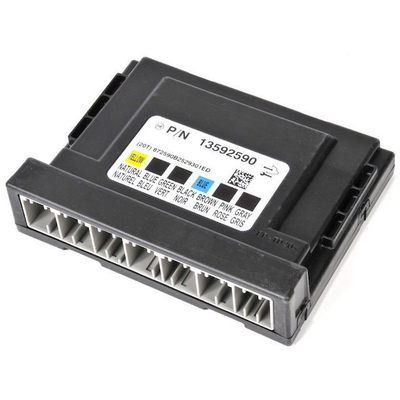
Below are the parts most often responsible for code B3130, ranked by how frequently each one is the actual culprit (per the diagnosis above). Tap any to see what we have for your vehicle.



The information in this article is provided for general reference and educational purposes only. Vehicle specifications, procedures, and part compatibility can vary by production date, trim level, and region. Always consult your vehicle's factory service manual and verify part numbers before purchasing or performing repairs. Safety-critical components such as airbags, seat belts, and braking systems should be installed by a qualified professional.
- 🧭 Diagnostic Flowchart
- 🛍️ Shop This Part
- What Does B3130 Mean?
- Can I Drive With B3130?
- Common Causes
- Symptoms
- Common Fixes & Costs
- Used vs. New Parts: Buying Guide
- What Happens If You Wait — Timeline
- Cost of Not Fixing It
- Diagnosis Steps
- When This Code Triggers (Freeze-Frame Conditions)
- Related Codes
- Climate & Environmental Factors
- How to Talk to a Mechanic About This Code
- Where to Take It: Dealer vs Independent vs Chain
- When to Walk Away From the Repair
- What Scan Tool You Need for This Code
- How to Clear the Code After You Fix It
- Will This Fail Emissions / State Inspection?
- Most Commonly Affected Vehicles
- Manufacturer-Specific Notes
- Real Owner Stories
- 2022 GMC Acadia with intermittent lock failure
- 2018 GMC Acadia with repeat BCM failure
- How to Prevent This Code From Triggering
- Frequently Asked Questions
- Can I just replace a fuse to fix code B3130?
- My key fob battery is new, why do I still have this code?
- What are the most common misdiagnosis mistakes for B3130?
- Why do my locks work sometimes but not others?
- Is this an expensive repair?
- Can I fix this myself?
- Can a bad BCM drain my battery?
- What is a BCM relearn procedure?
- What happens if I ignore code B3130?
- Key Takeaways
- 🎟️ Get 5% Off