

OBD-II Code B3135: All Doors Lock Circuit Malfunction
The Ultimate 2026 Guide to Causes, Diagnosis, and Repair
- Code B3135 on 2017+ GM SUVs guarantees a water leak; find and fix the A/C or sunroof drain before replacing any parts.
- Inspect the Body Control Module (BCM) and A-pillar connectors (X500/X600) first, as these two locations account for over 80% of B3135 failures.
- Never replace door lock actuators for a B3135 code; this is a central circuit failure requiring a multimeter to test for a short-to-ground under 5 ohms.
- If codes B3130 or B3125 appear alongside B3135, you have a systemic wiring failure at a common point like the main instrument panel harness.
What Does B3135 Mean?
Code B3135 indicates the Body Control Module (BCM) detects a failure in the 'All Doors Lock' electrical circuit. The BCM sets this code when the lock command signal shorts to ground, shorts to voltage, or encounters high resistance. A professional scan tool reveals a two-digit symptom byte, with B3135-02 ('Short to Ground') being the most frequent variant.
Technical definition: The BCM detects the voltage and resistance of the All Doors Lock control circuit deviates from the expected parameters during a lock command. This confirms a central command failure from the BCM or main wiring harness, not a mechanical fault in an individual door latch.
Can I Drive With B3135?
Yes, But With Caution. You can drive the vehicle, but it presents a severe security risk because power door locks fail. The underlying electrical short causing B3135 frequently disrupts the anti-theft immobilizer, causing a sudden no-start condition that leaves you stranded. Severe BCM water damage also triggers sudden electrical power loss while driving. Fix this immediately to avoid being stranded.
Common Causes
- Water Leaking on the Body Control Module (BCM) (Very Common) — On modern GM SUVs, a poorly sealed A/C evaporator drain hose or clogged sunroof drain leaks water directly onto the BCM in the passenger footwell. This causes severe corrosion and electrical shorts, triggering B3135. GM Technical Service Bulletin (TSB) #21-NA-183 documents this exact failure.
- Water Leaking into A-Pillar Wiring Connectors (Very Common) — Water bypasses faulty body plugs or foam seals in the A-pillar and drips onto large electrical pass-through connectors (X500 and X600). This corrosion disrupts door lock, window, and mirror control signals, as detailed in GM TSBs #23-NA-046 and #23-NA-090.
- Chafed Wiring Harness Under Dashboard (Common) — The main instrument panel wiring harness rubs against the intermediate steering shaft during turns. Friction wears through the wire insulation, causing the 'All Doors Lock' circuit wire to short to ground (GM bulletins PIC6290A and PIT5606F).
- Failed Body Control Module (BCM) (Less Common) — Internal BCM failure is rarely random. For code B3135, BCM failure is a direct result of water damage. You must rule out all external water intrusion and wiring faults before condemning the module.
- Improperly Installed Aftermarket Accessories (Less Common) — Poorly installed remote starters or security alarms introduce electrical shorts. Installers tapping into the BCM or door lock circuits incorrectly trigger a B3135 code.
- Poor Ground Connection for BCM (Rare) — The BCM relies on chassis ground points (e.g., G303). A loose or corroded ground connection creates high resistance, causing unpredictable electrical issues and setting circuit-specific codes like B3135.
- Incorrect Door Lock Linkage Rod (Factory Error) (Very Rare) — A factory assembly error (GM PIE0266) affects some 2012-2016 Buick LaCrosse and 2013-2015 Chevrolet Malibu models. The wrong linkage rod causes mechanical binding, which the BCM interprets as an electrical fault.
Symptoms
- Power door locks and key fob inoperative — Pressing the lock or unlock button on the door panel or key fob has no effect on the door locks.
- Doors lock or unlock erratically — Door locks cycle on their own while driving or parked, accompanied by clicking noises from the relays.
- Car won't start ('Service Theft Deterrent System' message) — The electrical fault disrupts the anti-theft system, preventing the engine from cranking and displaying a security warning on the dash.
- Horn, alarm, or hazard lights activate randomly — A short circuit within a water-damaged BCM commands other outputs like the horn or alarm without user input.
- Simultaneous electrical failures (windows, mirrors, seats) — Corroded A-pillar connectors cause simultaneous loss of power windows, power-folding mirrors, and power seats for the affected doors.
Diagnostic Flowchart
Tap your situation to follow the diagnostic path that matches what you're seeing on this code.
Common Fixes & Costs
- Repair Water Leak and Clean/Repair Wiring Connectors — Parts: $10-$150, Labor: $250-$850, ~2.5 hr book time (Professional)
- Replace Body Control Module (BCM) and Fix Associated Leak — Parts: $350-$600, Labor: $300-$1200, ~3.5 hr book time (Professional)
- Replace Corroded A-Pillar Connector and Foam Seal — Parts: $50-$250, Labor: $250-$600, ~3.0 hr book time (Professional)
- Repair Chafed Wiring Harness at Steering Shaft — Parts: $5-$25, Labor: $200-$450, ~2.0 hr book time (Intermediate)
Used vs. New Parts: Buying Guide
When a used part is worth it: A used BCM makes sense if you use a 'cloning' service. Cloning copies all data from your original BCM to the used one, making it plug-and-play and avoiding expensive dealer programming. This is more reliable than trying to reprogram a used BCM at a dealership.
Donor-vehicle mileage cap: roughly under 100000 miles for the part to have meaningful remaining life.
Donor quality checklist:
- Match the part number EXACTLY. Different part numbers have different hardware for vehicle options.
- Avoid BCMs from vehicles with signs of water damage or flood-damaged cars.
- Ask the seller if the donor vehicle's key is available; for older systems, this was sometimes necessary.
Decision logic:
- If Your original BCM is communicable and can be read for cloning → A used BCM with a cloning service is a cost-effective option.
- If Your original BCM is completely dead (no communication, severe burn/water damage) → Buy a new OEM BCM and have it programmed by a dealer or qualified locksmith, as there is no data to clone.
- If A dealership tells you they cannot program a used BCM → They are correct regarding their own procedures; seek a third-party cloning service instead.
Warranty tradeoff: Used parts: 30-90 day functional warranty. Cloning services warranty the programming, not the hardware. Aftermarket new: 1-year to limited lifetime warranty. OEM new: 1-2 year warranty, requires dealer installation.
Worst-case if a used part fails: $300-$600 if used part fails after install — cost of another used BCM, repeat cloning service fee, and repeat labor.
What Happens If You Wait — Timeline
- 0-1 month: Intermittent failure. Locks fail after heavy rain or on humid days, then function again when dry. Code B3135 is stored in the BCM. Vehicle security is compromised. (MPG impact: 0%% · Added cost: $0)
- 1-3 months: Failure becomes frequent. The short circuit causes a noticeable parasitic battery drain, weakening the battery on cold mornings. (MPG impact: 0%% · Added cost: $150-$250 (for a new battery if the drain kills the old one).)
- 3-6 months: Progressive corrosion inside the BCM or connectors gets severe. Other BCM-controlled systems fail, causing no-starts or random alarm activation. U-codes appear. (MPG impact: 0%% · Added cost: $350-$850 (Cost of a tow plus diagnostic time as the issue is now complex).)
- 6+ months: Catastrophic BCM failure. The module is completely non-functional due to internal short circuits. This causes a cascade of electrical failures, a constant dead battery, or a vehicle that shuts down while driving. (MPG impact: 0%% · Added cost: $1000-$2000+ (for BCM replacement, programming, and fixing the original leak).)
Cost of Not Fixing It
- Immediate: Vehicle security is compromised as doors fail to lock. Risk of being locked out or unable to secure the vehicle. (Added cost: 0)
- 0-3 months: Intermittent no-start condition due to anti-theft system disruption. Parasitic battery drain from the shorted circuit kills the battery. (Added cost: $150-$350 (for a new battery and potential tow).)
- 3+ months: Catastrophic BCM failure due to progressive water damage and corrosion. Leads to a cascade of electrical problems, including loss of lights, wipers, and instrument cluster. (Added cost: $800-$2000+ (for BCM replacement, programming, and repair of other damaged wiring).)
Diagnosis Steps
- Perform a Full Vehicle DTC Scan
Use a professional scan tool to read codes from ALL modules. Note the presence of B3135 and companion codes B3130 (Unlock), B3125 (Driver Unlock), and U-codes (Communication Loss). This combination proves a systemic wiring or BCM issue.
Tools: ['OBD-II Scan Tool'] - Check Fuses
Inspect fuses related to the BCM and power locks (labeled 'DLIS,' 'BCM,' 'DOOR LOCKS') in the interior and under-hood fuse panels. A blown fuse confirms an active short circuit.
Tools: ['Test light', 'Needle-nose pliers'] - Use Scan Tool Bidirectional Controls
Bypass the physical switches and directly command the BCM to lock and unlock the doors using a professional scan tool. If the doors fail to operate, the fault lies within the BCM or output wiring.
Tools: ['Professional Scan Tool with Bidirectional Controls'] - Check for Water Leaks (The Most Critical Step)
Pull back the carpet and insulation in the front passenger and driver footwells. Feel for dampness or look for water stains. A wet carpet guarantees a leaking A/C drain, sunroof drain, or body plug.
Tools: ['Flashlight', 'Trim removal tools'] - Inspect the Body Control Module (BCM)
Locate the BCM on the passenger side of the center console. Disconnect its electrical connectors and inspect the module's pins and connector terminals for blue-green corrosion or white residue.
Tools: ['Flashlight', 'Trim removal tools'] - Inspect A-Pillar Connectors (X500/X600)
Peel back the large rubber boot in the door jamb between the front door and the car's body. Disconnect the large main connector inside and inspect it for corrosion per TSB #23-NA-046.
Tools: ['Flashlight', 'Trim removal tools'] - Inspect for Chafed Wires at Steering Shaft
Remove the lower instrument panel trim below the steering wheel. Inspect the wiring harness passing near the intermediate steering shaft for rubbing, abrasion, or exposed copper wires.
Tools: ['Flashlight', 'Screwdriver'] - Test the 'All Doors Lock' Circuit for Short to Ground
Disconnect the BCM connector. Set a multimeter to Ohms (Ω). Probe the 'All Doors Lock' circuit pin and touch the other probe to a clean chassis ground. A reading under 5 ohms confirms a short to ground (B3135-02). Infinite resistance (OL) is normal.
Tools: ['Digital Multimeter', 'Vehicle-specific wiring diagram', 'Terminal pin tools'] (Advanced) - Verify BCM Operating Voltage Range
With the ignition on, back-probe the BCM's main power and ground pins. The voltage must remain stable between 9 and 16 volts. A reading below 10.5V under load indicates a bad power feed or ground connection causing false codes.
Tools: ['Digital Multimeter with back-probe pins'] (Advanced)
When This Code Triggers (Freeze-Frame Conditions)
- Ignition Status: On (The fault is logged when the ignition is on and a lock command is attempted.)
- System Voltage: 9-16 Volts (The BCM logs this fault while operating in its normal voltage range; the fault is an internal circuit issue, not a power supply problem.)
- Lock Command Source: Key Fob or Door Switch (The code sets at the exact moment the BCM attempts to send voltage to the lock actuators via the 'All Doors Lock' circuit.)
- Fault Type: Short to Ground (Freeze frame data on a professional scan tool shows the specific symptom byte (e.g., '02' for Short to Ground) that triggered the code.)
Related Codes
- B3130 — Code for 'All Doors Unlock Circuit Malfunction.' Having B3135 (Lock) and B3130 (Unlock) simultaneously proves a systemic problem like a water-damaged BCM or corroded main wiring connector.
- B3125 — Code for 'Driver Door Only Unlock Circuit Malfunction.' Appears alongside B3130 and B3135 because the corroded A-pillar connector (X500) contains circuits for all three functions.
- U-Codes (e.g., U0140, U0155) — Network communication errors. If the BCM is severely damaged by water, it stops communicating with other modules on the CAN bus. U-codes alongside B3135 signify the entire BCM is offline.
- B3979 / B3980 — Relate to the 'Theft Deterrent System'. They appear with B3135 when a water-damaged BCM disrupts key validation, triggering an immobilizer state and a no-start condition.
Climate & Environmental Factors
- High Humidity: High humidity accelerates corrosion on electrical connectors, terminals, and PCB traces inside the BCM. Moisture condenses inside the vehicle as temperatures change, introducing water without an active leak.
- Heavy Rainfall / Wet Seasons: B3135 is primarily caused by water leaks from clogged A/C drains, sunroof drains, and body seals. Code incidence spikes in regions with heavy rainfall.
- Cold Weather / Freeze-Thaw Cycles: Freeze-thaw cycles degrade body seal and plug integrity over time, creating new paths for water. Clogged drains freeze, crack, and leak when they thaw.
How to Talk to a Mechanic About This Code
Say this: "I have a B3135 code on my GM vehicle and the classic symptoms of a water leak, like erratic door locks and a damp passenger footwell. Please instruct the technician to start by inspecting for water intrusion at the BCM from the A/C drain per TSB 21-NA-183, and check the A-pillar connectors for corrosion per TSB 23-NA-090, before recommending any part replacements."
This signals you are educated about the specific causes of this code. It directs the technician to the most likely diagnostic path, preventing them from wasting time on replacing unrelated parts like lock actuators. It establishes you expect a diagnosis of the root cause (the leak), not just the symptom.
Avoid saying:
- 'My door locks are acting weird.'
- 'My car has an electrical problem, can you fix it?'
- 'Just replace the BCM, I read online that's the problem.'
Questions to ask before authorizing the repair:
- Did you find the exact source of the water leak, and is the repair for the leak included in this estimate?
- If the BCM needs to be replaced, does your quote include the cost of programming the new module to my vehicle?
- If you are repairing a corroded connector, are you replacing the damaged terminals or just cleaning them?
- What is the warranty on both the parts and the labor for this specific repair?
Where to Take It: Dealer vs Independent vs Chain
- Dealer:
A strong, but expensive, choice for out-of-warranty repairs. They are the experts on the TSBs related to this code, but you pay a premium for that expertise.
Best for: Vehicles still under the bumper-to-bumper warranty (the repair will be free)., Complex BCM replacement and programming, as they have the required tools (GDS2/SPS2) and direct access to TSBs.
Downsides: Highest labor rate, typically $150-$200 per hour., May be quick to replace the entire BCM when a wiring repair suffices. (Typical cost: +50% vs. baseline) - Independent Shop:
Best overall fit if you find the right one. A qualified independent shop performs water leak detection and wiring repairs for a much lower cost than the dealer. Ensure they handle BCM programming if needed.
Best for: Out-of-warranty vehicles where cost is a major factor., Shops that specialize in automotive electronics and diagnostics.
Downsides: Quality and expertise vary widely. You must find a shop with modern diagnostic tools and experience with GM electrical systems., May not have the expensive GM-specific tools to program a new BCM, requiring a mobile programmer. (Typical cost: +0% vs. baseline) - Chain Shop:
AVOID. This is not the type of repair for a quick-lube or chain auto center. The diagnostic process requires specialized knowledge of water leaks and module communication outside their scope.
Best for: Simple tasks like oil changes and tire rotations.
Downsides: Technicians lack the specialized electrical diagnostic training for this complex, intermittent fault., High pressure to sell parts leads to misdiagnosis (selling a door lock actuator instead of finding the water leak). (Typical cost: -10% vs. baseline)
When to Walk Away From the Repair
If the total estimated repair cost for the B3135 fault exceeds 40-50% of your car's current private-party value, it's time to seriously consider selling or trading in the vehicle.
- Car worth $4000, fix is $1800: Walk away. The repair cost is nearly half the car's value. The underlying water leak issues mean other expensive problems are imminent.
- Car worth $15000, fix is $450: Fix it. This is a minor cost for a wiring repair on a vehicle with significant value. The repair is well below the threshold.
- Car worth $8000, fix is $1200: Borderline. Get a second opinion. If the fix is a new BCM and a guaranteed stop to the water leak, it is worth it. If other problems are lurking, sell.
What Scan Tool You Need for This Code
Minimum: A scanner that reads manufacturer-specific Body (B-series) and Communication (U-series) codes. A basic engine-only (P-code) reader is useless for this fault.
A $20 scanner from a parts store will not see Body Control Module codes like B3135. It tells you 'No Codes Found' while your locks fail. You need to access the BCM to see the code and its critical two-digit symptom byte.
Budget: BlueDriver Pro Scan Tool (~$100) — Confirms the presence of B3135 and other body codes on supported GM vehicles. It reads and clears codes from the BCM, which is the minimum requirement for diagnosis.
Mid-range: Foxwell NT510 Elite for GM (~$180) — Offers full system diagnostics, including reading BCM codes with symptom bytes. It provides bi-directional control, allowing you to command the door locks to cycle directly from the tool.
Professional: Autel MaxiCOM MK808 / MK808BT (~$450-550) — Provides full bi-directional control of the BCM and all other modules. It performs active tests on locks, reads live data streams from switches, and accesses detailed freeze-frame data.
Rent vs buy: Buy. The free loaner tools at auto parts stores are basic P-code readers that cannot diagnose this issue. For a B3135 code, you need a tool that communicates with the BCM.
How to Clear the Code After You Fix It
- Ensure the root cause (water leak, chafed wire) is permanently fixed.
- Reconnect the battery if it was disconnected for the repair.
- Use a professional OBD-II scan tool to clear the B3135 code from the Body Control Module.
- Cycle the power locks using both the door switch and key fob multiple times to verify the repair.
Drive cycle (~5 minutes): A formal drive cycle is not required for this body code. After clearing the code, operate the power locks multiple times. If the code does not return, the repair is successful. The fault is a 'hard fault' detected instantly upon command if the short circuit still exists.
Readiness monitors affected: None
Watch out for:
- Clearing the code without fixing the underlying electrical short results in the code returning immediately.
- Disconnecting the battery will not clear this code from the BCM's memory.
- Forgetting to address the source of a water leak causes the new or repaired components to fail again.
Will This Fail Emissions / State Inspection?
No — by itself this code doesn't fail OBD inspection (but it can keep readiness monitors from setting, which causes a separate fail).
- California: A B-series code like B3135 will not cause a smog check failure. The test primarily looks for powertrain (P-series) codes that affect emissions.
- New York: NYS inspections focus on safety and emissions. A B3135 code does not illuminate the check engine light and is not part of the emissions test.
- Texas: As of 2025, most non-commercial vehicles are exempt from the safety inspection. B3135 is not an emissions-related code and will not cause a failure.
Most Commonly Affected Vehicles
- Chevrolet Traverse, Blazer, Equinox (2018-2024) — Extremely prone to BCM water damage from the A/C drain (TSB #21-NA-183) and A-pillar connector corrosion (TSB #23-NA-090).
- GMC Acadia, Terrain (2017-2024) — Shares the C1XX platform with the Traverse and Blazer, making them equally vulnerable to water intrusion at the BCM and A-pillar connectors.
- Cadillac XT5, XT6 (2017-2024) — Built on the C1XX platform and suffers from the well-documented HVAC drain leak that damages the BCM. TSB #21-NA-183 is highly relevant.
- Buick Enclave (2018-2024) — Sets code B3135 due to water damage at the BCM or corrosion in the A-pillar connectors, outlined in TSBs #21-NA-183 and #23-NA-090.
- Buick LaCrosse (2012-2016) — A factory error installed an incorrect door lock linkage rod, causing a mechanical bind that sets electrical codes like B3135 (GM PIE0266).
- Chevrolet Malibu (2013-2015) — Affected by the factory installation of an incorrect door lock linkage rod, leading to this code.
- Ford F-150, Explorer, Edge (2011-2020) — While B3135 is GM-specific, Fords exhibit identical symptoms from broken wires inside the flexible rubber boot between the driver's door and the body.
- SAAB 9-4X (2011) — Built on a GM platform, the diagnostic procedure is identical to GM counterparts, pointing to a short to ground in the lock control circuit.
Manufacturer-Specific Notes
- General Motors (Chevrolet, GMC, Cadillac, Buick): On 2017+ SUVs, B3135 is a hallmark of a water leak. GM TSBs (#21-NA-183, #23-NA-046, #23-NA-090) direct technicians to investigate specific water intrusion points before replacing parts. Repairs are covered under the original bumper-to-bumper warranty, but there are no active recalls for this issue.
- Ford: Ford does not use the B3135 code but has an analogous problem on F-150s and Explorers where wires break inside the driver's door jamb boot. The fix is repairing the broken wires, not replacing the lock actuator.
- SAAB: On the GM-based 9-4X, leaving a multimeter connected to the lock circuit for more than 20 seconds causes the BCM to register an error and drop test voltage to 0V, requiring a reset by cycling the locks.
Real Owner Stories
2018 Chevy Traverse at 75K miles with multiple electrical failures.
Owner experienced intermittent 'Service Theft Deterrent System' messages, a no-start condition, and erratic door lock behavior. Problems worsened after heavy rain.
Outcome: A second shop diagnosed a clogged A/C evaporator drain leaking water directly onto the new BCM. The fix involved clearing the drain hose, implementing the zip-tie fix from TSB #21-NA-183, and replacing the BCM again. Total cost exceeded $2,000 due to misdiagnosis.
Lesson: Replacing the BCM without fixing the water leak is the most common and costly mistake. Always start by checking for dampness in the passenger footwell.
2019 GMC Acadia at 60K miles with driver-side electrical issues.
The driver's door lock, window, and power mirror stopped working simultaneously. Codes B3135, B3125, and B3130 were present.
Outcome: Owner found TSB #23-NA-090 and checked the A-pillar connector (X500). They found the connector full of green, corroded terminals. Cleaning the connector with electrical contact cleaner restored all functions.
Lesson: When multiple functions in one door fail at once, the problem is the main connector or wiring harness for that door, not individual components.
2017 Cadillac XT5 with random alarm and no-start issues.
Vehicle's alarm went off randomly, and it intermittently failed to start, displaying a 'Service Theft' message. The key fob stopped working for the locks.
Outcome: A Cadillac-specialist shop identified a water-damaged BCM. Pulling back the passenger-side carpet revealed a soaked floor and a corroded BCM. The repair involved replacing the BCM ($550 part + $300 programming) and fixing the leaking A/C drain ($150 labor).
Lesson: Random alarm activation and anti-theft system warnings paired with B3135 are strong indicators of a failing BCM. Do not waste money on key fobs until the BCM is confirmed dry.
How to Prevent This Code From Triggering
- Clean Sunroof Drains (Once every 1-2 years) — Prevents water from backing up and overflowing into the headliner, A-pillars, and footwells, which directly causes BCM and connector corrosion. Use low-pressure compressed air or flexible trimmer line.
- Proactively Fix A/C Evaporator Drain (Once, as a preventative measure) — On affected GM models, proactively applying the fix from TSB #21-NA-183 (securing the drain elbow with strap P/N 11509086) prevents a $1500+ repair.
- Inspect and Clean A-Pillar and Body Plugs (Every 2-3 years or after driving in wet conditions) — Body plugs and seals in the A-pillar and firewall dry out or dislodge, allowing water to enter. Periodically check that they are seated and apply silicone paste.
- Apply Dielectric Grease to Key Connectors (During any related repair) — When A-pillar connectors (X500/X600) or BCM connectors are disconnected, apply dielectric grease to the seals to waterproof the connection and prevent moisture corrosion.
Frequently Asked Questions
What is the most common mistake when diagnosing code B3135?
The most expensive mistake is replacing the Body Control Module (BCM) without fixing the water leak that damaged it. The new BCM will inevitably get wet and fail again. Never replace individual door lock actuators, as B3135 is a central circuit code.
What does the '02' in B3135-02 mean?
The two digits after the code are a symptom byte specifying the exact electrical fault. B3135-02 means 'All Doors Lock Circuit Short to Ground,' which is the most common variant. Other possibilities include B3135-01 ('Short to Voltage') or B3135-04 ('Open Circuit').
Why do my locks work sometimes but not others?
Intermittent failure is a classic symptom of moisture-related electrical problems. When the corroded BCM or A-pillar connector gets wet, it shorts out and the locks fail. As it dries, electrical contact temporarily restores, but the problem worsens until the leak is fixed.
Can a bad key fob battery cause a B3135 code?
No. A weak key fob battery prevents the fob from sending a signal, but it cannot create an electrical short within the vehicle's wiring. B3135 is strictly a vehicle-side electrical fault.
How much does it really cost to fix code B3135?
A simple wiring repair under the dash costs $300-$500. Repairing a corroded A-pillar connector ranges from $400-$850. Replacing a water-damaged BCM costs between $800 and $1,500 because it requires dealer-level programming.
Is it safe to just clear the code?
You can clear it, but it returns immediately when you use the power locks. B3135 indicates a hard fault that is actively present. Clearing the code does not fix the underlying short circuit.
Is this repair covered by my warranty?
If your vehicle is within the original bumper-to-bumper warranty, this repair is fully covered. GM issued multiple Technical Service Bulletins (TSBs) for this exact problem, so dealers know the warranty procedures. Out of warranty, you pay out of pocket unless you have an extended service contract.
What is a BCM and what does it do?
The Body Control Module (BCM) is a computer controlling non-engine functions like power windows, locks, lighting, and the alarm system. It acts as the central hub for the vehicle's body electronics.
Key Takeaways
- Code B3135 on 2017+ GM SUVs guarantees a water leak; find and fix the A/C or sunroof drain before replacing any parts.
- Inspect the Body Control Module (BCM) and A-pillar connectors (X500/X600) first, as these two locations account for over 80% of B3135 failures.
- Never replace door lock actuators for a B3135 code; this is a central circuit failure requiring a multimeter to test for a short-to-ground under 5 ohms.
- If codes B3130 or B3125 appear alongside B3135, you have a systemic wiring failure at a common point like the main instrument panel harness.
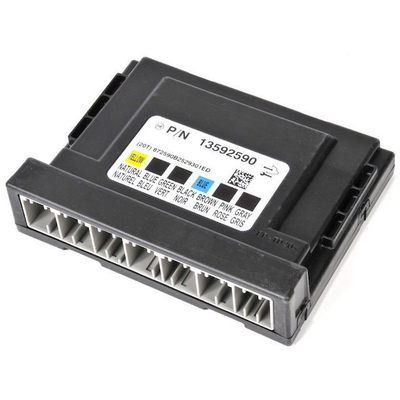
Shop the Parts Behind B3135
Below are the parts most often responsible for code B3135, ranked by how frequently each one is the actual culprit (per the diagnosis above). Tap any to see what we have for your vehicle.



The information in this article is provided for general reference and educational purposes only. Vehicle specifications, procedures, and part compatibility can vary by production date, trim level, and region. Always consult your vehicle's factory service manual and verify part numbers before purchasing or performing repairs. Safety-critical components such as airbags, seat belts, and braking systems should be installed by a qualified professional.
- 🧭 Diagnostic Flowchart
- 🛍️ Shop This Part
- What Does B3135 Mean?
- Can I Drive With B3135?
- Common Causes
- Symptoms
- Common Fixes & Costs
- Used vs. New Parts: Buying Guide
- What Happens If You Wait — Timeline
- Cost of Not Fixing It
- Diagnosis Steps
- When This Code Triggers (Freeze-Frame Conditions)
- Related Codes
- Climate & Environmental Factors
- How to Talk to a Mechanic About This Code
- Where to Take It: Dealer vs Independent vs Chain
- When to Walk Away From the Repair
- What Scan Tool You Need for This Code
- How to Clear the Code After You Fix It
- Will This Fail Emissions / State Inspection?
- Most Commonly Affected Vehicles
- Manufacturer-Specific Notes
- Real Owner Stories
- 2018 Chevy Traverse at 75K miles with multiple electrical failures.
- 2019 GMC Acadia at 60K miles with driver-side electrical issues.
- 2017 Cadillac XT5 with random alarm and no-start issues.
- How to Prevent This Code From Triggering
- Frequently Asked Questions
- What is the most common mistake when diagnosing code B3135?
- What does the '02' in B3135-02 mean?
- Why do my locks work sometimes but not others?
- Can a bad key fob battery cause a B3135 code?
- How much does it really cost to fix code B3135?
- Is it safe to just clear the code?
- Is this repair covered by my warranty?
- What is a BCM and what does it do?
- Key Takeaways
- 🎟️ Get 5% Off