

B3135 on 2018-2022 Buick Enclave: Causes and Fixes for Door Lock Failures
On a 2018-2022 Buick Enclave, code B3135 almost always points to water damage in the electrical system. The most common causes are a leaking A/C drain hose corroding the Body Control Module (BCM) or leaking body plugs causing corrosion in the door wiring harness. Expect a professional repair costing between $300 and $1,200 depending on the extent of the damage.
- B3135 on a 2018-2022 Enclave is a serious indicator of water intrusion and should be investigated immediately.
- The two primary failure points are the BCM (due to A/C drain leak) and the A-pillar wiring connectors (due to leaking body plugs).
- Repair is not complete until the source of the water leak is permanently fixed.
- This issue is shared across several large GM SUVs from the same era.
What's Unique About the 2018-2022 Buick ENCLAVE
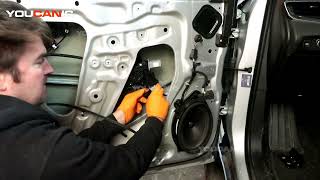
The second-generation Buick Enclave (2018-2022) and its GM C1XX platform siblings are known for specific water leak issues that lead to this code. Unlike a simple switch or actuator failure, 🎬 Watch: How to replace the door lock switch if needed. B3135 on this platform is frequently a symptom of a bigger problem, as documented in multiple General Motors Technical Service Bulletins (TSBs). The root cause is often water intrusion corroding key electronic components like the Body Control Module (BCM) or major wiring connectors (X500/X600), leading to a cluster of electrical faults.
Diagnostic Flowchart
Tap your situation to follow the diagnostic path that matches what you're seeing on this vehicle.
Symptoms You May Notice
- Power door locks do not work, either intermittently or completely.
- Keyless entry (key fob) does not lock or unlock the doors.
- Unwanted horn or hazard flasher operation.
- Warning lights on the instrument panel, including the airbag light.
- Immobilizer system errors, potentially preventing the car from starting.
- Power windows, mirrors, or seats may also be inoperative.
- Side Object Detection Inoperative and/or Unwanted Activation.
- Replacing a single door lock actuator when the problem is systemic (BCM or wiring harness corrosion).
- Replacing the key fob battery, as the issue lies within the vehicle's receiving and control circuits, not the fob's transmitter.
- Replacing the BCM without addressing the root cause of the water leak, leading to a repeat failure.
Most Likely Causes
- Water Intrusion Corroding the Body Control Module (BCM) 🔴 High Probability → Shop Body Control Module As outlined in GM TSB #21-NA-183, the A/C evaporator drain hose can leak water directly onto the BCM, which is located in the front passenger cabin footwell. This causes corrosion on the module's connectors and internal circuit board, leading to a host of electrical issues.
How to confirm: A technician will inspect the area around the BCM by removing the right front floor console extension panel. Signs of moisture, white or green corrosion on the BCM connectors or case are definitive indicators. TSB #21-NA-183 details a procedure to run the A/C at full blast to reveal an active leak at the hose connection to the HVAC module. The TSB notes that if water has been leaking, it has most likely entered the BCM, and opening the case will reveal internal damage.
Typical fix: If corrosion is found, the BCM must be replaced and the new module programmed to the vehicle. The A/C drain hose connection must also be secured with a tie strap to prevent future leaks, as instructed by the TSB.
Est. part cost: $150-$600 - Water Intrusion in A-Pillar Door Harness Connectors 🔴 High Probability GM TSB #23-NA-046 identifies an issue where water leaks past poorly sealed body plugs in the 'A' hinge pillar, dripping directly into the main door-to-body wiring connectors (X500 on the driver's side, X600 on the passenger's side). This causes corrosion in the terminals responsible for lock, window, and mirror functions.
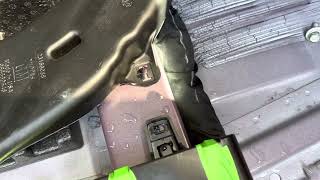
How to confirm: Disconnect the large rubber boot between the door and the car's body. Inspect the large plastic connectors (X500 and X600) for green or white corrosion. The TSB also advises checking for a damaged or displaced foam connector seal.
Typical fix: The corroded terminals or the entire connector must be repaired or replaced. The source of the water leak from the body plugs must be identified and sealed. The TSB provides instructions for repairing the wiring and replacing the foam seals if necessary.
Est. part cost: $50-$150 - Low or Unstable Battery Voltage ⚪ Low Probability
How to confirm: Test the battery and charging system. The BCM requires a stable voltage between 9-16 volts to operate correctly. Low voltage can cause it to set erroneous codes and other modules to malfunction.
Typical fix: Recharge or replace the battery and verify the alternator is functioning correctly. A Reddit thread on an older Enclave highlights how a failing alternator can cause widespread electrical issues mimicking other faults.
Est. part cost: $150-$350
Rare But Worth Checking
- Faulty Door Lock Actuator: While a common failure on many cars, on this platform it's less likely to be the root cause of B3135 than the water intrusion issues. An actuator failure usually affects only one door and may not set this specific 'All Doors Lock Circuit' code.
- Sunroof Drain Clogs: While not directly cited for B3135, clogged sunroof drains are a known source of water intrusion on GM platforms. TSB 20-NA-219 discusses water leak issues from sunroof drains in the plenum area, which can lead to water entering the cabin and potentially affecting electronics. This is a plausible, though less documented, pathway for water to reach the BCM or related wiring.
Diagnosis Steps
- Perform a full vehicle scan with a tool capable of reading GM-specific body codes. Confirm B3135 is present, along with any other related codes.
- Check and document battery voltage and charging system performance.
- Following TSB 21-NA-183, remove the right front floor console extension panel and inspect the Body Control Module (BCM) and its connectors for any signs of water staining, corrosion, or moisture.
- Following TSB 23-NA-046, pull back the rubber boot in the A-pillar and inspect the driver (X500) and passenger (X600) door harness connectors for corrosion.
- If water intrusion is confirmed at the BCM, secure the A/C drain hose with a tie strap per TSB 21-NA-183 after replacing the damaged components.
- If water intrusion is confirmed at the A-pillar connectors, locate and seal the leaking body plugs above the connectors before repairing the wiring.
- If no water damage is found, proceed with standard electrical diagnostics on the 'All Doors Lock' circuit, checking for shorts to ground between the BCM and the door lock relays/actuators.
Parts You'll Likely Need
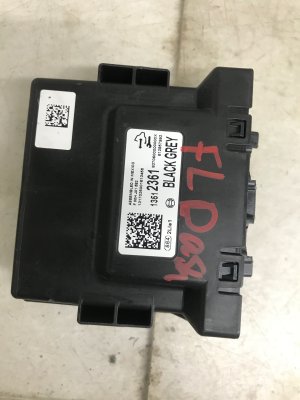
- Body Control Module (BCM)
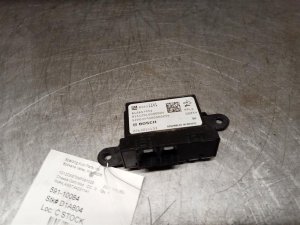
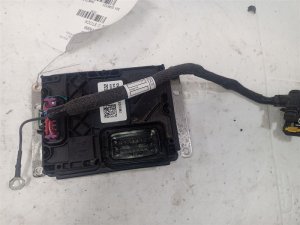
(OEM #13534190)— This is the most common part to fail due to water damage from a leaking A/C drain hose, as per TSB 21-NA-183. Part number 13534190 is listed for 2018-2019 models; verify by VIN for other years.
Trusted brands: ACDelco (Genuine GM)
OEM price range: $150-$320
Aftermarket price range: $140-$250 - Wiring Harness Connector Repair Kit — Needed to repair corroded terminals in the A-pillar door connectors (X500/X600), as per TSB 23-NA-046. These kits often include new connector housings, terminals, and seals. Specific kits are application-dependent.
Trusted brands: ACDelco, Dorman
OEM price range: $50-$150
Aftermarket price range: $30-$100
Related Codes That Often Appear With This One
- B3125 — This code is for a 'Driver Door Only Unlock Circuit' fault and is often triggered by the same water intrusion issues.
- B3130 — This code is for an 'All Doors Unlock Circuit' fault and is also listed in the same TSBs as a related code.
- B3979 / B3980 — These are also body control codes mentioned in TSB 21-NA-183, related to various BCM functions affected by the water damage.
- Various U codes — Communication codes (U-codes) are common when the BCM is compromised by water, as it disrupts communication with other modules on the vehicle's network. TSB 21-NA-183 explicitly lists 'Various U codes' as a related symptom.
Technical Service Bulletins (TSBs) & Recalls
- 21-NA-183: Intermittent Door Locks Inoperative, DTCs B3125, B3130, B3135, B3979, B3980, Various U codes, IP Lamps Illuminate, Immobilizer, Unwanted Horn or Hazard Flasher Operation.
- 23-NA-046: Power door locks inoperative, Keyless entry inoperative, Power windows and power mirror inoperative, etc., due to water in A-pillar connectors.
Platform-Specific Known Issues
- A known design flaw where the A/C evaporator drain hose can become disconnected or leak, dripping water onto the BCM.
- A known issue where body plugs in the A-pillar can leak, allowing water to corrode the main door wiring harnesses.
Mechanic-Grade Diagnostic Values
- Normal BCM Operating Voltage — expected: 9-16 Volts. Failure: Voltage outside this range can cause the BCM to set various DTCs, including B3135.
- Low Speed GMLAN Bus Voltage (at rest) — expected: ~0.2 V (Logic '1'). Failure: Incorrect voltage can indicate a bus communication problem affecting BCM function.
- Low Speed GMLAN Bus Voltage (active) — expected: ~4.0 V or higher (Logic '0'). Failure: Inability to toggle to this voltage indicates a communication fault.
- LIN Bus Voltage (at rest) — expected: Approx. 1 volt less than system voltage (~11-12V). Failure: A steady low voltage or no voltage can indicate a short or open in the LIN bus, affecting peripherals controlled by the BCM.
Scan Tool Commands That Help
- GDS2 (GM Diagnostic Software): BCM Output Controls > Door Locks — Use this bidirectional control to command the 'All Doors Lock' and 'All Doors Unlock' functions directly from the scan tool. If the doors lock and unlock with the scan tool but not the switch, it helps isolate the fault to the switch circuit. If they do not respond to the scan tool, the fault is likely in the BCM, wiring, or actuators.
- GDS2 (GM Diagnostic Software): Vehicle DTC Information — This function queries all modules on the vehicle for DTCs. It is critical for identifying communication (U-codes) or faults in other modules that are occurring concurrently with B3135, which is common in water intrusion cases.
Wiring & Ground Locations
- BCM Location — In the center console, behind the lower panel on the passenger side footwell.. This location makes it highly susceptible to water damage from the A/C evaporator drain hose, a primary cause of B3135.
- G303 (example from similar platform) — Typically located on the cowl, above the brake booster.. This is a major ground point for the BCM and other interior electronics. A corroded or loose G303 can cause a wide range of erratic electrical issues, including BCM faults. While the exact designator for the 2018+ Enclave may vary, checking the main cowl grounds is critical.
- BCM Connector X7, Pin 7 (example from similar platform) — This is the 'All Door Lock' control circuit pin on the BCM for some GM models.. A technician would test for greater than 9 volts between this pin's circuit and ground when diagnosing an open or short. Verifying the specific pin for the 2018-2022 Enclave via a service manual is required, but this illustrates the diagnostic process.
- X500 / X600 Connectors — In the A-pillars, connecting the main body harness to the front door harnesses (driver and passenger side, respectively).. These connectors are a known point of failure due to water leaking past body plugs, causing corrosion that directly leads to B3135 and other door function failures, as per TSB 23-NA-046.
OEM Part Supersession History
13519672→13534190— Part update/revision by manufacturer.
Heads up: The new part number (13534190) replaces the old one and should be used for service.
Model Year Variations Within This Range
- 2022-onward: The Buick Enclave received a mid-cycle refresh for the 2022 model year, which included new front/rear styling, a revised center console, and updated technology like standard wireless Apple CarPlay/Android Auto. While the BCM location and primary water leak issues are believed to be the same, some wiring and module software may differ from the 2018-2021 models. Notably, due to supply chain issues, some 2022 models were built without certain features like heated steering wheels or heated/ventilated seats, which are controlled by the BCM.
Helpful Videos

We Have This Part in Stock

The information in this article is provided for general reference and educational purposes only. Vehicle specifications, procedures, and part compatibility can vary by production date, trim level, and region. Always consult your vehicle's factory service manual and verify part numbers before purchasing or performing repairs. Safety-critical components such as airbags, seat belts, and braking systems should be installed by a qualified professional.
- Buick ENCLAVE:
- 🧭 Diagnostic Flowchart
- 🎬 Helpful Videos
- 🛍️ Shop This Part
- What's Unique About the 2018-2022 Buick ENCLAVE
- Symptoms You May Notice
- Most Likely Causes
- Rare But Worth Checking
- Diagnosis Steps
- Parts You'll Likely Need
- Related Codes That Often Appear With This One
- Technical Service Bulletins (TSBs) & Recalls
- Platform-Specific Known Issues
- Mechanic-Grade Diagnostic Values
- Scan Tool Commands That Help
- Wiring & Ground Locations
- OEM Part Supersession History
- Model Year Variations Within This Range
- 🎟️ Get 5% Off