

B3135 on 2017-2022 Cadillac XT5: Door Lock Circuit Fault Causes and Fixes
Code B3135 on a 2017-2022 Cadillac XT5 indicates a fault in the 'All Doors Lock' circuit. The most likely cause, documented in GM TSB #21-NA-183, is water from a poorly secured HVAC drain hose leaking directly onto the Body Control Module (BCM) in the center console area. The official fix for the leak is adding a zip tie to the hose. However, if the BCM is corroded, it will require replacement and programming, with total repair costs often ranging from $500 to over $1000.
- B3135 on an XT5 is rarely a simple fix; it's a strong indicator of a water leak or wiring problem.
- Before replacing any parts, your first step should be to check for water damage near the BCM as outlined in TSB #21-NA-183.
- Do not be surprised if other electrical problems are happening at the same time; they are likely related to the same root cause.
- Fixing the source of the problem (the water leak or chafed wire) is more important than just replacing the part that failed.
- Due to the need for BCM programming, this repair will likely require a visit to a professional shop.
What's Unique About the 2017-2022 Cadillac XT5
The Cadillac XT5 and its GM C1XX platform siblings (like the GMC Acadia and Chevy Traverse) have a well-documented design vulnerability detailed in TSB #21-NA-183. 🎬 Watch: How water leaks into the cabin on this platform. An HVAC drain hose can leak water directly onto the Body Control Module (BCM), which is located in the center console area, causing corrosion and widespread electrical chaos. This means B3135 is frequently not an isolated door lock issue, but a symptom of a larger problem that also causes seemingly unrelated codes and symptoms like unwanted horn activation, immobilizer errors, and random warning lights. A secondary documented issue is the instrument panel wiring harness chafing on the steering column shaft.
Diagnostic Flowchart
Tap your situation to follow the diagnostic path that matches what you're seeing on this vehicle.
Symptoms You May Notice
- Power door locks are intermittent or completely inoperative.
- Unwanted horn or hazard flasher activation.
- Instrument panel warning lamps illuminate randomly.
- Immobilizer system warnings ('Theft Deterrent System') or a no-start condition.
- Doors may cycle between locked and unlocked while driving.
- Unwanted seat or mirror movement.
- Vehicle fails to shut off immediately after turning key off.
- Water visible on the floor/carpet in the front passenger or driver footwell.
- Replacing a single door lock actuator when the problem is a systemic electrical issue (BCM/wiring).
- Replacing the key fob battery, which does not relate to the BCM's door lock circuit faults.
- Replacing fuses without diagnosing the underlying short that caused the fuse to blow.
- Replacing the BCM without first identifying and fixing the source of the water leak, leading to repeat failure.
Most Likely Causes
- Water Intrusion into Body Control Module (BCM) 🔴 High Probability → Shop Body Control Module As documented in TSB #21-NA-183, the HVAC drain hose connection can leak at a notch near the top, allowing water to drip directly onto the BCM and its connectors, causing corrosion and short circuits.
How to confirm: Remove the right and/or left front floor console extension panels. Run the A/C on high with the temperature set to low and observe the HVAC drain hose connection for drips. Visually inspect the BCM and its electrical connectors for any signs of moisture or blue/green corrosion. The TSB notes you may need to open the BCM case to see internal damage.
Typical fix: Secure the HVAC drain hose by installing a tie strap just below the locking nib near the top of the hose connection, as per TSB #21-NA-183. If the BCM shows any signs of water damage or corrosion, it must be replaced. The new BCM will require programming by a dealer or qualified shop with GM-specific software.
Est. part cost: $250-$600 for a new OEM BCM. $5 for a zip tie. - Chafed Instrument Panel (IP) Wiring Harness 🟡 Medium Probability TSB #PIT5606F and later versions note that the main IP wiring harness can rub against the intermediate steering shaft (I-shaft), eventually wearing through the insulation and causing shorts to ground.
How to confirm: Remove the lower dash panels to visually inspect the wiring harness where it passes the steering column and I-shaft. Look for worn insulation, exposed copper wires, or evidence of rubbing on the harness loom.
Typical fix: Repair the damaged wires using appropriate splicing techniques and heat shrink. Secure the harness away from the steering shaft using zip ties to prevent future damage.
Est. part cost: $5-$20 for wire repair supplies. - Faulty Door Lock Actuator ⚪ Low Probability While actuators can fail on any vehicle, this is a less likely cause on the XT5 if multiple, seemingly unrelated electrical symptoms are present, as the TSBs point to a more central BCM or wiring issue.
How to confirm: If only one door fails to lock and no other electrical symptoms are present, the actuator in that door is suspect. Test for power and ground at the actuator connector when the lock switch is pressed.
Typical fix: Replace the faulty door lock actuator/latch assembly.
Est. part cost: $100-$250
Rare But Worth Checking
- Water Intrusion in Body Connectors: TSB #PIT5606J mentions that water can enter major body connectors like X500, X600, X200, and X201, causing similar issues. This can be caused by a leaking A-pillar seal or, on pre-2/14/2019 vehicles, incorrectly sized hinge pillar body plugs.
Diagnosis Steps
- Scan all vehicle modules for DTCs. Note all codes, especially B-codes and U-codes, and check for TSBs.
- Specifically check for TSB #21-NA-183 and TSB #PIT5606 (any version).
- Following TSB #21-NA-183, remove the right front floor console extension panel.
- Start the vehicle, turn the A/C to max speed and low temp. Allow it to run and observe the HVAC drain hose connection (on both left and right sides) for any signs of water dripping.
- If a leak is found, secure the hose with a zip tie as described in the TSB.
- Disconnect the battery. Carefully access and inspect the Body Control Module (BCM) and its connectors for any signs of water damage or corrosion (blue/green crust). Per the TSB, this may require opening the BCM case to find.
- If the BCM is corroded, it must be replaced and programmed. If it is clean, proceed to the next step.
- If no water damage is found, remove lower dash panels and inspect the instrument panel wiring harness for chafing near the steering column I-shaft, per TSB #PIT5606.
- If no issues are found, inspect major body connectors (X500, X600, etc.) for water intrusion.
Parts You'll Likely Need
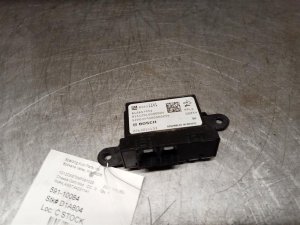
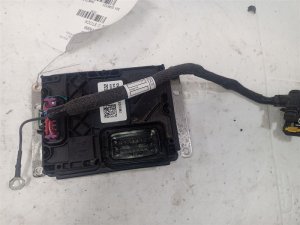
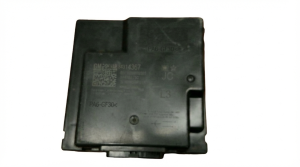
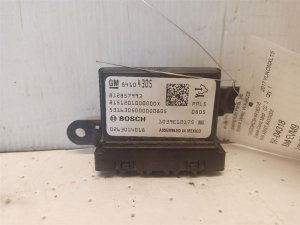
- Body Control Module (BCM)
(OEM #Varies by year/options. Common numbers include 13534188, 13534190, 84922494. Must confirm with VIN.)— This is the most common point of failure for this code on the XT5 due to its vulnerability to water damage from a leaking HVAC drain hose, as documented in TSB #21-NA-183.
Trusted brands: ACDelco (GM Genuine)
OEM price range: $300-$600
Aftermarket price range: $200-$400 (Often requires programming) - Zip Tie / Cable Tie — This is the official GM-recommended part to permanently fix the leaking HVAC drain hose connection as per TSB #21-NA-183.
OEM price range: <$1
Aftermarket price range: <$1
Related Codes That Often Appear With This One
- B3125 — Driver Door Only Unlock Circuit fault. Often set together as they are related to door lock control functions originating from the same water-damaged BCM.
- B3130 — All Doors Unlock Circuit fault. Often set together as they are related to door lock control functions originating from the same water-damaged BCM.
- Various U-codes (e.g., U0140) — U-codes (e.g., U0140 - Lost Communication With BCM) indicate network communication problems, which are a common result of a failing or water-damaged BCM.
- B3979 / B3980 — Sensor Power Circuit faults. These are also listed in TSB #21-NA-183 as being caused by the same BCM water intrusion issue.
Technical Service Bulletins (TSBs) & Recalls
- 21-NA-183: Intermittent Door Locks Inoperative, DTCs B3125, B3130, B3135... and other electrical issues caused by possible water intrusion to the Body Control Module (BCM) from the HVAC drain hose. Details the zip-tie fix.
- PIT5606F/J: Power Door Locks Cycle or Intermittently Inoperative with DTC's B3125, B3130, B3135 caused by a chafed IP wiring harness or water intrusion into the BCM or other body connectors (X500, X600).
Platform-Specific Known Issues
- TSB #21-NA-183: BCM Water Intrusion from HVAC Drain: Documents a widespread issue where a leaking HVAC drain hose causes water intrusion into the BCM. The official fix is to secure the hose with a zip tie. If the BCM is damaged, it requires replacement.
- TSB #PIT5606F/J: Chafed IP Wiring Harness: Documents a secondary common issue where the instrument panel wiring harness chafes against the steering shaft, causing shorts that can trigger B3135 and other electrical problems.
Mechanic-Grade Diagnostic Values
- BCM Ground Circuit Voltage Drop — expected: < 50 millivolts (0.05V). Failure: A reading significantly higher than 50mV between the BCM ground pin and a known-good chassis ground indicates high resistance in the ground circuit, which can cause erratic module behavior.
- System Operating Voltage at BCM — expected: 9-16 Volts. Failure: Voltage outside this range can prevent the BCM from operating correctly and setting various DTCs, including B3135.
Hidden / Shadow Codes Worth Checking
- B3135 02: The '02' is a symptom byte indicating 'Short to Ground'. While not truly hidden, many basic scanners only show 'B3135'. Seeing the symptom byte confirms the BCM has specifically detected a short to ground on the 'All Doors Lock' circuit. (see via GM GDS2, high-end professional scan tools.)
Scan Tool Commands That Help
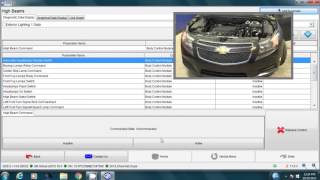
- GM GDS2 (or equivalent professional scanner): Body Control Module > Vehicle Access > All Doors Lock/Unlock — This is a bidirectional control used to command the BCM to lock and unlock the doors. If the doors do not respond to the scan tool command, it helps isolate the problem to the BCM, its wiring, or the lock actuators, bypassing the physical interior switches.
- GM GDS2 (or equivalent professional scanner): BCM > Control Functions > Output Control — Allows a technician to individually command various outputs controlled by the BCM, such as specific lights or relays. This can be used to test the BCM's ability to send commands and verify the integrity of individual circuits connected to it.
- GM SPS (Service Programming System): Replace and Program ECU — This function is required after physically installing a new BCM. It downloads the correct vehicle-specific software, VIN, RPO configurations, and security information into the new module, making it operational.
Wiring & Ground Locations
- BCM Location — Inside the vehicle, typically mounted to the side of the center console in the driver or front passenger footwell area, often near the instrument panel fuse block.. This is the central module that controls the door locks and is the primary component affected by the HVAC drain water leak described in TSB #21-NA-183.
- G303 — On the left side B-pillar, behind the trim panel.. This is a major body ground point. While not directly cited for the BCM on the XT5, a poor B-pillar ground could affect door-related components. GM uses a 'G3xx' designation for grounds in the rear seat/B-pillar area.
- X500 / X600 — Large, multi-pin connectors located in the A-pillar hinge area, connecting the main body harness to the door harnesses.. TSB #PIT5606J and #23-NA-046 identify these connectors as potential points for water intrusion from leaking A-pillar body plugs or windshield seals, which can cause door lock circuit faults identical to a failed BCM.
- Instrument Panel Fuse Block — Located behind a panel on the passenger side of the center console/instrument panel.. The BCM and its associated circuits are powered by fuses in this block. While a blown fuse is rarely the root cause, checking relevant fuses is a preliminary step.
OEM Part Supersession History
13594646→13534188— Standard part revision and consolidation.
Heads up: Part 13534188 is listed for the Cadillac XT5 and its platform mates (Acadia, Traverse). Always confirm the correct part number with the vehicle's VIN before ordering.Multiple (e.g., 25934762, 22860591, etc.)→84922494— Part 84922494 is a major supersession that replaces over a dozen older BCM part numbers across various GM platforms.
Heads up: While this part number is listed as a valid BCM for some GM vehicles, it's critical to verify with a GM parts catalog using the VIN, as it may not be correct for the C1XX platform (XT5).
Model Year Variations Within This Range
- 2017 - Early 2019: Vehicles built before February 14, 2019, may have been assembled with 29mm hinge pillar body plugs, which were found to be undersized. TSB #19-NA-243 advises that these can allow water intrusion into connectors X500/X600. The updated part is a 30mm plug.
Helpful Videos


We Have This Part in Stock

The information in this article is provided for general reference and educational purposes only. Vehicle specifications, procedures, and part compatibility can vary by production date, trim level, and region. Always consult your vehicle's factory service manual and verify part numbers before purchasing or performing repairs. Safety-critical components such as airbags, seat belts, and braking systems should be installed by a qualified professional.
- Cadillac XT5:
- 🧭 Diagnostic Flowchart
- 🎬 Helpful Videos
- 🛍️ Shop This Part
- What's Unique About the 2017-2022 Cadillac XT5
- Symptoms You May Notice
- Most Likely Causes
- Rare But Worth Checking
- Diagnosis Steps
- Parts You'll Likely Need
- Related Codes That Often Appear With This One
- Technical Service Bulletins (TSBs) & Recalls
- Platform-Specific Known Issues
- Mechanic-Grade Diagnostic Values
- Hidden / Shadow Codes Worth Checking
- Scan Tool Commands That Help
- Wiring & Ground Locations
- OEM Part Supersession History
- Model Year Variations Within This Range
- 🎟️ Get 5% Off