

OBD-II Code B3377: Body Control Module Not Programmed
What B3377 means, why it triggers, and how to fix it
- Code B3377 indicates the Body Control Module (BCM) lacks vehicle-specific software and requires professional programming.
- General Motors (GM) vehicles frequently trigger this code after a BCM replacement, a botched jump-start, or a severe battery voltage drop.
- Do not drive the vehicle; an unprogrammed BCM disables critical safety systems like headlights and wipers, and the anti-theft system will likely strand you.
- Programming requires a J2534 Pass-Thru device and a manufacturer software subscription, making this a mandatory professional repair costing $150 to $300.
- Always inspect the G218 ground connection on 2007-2020 GM trucks before replacing the BCM, as a loose $10 ground wire perfectly mimics a $600 module failure.
What Does B3377 Mean?
Code B3377 means your vehicle's Body Control Module (BCM) lost its programming or configuration settings. The BCM acts as the central brain for comfort, convenience, and security features. Without programming, it cannot operate power windows, locks, lights, or the anti-theft system.
Technical definition: Within General Motors (GM) vehicles, B3377 indicates 'Loss of Programmer Communication' or an unconfigured Body Control Module (BCM). The scan tool communicates with the module, but the module reports its flash memory is blank or lacks the correct Vehicle Identification Number (VIN) and option configuration.
Can I Drive With B3377?
Yes, But With Caution. You can physically drive the vehicle, but it is strongly discouraged. An unprogrammed BCM causes unpredictable behavior in critical systems. You risk sudden stalling, loss of headlights, or anti-theft system engagement that prevents restarting. Continuing to drive risks cascading electrical damage and persistent battery drain, adding $200-$500 to your repair bill.
Common Causes
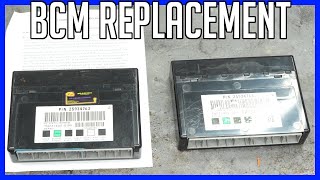
- BCM Replacement Without Programming (Very Common) — A newly installed BCM is a blank slate. It triggers this code until a technician configures it with the correct software and VIN for your specific vehicle. Installing a used or 'cloned' BCM without proper reprogramming yields the same result.
- BCM Memory Corruption from Voltage Fluctuation (Common) — Sudden voltage spikes or drops from improper jump-starting, battery replacement without a memory saver, or a chronically failing alternator corrupt the BCM's flash memory, erasing its programming.
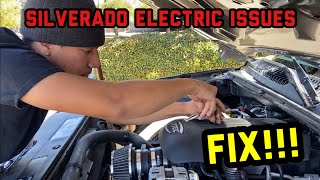
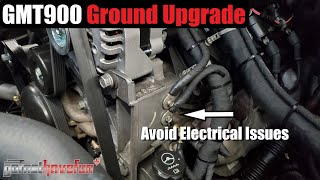
- Poor BCM Ground Connection (Common) — A loose or corroded ground connection causes unpredictable electrical issues and memory loss that triggers B3377. This is a highly documented failure point on 2007-2020 GM trucks (specifically ground G218). 🎬 See how to fix common GM truck ground connection issues
- Failed BCM Programming Attempt (Common) — An interruption during a software update—such as a loss of power to the scan tool, a disconnected J2534 device, or a glitch in the manufacturer's programming system—leaves the BCM unprogrammed.
- Internal BCM Failure (Less Common) — The BCM fails internally due to age, water intrusion, or cracked solder joints on the circuit board, permanently losing its memory and programming capabilities.
- Software or Firmware Glitch (Rare) — A random software bug within the BCM's firmware causes it to spontaneously drop its programming, requiring a re-flash even if the hardware is perfectly intact.
- Aftermarket Device Interference (Rare) — Poorly installed aftermarket remote starters, alarms, or audio equipment interfere with the vehicle's CAN bus network, corrupting the BCM data or disrupting the programming process.
Symptoms
- Vehicle Won't Start or Stalls — The BCM controls the anti-theft immobilizer system. Without programming, it prevents the engine from cranking or shuts off fuel delivery seconds after starting.
- Inoperative Body Features — Power windows, power door locks, interior lighting, remote keyless entry, and the radio stop working entirely.
- Incorrect Feature Operation — Features behave erratically. Radio buttons swap functions, headlights refuse to turn off, or windshield wipers activate on their own.
- Parasitic Battery Drain — A corrupted BCM fails to shut down circuits when the vehicle turns off, creating a steady battery drain that leaves the car dead overnight.
- Warning Lights Illuminated — The dashboard displays a 'SERVICE' message, a security padlock icon, or the main Check Engine light.
Diagnostic Flowchart
Tap your situation to follow the diagnostic path that matches what you're seeing on this code.
Common Fixes & Costs
- Program or Reprogram the Body Control Module (BCM) — Parts: $0, Labor: $150 - $300, ~1.5 hr book time (Professional)
- Repair BCM Ground Connection — Parts: $5 - $20, Labor: $100 - $200, ~1.0 hr book time (DIY)
- Replace and Program a New Body Control Module (BCM)
— Parts: $250 - $500, Labor: $150 - $300, ~2.0 hr book time
(Professional)
2014 Chevrolet Silverado / GMC Sierra: OEM ACDelco/GM: 13594692, 13594768 (Alt: Cardone (Remanufactured, requires flashing))
2014 Cadillac Escalade: OEM ACDelco/GM: 22846364, 22737274 (Alt: Cardone (Remanufactured)) - Replace Vehicle Battery — Parts: $150 - $250, Labor: $50 - $100, ~0.5 hr book time (DIY)
- BCM Cloning Service — Parts: $150 - $300, Labor: $50 - $150, ~1.0 hr book time (Intermediate)
Used vs. New Parts: Buying Guide
When a used part is worth it: A used BCM only makes sense if you use a professional cloning service to transfer your original data to a compatible donor module. Buying a used BCM and asking a dealer to reprogram it almost always fails.
Donor-vehicle mileage cap: roughly under 100000 miles for the part to have meaningful remaining life.
Donor quality checklist:
- Part number must be an exact match to the original BCM.
- Avoid modules from flood-damaged vehicles, as they cannot be reliably cloned.
- Verify the source; a reputable auto recycler is preferable to a random online seller.
- Ensure the cloning service offers a warranty on their work.
Decision logic:
- If The original BCM is physically destroyed or water-damaged (unclonable) → Buy a new OEM BCM and have it professionally programmed. This is the only reliable option.
- If The original BCM is electronically faulty but still communicates (clonable) and budget is a primary concern → A cloning service with a compatible used donor is a viable, cost-effective option.
- If The vehicle is newer and under warranty, or you prioritize reliability → Buy a new OEM BCM. The repair carries a parts and labor warranty.
Warranty tradeoff: Used/Cloned BCMs: Warranty covers the cloning service (90 days to 1 year), not the used part. Aftermarket New: 1-year to limited lifetime warranty, but risks compatibility issues. OEM New: 1-2 year parts warranty, plus a labor warranty if installed by a dealer.
Worst-case if a used part fails: $300 - $600 if a cloned used part fails, covering another cloning service plus repeated labor.
What Happens If You Wait — Timeline
- Immediate: Code B3377 sets. Multiple body features (windows, locks, radio) fail. The vehicle refuses to start due to the anti-theft system engaging. (MPG impact: 0%% · Added cost: $150 - $300 (Towing and diagnostic fees))
- 1 week - 2 months: If drivable, a parasitic draw from the faulty BCM repeatedly discharges the battery. Constant deep cycling destroys the battery. (MPG impact: 0%% · Added cost: $200 - $350 (Cost of a new battery))
- 2-6 months: Operating with a failing battery puts massive stress on the electrical system. The alternator works overtime to compensate, burning out prematurely. (MPG impact: 0-2%% · Added cost: $600 - $1100 (Cost of new battery and alternator))
- 6+ months: Cascading electrical failure. Unstable voltage corrupts or physically damages the Engine Control Module (ECM) or Transmission Control Module (TCM). (MPG impact: N/A (Vehicle inoperable)% · Added cost: $1500 - $3000+ (Cost to replace multiple control modules))
Cost of Not Fixing It
- Immediate: Major safety risk. Headlights, wipers, and door locks fail. The anti-theft system prevents the car from starting, leaving you stranded. (Added cost: $150 - $300 (Towing and diagnostic fees))
- 1-3 Months: A faulty BCM causes a parasitic battery drain. Constant deep cycling destroys the battery, requiring immediate replacement. (Added cost: $200 - $350 (Cost of a new battery and installation))
- 3+ Months: Operating with unstable voltage from a dying battery damages other expensive control modules (PCM, TCM, ABS), leading to cascading electrical failures. (Added cost: $500 - $2000+ (Cost to diagnose and replace damaged electronic modules))
Diagnosis Steps
- Scan for All Trouble Codes
Use a professional-grade scan tool to check for B3377 and related U-codes. Note if the code is 'current' or 'history'. The ability to communicate with the BCM dictates the next diagnostic step.
Tools: Professional OBD-II Scan Tool (Intermediate) - Check for Technical Service Bulletins (TSBs)
Search for TSBs related to your vehicle. For example, GM TSB 18-NA-161 addresses BCM ground issues on 2015-2020 models that mimic a failed module, while bulletin 13-08-47-001A addresses a no-crank condition requiring a BCM reprogram.
Tools: Online Service Information Subscription (e.g., ALLDATA, Mitchell 1) (Advanced) - Verify Battery and Charging System Health
Test the battery's state of charge and the alternator's output. A stable voltage (12.4V+ engine off, 13.7-14.7V engine running) is mandatory. Unstable voltage causes memory corruption and guarantees failed programming attempts.
Tools: Multimeter, Battery Terminal Cleaner (Beginner) - Check for Recent Repairs or Modifications
Determine if the BCM was recently replaced, if the battery died, or if aftermarket electronics were installed. These events directly point to a lack of programming or network interference.
Tools: Service records (Beginner) - Attempt to Communicate with the BCM
Access the BCM's live data stream. If you can communicate but it shows no software or VIN, it needs programming. If you cannot communicate at all, you have a power, ground, or network wiring issue (typically setting code U0140).
Tools: Professional OBD-II Scan Tool (Intermediate) - Inspect BCM Power and Ground Circuits
If communication fails, use a multimeter to check for solid voltage and ground at the BCM connector. Perform a voltage drop test on the ground side; anything over 0.2 volts indicates a poor ground.
Tools: Multimeter, Wiring Diagram (Advanced) - Attempt BCM Programming
If power, ground, and network are solid but the module is unprogrammed, flash the BCM. This requires a J2534 Pass-Thru device, a stable battery maintainer, and a subscription to the manufacturer's software (like GM SPS).
Tools: J2534 Pass-Thru Device, Manufacturer Software Subscription, Battery Voltage Maintainer (Professional) - Perform a Parasitic Draw Test
If a dead battery is the primary symptom, perform a parasitic draw test. After the vehicle sleeps for 30 minutes, current draw must be below 85 milliamps (0.085A). Higher readings indicate a faulty BCM failing to shut down.
Tools: Multimeter with 10A Amperage Setting (Advanced) - Inspect the CAN Bus Network
If multiple modules set communication codes, check the CAN data bus wiring. Use an oscilloscope to verify a clean square wave pattern on the high and low speed data lines at the diagnostic port. Distorted signals indicate a wiring short.
Tools: Oscilloscope, Wiring Diagram (Professional)
When This Code Triggers (Freeze-Frame Conditions)
- Module Voltage: 11.5V - 13.0V (During Key-On, Engine-Off self-test)
- Ignition Status: ON (The code sets immediately upon key-on during the startup communication check.)
- Engine RPM: 0 (Set before the engine starts, during the initial module handshake.)
- Vehicle Speed: 0 mph (The fault is detected during a static, pre-drive system check.)
Related Codes
- U0140 — U0140 means 'Lost Communication With Body Control Module.' If you have U0140, your scan tool cannot connect to the BCM at all, pointing to a power, ground, or network wiring fault. With B3377, the scan tool CAN communicate, but the BCM reports it is blank.
- B398A — B398A is 'Environment Identification Incorrect.' This means the BCM has a different VIN stored in it than the rest of the car, indicating a used BCM was installed without reprogramming. B3377 is for a blank module; B398A is for a module programmed for the wrong car.
- B1001 — B1001 is 'Option Configuration Error.' The BCM has valid base software, but the specific features it's programmed for (e.g., sunroof, heated seats) don't match the vehicle. B3377 is more severe, indicating the fundamental operating software is missing entirely.
- B1000 — B1000 stands for 'ECU Malfunction', indicating an internal hardware or software fault. It often appears alongside B3377, as an internal failure causes the memory loss. Diagnosing a B1000 confirms the need to replace the BCM entirely.
Climate & Environmental Factors
- High Humidity and Moisture: Water intrusion from clogged sunroof drains or bad windshield seals causes corrosion on the BCM's circuit board, leading to short circuits and memory loss.
- Road Salt (Winter Climates): Salt-laden moisture accelerates corrosion of electrical components, specifically degrading BCM connectors and chassis ground points.
- Extreme Temperature Fluctuations: Repeated heating and cooling cycles cause expansion and contraction of solder joints on the BCM's circuit board, leading to microscopic cracks and intermittent open circuits.
How to Talk to a Mechanic About This Code
Say this: "I have a B3377 code and suspect the BCM lost its programming. I need a quote to diagnose and reprogram the existing module. Before replacing it, please verify the BCM's power and ground connections, specifically checking for TSBs like the G218 ground issue on GM trucks."
This proves you understand the code and common misdiagnoses. It forces the mechanic to perform necessary diagnostic steps before suggesting an expensive module replacement, saving you hundreds of dollars.
Avoid saying:
- 'My car is acting weird and won't start.'
- 'The check engine light is on, can you just fix it?'
- 'I think I need a new computer.'
Questions to ask before authorizing the repair:
- Did you confirm the BCM is receiving proper power and has a solid ground?
- Were you able to communicate with the BCM using your scan tool?
- If it needs replacement, what is the warranty on the new BCM and the programming labor?
- Does the quoted price include all post-programming procedures, like security and airbag relearns?
Where to Take It: Dealer vs Independent vs Chain
- Dealer:
A safe, but expensive, option. They possess the exact tools and software required. Best for newer vehicles or complex software issues.
Best for: Vehicles under warranty, Complex programming issues requiring the latest manufacturer software updates, When you want a guaranteed OEM part and a nationwide warranty
Downsides: Highest labor rates, Often default to module replacement instead of diagnosing simpler ground faults (Typical cost: +50% vs. baseline) - Independent Shop:
Best fit, provided you choose the right shop. Ask specifically if they can program a BCM for your exact make and model before bringing it in.
Best for: Out-of-warranty vehicles where cost is a factor, Shops specializing in your vehicle's brand (e.g., a GM specialist), Diagnosing common pattern failures, like the GM ground fault
Downsides: You must verify they have the specific J2534 equipment and software subscription to program modules. (Typical cost: +0% vs. baseline) - Chain Shop:
AVOID. This repair is outside the scope of chain shops. They cannot perform the necessary programming and will misdiagnose the problem.
Best for: Simple jobs like battery replacement or tire changes.
Downsides: Lack specialized tools and software for module programming., Technicians lack experience with complex electrical diagnostics. (Typical cost: -10% vs. baseline)
When to Walk Away From the Repair
If the estimated repair cost exceeds 50% of the car's private-party value, seriously consider selling it as-is or trading it in.
- Car worth $5000, fix is $2800: Walk away. The repair cost is over 50% of the car's value.
- Car worth $15000, fix is $900: Fix it. The repair is a small fraction of the vehicle's value.
- Car worth $3000, fix is $1200: Borderline. The repair is 40% of the value. Consider the car's overall condition before proceeding.
What Scan Tool You Need for This Code
Minimum: A scanner that reads Body/Chassis codes (B-codes) and communicates with the BCM. A basic engine-only code reader will not see B3377.
A cheap OBD-II scanner only reads 'P' (Powertrain) codes and reports 'no codes found,' leaving you confused. You need a tool that accesses all vehicle modules.
Budget: BlueDriver Pro (~$100) — Reads and clears B-codes, including B3377, and views live data from the BCM to confirm communication. It cannot perform programming, but it is excellent for initial diagnosis.
Mid-range: FOXWELL NT510 Elite for GM (~$180) — Offers OE-level diagnostics for GM vehicles. Includes bidirectional controls to test BCM-controlled components (lights, wipers) directly from the tool, confirming BCM responsiveness.
Professional: Autel MaxiCOM MK906BT / MS906 Pro (~$1000-1500) — Provides professional-level capabilities. Performs advanced ECU coding and programming functions, including BCM replacement and setup procedures, when paired with a J2534 device.
Rent vs buy: You cannot rent a tool that performs the final programming fix. Renting a basic scanner from an auto parts store is useless as it won't read B-codes. Buy a budget scanner like the BlueDriver for initial diagnosis.
How to Clear the Code After You Fix It
- Complete BCM programming using manufacturer's software (e.g., GM SPS).
- Use a scan tool to perform required post-programming setups, such as 'Setup SDM Primary Key in BCM' to clear airbag lights.
- Perform the Vehicle Theft Deterrent (VTD) relearn procedure, which takes 10 to 30 minutes.
- Use a scan tool to clear any remaining fault codes from all modules.
- Start the vehicle and test all BCM-related functions (lights, locks, windows, wipers) to confirm operation.
Drive cycle (~15 minutes): This code clears via successful programming, not a drive cycle. After programming, a 15-minute test drive ensures all systems communicate correctly and no new codes appear.
Readiness monitors affected: Not directly applicable. B3377 is a Body code and does not affect emissions readiness monitors. However, disconnecting the battery resets all monitors.
Before emissions retest: drive at least 50 miles to fully set monitors.
Watch out for:
- Clearing the code with a scan tool fails; the code returns immediately on the next key cycle.
- Forgetting post-programming procedures like the VTD relearn leaves the Security and Airbag lights on.
- Using an unstable power supply during programming permanently bricks the module.
Will This Fail Emissions / State Inspection?
Yes — this code typically fails an OBD-II emissions inspection.
- California: An automatic failure. Any trouble code illuminating the Malfunction Indicator Lamp (MIL) results in a failed smog check. The BCM must be programmed and codes cleared.
- New York: A B3377 code causes an automatic failure of the NYS OBD-II inspection due to the illuminated MIL.
- Texas: In emissions-testing counties, an illuminated 'Check Engine' light is an automatic failure. If the BCM issue prevents the inspection scanner from communicating with the vehicle, it also fails.
Most Commonly Affected Vehicles
- Chevrolet Silverado, Tahoe, Suburban (2007-2020) — Highly susceptible. GMT900 platform (2007-2014) trucks have a documented issue with the BCM ground (G218) becoming insulated by dash material, causing intermittent electrical faults misdiagnosed as BCM failure.
- GMC Sierra, Yukon (2007-2020) — Shares the same platform and BCM architecture with Chevrolet models. 2014 models were subject to TSB 13-08-47-001A for a no-crank condition fixable by a BCM reprogram.
- Cadillac Escalade, CTS (2007-2019) — Uses the 'Global A' architecture and is prone to identical programming requirements and faults. Water intrusion into the cabin frequently damages the BCM on CTS models.
- Buick Enclave, LaCrosse (2008-2017) — The Lambda platform Enclave shares its BCM with other GM SUVs and is prone to similar programming failures. LaCrosse models experience BCM issues related to voltage fluctuations.
- Saturn Outlook, Aura (2007-2010) — The Outlook uses the same BCM as the Enclave and Acadia. The Aura shares its platform with the Pontiac G6 and suffers from identical BCM electrical issues.
- Pontiac G6 (2005-2010) — Features an integrated BCM and fuse box design. These units suffer from water intrusion and internal corrosion, corrupting programming or causing complete failure.
- Chevrolet Volt (2016-2019) — A failing Battery Energy Control Module (BECM) causes communication loss codes that are misdiagnosed as BCM failure. The main BCM still requires programming upon replacement.
- Chevrolet Equinox (2010-2017) — Suffers from parasitic battery drain caused by a faulty BCM failing to enter 'sleep mode', eventually leading to memory corruption.
Manufacturer-Specific Notes
- General Motors (GM): Replacing a GM BCM is never plug-and-play. It requires a specific programming procedure using the Service Programming System (SPS) to load the correct software and VIN. Skipping this guarantees a B3377 code.
- General Motors (GM): A common misdiagnosis is replacing the BCM when the actual fault is a poor ground. TSB 18-NA-161 points to the G218 ground under the driver's side dash as a frequent culprit for electrical issues that perfectly mimic BCM failure on 2007-2020 trucks and SUVs.
- General Motors (GM): After programming a new BCM, you must perform a 'Setup SDM Primary Key in BCM' procedure using a scan tool. Skipping this leaves the airbag warning light illuminated because the BCM and airbag computer cannot communicate securely.
- General Motors (GM): Online forums sometimes suggest a risky 'hot-swapping' technique to avoid dealer programming, replacing the BCM while the key is on. This causes severe voltage spikes and destroys other modules, leading to catastrophic repair bills.
Real Owner Stories
2015 Chevy Silverado with 85K miles - Misdiagnosis Story
Owner experienced random electrical issues: radio turning off, dash lights flickering, and occasional 'Service Stabilitrak' messages. The truck eventually failed to start. A local shop diagnosed a failed BCM.
Outcome: The actual problem was a poor ground connection at G218 under the driver-side dash. The dealer cleaned the ground contact point for a $150 diagnostic fee, permanently resolving the issues.
Lesson: Before paying $800+ to replace a BCM on a GM truck, demand your mechanic inspect ground G218 per TSB 18-NA-161. A $150 ground repair fixes the issue 80% of the time.
2008 Pontiac G6 with 120K miles - Water Intrusion
After a heavy rainstorm, the driver's side floorboard was soaked. The car wouldn't start, the key fob died, and code B3377 appeared alongside U0140 (Lost Communication with BCM).
Outcome: The BCM was internally shorted from water damage. The owner used a mail-in cloning service, sending their water-damaged original and a used BCM for $250. After fixing the sunroof drain leak and reinstalling the module, all functions returned.
Lesson: On vehicles like the Pontiac G6, the BCM is highly vulnerable to water damage from clogged sunroof drains. Always check the BCM for moisture before assuming a simple programming glitch.
2012 Chevy Equinox with 95K miles - Straightforward Fix
Code B3377 appeared immediately after the owner replaced a dead battery at home. The car refused to start, and the security light flashed continuously.
Outcome: The shop confirmed the battery replacement caused a voltage fluctuation that corrupted the BCM's memory. They reprogrammed the existing BCM using GM SPS software for $150. The car started normally.
Lesson: If B3377 appears right after a battery change or jump-start, the BCM is not physically broken. Do not buy a new BCM; a simple $150 reprogram is the correct fix.
How to Prevent This Code From Triggering
- Use a battery memory saver when changing the battery (Every battery replacement) — Provides constant voltage to the electrical system while the main battery is disconnected, preventing the voltage drop that corrupts the BCM's memory.
- Use a quality battery maintainer for long-term storage (Anytime vehicle is stored for more than 3 weeks) — Prevents the battery from discharging to a critically low voltage, which causes modules to behave erratically and corrupts data.
- Regularly inspect and clean battery terminals (Annually) — Corroded terminals create high resistance and unstable voltage. Cleaning them ensures a solid connection and stable power for the BCM.
- Periodically check for water leaks into the cabin (Annually, especially in rainy climates) — Clogged sunroof drains or degraded seals allow water to drip onto the BCM, causing catastrophic corrosion and failure.
- Ensure proper jump-starting procedures are followed (Whenever jump-starting is necessary) — Incorrectly connecting jumper cables creates a massive voltage spike that permanently destroys the BCM and other sensitive electronics.
Frequently Asked Questions
Can I fix a B3377 code myself?
No. Fixing the root cause requires a J2534 Pass-Thru device and a paid software subscription to the manufacturer's service (like GM SPS). This repair is strictly for professional shops or dealerships.
How much does it cost to program a BCM?
Most shops charge between one and one-and-a-half hours of labor for programming. Depending on the shop's labor rate, this typically ranges from $150 to $300.
Can I use a used BCM to fix this code?
Using a used BCM is highly discouraged for DIY repair because it is locked to the original vehicle's VIN. Dealers usually cannot reprogram used modules. You must use a specialized 'cloning' service to transfer your old BCM's data to the used one.
Why did this code appear after I replaced my battery or jump-started my car?
Sensitive electronic modules are vulnerable to sudden voltage changes. A voltage spike or drop during a jump-start corrupts the BCM's flash memory, erasing its programming and triggering the B3377 code.
Can a bad BCM drain my battery?
Yes. A faulty BCM fails to enter 'sleep mode' when the car is off, keeping circuits active. This creates a parasitic draw that drains a healthy battery overnight.
What happens if a BCM is not programmed?
An unprogrammed BCM cannot control the vehicle's specific features. Accessories stop working, the anti-theft system prevents the car from starting, and the B3377 code is stored. The module is a paperweight until it receives the correct software.
Can you bypass the BCM to start the car?
No. While you can technically jump the starter relay to crank the engine, you cannot bypass the immobilizer function. The engine computer requires a secure digital signal from the BCM to enable fuel delivery.
How long does it take to program a BCM?
The actual software transfer takes 20 to 45 minutes. However, the entire service appointment, including connecting equipment and performing post-programming setups, typically takes a shop 1 to 2 hours.
Key Takeaways
- Code B3377 indicates the Body Control Module (BCM) lacks vehicle-specific software and requires professional programming.
- General Motors (GM) vehicles frequently trigger this code after a BCM replacement, a botched jump-start, or a severe battery voltage drop.
- Do not drive the vehicle; an unprogrammed BCM disables critical safety systems like headlights and wipers, and the anti-theft system will likely strand you.
- Programming requires a J2534 Pass-Thru device and a manufacturer software subscription, making this a mandatory professional repair costing $150 to $300.
- Always inspect the G218 ground connection on 2007-2020 GM trucks before replacing the BCM, as a loose $10 ground wire perfectly mimics a $600 module failure.
Helpful Videos


Shop the Parts Behind B3377
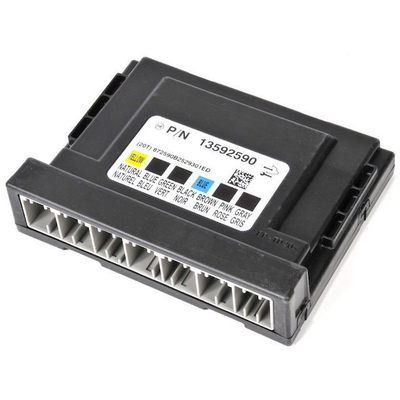
Below are the parts most often responsible for code B3377, ranked by how frequently each one is the actual culprit (per the diagnosis above). Tap any to see what we have for your vehicle.


The information in this article is provided for general reference and educational purposes only. Vehicle specifications, procedures, and part compatibility can vary by production date, trim level, and region. Always consult your vehicle's factory service manual and verify part numbers before purchasing or performing repairs. Safety-critical components such as airbags, seat belts, and braking systems should be installed by a qualified professional.
- 🧭 Diagnostic Flowchart
- 🎬 Helpful Videos
- 🛍️ Shop This Part
- What Does B3377 Mean?
- Can I Drive With B3377?
- Common Causes
- Symptoms
- Common Fixes & Costs
- Used vs. New Parts: Buying Guide
- What Happens If You Wait — Timeline
- Cost of Not Fixing It
- Diagnosis Steps
- When This Code Triggers (Freeze-Frame Conditions)
- Related Codes
- Climate & Environmental Factors
- How to Talk to a Mechanic About This Code
- Where to Take It: Dealer vs Independent vs Chain
- When to Walk Away From the Repair
- What Scan Tool You Need for This Code
- How to Clear the Code After You Fix It
- Will This Fail Emissions / State Inspection?
- Most Commonly Affected Vehicles
- Manufacturer-Specific Notes
- Real Owner Stories
- 2015 Chevy Silverado with 85K miles - Misdiagnosis Story
- 2008 Pontiac G6 with 120K miles - Water Intrusion
- 2012 Chevy Equinox with 95K miles - Straightforward Fix
- How to Prevent This Code From Triggering
- Frequently Asked Questions
- Can I fix a B3377 code myself?
- How much does it cost to program a BCM?
- Can I use a used BCM to fix this code?
- Why did this code appear after I replaced my battery or jump-started my car?
- Can a bad BCM drain my battery?
- What happens if a BCM is not programmed?
- Can you bypass the BCM to start the car?
- How long does it take to program a BCM?
- Key Takeaways
- 🎟️ Get 5% Off