

OBD-II Code B3600: Interior Dimmer Switch Circuit Fault
What B3600 means, why it triggers (especially on GM trucks and SUVs), and how to fix it for good
- Code B3600 on 2014-2020 GM trucks and SUVs is a 'red herring' pointing to a failed G218 ground connection, not a broken dimmer switch.
- This ground failure causes sudden engine stalling and complete loss of power steering assist during low-speed turns.
- Fixing the G218 ground takes under 2 hours and costs less than $5 in supplies to cut away trapped factory insulation and sand the contact to bare metal.
- Never replace the $500+ Body Control Module (BCM) before performing a loaded voltage drop test on the main battery cables per GM TSB 18-NA-161.
What Does B3600 Mean?
B3600 means the Body Control Module (BCM) detects an abnormal voltage signal from the dashboard dimmer switch. On millions of 2014-2020 General Motors vehicles, this code is a 'red herring' pointing to a critical, well-known electrical ground failure rather than a simple lighting issue.
Technical definition: The official definition is 'Passenger Compartment Dimming Request Signal Circuit.' The BCM sets B3600 when the dimmer switch signal voltage falls outside the expected 0.10V to 4.97V range. A reading below 0.10V sets sub-code B3600-03, while a reading above 4.97V sets B3600-07.
Can I Drive With B3600?
No — Do Not Drive. Driving is a significant safety hazard. The most common cause for this code on GM vehicles causes the engine to stall and power steering to fail without warning. This frequently occurs at low speeds while turning, creating a high risk of an accident.
Common Causes
- Poor BCM Ground Connection (G218) (Very Common) — On 2014-2020 GM trucks and SUVs, sound-deadening insulation trapped under ground point G218 during factory assembly causes an unstable BCM connection. This triggers dozens of electrical codes, with B3600 acting as a primary indicator.
- High Resistance in Main Battery Cables (Common) — Corroded or internally failed main battery cables cause system-wide voltage fluctuations that confuse the BCM. GM TSBs advise a loaded voltage drop test, as visual inspections miss internal corrosion. 🎬 See this walkthrough on replacing faulty GM battery cables.
- Shorted B+ Cable at Starter Solenoid (Less Common) — A mis-installed main battery cable terminal or loose starter heat shield creates a direct short to ground, causing catastrophic electrical failures and triggering B3600.
- Discharged or Faulty Battery (Less Common) — A failing battery unable to maintain 12.4V at rest causes communication errors. The BCM is highly sensitive to low voltage and sets B3600 before a no-start condition occurs.
- Water Intrusion and Corrosion (Less Common) — Water leaking from a bad windshield seal or clogged sunroof drain corrodes BCM pins and nearby harnesses, causing intermittent shorts.
- Aftermarket Accessory Interference (Rare) — Improperly installed remote starters or alarms disrupt the CAN bus network or interfere with BCM power, triggering fault codes.
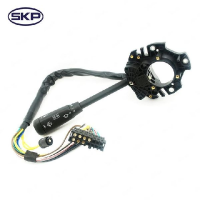
- Faulty Headlight/Dimmer Switch or Wiring (Rare) — The dimmer switch or its wiring fails internally. This is rarely the actual cause on GM vehicles and is often replaced by mistake before ruling out ground issues.
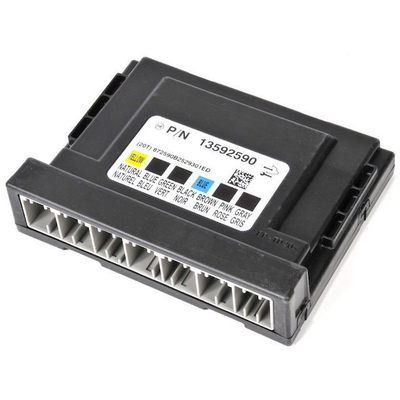
- Failed Body Control Module (BCM) (Very Rare) — The BCM is a robust component. It is frequently condemned incorrectly when the real problem is a ground connection, power supply, or wiring issue.
Symptoms
- Engine Stalling While Driving — The engine suddenly stalls, especially when turning at low speeds in parking lots or intersections.
- Loss of Power Steering Assist — Electric power steering cuts out unexpectedly, making the wheel difficult to turn. A 'Service Power Steering' message appears.
- Instrument Cluster Failure and Warning Lights — The dashboard goes blank, gauges drop to zero, lights flicker, and warnings like 'Service Stabilitrak' illuminate.
- Erratic Body Electronics — Door locks cycle independently, the alarm sounds randomly, or windshield wipers run continuously after being turned off.
- Interior Lights Won't Dim — Dashboard lights stay at one brightness level and ignore dimmer knob inputs, or fail to illuminate entirely.
- Multiple Communication 'U' Codes Stored (scan-tool only — no driver-felt sign) — A scan tool reveals codes like U0140 or U0073, proving the BCM is offline or disrupting the data network. 🎬 Watch: Understanding and fixing U0140 BCM communication codes.
Diagnostic Flowchart
Tap your situation to follow the diagnostic path that matches what you're seeing on this code.
Common Fixes & Costs
- Repairing BCM Ground G218 — Parts: $0-$5, Labor: $150-$200, ~1.5 hr book time (DIY)
- Replacing Negative Battery Cable — Parts: $60-$120, Labor: $80-$150, ~0.8 hr book time (DIY)
- Replacing Headlight/Dimmer Switch Assembly — Parts: $40-$90, Labor: $50-$100, ~0.5 hr book time (Intermediate)
- Replacing Body Control Module (BCM) — Parts: $300-$500, Labor: $250-$400, ~1.8 hr book time (Professional)
Used vs. New Parts: Buying Guide
When a used part is worth it: A used BCM is cost-effective if the seller guarantees functionality, but battery cables and switches should always be purchased new for reliability.
Donor-vehicle mileage cap: roughly under 100000 miles for the part to have meaningful remaining life.
Donor quality checklist:
- Verify the donor vehicle was not scrapped for flood or electrical fires.
- Ensure the BCM part number matches exactly to avoid incompatibility.
- Confirm if the used BCM requires a specialized cloning service, as dealers often cannot reprogram used modules.
Decision logic:
- If The required part is a battery cable or dimmer switch → Buy new. The low cost and reliability outweigh the minimal savings of a used part.
- If The required part is a BCM and the budget is tight → Buy used, but factor in the $100-$200 cost of a module cloning service.
- If The vehicle is critical for daily use → Buy a new OEM BCM and have it professionally programmed by a dealer.
Warranty tradeoff: Used electronic parts carry 30-90 day warranties covering only the part. New aftermarket parts offer 1-year warranties, while dealer-installed OEM parts include labor coverage.
Worst-case if a used part fails: $400-$600 if a used BCM fails, requiring a second part and repeat programming fees.
What Happens If You Wait — Timeline
- 0-3 months: Fault is intermittent. B3600 stores with no symptoms, or dash lights occasionally flicker. The G218 ground has high resistance but hasn't separated. (MPG impact: 0%% · Added cost: $0)
- 3-6 months: Symptoms increase. The dash goes blank, and 'Service Stabilitrak' warnings appear. The BCM loses communication frequently. (MPG impact: 0%% · Added cost: $0-$200 (Risk of unnecessarily replacing the battery).)
- 6-12 months: Critical failure occurs. The engine stalls while turning or power steering assist drops completely, creating a major safety hazard. (MPG impact: 0%% · Added cost: $500+ (Potential for a low-speed collision).)
- 12+ months: Constant voltage fluctuations and spikes from the unstable ground permanently destroy the BCM or other sensitive modules. (MPG impact: 0%% · Added cost: $800-$1500 (Cost to replace damaged modules and program them).)
Cost of Not Fixing It
- Immediate: Causes sudden engine stalls and loss of power steering assist, creating a high risk of low-speed collisions. (Added cost: Potential for collision damages ranging from $500 to total vehicle loss.)
- Weeks to Months: Causes chronic intermittent electrical problems and damages the battery due to repeated voltage fluctuations. (Added cost: $200-$300 for a replacement battery.)
- Long-Term: Intermittent voltage spikes permanently destroy the BCM and other sensitive electronic modules. (Added cost: $500-$1500 for module replacement and programming.)
Diagnosis Steps
- Scan All Modules for 'U' Codes
Use a professional-grade OBD-II scanner to check every module. Finding communication codes like U0140 or U0073 alongside B3600 confirms the common BCM ground issue. Do not proceed to the dimmer switch if U-codes are present.
Tools: Professional OBD-II Scan Tool (Beginner) - Repair the BCM Ground (G218)
Disconnect the negative battery terminal. On affected GM vehicles, locate the G218 ground stud under the driver's side dashboard near the A-pillar. Remove the 10mm nut, cut away any trapped foam insulation, sand the wire terminal and body contact to bare metal, and securely reinstall.
Tools: 10mm socket, trim removal tools, utility knife, sandpaper, flashlight (Intermediate) - Perform a Loaded Voltage Drop Test
If symptoms persist after fixing G218, test for hidden cable resistance per TSB 18-NA-161. Disable the fuel system. Connect a multimeter (DC volts) from the negative battery post to the engine block. Crank the engine. A drop above 200mV (0.2V) indicates a bad negative cable. Repeat for the positive side (post to fuse block); a drop above 100mV (0.1V) indicates a bad positive cable.
Tools: Multimeter (DVOM) (Advanced) - Inspect Starter B+ Cable and Main Connections
Ensure battery terminal clamps are torqued to 62 lb-in. Check the main cables at the underhood fuse block (11 ft-lb). Visually inspect the starter motor area to ensure the large B+ cable is not touching the metal heat shield, which causes a direct short.
Tools: Torque wrench, socket set, flashlight (Intermediate) - Test the Dimmer Switch Circuit at the BCM
Only perform this if all grounds and power cables pass testing. Backprobe the dimmer signal wire at the BCM connector with a multimeter. Turn the dimmer switch; voltage must sweep smoothly between 0.10V and 4.97V. If voltage is stuck or erratic, the switch or wiring is faulty.
Tools: Multimeter, backprobe pins, wiring diagram (Advanced) - Test the Dimmer Switch Directly
Disconnect the switch connector. Verify B+ voltage (12.6V) on the reference wire and 0 ohms continuity on the ground wire. If power and ground are present but the switch fails to send a varying signal, replace the switch.
Tools: Multimeter, wiring diagram (Advanced)
When This Code Triggers (Freeze-Frame Conditions)
- Electrical System Load: High (The fault occurs when high-current accessories activate, such as turning the steering wheel or running the A/C and rear defrost.)
- Vehicle Speed: 0-15 mph (Symptoms frequently trigger at low speeds during maneuvers like parking or turning in an intersection.)
- System Voltage: <12.4V (The code sets when system voltage momentarily dips due to high load and a poor ground connection.)
Related Codes
- U0140 - Lost Communication With Body Control Module — The most critical clue. B3600 plus U0140 proves the BCM is losing power or ground, making the G218 fault the primary suspect.
- U0073 - Control Module Communication Bus 'A' Off — Indicates the high-speed data network is disrupted. Confirms the BCM failure is severe enough to crash the entire network.
- C0544 / C0800 - Power Steering Codes — Symptoms of the BCM losing ground. When the BCM fails, steering assist drops, setting these codes and confirming a severe safety hazard.
- B3600-03 / B3600-07 - Symptom Bytes — Sub-codes visible on pro scanners. '03' means voltage is below 0.10V (short to ground). '07' means voltage is above 4.97V (short to voltage).
Climate & Environmental Factors
- High Humidity / Rain: Moisture accelerates corrosion on main battery cables and G218, creating temporary conductive paths that confuse the BCM and trigger intermittent faults.
- Cold Weather: Cold temperatures increase electrical resistance and contract metal components, worsening poor ground connections and lowering battery voltage.
- Road Salt: Salt exposure accelerates corrosion of chassis-mounted electrical connections, including the main battery-to-engine ground strap, causing high-resistance faults.
How to Clear the Code After You Fix It
- Ensure the G218 ground and main power connections are physically repaired and tight.
- Reconnect the negative battery terminal.
- Use an OBD-II scan tool to erase all DTCs from all modules.
- Perform a complete GM drive cycle to run system readiness monitors.
Drive cycle (~20 minutes): From a cold start, idle for 3 minutes with A/C and rear defrost on. Accelerate to 55 mph and hold for 3 minutes. Coast to 20 mph without braking. Accelerate to 60 mph and hold for 5 minutes. Coast to a stop.
Readiness monitors affected: Catalyst Monitor, Evaporative System Monitor, Oxygen Sensor Monitor, EGR System Monitor
Before emissions retest: drive at least 50 miles to fully set monitors.
Watch out for:
- Disconnecting the battery clears codes but resets emissions monitors to 'Not Ready', guaranteeing an inspection failure.
- The code returns immediately if the underlying bad ground is not corrected.
Will This Fail Emissions / State Inspection?
Yes — this code typically fails an OBD-II emissions inspection.
- California: Communication codes (U0140) accompanying B3600 trigger an automatic smog check failure. Disconnecting the battery to clear them resets monitors, also causing a failure.
- New York: The presence of communication trouble codes (U-codes) causes an immediate emissions inspection failure.
- Texas: In emissions-testing counties, the OBD-II test fails if communication codes are present, regardless of the 2025 safety inspection phase-out.
Most Commonly Affected Vehicles
- Chevrolet / GMC Silverado 1500 / Sierra 1500 (2014-2019) — Prone to the G218 BCM ground fault due to a factory assembly issue documented in TSB PIT5405C.
- Chevrolet / GMC Silverado HD / Sierra HD (2500/3500) (2015-2019) — Shares the K2XX platform and identical G218 ground and battery cable vulnerabilities.
- Chevrolet / GMC / Cadillac Tahoe, Suburban, Yukon, Escalade (2015-2020) — Affected by the same BCM ground issue. G218 is the primary suspect for any erratic electrical behavior.
- Other Makes Ford, Toyota, Honda, etc. (All Years) — Extremely rare. B3600 on non-GM vehicles points to a standard electrical fault (bad switch, damaged wire) and lacks a widespread pattern failure.
Manufacturer-Specific Notes
- General Motors (2014-2020 K2XX Platform): Code B3600 is a famous 'red herring.' The description points to the dimmer switch, but the root cause is almost always a poor BCM ground at location G218 (TSB PIT5405C).
- General Motors (CAN Bus Behavior): The BCM acts as a central gateway. Intermittent ground loss disrupts the entire CAN bus, causing a cascade of unrelated failures from power steering to the radio.
- General Motors (Recall #18289): A recall for power steering loss updates software to tolerate voltage drops, but ignores the physical cause (bad G218 ground). The underlying electrical problem persists even after the recall.
Real Owner Stories
2014 Chevy Silverado 1500 at 110K miles
Truck randomly stalled and lost power steering in parking lots. Dash went black with 'Service Stabilitrak' warnings. Codes B3600 and U0140 present.
What they tried:
- Initially suspected a wheel speed sensor due to Stabilitrak messages.
Outcome: The owner found TSB PIT5405C, located the G218 ground, cut away trapped foam insulation, and sanded the contacts. All symptoms and codes permanently resolved.
Lesson: Stalling while turning combined with B3600/U0140 almost always points to the G218 ground fault. Check this before replacing sensors.
2015 GMC Yukon at 85K miles
Experienced flickering lights, cycling door locks, and a no-start condition. Codes B3600 and U0140 stored.
What they tried:
- Replaced the battery, but problems returned.
- Mechanic recommended a $900 BCM replacement.
Outcome: The owner declined the BCM replacement, researched the G218 ground, and performed the 1-hour fix for free, solving all electrical problems.
Lesson: Never authorize a BCM replacement for these symptoms without showing the mechanic GM TSB PIT5405C first.
2015 Chevy Suburban with 125K miles
Cleaned the G218 ground, which improved stalling, but B3600 occasionally returned.
What they tried:
- Thoroughly cleaned G218.
- Visually inspected battery cables.
Outcome: Following TSB 18-NA-161, the owner performed a loaded voltage drop test. The negative cable showed a 300mV drop. Replacing the negative battery cable resolved all remaining issues.
Lesson: If the G218 fix doesn't fully solve the problem, perform a voltage drop test to find hidden internal resistance in the battery cables.
How to Prevent This Code From Triggering
- Perform annual battery terminal and cable end cleaning. (Every 12 months, or every oil change in salt-belt regions.) — Prevents corrosion that causes high resistance and system-wide voltage drops mimicking the G218 fault.
- Apply dielectric grease to main electrical connections. (Whenever a key connection is serviced.) — Creates a moisture-proof barrier preventing oxygen and water from corroding exposed grounds like the engine-to-chassis strap.
- Check for and clear cabin water leaks. (Annually, especially before rainy seasons.) — Prevents water from bad windshield seals or clogged sunroof drains from dripping onto the BCM and causing internal shorts.
- Periodically check battery health. (Every oil change.) — Ensures the battery buffers the electrical system properly, preventing alternator voltage spikes from damaging the BCM.
Frequently Asked Questions
Why would a dimmer switch code make my truck stall and lose power steering?
It's not the dimmer switch. On 2014-2020 GM vehicles, B3600 is a symptom of the Body Control Module (BCM) losing its main ground (G218). When this master computer loses ground, critical systems like power steering and engine control fail simultaneously.
Can I fix the B3600 code myself?
Yes. The most common fix involves cleaning and tightening the G218 ground nut under the dashboard, requiring basic hand tools and about an hour of time.
I cleaned the G218 ground but the problem is still there. What's next?
Perform a loaded voltage drop test on the main battery cables per GM TSB 18-NA-161. A drop over 0.2V on the negative cable indicates high internal resistance requiring cable replacement. Also, inspect the starter area for a shorted B+ cable.
What does it mean when my dash goes black and the steering gets hard to turn?
This is the classic sign of the BCM losing power or ground on a modern GM truck. The instrument cluster and power steering fail because they lose communication with the BCM. It is a direct result of the G218 ground fault.
My mechanic wants to replace the Body Control Module (BCM). Should I let them?
Do not replace the BCM until the G218 ground and main battery cables are thoroughly tested. The BCM rarely fails and is often misdiagnosed. Show your mechanic GM TSB #PIT5405C or #18-NA-161.
Will clearing the code with a scanner fix the problem?
No. The root cause is a physical electrical fault, so the code and dangerous stalling symptoms will return until the connection is repaired.
How much does it cost to fix code B3600?
DIY repair of the G218 ground costs under $5 for sandpaper. An independent shop typically charges $150 to $200 for 1-1.5 hours of labor to perform the fix.
Where exactly is the G218 ground located?
On affected GM trucks, G218 is under the driver's side dashboard, high up near the A-pillar. It is a metal stud on the body with wires attached by a 10mm nut, often hidden behind the side dash panel.
Key Takeaways
- Code B3600 on 2014-2020 GM trucks and SUVs is a 'red herring' pointing to a failed G218 ground connection, not a broken dimmer switch.
- This ground failure causes sudden engine stalling and complete loss of power steering assist during low-speed turns.
- Fixing the G218 ground takes under 2 hours and costs less than $5 in supplies to cut away trapped factory insulation and sand the contact to bare metal.
- Never replace the $500+ Body Control Module (BCM) before performing a loaded voltage drop test on the main battery cables per GM TSB 18-NA-161.
Helpful Videos



Shop the Parts Behind B3600
Below are the parts most often responsible for code B3600, ranked by how frequently each one is the actual culprit (per the diagnosis above). Tap any to see what we have for your vehicle.


The information in this article is provided for general reference and educational purposes only. Vehicle specifications, procedures, and part compatibility can vary by production date, trim level, and region. Always consult your vehicle's factory service manual and verify part numbers before purchasing or performing repairs. Safety-critical components such as airbags, seat belts, and braking systems should be installed by a qualified professional.
- 🧭 Diagnostic Flowchart
- 🎬 Helpful Videos
- 🛍️ Shop This Part
- What Does B3600 Mean?
- Can I Drive With B3600?
- Common Causes
- Symptoms
- Common Fixes & Costs
- Used vs. New Parts: Buying Guide
- What Happens If You Wait — Timeline
- Cost of Not Fixing It
- Diagnosis Steps
- When This Code Triggers (Freeze-Frame Conditions)
- Related Codes
- Climate & Environmental Factors
- How to Clear the Code After You Fix It
- Will This Fail Emissions / State Inspection?
- Most Commonly Affected Vehicles
- Manufacturer-Specific Notes
- Real Owner Stories
- 2014 Chevy Silverado 1500 at 110K miles
- 2015 GMC Yukon at 85K miles
- 2015 Chevy Suburban with 125K miles
- How to Prevent This Code From Triggering
- Frequently Asked Questions
- Why would a dimmer switch code make my truck stall and lose power steering?
- Can I fix the B3600 code myself?
- I cleaned the G218 ground but the problem is still there. What's next?
- What does it mean when my dash goes black and the steering gets hard to turn?
- My mechanic wants to replace the Body Control Module (BCM). Should I let them?
- Will clearing the code with a scanner fix the problem?
- How much does it cost to fix code B3600?
- Where exactly is the G218 ground located?
- Key Takeaways
- 🎟️ Get 5% Off