

OBD-II Code B3920: HVAC Door Actuator & Power Seat Circuit Malfunction
The Ultimate Guide to Diagnosing and Fixing B3920 Faults
- Code B3920 indicates a failed HVAC actuator on most vehicles, but specifically flags a power seat motor circuit failure on GM and Saab models.
- Listen for a clicking dashboard to confirm an HVAC actuator failure, or check for an inoperative power seat to isolate a seat circuit fault.
- Labor drives the repair cost, ranging from $100 for an accessible glovebox actuator to over $1,200 for actuators buried deep inside the dashboard.
- Inspect the wiring harness under the driver's seat for pinched wires or water damage before spending $200+ on a new Memory Seat Module.
- Use a bi-directional scan tool to command individual actuators or seat motors to move, instantly confirming which specific component has failed.
What Does B3920 Mean?
B3920 is a manufacturer-specific Body Diagnostic Trouble Code (DTC) indicating an electrical circuit malfunction detected by the Body Control Module (BCM) or Memory Seat Module (MSM). Its meaning varies by brand. Most commonly, it points to a failed HVAC door actuator controlling air temperature or distribution. On General Motors (Chevrolet, GMC, Cadillac, Buick) and Saab vehicles, this code specifically flags a fault in the power seat motor circuits. In rare cases, such as on certain Saturn models, it indicates a GPS antenna circuit issue.
Technical definition: The official definition of B3920 depends on the manufacturer. For GM vehicles, it means 'Driver Seat Motors Group 1 Common Circuit Short to Ground' or 'Short to Battery,' indicating the Memory Seat Module (MSM) detected an open, short, or high current condition in a power seat motor circuit. On GM-platform Saabs, 2-digit suffixes specify the fault: B3920 01 (short to battery, >2.78V), B3920 02 (short to ground, <1.47V), B3920 0B (excessive current), and B3920 42 (unprogrammed module). For most other brands, it broadly flags a generic HVAC actuator circuit fault.
Can I Drive With B3920?
Yes, But With Caution. Driving with code B3920 does not damage your engine or core safety systems. However, a failed HVAC mode door actuator prevents windshield defrosting, creating a severe visibility hazard in cold or humid weather. Otherwise, the impact is limited to comfort features like climate control or power seat adjustment.
Common Causes
- Failed HVAC Door Actuator (Stripped Gears) (Very Common) — The small electric motor or the plastic gears inside the actuator assembly wear out and strip. This is the most frequent cause, resulting in a clicking or ticking noise from the dashboard as the gears slip.
- Damaged Wiring or Pinched Harness (Common) — Wires leading to a motor chafe, pinch, or break. This is highly prevalent in the harness under a power seat or where it passes between the seat cushion and frame. GM issued TSB PIT5659 for this exact issue on the Chevy Blazer.
- Water Intrusion and Corrosion (Less Common) — Water from car detailing or an open window seeps into the wiring, Memory Seat Module (MSM), or connectors under the power seat. This causes rapid corrosion and short circuits.
- Faulty Control Module (BCM or MSM) (Less Common) — The control module commanding the actuator fails internally. This results in no signal, an incorrect signal, or a failure to learn the actuator's position.
- Jammed HVAC Door or Seat Track (Less Common) — A foreign object, like a pen or coin, falls into the vents and physically blocks an HVAC door. Similarly, debris jams a power seat track, causing the motor to strain and trigger a high-current fault.
- Faulty Power Seat Switch (Rare) — The physical switch used to control the power seat fails internally, creating an open or shorted circuit and preventing the motor from receiving the command.
- Failed Memory Seat Module Calibration (Rare) — If the Memory Seat Module is replaced or loses power, it requires recalibration. On Saab vehicles, a B3920 42 code sets specifically to indicate missing programming.
Symptoms
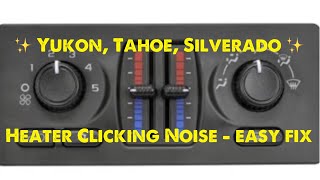
- Clicking, Ticking, or Grinding Noise from Dashboard — The most common symptom, indicating an HVAC actuator with stripped internal gears. The sound occurs when starting the car or changing climate settings. 🎬 Watch: How to fix that annoying heater clicking noise.
- Power Seat is Inoperative or Intermittent — On GM and Saab vehicles, the power seat refuses to move or only works sporadically, pointing to a wiring or motor circuit fault under the seat. 🎬 See this guide on diagnosing power seat motors and switches.
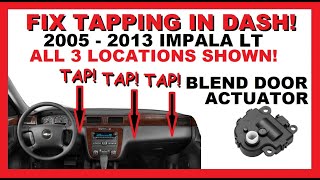
- Incorrect Air Temperature or Distribution — Air is stuck on hot when you want cold, blows from the wrong vents, or blows uneven temperatures in a dual-zone system. This points to a failed blend or mode door actuator. 🎬 Watch: Step-by-step walkthrough for replacing all three HVAC actuator locations.
- Inability to Clear Windshield Fog — If the mode door actuator fails in a position preventing airflow to the windshield, you lose the defrost function, creating a severe safety hazard.
Diagnostic Flowchart
Tap your situation to follow the diagnostic path that matches what you're seeing on this code.
Common Fixes & Costs
- Replace HVAC Door Actuator — Parts: $30 - $160, Labor: $100 - $1,200, ~0.5-10.0 hr book time (Intermediate)
- Repair Damaged Wiring Harness — Parts: $10 - $50, Labor: $150 - $400, ~1.5-3.0 hr book time (Intermediate)
- Recalibrate HVAC or Seat Module — Parts: $0, Labor: $0 - $150, ~0.1-1.0 hr book time (DIY)
- Replace Power Seat Motor/Assembly — Parts: $150 - $800, Labor: $150 - $300, ~1.5-2.5 hr book time (Professional)
- Replace Memory Seat Module (MSM) — Parts: $200 - $500, Labor: $100 - $200, ~0.8-1.5 hr book time (Professional)
Used vs. New Parts: Buying Guide
When a used part is worth it: Used parts make sense for high-cost, low-wear components like a Memory Seat Module (MSM) or a complete power seat track assembly on older vehicles. Used HVAC actuators are never recommended due to their high failure rate and expensive replacement labor.
Donor-vehicle mileage cap: roughly under 100000 miles for the part to have meaningful remaining life.
Donor quality checklist:
- Ensure the part number matches exactly, including any suffix codes.
- Verify the donor vehicle was not involved in a flood or fire.
- Demand a short-term functional warranty (30-90 days).
Decision logic:
- If The part is a cheap, easily accessible HVAC actuator (e.g., behind glove box) → Buy a new aftermarket part. The cost is low and the risk of repeat labor is minimal.
- If The part is an expensive, hard-to-reach HVAC actuator (e.g., requires dash removal) → Buy a new OEM part. The high labor cost makes it worth paying extra for the most reliable component.
- If The part is a Memory Seat Module or entire seat track for a vehicle over 10 years old → Buy a used part from a reputable salvage yard to save hundreds of dollars.
Warranty tradeoff: Used parts carry a 30-90 day warranty covering the part only. New aftermarket parts offer a 1-year to limited lifetime warranty. New OEM parts carry a 1-2 year warranty.
Worst-case if a used part fails: $200 - $1500 if a used part fails after the warranty period, requiring you to pay for the part and installation labor a second time.
What Happens If You Wait — Timeline
- 0-1 month: Code B3920 sets. Symptoms are intermittent. An HVAC actuator clicks occasionally on startup, or a power seat hesitates before moving. (MPG impact: 0%% · Added cost: $0)
- 1-4 months: The failure becomes consistent. The HVAC actuator clicks loudly for 5-10 seconds on every startup, and the corresponding function is permanently inoperative. The power seat refuses to move. (MPG impact: 0%% · Added cost: $0)
- 4-12 months: Secondary consequences appear. A failed defroster mode door actuator becomes a severe safety hazard. A continuously running actuator motor creates a parasitic battery drain. (MPG impact: 0%% · Added cost: $50 - $250 (for a new battery if the original is damaged by repeated deep cycling))
- 12+ months: No further cascading mechanical damage occurs. The component is fully failed and the loss of function is permanent. (MPG impact: 0%% · Added cost: $0)
Cost of Not Fixing It
- 0-3 months: Ongoing annoyance from clicking noises, incorrect climate control, or an inoperative power seat. A failed defroster actuator creates a severe safety hazard in cold or humid weather. (Added cost: $0)
- 3-12 months: A continuously running or struggling motor creates a parasitic battery drain, causing no-start situations. The component eventually fails completely, leaving the function permanently inoperative. (Added cost: $50 - $250 (for a new battery if drained completely))
- 12+ months: No significant further damage occurs. The primary cost remains the inconvenience and loss of function. A failed actuator motor does not cause cascading damage to other major systems. (Added cost: $0)
Diagnosis Steps
- Confirm the Primary Symptom
Determine which system is affected. Start the car. A clicking from the dash when changing climate settings isolates the problem to an HVAC actuator. A power seat failing to move isolates the problem to the seat circuit. This observation dictates the entire diagnostic path.
Tools: Your ears and eyes (Beginner) - Use a Bi-Directional Scan Tool to Command the Actuator
A professional scan tool directly commands each specific actuator or seat motor to move. Command the blend door from 0% to 100% or tell a seat motor to move forward. If the component does not move, the fault lies with the motor or its direct wiring.
Tools: Bi-directional OBD-II scan tool (Advanced) - Visually Inspect the Problem Area
For HVAC issues, remove the glove box or lower dash panels to access the actuators. For power seat issues, look under the driver's seat. Inspect wiring harnesses for pinched, chafed, or disconnected wires. On GM SUVs, scrutinize the harness near the seat frame.
Tools: Flashlight, trim removal tools (Intermediate) - Attempt a System Recalibration (Fuse Pull)
Control modules sometimes lose track of an actuator's position. Pull the main HVAC or Memory Seat fuse for 60 seconds to discharge the system, then reinstall it. Start the car and wait 2 minutes without touching the controls while the system recalibrates.
Tools: Fuse puller (Beginner) - PRO TIP: Test the Circuit for Voltage and Ground at the Connector
Unplug the suspect motor. Set a multimeter to DC Volts. Connect the black lead to ground. Probe the power feed pin while an assistant activates the switch; you should see 12V. Probe the ground pin; it should show near 0 ohms to ground. A lack of voltage or ground indicates a wiring or module problem, not a failed motor.
Tools: Multimeter, vehicle-specific wiring diagram (Advanced) - Test the Motor Directly
If proper voltage and ground reach the connector, test the motor itself. Use jumper wires to apply 12V power directly from the battery to the motor's terminals. If the motor does not run, it is internally failed and requires replacement.
Tools: Jumper wires, 12V power source (Advanced) - Analyze Live Data PIDs with a Scan Tool
While commanding the actuator, monitor the 'Actuator Position' live data PID. A normal range is 0-255 counts or 0-100%. If you command the actuator to 100% but the feedback value remains at 0, the actuator's internal position sensor has failed.
Tools: OBD-II scan tool with live data capability (Advanced) - PRO TIP: Check for Specific Fault Voltages (GM/Saab)
On GM/Saab systems, diagnose shorts with a multimeter. Disconnect the Memory Seat Module. A B3920 01 (Short to Battery) sets when voltage on a motor circuit exceeds 2.78V. A B3920 02 (Short to Ground) sets when voltage is below 1.47V. Test for voltage at the disconnected harness pins to locate the short.
Tools: Multimeter, manufacturer service manual (Professional) - Test Circuit and Switch Resistance
To test for an open circuit, set a multimeter to Ohms (Ω). Disconnect the battery and component connectors. Test the resistance of the suspect wire from end to end; less than 5 ohms is normal. To test a switch, check resistance across its terminals while operating it. It should read near zero ohms when closed and 'OL' when open.
Tools: Multimeter, wiring diagram (Advanced)
When This Code Triggers (Freeze-Frame Conditions)
- Ignition Status: ON (Run) (The fault is detected when the ignition is on and a command is sent to the actuator or motor.)
- System Voltage: 9.0V - 16.0V (The BCM or MSM only runs diagnostics and sets this code when system voltage is within a normal operating range.)
- Component Commanded State: Active (The code sets the moment the driver adjusts the power seat or changes a climate control setting, commanding the faulty circuit.)
- Time After Ignition On: > 5 seconds (Control modules utilize a brief delay after startup before actively monitoring for circuit faults.)
Related Codes
- B3921 — A direct companion code on GM and Saab vehicles. B3920 refers to 'Group 1' seat motors (forward/back), while B3921 refers to 'Group 2' (recline). Seeing both points to a common power or ground loss for the entire seat module.
- B0229 — HVAC Actuator Recalibration Error. A mechanical failure setting B3920 prevents the HVAC system from completing its self-test, triggering B0229. Fix the root cause of B3920 first.
- B1081 — Blend Door Actuator Position Sensor Malfunction. If present with B3920, it confirms the internal position sensor within the actuator has failed, rather than a simple gear issue.
- U0208 — Lost Communication With Seat Control Module. If present with B3920, it points to a failed Memory Seat Module, a bad network wire, or significant power/ground loss to the module itself.
Climate & Environmental Factors
- High Humidity: Accelerates corrosion on electrical connectors and circuit boards, such as the Memory Seat Module (MSM) located under the seat. Moisture causes short circuits and intermittent operation.
- Extreme Cold: Causes plastic actuator gears to become brittle and strip. It also hardens wiring insulation, leading to cracks and shorts when the power seat flexes the harness.
- Water Intrusion: Water from interior detailing, car washes, or open windows pools under the seat, submerging the MSM and its connectors, leading to catastrophic electrical failure.
How to Talk to a Mechanic About This Code
Say this: "I have a B3920 code and my primary symptom is a [clicking noise from the dashboard / non-working power seat]. I need a diagnosis to pinpoint which specific [HVAC actuator / part of the seat circuit] has failed. Please use a bi-directional scanner to command the components before recommending a replacement."
This immediately tells the shop you've done research, know the code has multiple meanings, and directs them to the correct system. Requesting a bi-directional test prevents them from guessing and replacing the wrong part.
Avoid saying:
- 'My car is making a weird noise.'
- 'My A/C is broken, can you fix it?'
- 'Just fix whatever the code says.'
Questions to ask before authorizing the repair:
- For an HVAC issue: What is the exact labor time for this specific actuator? Can you show me where it is located?
- For a power seat issue: Did you inspect the wiring harness under the seat for damage, as noted in GM TSBs, before condemning the motor or module?
- Did you test for power and ground at the component's electrical connector?
- What is the warranty on the recommended part and the labor?
Where to Take It: Dealer vs Independent vs Chain
- Dealer:
Recommended if module programming is needed or for a vehicle under warranty. Otherwise, a well-equipped independent shop is more cost-effective.
Best for: Vehicles under warranty, Complex electrical issues requiring module programming, Known TSB-related problems (like the Chevy Blazer harness)
Downsides: Highest labor rates, May recommend replacing an entire assembly when only one component has failed (Typical cost: +50% vs. baseline) - Independent Shop:
Best fit for most B3920 scenarios, offering a balance of expertise and value. Vet the shop by asking if they have advanced diagnostic tools for body electrical systems.
Best for: Out-of-warranty vehicles, Common HVAC actuator replacements, Wiring harness repairs
Downsides: Quality and diagnostic capabilities vary greatly; ensure they have a bi-directional scan tool. (Typical cost: +0% vs. baseline) - Chain Shop:
AVOID for this code. The diagnostic complexity is beyond the scope of most chain shops and carries a high risk of an incorrect and expensive repair.
Best for: Simple maintenance like oil changes and tires.
Downsides: Technicians lack the specialized diagnostic tools (bi-directional scanners) and experience for nuanced body electrical faults., High pressure to upsell leads to misdiagnosis and unnecessary parts replacement. (Typical cost: -10% vs. baseline)
When to Walk Away From the Repair
If the estimated repair cost exceeds 40-50% of the car's Kelley Blue Book (KBB) private-party value, pause and consider alternatives.
- Car worth $8000, fix is $450: Fix it. This is a common repair and well below the threshold.
- Car worth $4000, fix is $1500: Walk away. The repair cost is nearly half the car's value for a non-essential feature.
- Car worth $15000, fix is $1500: Fix it, but get a second opinion on the labor quote to ensure it's fair.
What Scan Tool You Need for This Code
Minimum: A scan tool with bi-directional control that accesses the Body Control Module (BCM).
A basic $20 code reader only tells you that code B3920 exists. It cannot tell you which of the 5-10 possible HVAC actuators or power seat motors has failed. Without bi-directional control to command each component to move, you are guessing and will waste hundreds of dollars replacing the wrong parts.
Budget: Autel MaxiAP AP200 (~$60) — This Bluetooth dongle pairs with your smartphone. After purchasing the specific software for your vehicle's make, it reads BCM codes and offers bi-directional controls to isolate the faulty component.
Mid-range: FOXWELL NT510 Elite (~$180) — A handheld scanner that comes with software for one manufacturer. It offers robust bi-directional controls, allowing you to command specific actuators and motors to move, making diagnosis definitive.
Professional: Autel MaxiCOM MK808S (~$500) — A professional-level tablet scanner with full bi-directional control for all vehicle systems. It provides comprehensive diagnostic capabilities, live data graphing, and service functions.
Rent vs buy: Auto parts stores offer free loaner tools, but their scanners are typically basic code readers insufficient for this code. For B3920, you must buy a capable bi-directional scanner or take your vehicle to a shop that has one.
How to Clear the Code After You Fix It
- Reconnect battery if disconnected for the repair.
- Use an OBD-II scan tool to clear the Diagnostic Trouble Code (DTC) from the Body Control Module (BCM) or Memory Seat Module (MSM).
- Perform a system recalibration by pulling the appropriate fuse for 60 seconds or using a scan tool's recalibration function.
- Operate the repaired component through its full range of motion to confirm proper function.
Drive cycle (~5 minutes): A specific drive cycle is not required. The code clears from 'current' to 'history' status as soon as the fault is repaired and the ignition is cycled. A history DTC clears on its own after 40-50 fault-free ignition cycles.
Readiness monitors affected: None
Watch out for:
- Clearing the code with a scanner does not fix the problem; the code returns immediately if the underlying electrical or mechanical fault remains.
- Skipping the recalibration step after replacing an actuator results in the part functioning incorrectly or not at all.
- This code does not affect engine emissions readiness monitors, requiring no extended driving before a smog test.
Will This Fail Emissions / State Inspection?
No — by itself this code doesn't fail OBD inspection (but it can keep readiness monitors from setting, which causes a separate fail).
- California: This is a 'B' (Body) code and does not illuminate the Check Engine Light (MIL). It will not cause a failure of the California Smog Check.
- New York: The NYS inspection checks for illuminated MILs and emissions-related codes. B3920 is a body code and will not cause an emissions failure.
- Texas: Emissions testing focuses on the OBD-II system's reporting of powertrain codes ('P' codes) and readiness monitors. A 'B' code will not cause a test failure.
Most Commonly Affected Vehicles
- Chevrolet Silverado / Tahoe / Suburban (2007-2014) — Extremely common for HVAC blend door and mode door actuators to fail, causing clicking noises. Also prone to power seat issues from chafed wiring inside the seat back or under the cushion.
- GMC Sierra / Yukon / Yukon XL (2007-2014) — Mechanically identical to their Chevrolet counterparts, suffering from the exact same high rate of HVAC actuator and power seat wiring failures.
- Cadillac Escalade (2007-2014) — B3920 almost always points to the driver's power seat motor circuit. Prone to failures of both front and rear HVAC actuators as well.
- Chevrolet Blazer (2019-2020) — A known issue documented in TSB PIT5659 where the driver's power seat becomes inoperative due to a pinched seat wiring harness.
- Buick LaCrosse (2010-2016) — Consistently associated with a fault in the driver's power seat motor circuits, often related to the Memory Seat Module or its wiring.
- Saab 9-5 (2010-2011) — Used exclusively for the driver's seat motor circuit. The system provides detailed fault information via 2-digit suffixes like '01' for short to battery.
- Volkswagen Atlas / Atlas Cross Sport (2021-2023) — While not using B3920, a similar issue with the driver seat memory becoming inoperative is documented in TSB 72-24-01, resolved with a software update.
- Saturn Astra / Vue (2008-2010) — In a rare variation, some Saturn vehicles use B3920 to indicate a fault with the GPS antenna circuit, such as a signal loss or incorrect current draw.
Manufacturer-Specific Notes
- General Motors (Chevrolet, GMC, Cadillac, Buick): B3920 means either an HVAC actuator or a power seat motor circuit. The primary symptom (clicking dash vs. inoperative seat) is the key to diagnosis. GM issued TSB PIT5659 for the 2019 Blazer, documenting B3920 caused by a pinched power seat harness.
- Saab: On GM-era Saabs, B3920 is consistently for the driver's seat motor circuit. It uses 2-digit suffixes to pinpoint the electrical fault: 01 (Short to Voltage), 02 (Short to Ground), 0B (High Current), and 42 (Calibration Not Programmed).
- Saturn: Some Saturn vehicles use B3920 to indicate a problem with the GPS antenna circuit, such as 'Signal Missing' or incorrect current draw outside the 20-25 mA range.
- Schneider Electric: In an unrelated industrial context, 'b3920' is the model number for a BACnet-compatible HVAC system controller for large commercial buildings, which pollutes search results.
Real Owner Stories
2011 GMC Yukon XL with 155K miles - Clicking Dash
Owner heard a constant clicking noise from the passenger side dashboard when starting the vehicle. The passenger side AC was stuck blowing warm air.
What they tried:
- Tried the HVAC fuse pull recalibration trick. The clicking stopped for one ignition cycle but returned.
- Removed the glove box to access the actuators. Placed a hand on each actuator while changing temperature settings to identify the vibrating, faulty lower actuator.
- Ordered a new Dorman 604-108 actuator online.
Outcome: Replaced the accessible passenger-side blend door actuator in under 30 minutes using a 7mm socket. The total cost was under $40. The new actuator worked immediately, resolving the clicking and temperature issue.
Lesson: For the common 'clicking dash' symptom on GM SUVs, the passenger side blend door actuator is often the culprit and is easily replaced behind the glove box.
2019 Chevrolet Blazer with 40K miles - Inoperative Power Seat
The driver's power seat completely stopped working. A scan tool at an independent shop revealed code B3920.
What they tried:
- The shop suspected a failed Memory Seat Module (MSM) or seat motor, quoting over $700.
- Owner found GM Technical Service Bulletin (TSB) PIT5659 describing this exact issue.
- Inspected the wiring harness under the driver's seat and found it pinched by the seat frame, causing broken wires.
Outcome: The owner repaired the broken wires using solder and heat shrink tubing, then re-routed the harness. Seat function was fully restored, avoiding an expensive module replacement.
Lesson: On a 2019-2020 Blazer with B3920 and a dead power seat, always inspect the wiring harness under the seat for damage per TSB PIT5659 before replacing components.
2010 Saab 9-5 with 110K miles - Intermittent Power Seat
The driver's power seat worked intermittently. The code reader showed B3920 02 (Driver Seat Motors Group 1 Common Circuit Short to Ground).
What they tried:
- Checked the main fuse for the seat.
- Disconnected the Memory Seat Module (MSM) and inspected the connector for corrosion.
- Tested the control circuit for a short to ground with a multimeter and found no wiring issues.
Outcome: The diagnostic procedure pointed to an internal failure of the Memory Seat Module. A used MSM was purchased from a salvage yard for $120, restoring seat functions permanently.
Lesson: On Saabs, the B3920 code's 2-digit suffix is extremely helpful. A '02' code points to a short-to-ground; if the wiring checks out, the module itself is the culprit.
2012 Chevy Impala with 160K miles - Parasitic Battery Drain
The car's battery died overnight, requiring a daily jump start. The owner heard a faint, continuous clicking from the dashboard with the car turned off.
What they tried:
- Connected a multimeter to measure parasitic draw and found a significant current pull.
- Pulled fuses one by one; the draw disappeared when pulling the HVAC fuse.
- Diagnosed a failed internal gear on a blend door actuator causing the motor to run continuously.
Outcome: Replaced the faulty HVAC actuator, fixing the incorrect temperature output and eliminating the parasitic battery drain.
Lesson: An annoying clicking sound from an HVAC actuator is not just a comfort issue; if it runs continuously with the key off, it causes a severe parasitic battery drain.
How to Prevent This Code From Triggering
- Avoid Storing Items Under Power Seats (Daily habit) — Objects shoved under the seat snag, pinch, or disconnect the wiring harness for the Memory Seat Module and motors, leading to intermittent shorts.
- Use Caution During Interior Cleaning (During each cleaning) — Excessive water or cleaning solution seeps into the low-lying Memory Seat Module (MSM) and its connectors, causing rapid corrosion and short circuits.
- Cycle HVAC Modes Periodically (Monthly) — Regularly cycling the HVAC system through all its modes and temperature ranges keeps the actuator gears and doors from seizing due to inactivity.
- Protect Under-Seat Wiring (Once) — Use split-loom tubing or high-quality automotive tape to bundle and shield exposed factory wires from physical damage or pet chewing.
- Address Water Leaks Promptly (As needed) — A clogged sunroof drain or bad window seal leads to water pooling on the floor, directly submerging under-seat modules.
Frequently Asked Questions
Why is the repair estimate for an HVAC actuator so wide, from $130 to over $1,300?
The cost is almost entirely dependent on labor. Some actuators are easily accessed behind the glove box, requiring under an hour of labor. Others are located deep inside the dashboard, requiring complete removal and 8-10 hours of labor, driving the total cost over $1,300.
My power seat stopped working right after a car wash. Is that related?
Yes, water easily seeps into the Memory Seat Module (MSM) located under the seat during interior detailing, causing a short circuit. Before replacing parts, disconnect the module and check for moisture or green corrosion on the connector pins.
Can I just replace the broken plastic gears inside my seat motor or actuator?
Yes, aftermarket companies sell replacement brass gears for improved durability. This is a cost-effective repair if you are willing to disassemble the motor housing, but it is a detailed and difficult process.
What is an HVAC actuator recalibration and why is it necessary?
Recalibration teaches the control module the start and end points of a new actuator's range of motion. If you skip this procedure, the system cannot control the new part properly. Trigger a recalibration by pulling the HVAC fuse for a few minutes or using a scan tool.
My power seat moves, but in the wrong direction. What causes that?
This happens if the control module loses its memory or if a replacement motor has reversed polarity. The professional fix is re-flashing the module with a scanner, while a common DIY fix involves cutting and reversing the two motor wires.
Can I ignore code B3920?
Yes, from a mechanical standpoint, as it does not affect engine performance or reliability. However, a failed defroster actuator creates a severe safety hazard in cold or humid weather. Otherwise, you only suffer the loss of comfort features like climate control or power seats.
Should I use a cheap aftermarket actuator or an OEM part?
Always use a high-quality OEM or top-tier aftermarket part for actuators buried deep in the dashboard. Using a cheap part that fails prematurely forces you to pay for 8+ hours of expensive labor a second time.
Key Takeaways
- Code B3920 indicates a failed HVAC actuator on most vehicles, but specifically flags a power seat motor circuit failure on GM and Saab models.
- Listen for a clicking dashboard to confirm an HVAC actuator failure, or check for an inoperative power seat to isolate a seat circuit fault.
- Labor drives the repair cost, ranging from $100 for an accessible glovebox actuator to over $1,200 for actuators buried deep inside the dashboard.
- Inspect the wiring harness under the driver's seat for pinched wires or water damage before spending $200+ on a new Memory Seat Module.
- Use a bi-directional scan tool to command individual actuators or seat motors to move, instantly confirming which specific component has failed.
Helpful Videos
Shop the Parts Behind B3920
Below are the parts most often responsible for code B3920, ranked by how frequently each one is the actual culprit (per the diagnosis above). Tap any to see what we have for your vehicle.


The information in this article is provided for general reference and educational purposes only. Vehicle specifications, procedures, and part compatibility can vary by production date, trim level, and region. Always consult your vehicle's factory service manual and verify part numbers before purchasing or performing repairs. Safety-critical components such as airbags, seat belts, and braking systems should be installed by a qualified professional.
- 🧭 Diagnostic Flowchart
- 🎬 Helpful Videos
- 🛍️ Shop This Part
- What Does B3920 Mean?
- Can I Drive With B3920?
- Common Causes
- Symptoms
- Common Fixes & Costs
- Used vs. New Parts: Buying Guide
- What Happens If You Wait — Timeline
- Cost of Not Fixing It
- Diagnosis Steps
- When This Code Triggers (Freeze-Frame Conditions)
- Related Codes
- Climate & Environmental Factors
- How to Talk to a Mechanic About This Code
- Where to Take It: Dealer vs Independent vs Chain
- When to Walk Away From the Repair
- What Scan Tool You Need for This Code
- How to Clear the Code After You Fix It
- Will This Fail Emissions / State Inspection?
- Most Commonly Affected Vehicles
- Manufacturer-Specific Notes
- Real Owner Stories
- 2011 GMC Yukon XL with 155K miles - Clicking Dash
- 2019 Chevrolet Blazer with 40K miles - Inoperative Power Seat
- 2010 Saab 9-5 with 110K miles - Intermittent Power Seat
- 2012 Chevy Impala with 160K miles - Parasitic Battery Drain
- How to Prevent This Code From Triggering
- Frequently Asked Questions
- Why is the repair estimate for an HVAC actuator so wide, from $130 to over $1,300?
- My power seat stopped working right after a car wash. Is that related?
- Can I just replace the broken plastic gears inside my seat motor or actuator?
- What is an HVAC actuator recalibration and why is it necessary?
- My power seat moves, but in the wrong direction. What causes that?
- Can I ignore code B3920?
- Should I use a cheap aftermarket actuator or an OEM part?
- Key Takeaways
- 🎟️ Get 5% Off