

OBD-II Code B3924: Incorrect Environmental Identifier
What B3924 means, why it triggers, and how to fix it
- Code B3924 is a critical GM-specific fault that immobilizes the vehicle, preventing it from starting or causing an immediate stall.
- Over 90% of the time, this code is caused by a Body Control Module (BCM) software glitch triggered by a jump-start, dead battery, or battery replacement.
- Do not replace the BCM or key fobs; demand the software reprogramming fix detailed in GM Technical Service Bulletin 23-NA-163.
- This is a professional-only repair requiring GM SPS software, typically costing $150 to $400 for 1 to 2 hours of labor at a dealership.
What Does B3924 Mean?
B3924 means your car's Body Control Module (BCM) has suffered a critical memory glitch. This corruption almost always happens after a vehicle battery is replaced, jump-started, or dies. Because of this glitch, the BCM loses its security synchronization with other modules and no longer recognizes your key fob, engaging the immobilizer and preventing the engine from running.
Technical definition: The official SAE/OBD-II definition for B3924 is 'Incorrect Environmental Identifier Received'. This indicates the Body Control Module (BCM) detected a signal from another module on the vehicle's communication network that does not match the expected security identifier. This is most often the result of BCM memory corruption on specific GM platforms, documented in TSB 23-NA-163.
Can I Drive With B3924?
No — Do Not Drive. The vehicle will not start, crank, or starts and stalls immediately, leaving you stranded. This code indicates a critical failure in the anti-theft and immobilizer system. In some cases, the electronic parking brake engages and cannot be released, completely immobilizing the vehicle.
Common Causes
- BCM Memory Corruption After a Voltage Event (Very Common) — This is the primary cause, documented in GM TSB 23-NA-163. Failing to use a memory saver device during a battery swap, connecting jumper cables incorrectly, or experiencing a dead battery causes a voltage spike or drop that scrambles the memory of sensitive 'GEN3R' BCMs. The fault appears immediately after the event.
- Weak or Defective 12V Vehicle Battery (Common) — A failing battery providing unstable or low voltage is the underlying condition necessitating a jump-start, which triggers the BCM memory corruption. The low voltage itself causes a variety of strange electrical issues, including this code.
- Faulty Keyless Entry (PEPS) Antenna or Wiring (Less Common) — If B3924 appears by itself without the typical cluster of related codes (B389A, B3925, etc.), it points to a hardware failure or damaged wiring of a specific Passive Entry Passive Start (PEPS) antenna. B3924 often corresponds to the antenna in the center console or rear bumper.
- Poor BCM Ground Connection (Rare) — A poor or corroded ground connection at the BCM (often at connector X2, Pin 2 on a black/white wire) causes erratic voltage and communication faults. This mimics the software glitch or acts as the root cause of the voltage fluctuation that triggers it.
- Aftermarket Electronic Accessories (Rare) — Poorly installed aftermarket accessories like remote starters, alarms, or USB chargers cause radio frequency interference (RFI) or voltage fluctuations on the vehicle's network, leading to communication errors or triggering the BCM memory corruption.
- Failed Body Control Module (BCM) (Very Rare) — A true internal hardware failure of the BCM is extremely unlikely to cause this specific code pattern. The TSB explicitly warns against replacing the BCM as a first step. Consider this only after the official BCM reprogramming procedure fails multiple times.
Symptoms
- No Crank / No Start — The engine will not turn over at all when you push the start button. The dashboard lights up, but the starter motor does not engage.
- 'No FOB Detected' Message — A message appears on the driver information center (DIC) indicating the key fob cannot be found, even if it is inside the vehicle.
- Engine Starts and Immediately Stalls — The engine fires up for a second or two and then immediately shuts off as the vehicle's immobilizer system activates.
- Electronic Parking Brake Stuck On — The electronic parking brake engages and cannot be released, preventing the vehicle from being moved or towed easily.
- Inoperative Key Fob — The buttons on the key fob for locking, unlocking, remote start, and panic alarm do not work.
- Service Theft Deterrent System Message — A warning related to the vehicle's anti-theft system displays on the dashboard, indicating a security system fault.
- Multiple Warning Lights — Due to the communication breakdown between modules, various other system warning lights (Check Engine, ABS, etc.) illuminate simultaneously.
Diagnostic Flowchart
Tap your situation to follow the diagnostic path that matches what you're seeing on this code.
Common Fixes & Costs
- BCM Reprogramming per TSB 23-NA-163 — Parts: $0, Labor: $150-$375, ~1.5 hr book time (Professional)
- Battery Replacement with Memory Saver
— Parts: $200-$300, Labor: $50-$100, ~0.8 hr book time
(Beginner)
: OEM - Replace Keyless Entry (PEPS) Antenna
— Parts: $40-$100, Labor: $100-$300, ~1.5 hr book time
(Intermediate)
: OEM - Repair Damaged Wiring or Connector — Parts: $10-$30, Labor: $150-$400, ~2 hr book time (Intermediate)
- Replace Body Control Module (BCM)
— Parts: $300-$600, Labor: $200-$450, ~2.5 hr book time
(Professional)
: OEM
Used vs. New Parts: Buying Guide
When a used part is worth it: For this specific issue, the primary fix is reprogramming, not replacement. If the BCM has a true hardware failure, a used BCM is an option, but it is extremely risky. It only makes sense if a new part is unavailable and you have access to a specialized service that 'clones' your original BCM's data to the used one.
Donor-vehicle mileage cap: roughly under 50000 miles for the part to have meaningful remaining life.
Donor quality checklist:
- Part numbers must match EXACTLY. Even a single digit difference means incompatibility.
- The donor BCM must be from a vehicle with the exact same options (RPO codes) as yours.
- Avoid BCMs from flood-damaged or high-impact collision vehicles.
Decision logic:
- If The fix is the TSB 23-NA-163 software glitch → Do NOT buy any BCM, new or used. Pay for the reprogramming service only.
- If The BCM has confirmed hardware failure AND a new part is available → Buy a new OEM BCM. It is the only way to guarantee it can be programmed correctly to your vehicle's VIN by a dealer.
- If BCM has failed AND new parts are on backorder → Consider a used BCM only if you use a 'cloning service' that transfers all data from your old module to the donor. A standard dealer cannot reprogram a used, VIN-locked BCM to your car.
Warranty tradeoff: Used parts from a salvage yard typically have a 30-90 day warranty at best. New OEM parts installed by a dealer carry a 12-24 month warranty. A cloned/used BCM has a high risk of failure with no warranty on the programming labor.
Worst-case if a used part fails: $500-$800 if a used BCM fails after programming. This includes the cost of the used part, non-refundable programming/cloning fees, and repeat labor.
What Happens If You Wait — Timeline
- Instantaneous: Immediately following a voltage event (jump-start, battery change), the BCM memory corrupts. The vehicle is immobilized with a 'No Crank/No Start' and 'No FOB Detected' condition. (MPG impact: 100% (vehicle is undrivable)% · Added cost: $100-$300 for a mandatory tow to a repair facility.)
- 1-3 Days (Incorrect Diagnosis): An uninformed shop misdiagnoses the software glitch as a simple hardware issue. They replace the vehicle's main battery or the key fob batteries. (MPG impact: 100% (vehicle remains undrivable)% · Added cost: $300-$600 for incorrect diagnostic time and unnecessary parts that do not fix the problem.)
- 3-7 Days (Escalated Misdiagnosis): Frustrated, the shop recommends the most expensive and logical-seeming part: the Body Control Module itself. The owner is quoted a very high price for the part and labor. (MPG impact: 100% (vehicle remains undrivable)% · Added cost: $1,000-$1,800 for an unnecessary BCM replacement that still does not fix the issue if the shop is unable to program it correctly.)
- 1+ Week (The Correct Fix): The owner finds TSB 23-NA-163 online or takes the vehicle to a GM dealer. The correct, software-only reprogramming is performed in under 2 hours, finally fixing the vehicle. (MPG impact: 0% (vehicle is now fixed)% · Added cost: An additional $200-$400 for the correct repair, plus all the sunk costs from the previous incorrect repairs and towing fees.)
Cost of Not Fixing It
- Immediate: Vehicle is completely immobilized and will not start, or starts and immediately stalls. You will be stranded. (Added cost: $100-$300 for a tow truck service to a capable repair shop.)
- 1-3 Days: If stranded away from home, you incur costs for lodging, rental cars, or alternative transportation while the vehicle awaits repair. (Added cost: $90-$200+ per day for hotel and rental car expenses.)
- 1+ Week: Incorrect diagnosis at a shop unfamiliar with the TSB leads to unnecessary and expensive parts replacement (e.g., a new BCM) that does not fix the problem, escalating costs significantly. (Added cost: $1000-$1500+ for an incorrect BCM replacement that fails to solve the root issue.)
Diagnosis Steps
- Try the Backup Starting Procedure
Place your key fob in the vehicle's designated transmitter pocket and try to start the engine. Check your owner's manual for the location (often in the front cupholder, center console storage bin, or glove box). If the car starts, the issue is a dead fob battery. If it doesn't, it confirms a deeper system fault and points towards the BCM glitch.
Tools: Key Fob (Beginner) - Scan for the Specific Code Pattern (TSB Confirmation)
Use a professional-grade OBD-II scanner that reads Body Control Module (BCM) codes. The key diagnostic pattern is the presence of DTC B389A along with three or more codes from the B3924-B3928 range. This specific combination is the hallmark of the BCM memory corruption issue outlined in TSB 23-NA-163.
Tools: Professional OBD-II Scan Tool (Intermediate) - Check the Vehicle's Main Battery
Use a multimeter set to 20V DC to verify the main 12V battery voltage. A healthy, fully charged battery reads 12.6 volts or higher with the vehicle off. A reading below 12.2V indicates a discharged battery that is the likely root cause of the voltage event.
Tools: Multimeter (Beginner) - Verify BCM Part Number is 'GEN3R'
Using the scan tool, navigate to the BCM's 'Identification Information' screen to check its 'Base Model Part Number'. Cross-reference this number with the list of affected 'GEN3R' BCMs in TSB 23-NA-163 (e.g., 13518569, 13533817). This confirms the vehicle is eligible for the special software fix.
Tools: Professional OBD-II Scan Tool (Advanced) - Perform BCM Reprogramming (The Primary Fix)
A dealer or qualified shop must use GM's Service Programming System (SPS). The technician selects 'Programming A Per Bulletin 23-NA-163' to restore the BCM's corrupted memory, followed by an immobilizer relearn procedure. This software-only repair is the definitive fix in over 95% of cases.
Tools: GM GDS2 Scan Tool, GM SPS Software Subscription (Professional) - [Pro Tip] Test PEPS Antenna Circuit (If B3924 is Isolated)
If B3924 appears alone or reprogramming fails, test the specific antenna circuit. Disconnect the antenna (often in the center console or rear bumper) and the BCM. Use a multimeter to check for resistance across the two pins of the antenna itself; a reading between 5 and 15 ohms is typical. Check for continuity on the two wires from the antenna connector back to the corresponding pins at the BCM connector; resistance should be less than 2 ohms. Check for shorts to ground or power on both wires.
Tools: Multimeter, Trim Removal Tools, Vehicle-Specific Wiring Diagrams (Advanced) - [Pro Tip] Verify BCM Ground Integrity
If software fixes fail, inspect the main BCM ground connection. On many affected GM models, this is Pin 2 of BCM connector X2 (a black and white wire). Set your multimeter to resistance and measure between this pin and a clean chassis ground. The reading should be less than 0.5 ohms. A high reading indicates a corroded or loose ground, causing the voltage fluctuations that trigger the initial fault.
Tools: Multimeter, BCM Connector Pinout Diagram (Advanced) - [Advanced] Perform Alternator Output and Parasitic Draw Test
With the engine running, test the battery voltage again. A healthy alternator produces a reading between 13.7V and 14.7V. If the battery dies overnight, check for a parasitic draw from the BCM. With the vehicle off for at least 30 minutes, use an ammeter on the BCM fuse. A normal reading is between 20-50mA. A reading consistently over 100mA indicates a faulty BCM that is not entering 'sleep mode' and is draining the battery.
Tools: Multimeter with Ammeter function (Advanced)
When This Code Triggers (Freeze-Frame Conditions)
- Module Voltage: 9.5V - 11.5V (During crank or immediately after a voltage event (jump-start/battery change). The code sets when voltage returns to normal and modules reboot.)
- Ignition Status: ON (The fault is recognized when the ignition is turned on and the BCM fails its internal security check with other modules.)
- Engine Speed: 0 RPM (The code is typically set during a no-start or crank-and-stall condition, so engine speed is zero.)
- Vehicle Speed: 0 MPH (The fault prevents the vehicle from being driven, so it is always set when the vehicle is stationary.)
Related Codes
- B389A — This is the primary 'enabling' code that triggers the others. When B389A is present with B3924, it confirms the BCM memory corruption issue described in TSB 23-NA-163.
- B3925, B3926, B3927, B3928 — These are sibling codes to B3924, each for a different 'Incorrect Environmental Identifier'. When three or more of these appear together, it indicates a system-wide software failure (the BCM glitch) rather than multiple individual part failures.
- P0513 — This powertrain code means 'Incorrect Immobilizer Key'. It appears when the BCM and Engine Control Module (ECM) lose their security synchronization due to the BCM memory corruption.
- U0140 — This code means 'Lost Communication With Body Control Module'. It is a symptom of the same underlying issues that cause B3924, such as a poor BCM ground or severe voltage fluctuations.
Climate & Environmental Factors
- Extreme Cold Weather: Cold temperatures significantly reduce a 12V battery's cranking power and overall capacity. This increases the likelihood of a low-voltage condition or the need for a jump-start. These voltage events are the primary trigger for the BCM memory corruption that causes code B3924.
- High Humidity / Water Intrusion: In the rare cases where B3924 is caused by a true hardware failure, high humidity or water leaks are a contributing factor. Moisture corrodes the terminals on PEPS antenna connectors, especially those located in bumpers or door handles, leading to a circuit fault.
How to Talk to a Mechanic About This Code
Say this: "My car won't start and is showing symptoms consistent with GM Technical Service Bulletin 23-NA-163. I need to schedule a diagnostic to confirm the B3924 code cluster and, if it matches, to have the BCM reprogramming procedure from the TSB performed. Please do not replace any modules before attempting the software fix."
This signals to the service advisor that you are informed about this specific, known software issue. It directs them away from a costly and incorrect hardware diagnosis (like a BCM replacement) and towards the official, low-cost software repair, saving significant time and money.
Avoid saying:
- 'My car won't start, I think it's the battery or starter.'
- 'My key fob stopped working, can you replace it?'
- 'Just fix whatever is wrong with the anti-theft system.'
Questions to ask before authorizing the repair:
- Can you confirm that you will check for the specific code pattern in TSB 23-NA-163—DTC B389A plus three or more codes from B3924-B3928?
- Is your shop equipped with GM's GDS2 and SPS software to perform the specific reprogramming?
- Can you provide a quote for the diagnostic and reprogramming labor only, not for a new BCM?
- If my vehicle is still under warranty, will this reprogramming be covered?
Where to Take It: Dealer vs Independent vs Chain
- Dealer:
Highly Recommended. The dealer is the safest bet to get the specific TSB 23-NA-163 procedure done correctly the first time, avoiding a costly misdiagnosis.
Best for: Vehicles under the Bumper-to-Bumper warranty, as this repair will be covered., The most reliable and direct path to the correct fix, as they are most familiar with TSBs and have the required proprietary software (GDS2/SPS).
Downsides: Highest labor rate if the vehicle is out of warranty. (Typical cost: +50% vs. baseline) - Independent Shop:
Use with Caution. Only use an independent shop if you verify they are equipped for and experienced with GM module programming and are aware of TSB 23-NA-163. A general mechanic will get this wrong.
Best for: Out-of-warranty vehicles where the owner has a trusted relationship with a high-tech shop.
Downsides: Many independent shops lack the expensive subscription to GM's Service Programming System (SPS) required for the fix. High risk of misdiagnosis as a 'failed BCM' if they are unaware of the TSB. (Typical cost: +0% vs. baseline) - Chain Shop:
AVOID. These shops are not equipped for module-level software repairs and will waste your time and money on incorrect fixes.
Best for: Selling you a new battery, which is what likely caused the problem in the first place.
Downsides: Almost zero chance of having the required GM-specific software. Extremely high likelihood of misdiagnosis, leading to unnecessary replacement of batteries, starters, or key fobs. (Typical cost: -10% vs. baseline)
When to Walk Away From the Repair
If the estimated repair cost exceeds 40-50% of the car's private-party value, question the repair. However, for code B3924, this rule applies to an *incorrect* diagnosis.
- Car worth $8000, fix is $1500: Walk Away from this Quote. The $1500 quote is for an unnecessary BCM replacement. Get a second opinion from a dealer to perform the correct $300 software fix.
- Car worth $15000, fix is $350: Fix It. This cost is appropriate for the BCM reprogramming and is well below the walk-away threshold.
- Car worth $4000, fix is $1200: Walk Away. The repair quote is for a misdiagnosed BCM failure. The correct repair is ~$300. If you cannot get the correct repair done, sell the vehicle as a 'mechanic special'.
What Scan Tool You Need for This Code
Minimum: A scanner that reads manufacturer-specific codes from the Body Control Module (BCM). A basic engine code reader will not see B3924.
A standard $20-$50 OBD-II reader only communicates with the Engine Control Module (ECM). Code B3924 is stored in the BCM, so a basic reader shows 'No Codes Found' while your car still won't start, leading to confusion.
Budget: OBDLink MX+ or Autel AP200 (~$99) — These Bluetooth dongles work with a smartphone app and access non-engine modules like the BCM on GM vehicles. This is sufficient to read the B389A/B3924 code cluster to confirm the TSB is the likely issue before you call a shop.
Mid-range: Foxwell NT510 Elite for GM or CGSULIT SC530 for GM (~$180) — These handheld scanners offer comprehensive access to all modules on GM vehicles, including the BCM. They allow you to read and clear codes from all systems and view live data, providing definitive proof of the code cluster.
Professional: Autel MaxiCOM MK808 / MK808BT (~$450) — A professional-level tablet scanner that reads all codes from all modules on virtually any car. While it cannot perform the SPS reprogramming for the B3924 fix, it is an excellent all-around diagnostic tool for identifying the fault pattern with certainty.
Rent vs buy: For this code, the goal is only to confirm the code cluster before taking it to a professional. A budget pick like the OBDLink MX+ or Autel AP200 is a good investment for any modern car owner. Auto parts store loaner tools are typically basic engine code readers and will NOT be able to diagnose this issue.
How to Clear the Code After You Fix It
- Perform BCM reprogramming per TSB 23-NA-163 using GM SPS software.
- Perform 'IMMO Learn with Existing Transponder or Remote Key' procedure.
- Use a scan tool to clear all DTCs from all modules.
- Verify vehicle starts and all key fob functions are restored.
Drive cycle (~30 minutes): The primary 'reset' is the 30-minute immobilizer relearn procedure, required after BCM programming. It involves cycling the key to 'ON' for 10-minute intervals three consecutive times. A normal drive cycle is not sufficient to clear this security fault.
Readiness monitors affected: Not applicable. This is a Body Control Module fault, not an emissions-related powertrain fault, so it does not directly affect OBD-II readiness monitors.
Watch out for:
- Attempting to clear the code with a standard OBD-II scanner will not work; the code returns immediately because the underlying software corruption is not fixed.
- Disconnecting the battery will not clear the fault; in fact, it causes the fault in the first place.
- Failing to use a stable battery charger during the 30-minute relearn procedure causes it to fail.
Will This Fail Emissions / State Inspection?
Yes — this code typically fails an OBD-II emissions inspection.
- California: While B3924 is a body code, if it illuminates the Malfunction Indicator Lamp (Check Engine Light) or prevents the vehicle from starting, it results in an automatic smog check failure. The vehicle cannot be tested if it is in a no-start condition.
- New York: A NYS inspection includes an OBD-II scan for all vehicles 1996 and newer. Any active diagnostic trouble code that illuminates the check engine light causes an automatic failure. A no-start condition also makes the inspection impossible to complete.
- Texas: In the 17 Texas counties requiring emissions testing, an illuminated check engine light results in a failed OBD inspection. The B3924 code, by causing a no-start condition and often other warning lights, prevents the vehicle from passing inspection.
Most Commonly Affected Vehicles
- Chevrolet Blazer (2019-2025) — Highly susceptible to the BCM memory corruption issue (TSB 23-NA-163) after a voltage event. This model uses the sensitive 'GEN3R' BCM.
- Chevrolet Equinox / GMC Terrain (2018-2024) — Platform mates that are extremely prone to the BCM software glitch after a jump-start or battery change. This is one of the most commonly reported vehicles for this issue.
- Chevrolet Malibu (2019-2024) — Known to set B3924 and the related cluster of codes due to BCM memory corruption from low voltage events, as covered by TSB 23-NA-163.
- Chevrolet Traverse (2018-2024) — Explicitly listed in TSB 23-NA-163 as being affected. The August 2024 TSB revision confirmed its inclusion.
- GMC Acadia (2019-2023) — Explicitly mentioned in TSBs as being prone to the no-start condition caused by this BCM software fault. Uses the 'GEN3R' BCM.
- Buick Enclave (2018-2024) — Added to the list of affected vehicles in updates to TSB 23-NA-163, sharing the same BCM software vulnerability as its platform mates.
- Buick Envision (2019-2020) — Listed in TSB 23-NA-163 as a vehicle that experiences the no-start condition from the BCM glitch. The fault is sometimes triggered by spills in the center console near Antenna 4.
- Cadillac XT4 (2019-2024) — Shares the same GM electrical architecture and sensitive 'GEN3R' BCM, making it susceptible to the memory corruption issue outlined in GM service bulletins.
- Cadillac XT5 / XT6 (2018-2025) — These models use the same sensitive 'GEN3R' BCM prone to memory corruption and are explicitly included in TSB 23-NA-163, with the XT6 being added in the August 2024 revision.
Manufacturer-Specific Notes
- General Motors (Chevrolet, GMC, Cadillac, Buick): This code cluster is almost exclusively a GM-specific software issue. It is rarely caused by a failed part and is most often a glitch in the Body Control Module (BCM) that occurs after a low-voltage event. GM issued TSB 23-NA-163 detailing a specific BCM reprogramming procedure to fix it.
- General Motors: The issue is specific to vehicles equipped with a 'GEN3R' Body Control Module. Technicians must verify the BCM part number against a list in the TSB using a scan tool before attempting the software fix. Vehicles without a GEN3R BCM are not eligible and must follow standard diagnostics.
- General Motors: The TSB (23-NA-163) outlines two distinct repair paths: 'Programming A' and 'Programming B'. The correct path depends on whether an immobilizer key relearn procedure was already attempted before diagnosis. Following the wrong path fails to resolve the issue, requiring the technician to start over.
- General Motors: This fault is a known characteristic of GM's 'Global B' (Vehicle Intelligence Platform) electrical architecture. These systems are highly integrated and more sensitive to voltage instability than older architectures, making the use of a memory saver during battery service critically important.
- General Motors: There is no specific safety recall for the B3924/TSB 23-NA-163 issue. However, the repair is covered under the vehicle's Bumper-to-Bumper new vehicle warranty. GM provides a specific labor operation code (2889808) for dealerships to use for this warranty claim.
- General Motors: A related 'Customer Satisfaction Program' (N242435630), in effect until Oct 31, 2026, addresses battery drain issues on some 2023-2024 models by reprogramming the serial data gateway module. While not a direct fix for B3924, it shows a pattern of module software issues related to battery management.
Real Owner Stories
2019 Chevy Equinox stranded after battery replacement
Owner of a 2019 Equinox with 55,000 miles replaced the original battery at a local auto parts store. Immediately after installation, the car would not start, the key fob was inoperative, and the dashboard displayed 'No Remote Detected'.
What they tried:
- The store re-checked the new battery, which was perfectly healthy.
- They tried replacing the battery in the key fob, with no change.
- The vehicle was towed to a dealership.
Outcome: The dealership technician recognized the symptom pattern. A scan revealed codes B389A, B3924, B3925, and B3927. The technician performed the BCM reprogramming procedure outlined in TSB 23-NA-163. The car started immediately afterward, and all functions were restored. The total cost was for 1.5 hours of labor ($280).
Lesson: A sudden no-start after a battery event is the classic sign of the BCM software glitch. Do not replace parts; insist the shop consults TSB 23-NA-163 first, as this is a known issue requiring a software fix, not hardware.
2020 GMC Acadia misdiagnosed with a $1,200 failed BCM
A 2020 Acadia required a jump-start in a parking lot after the lights were left on. The vehicle started but stalled immediately. On the second attempt, it was a 'no crank, no start' condition. The owner had it towed to an independent repair shop.
What they tried:
- The shop was unfamiliar with the TSB and diagnosed a failed Body Control Module based on the communication codes.
- They quoted the owner $1,200 for a new BCM and programming.
Outcome: The owner searched online for the symptoms and found forums discussing TSB 23-NA-163. They declined the BCM replacement and had the vehicle towed to a GM dealership. The dealer confirmed the TSB applied and performed the reprogram for $220. The vehicle was fixed the same day.
Lesson: Be your own advocate. If a shop recommends an expensive BCM replacement for this specific symptom pattern, question their diagnosis and ask them to verify TSB 23-NA-163. A few hundred dollars for a software fix is vastly preferable to over a thousand for a misdiagnosed hardware replacement.
2018 Chevy Traverse with an unusual wiring-related no-start
The owner of a higher-mileage 2018 Traverse experienced intermittent 'no crank, no start' issues over several weeks. Sometimes the car started fine, other times it was completely dead. Code B3924 was present, but not the full cluster of codes from the TSB.
What they tried:
- The dealer initially suspected the BCM glitch, but reprogramming did not solve the intermittent problem.
- They replaced the PEPS antenna associated with code B3924, but the issue returned a week later.
Outcome: A technician traced the wiring harness for the rear bumper PEPS antenna. They found that the harness had been rubbing against a bracket, causing an intermittent short circuit. Repairing the chafed wire and securing the harness away from the bracket permanently solved the problem. The diagnostic time was significant, but the final repair was low-cost.
Lesson: If B3924 appears alone, without the B389A and B3925-B3928 code cluster, it is a true hardware or wiring issue with that specific antenna circuit. The TSB software fix only applies when the full code pattern is present.
How to Prevent This Code From Triggering
- Use an OBD-II Memory Saver During Battery Replacement (Every time the battery is disconnected or replaced) — This is the single most effective preventative measure. A memory saver provides continuous low-amperage power to the vehicle's modules via the OBD-II port, preventing the voltage drop that corrupts the BCM's memory and triggers the B3924 fault.
- Proactively Replace the 12V Battery (Every 3-5 years, or when tests show declining health) — The B3924 issue is triggered by low-voltage events. A weak, aging battery is the most common reason for needing a jump-start, which is the primary trigger. Replacing the battery before it fails avoids this scenario entirely.
- Ensure Proper Jump-Starting Procedures (When a jump-start is unavoidable) — Incorrectly connecting jumper cables causes voltage spikes that damage sensitive electronics. Always connect to the designated under-hood remote terminals in the correct sequence (Positive first, then Negative to a chassis ground).
- Test for Parasitic Battery Drain (If the battery seems to die prematurely or without reason) — A malfunctioning BCM fails to enter 'sleep mode,' causing a constant parasitic draw that drains the battery overnight. Fixing a parasitic draw prevents the battery from dying and creating the low-voltage condition that triggers the B3924 memory corruption.
Frequently Asked Questions
Can I fix code B3924 myself?
No, this is not a DIY fix. The solution requires reprogramming the Body Control Module using proprietary GM software (SPS) and a dealer-level scan tool. You must have the vehicle towed to a GM dealer or a well-equipped independent shop.
Will replacing my car's battery fix the B3924 code?
No. Replacing the battery (or having a dead battery) is what usually CAUSES this problem. The code is a result of a software glitch from the voltage change, not a bad battery itself. A new battery will not resolve the corrupted BCM memory.
The shop wants to replace my BCM for over $1,000. Is that right?
This is almost always the wrong repair. Insist the shop performs the reprogramming procedure outlined in TSB 23-NA-163 first. The software fix typically costs $200-$400, while an unnecessary BCM replacement exceeds $1,000.
My car won't start and shows 'No FOB Detected'. Is it just a dead key fob battery?
While a dead fob battery causes a 'No FOB Detected' message, it will not set code B3924 and its companions. If you have this code, the problem is with the vehicle's main computer, not the battery in your key. Placing the fob in the backup transmitter pocket is unlikely to work if the BCM glitch has occurred.
What if the BCM reprogramming doesn't fix the code?
If the specific reprogramming in TSB 23-NA-163 is performed correctly and fails, only then should hardware be considered. The next step is to perform a traditional diagnosis on the antenna circuit if an isolated code is present, or check the BCM's power and ground connections. In very rare cases, the BCM itself has a hardware failure and requires replacement.
How can I prevent code B3924 from happening?
Maintain a healthy 12V vehicle battery and replace it proactively every 3-5 years. When replacing the battery, ALWAYS use a memory saver device that plugs into the OBD-II port to provide continuous power to the modules during the swap.
What is a 'GEN3R' BCM and why does it matter?
'GEN3R' is a specific family of Body Control Modules used by GM that is known to be sensitive to voltage fluctuations. The TSB fix for code B3924 only applies to vehicles equipped with this type of BCM. A technician must verify the vehicle has a GEN3R BCM using a scan tool to confirm the software fix is the correct repair.
Key Takeaways
- Code B3924 is a critical GM-specific fault that immobilizes the vehicle, preventing it from starting or causing an immediate stall.
- Over 90% of the time, this code is caused by a Body Control Module (BCM) software glitch triggered by a jump-start, dead battery, or battery replacement.
- Do not replace the BCM or key fobs; demand the software reprogramming fix detailed in GM Technical Service Bulletin 23-NA-163.
- This is a professional-only repair requiring GM SPS software, typically costing $150 to $400 for 1 to 2 hours of labor at a dealership.
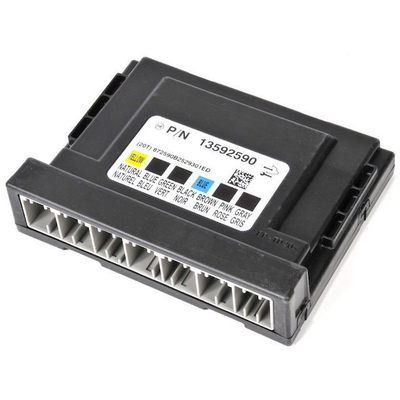
Shop the Parts Behind B3924
Below are the parts most often responsible for code B3924, ranked by how frequently each one is the actual culprit (per the diagnosis above). Tap any to see what we have for your vehicle.




The information in this article is provided for general reference and educational purposes only. Vehicle specifications, procedures, and part compatibility can vary by production date, trim level, and region. Always consult your vehicle's factory service manual and verify part numbers before purchasing or performing repairs. Safety-critical components such as airbags, seat belts, and braking systems should be installed by a qualified professional.
- 🧭 Diagnostic Flowchart
- 🛍️ Shop This Part
- What Does B3924 Mean?
- Can I Drive With B3924?
- Common Causes
- Symptoms
- Common Fixes & Costs
- Used vs. New Parts: Buying Guide
- What Happens If You Wait — Timeline
- Cost of Not Fixing It
- Diagnosis Steps
- When This Code Triggers (Freeze-Frame Conditions)
- Related Codes
- Climate & Environmental Factors
- How to Talk to a Mechanic About This Code
- Where to Take It: Dealer vs Independent vs Chain
- When to Walk Away From the Repair
- What Scan Tool You Need for This Code
- How to Clear the Code After You Fix It
- Will This Fail Emissions / State Inspection?
- Most Commonly Affected Vehicles
- Manufacturer-Specific Notes
- Real Owner Stories
- 2019 Chevy Equinox stranded after battery replacement
- 2020 GMC Acadia misdiagnosed with a $1,200 failed BCM
- 2018 Chevy Traverse with an unusual wiring-related no-start
- How to Prevent This Code From Triggering
- Frequently Asked Questions
- Can I fix code B3924 myself?
- Will replacing my car's battery fix the B3924 code?
- The shop wants to replace my BCM for over $1,000. Is that right?
- My car won't start and shows 'No FOB Detected'. Is it just a dead key fob battery?
- What if the BCM reprogramming doesn't fix the code?
- How can I prevent code B3924 from happening?
- What is a 'GEN3R' BCM and why does it matter?
- Key Takeaways
- 🎟️ Get 5% Off