

B3924 on 2018-2024 Chevrolet Traverse: 'No FOB Detected' & No-Start Causes
Code B3924 on a Traverse almost always indicates a Body Control Module (BCM) software glitch, not a failed part. It's typically caused by a jump-start or battery change and requires a dealer to reprogram the BCM per TSB #23-NA-163. Expect a shop cost of $150-$350.
- B3924 is a software problem, not a hardware failure. Do not replace the BCM, key fobs, or battery to fix it.
- The issue is almost always triggered by a low-voltage event like a jump-start or battery replacement.
- This is not a DIY repair. The vehicle must go to a GM dealer or qualified shop for a BCM software update.
- Reference TSB #23-NA-163 when talking to a service advisor to ensure the correct, cost-effective repair is performed.
- If stranded, try placing the key fob in the designated transmitter pocket (inside the center console armrest, under the liner) to start the car.
What's Unique About the 2018-2024 Chevrolet TRAVERSE
The 2018-2024 Traverse, along with many other GM SUVs of this era, uses a specific 'GEN3R' Body Control Module (BCM) that is sensitive to voltage fluctuations. A low battery, jump-start, or even a standard battery replacement can corrupt the BCM's memory, triggering this code and a no-start condition. The problem is so well-known that GM issued a specific technical service bulletin (TSB #23-NA-163) detailing a software-based repair, warning technicians not to replace any hardware. Furthermore, the battery in these vehicles is located inside the cabin under the floor behind the passenger seat, making service less straightforward and potentially increasing the risk of voltage irregularities if not performed carefully.
Diagnostic Flowchart
Tap your situation to follow the diagnostic path that matches what you're seeing on this vehicle.
Symptoms You May Notice
- Vehicle will not crank ('No Crank')
- Engine starts but immediately stalls
- Message on dash: 'No FOB Detected' or 'Key FOB Not Detected'
- Key fobs are inoperative (lock/unlock/remote start do not work)
- Check Engine Light may be on
- Security or anti-theft light is illuminated on the dashboard.
- Electronic parking brake is stuck on and cannot be released.
- Replacing the vehicle's 12V battery. While a failing battery is the trigger, a new battery will not fix the corrupted BCM memory.
- Replacing the key fobs or their batteries. The issue is not with the fobs, but with the vehicle's inability to recognize them.
- Replacing the Body Control Module (BCM). TSB #23-NA-163 explicitly warns against replacing the BCM, as the issue is resolved with software.
- Replacing keyless entry antennas.
Most Likely Causes
- Body Control Module (BCM) Memory Corruption 🔴 High Probability → Shop Body Control Module This issue is documented in TSB #23-NA-163. A low voltage event (weak battery, jump-start, battery replacement) can corrupt the memory of the specific 'GEN3R' BCM used in these vehicles. The TSB lists specific affected BCM Base Model Part Numbers (BMPNs) including 13518569, 13519619, 13527260, 13533809, and others.
How to confirm: A professional scan tool (GM GDS2) will show DTC B389A 00 set as 'current', along with three or more codes from the B3924-B3928 series. The TSB notes that if B389A is not present, a battery disconnect/reconnect for 30 seconds may cause it to set. The technician must then verify the BCM is a 'GEN3R' type by checking its part number in the GDS2 software.
Typical fix: A dealer or qualified shop must follow TSB #23-NA-163. The procedure involves using GM's Service Programming System (SPS) to perform a special routine called 'Programming A' followed by an immobilizer relearn. If that fails, a 'Programming B' routine is performed. This is a software fix, not a parts replacement.
Est. part cost: $0
Rare But Worth Checking
- Poor BCM Ground Connection: In the rare event that BCM reprogramming does not resolve the issue, a poor ground connection at the BCM itself could cause erratic behavior and communication faults. This should be investigated before condemning the module.
Diagnosis Steps
- Attempt to start the vehicle by placing the key fob in the transmitter pocket. In the Traverse, this is located inside the center console armrest; you may need to remove a tray and liner to access the key-shaped indentation at the bottom.
- Confirm the vehicle's main 12V battery is fully charged and healthy. A low voltage state can prevent successful reprogramming.
- Scan the Body Control Module (BCM) with a professional, GM-compatible scan tool (GDS2).
- Verify the presence of DTC B389A 00 as 'current' or 'active'. If not present, the TSB advises a 30-second battery disconnect/reconnect 🎬 See how to perform a simple BCM reset without tools. to try and set the code.
- Verify the presence of at least three codes from the B3924-B3928 series.
- Using the GDS2 scan tool, navigate to Module Diagnostics > [K9] Body Control Module > Identification Information to confirm the BCM is a 'GEN3R' type and its part number is on the TSB's eligible list.
- If the code pattern and BCM type are confirmed, do not replace any parts. The vehicle must be taken to a GM dealer or qualified shop.
- The shop will follow the procedure in TSB #23-NA-163, which involves a specific BCM reprogramming routine ('Programming A' or 'Programming B') and an immobilizer relearn procedure.
Related Codes That Often Appear With This One
- B389A — This is the primary code for 'Environment Identification' fault. Per TSB #23-NA-163, its presence is the main entry condition for the special software repair. The B392x codes are logged as secondary data when B389A is set due to BCM memory corruption.
- B3925, B3926, B3927, B3928 — These are sibling codes for the other keyless entry antennas and modules. When three or more appear together with B389A, it confirms a system-wide software fault rather than multiple simultaneous hardware failures.
- P0513 — This code for 'Incorrect Immobilizer Key' can also be set when the BCM and Engine Control Module (ECM) lose their security synchronization due to the software glitch.
Technical Service Bulletins (TSBs) & Recalls
- 23-NA-163: Addresses customer concern of No Crank, No Start, Quick Start/Stall, No FOB Detected, or inoperative key fobs associated with codes B3924, B3925, B3926, B3927, and B3928. It outlines a software-based repair procedure for vehicles with specific 'GEN3R' BCMs and has been updated multiple times to include more models like the Traverse, Acadia, Enclave, and Blazer.
Platform-Specific Known Issues
- A known condition documented in GM Technical Service Bulletin #23-NA-163 describes how a low voltage event can cause a memory corruption event in the 'GEN3R' Body Control Module, leading to a no-start condition and setting codes B3924, B3925, B3926, B3927, and B3928.
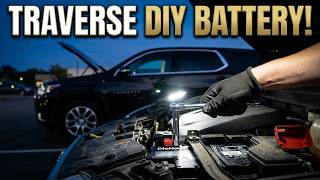
- The 12V battery is located inside the vehicle's cabin, under the floor behind the front passenger seat, 🎬 Watch: Step-by-step guide to accessing and replacing the cabin battery. requiring removal of trim and covers for access. This non-standard location can complicate battery replacement and increase the likelihood of voltage-related issues if not serviced correctly.
Hidden / Shadow Codes Worth Checking
- B389A 00: Incorrect Environment Identification. This is the primary fault code that triggers the B3924-B3928 series. Its presence is the main diagnostic criterion for initiating the TSB #23-NA-163 repair procedure. (see via GM GDS2 (Global Diagnostic System 2) scan tool. The TSB advises that if this code is not present, a 30-second battery disconnect/reconnect may force it to set.)
Scan Tool Commands That Help
- GM SPS (Service Programming System): K9 Body Control Module “Programming A Per Bulletin 23-NA-163 and 23-NA-165 Only” — This is the primary software routine used to correct the BCM memory corruption. It is the first step in the TSB repair process.
- GM SPS (Service Programming System): Immobilizer procedure “Body Control Module IMMO Learn with Existing Transponder or Remote Key” — This must be performed immediately after successfully completing 'Programming A' to re-synchronize the existing key fobs with the newly programmed BCM.
- GM SPS (Service Programming System): K9 Body Control Module “Programming B Per Bulletin 23-NA-163 Only” — This is a secondary, alternative programming routine. It should ONLY be used if 'Programming A' and the subsequent immobilizer learn do not resolve the no-start condition and the codes remain.
- GM SPS (Service Programming System): Immobilizer procedure “Engine Control Module and Body Control Module IMMO Learn.” — This specific immobilizer learn procedure is required after performing 'Programming B'.
Wiring & Ground Locations
- G304 — On the right side B-pillar, behind the interior trim panel.. This is a major chassis ground point. While not exclusively for the BCM, poor integrity at this location can cause intermittent voltage and communication issues for multiple modules, potentially contributing to the low-voltage conditions that trigger BCM memory corruption. A voltage drop test at this ground is a valid step if software fixes fail.
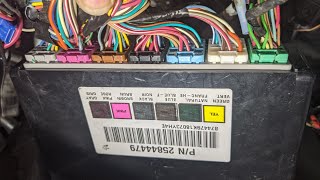
- K9 Body Control Module — Located on the left-hand (driver's) side of the dash for 2022-2024 models. For earlier models, it is typically behind the driver's side of the instrument panel.. This is the module that stores the fault and requires reprogramming. Physical access is needed to check its connections or replace it in the rare case of hardware failure.
Real Owner Repair Stories
- General Forum Consensus (e.g., traverseforum.com, gm-trucks.com) (Multiple 2018-2024 Chevrolet Traverse, GMC Acadia, Buick Enclave) — Vehicle was running perfectly. Owner replaced the 12V battery (often as preventative maintenance). Immediately after replacement, the vehicle would not start, displayed a 'No FOB Detected' message, and all key fobs were inoperative.
❌ Tried (didn't work) Replacing the batteries in the key fobs., Disconnecting the new car battery for an extended period to 'reset' the computers., Purchasing and attempting to program new key fobs., Towing to a general mechanic who replaced the battery again.
✅ What actually fixed it The vehicle was towed to a GM dealership. The dealer service department identified TSB #23-NA-163, performed the BCM reprogramming ('Programming A' routine), and completed the immobilizer relearn. The original BCM and key fobs were used. The total cost was typically between 1-2 hours of labor ($150-$350).
OEM Part Supersession History
13518569, 13519619, 13527260, 13533809, etc.→Varies by original part number— Standard part lifecycle updates. It is unknown if newer hardware revisions are less susceptible to the voltage corruption issue. The TSB applies to a long list of GEN3R BCM part numbers, indicating a design-level sensitivity.
Heads up: A replacement BCM, whether new or used, MUST be programmed to the vehicle's VIN using GM's SPS. For 2024+ models with the Global B architecture, this process is even more stringent and may require an online connection to GM servers. A used module is locked to the donor VIN and will not function until reprogrammed.
Model Year Variations Within This Range
- 2018-2021: These models use the standard electrical architecture where the TSB #23-NA-163 is the primary fix for this issue.
- 2022-2023: The Traverse received a mid-cycle refresh for the 2022 model year. While still susceptible to the B3924 issue, the BCM location is confirmed to be on the left-hand side of the dash.
- 2024+: The 2024 Traverse introduced GM's new Vehicle Intelligence Platform (VIP) or 'Global B' electrical architecture. While the B3924 fault can still occur, any BCM replacement or programming is more complex and requires tools and software (SPS2/Techline Connect) that have an active connection to GM's network.
Helpful Videos

The information in this article is provided for general reference and educational purposes only. Vehicle specifications, procedures, and part compatibility can vary by production date, trim level, and region. Always consult your vehicle's factory service manual and verify part numbers before purchasing or performing repairs. Safety-critical components such as airbags, seat belts, and braking systems should be installed by a qualified professional.
- Chevrolet TRAVERSE:
- 🧭 Diagnostic Flowchart
- 🎬 Helpful Videos
- What's Unique About the 2018-2024 Chevrolet TRAVERSE
- Symptoms You May Notice
- Most Likely Causes
- Rare But Worth Checking
- Diagnosis Steps
- Related Codes That Often Appear With This One
- Technical Service Bulletins (TSBs) & Recalls
- Platform-Specific Known Issues
- Hidden / Shadow Codes Worth Checking
- Scan Tool Commands That Help
- Wiring & Ground Locations
- Real Owner Repair Stories
- OEM Part Supersession History
- Model Year Variations Within This Range
- 🎟️ Get 5% Off