

B3925 on 2018-2024 Buick Enclave: 'No FOB Detected' & No-Start Causes and Fixes
On a 2018-2024 Buick Enclave, code B3925 almost always indicates a Body Control Module (BCM) software glitch, not a failed part. This is typically triggered by a weak battery or jump-start. The fix is a specific BCM reprogramming procedure outlined in TSB #23-NA-163, which must be done by a dealer or a shop with GM-specific software.
- B3925 on a 2018-2024 Enclave means the vehicle's security system is locked due to a BCM software glitch, not a bad part.
- The most common trigger is a weak battery, a jump-start, or a battery replacement.
- Do NOT replace the BCM, key fobs, or antennas. The fix is a software reprogramming procedure detailed in TSB #23-NA-163.
- This repair is not DIY-friendly and requires a GM dealer or a specialized shop with GM's programming software.
- A proper diagnosis requires finding code B389A along with three or more B392x codes (like B3925).
What's Unique About the 2018-2024 Buick ENCLAVE
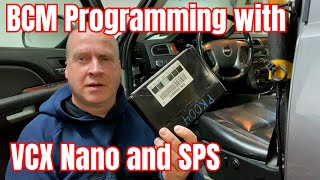
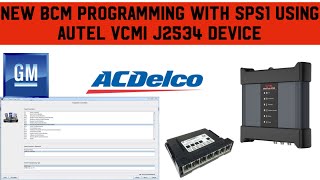
Unlike many vehicles where key detection codes point to a bad antenna, on this GM platform (including the Enclave, Traverse, Acadia, and others), the problem is a well-documented software vulnerability. A low voltage event, such as a weak battery or a jump-start, can corrupt the memory in the specific 'GEN3R' Body Control Module used in these SUVs. GM has issued Technical Service Bulletin #23-NA-163 that provides a specific, multi-stage software reprogramming fix. 🎬 Watch: How to perform BCM programming with SPS software. This makes a trip to the dealer for a software update the solution instead of replacing expensive hardware. The TSB explicitly warns technicians not to replace modules before performing the software procedure.
Diagnostic Flowchart
Tap your situation to follow the diagnostic path that matches what you're seeing on this vehicle.
Symptoms You May Notice
- No Crank, No Start condition.
- Vehicle starts and immediately stalls.
- "No FOB Detected" or "No Remote Detected" message on the driver information center.
- Key fobs are completely inoperative.
- Check Engine Light is on.
- Electronic parking brake may be stuck on.
- Replacing the key fob or its battery. The B3925 code points to a fault in the vehicle's receiving system, not the fob itself.
- Replacing the Body Control Module (BCM) without first attempting the software fix. TSB #23-NA-163 explicitly warns against replacing modules before following the bulletin.
- Replacing keyless entry antennas before confirming the software issue is resolved.
- Performing a standard immobilizer relearn procedure before the TSB's specific reprogramming steps. This can complicate the repair.
Most Likely Causes
- Body Control Module (BCM) Memory Corruption 🔴 High Probability → Shop Body Control Module A known issue documented in GM TSB #23-NA-163 shows that the 'GEN3R' BCM is susceptible to memory corruption following a low voltage event.
How to confirm: A professional scan tool will show DTC B389A 00 as current in the BCM, along with three or more 'Incorrect Environmental Identifier' codes (B3924, B3925, B3926, B3927). The presence of B389A is the key indicator that the TSB procedure applies. If B389A is not present, the TSB advises disconnecting the battery for 30 seconds and rechecking.
Typical fix: The BCM must be reprogrammed by a GM dealer or qualified shop using the specific two-stage procedure outlined in TSB #23-NA-163. This involves 'Programming A' and, if necessary, 'Programming B' steps within the GM Service Programming System (SPS). This is a software fix, not a hardware replacement.
Est. part cost: $0 - Low Vehicle Battery Voltage 🟡 Medium Probability → Shop Vehicle Battery This is the primary trigger for the BCM memory corruption. A weak battery, a recent jump-start, or a battery replacement can cause the voltage fluctuation that leads to the fault.
How to confirm: Test the 12V battery with a multimeter or battery tester. A reading below 12.4 volts indicates a weak or discharged battery that needs to be charged or replaced. The presence of code B1325 (Control Module Power Circuit Low Voltage) also points to this as the root cause.
Typical fix: Charge or replace the 12V battery. Note: This will not fix the B3925 code itself; the BCM reprogramming will still be required after the battery issue is resolved.
Est. part cost: $150-$350
Rare But Worth Checking
- Faulty Passive Entry Antenna or Wiring: → Shop Antenna While the TSB points to software, a true hardware failure of an antenna or its wiring is still possible. This should only be investigated after the TSB reprogramming procedure has been attempted and failed. On some platforms, B3925 can point to a specific antenna, but in this context with other codes, it's almost always the BCM software.
- Failed Body Control Module (BCM): → Shop Body Control Module In rare cases where the specific reprogramming from TSB #23-NA-163 fails to resolve the issue, the BCM itself may have a permanent hardware fault and require replacement and programming. This should be considered a last resort, as the TSB explicitly warns against premature replacement.
Diagnosis Steps
- Verify the complaint: Confirm the no-start, 'No FOB Detected' message, and inoperative fobs.
- Test the main 12V vehicle battery and ensure it is fully charged and healthy (above 12.6V). A low voltage condition must be corrected first.
- Scan all vehicle modules with a professional-grade scan tool (like GM's GDS2) capable of reading GM body codes.
- Confirm the presence of DTC B389A 00. If not present, disconnect and reconnect the battery for at least 30 seconds and check again.
- Confirm that B389A is present with three or more codes from the B3924-B3927 range.
- Do NOT clear codes or replace any modules.
- The vehicle must be taken to a GM dealer or qualified independent shop to perform the BCM reprogramming procedure outlined in TSB #23-NA-163.
- The technician will use GM's Techline Connect (TLC) software to access the Service Programming System (SPS2).
- The technician will first perform 'Programming A Per Bulletin 23-NA-163' on the K9 Body Control Module.
- After programming, an immobilizer learn with existing keys is performed using the 'Body Control Module IMMO Learn with Existing Transponder or Remote Key' function.
- If the vehicle still does not start (often because a standard immobilizer learn was incorrectly attempted before), the technician must perform the 'Programming B Per Bulletin 23-NA-163 Only' step.
- After successful reprogramming, clear all DTCs and verify the vehicle starts and all key fob functions operate correctly.
Parts You'll Likely Need
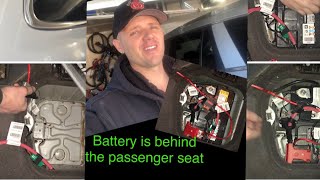
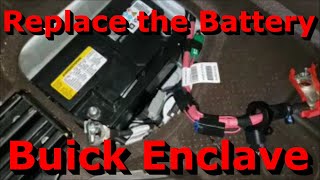
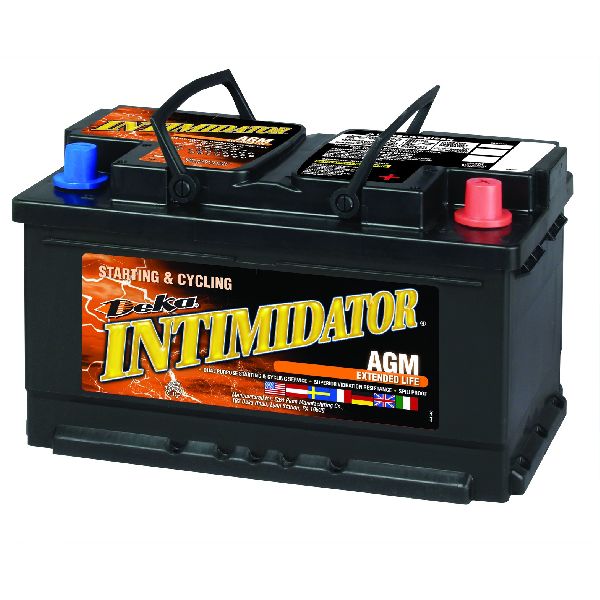
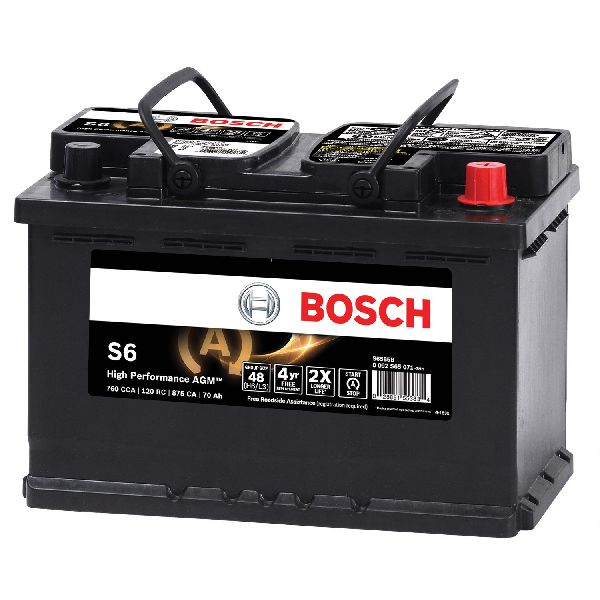
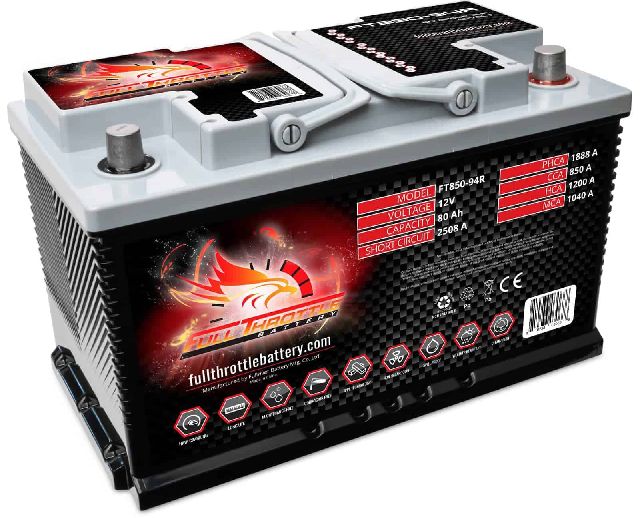
- 12V AGM Battery
(OEM #88864541 (ACDelco Gold 48AGM))— A weak or failing battery is the most common trigger for the BCM software fault that causes code B3925. The battery must be healthy before attempting the reprogramming.
Trusted brands: ACDelco, Interstate, DieHard, Duralast
OEM price range: $250-$400
Aftermarket price range: $150-$300 - Body Control Module (BCM)
(OEM #13533817, 13517057 (Examples of many possible GEN3R BCMs))— Only needed in the very rare case that the BCM is physically damaged and does not respond to the reprogramming procedure outlined in TSB #23-NA-163.
Trusted brands: GM Genuine Parts
OEM price range: $300-$500
Aftermarket price range: $200-$400
Related Codes That Often Appear With This One
- B389A 00 — This code for 'Environment Identification' is the primary indicator that the system-wide configuration is lost. The TSB procedure specifically requires this code to be present before proceeding. The '00' failure type byte indicates 'No Additional Information'.
- B3924 00 — Incorrect Environmental Identifier from another module, set as part of the same BCM memory corruption event.
- B3926 00 — Incorrect Environmental Identifier Received From Instrument Cluster, set during the same BCM fault.
- B3927 00 — Incorrect Environmental Identifier Received From Electronic Brake Control Module, set during the same BCM fault.
- P0513 — Incorrect Immobilizer Key. This code is set by the Engine Control Module (ECM) when it receives an invalid security signal from the BCM, a direct result of the BCM's internal fault.
- B1325 — Control Module Power Circuit Low Voltage. This code often logs the root cause of the event—the low voltage condition that triggered the memory corruption in the BCM.
Technical Service Bulletins (TSBs) & Recalls
- 23-NA-163: Provides a specific, multi-step BCM reprogramming procedure ('Programming A' and 'Programming B') to correct a no-start/no-fob-detected condition caused by B389A and B392x codes. It explicitly warns against replacing parts and supersedes older bulletins like #21-NA-277.
Platform-Specific Known Issues
- A known issue, documented in GM TSB #23-NA-163, describes how a low voltage event can cause memory corruption in the 'GEN3R' Body Control Module, leading to a no-start condition and setting DTC B3925.
- The official fix is a specific software reprogramming and immobilizer relearn procedure, not a BCM replacement. The TSB explicitly warns: 'Do not attempt the immobilizer procedure or module replacements before following this bulletin.'
- The TSB only applies to vehicles with a 'GEN3R' BCM. A technician can verify this using a GDS2 scan tool by navigating to Module Diagnostics > [K9] Body Control Module > Identification Information. Eligible part numbers listed in the TSB include 13518569, 13533817, 13533821, and many others.
Hidden / Shadow Codes Worth Checking
- B389A 00: The primary code indicating Environment Identification is lost. The '00' is a failure type byte meaning 'No Additional Information,' which is typical for this fault. (see via A professional scan tool like GM GDS2 is required to read current B-codes from the Body Control Module.)
Scan Tool Commands That Help
- GDS2: Module Diagnostics > [K9] Body Control Module > Identification Information — To verify the BCM is a 'GEN3R' model and that its part number is eligible for the TSB #23-NA-163 procedure.
- SPS2 (in Techline Connect): K9 Body Control Module “Programming A Per Bulletin 23-NA-163 and 23-NA-165 Only.” — This is the primary software fix to reprogram the corrupted BCM memory.
- SPS2 (in Techline Connect): Immobilizer procedure “Body Control Module IMMO Learn with Existing Transponder or Remote Key.” — This is performed immediately after 'Programming A' to relearn the existing keys to the newly programmed BCM.
- SPS2 (in Techline Connect): K9 Body Control Module “Programming B Per Bulletin 23-NA-163 Only” — This alternate programming step is used ONLY if a standard immobilizer learn was attempted *before* the TSB procedure, which can complicate the repair.
Wiring & Ground Locations
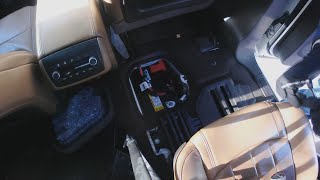
- Passenger Compartment Fuse Box — Located inside the center console on the passenger side, behind a cover panel.. This panel contains the primary fuses that supply power to the Body Control Module. Checking fuses F1, F7, F13, and F19 is a crucial first step to ensure the BCM has power before attempting reprogramming.
- G103 (or similar cowl ground) — A common location for this primary body ground is on the cowl, above the brake booster in the engine compartment.. This ground point serves the BCM and many other interior modules. A loose or corroded connection here can cause low voltage at the BCM, potentially triggering the memory corruption that leads to code B3925.
Real Owner Repair Stories
- Review for White Automotive & Media Services (2020 Chevrolet Silverado (similar GM Global A platform)) — Dead BCM, vehicle would not start.
❌ Tried (didn't work) N/A
✅ What actually fixed it The factory BCM died during a jump start. Replacing it with a pre-programmed BCM from WAMS brought the truck back to life. This confirms that a jump start is a real-world trigger for this type of BCM failure.
OEM Part Supersession History
Multiple (e.g., 13518569, 13533817)→Varies— Software/hardware revisions
Heads up: The critical factor is not the specific part number, but that the BCM is a 'GEN3R' type. The TSB #23-NA-163 reprogramming procedure is only applicable to these modules. Verification must be done with a GDS2 scan tool.
Helpful Videos
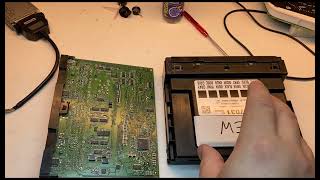
Used OEM Parts in Stock
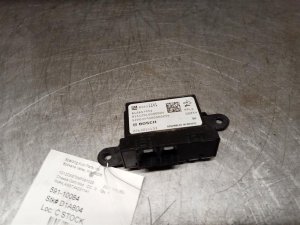
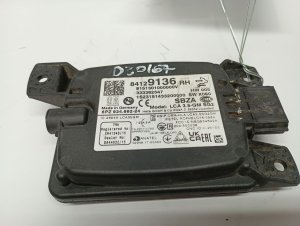
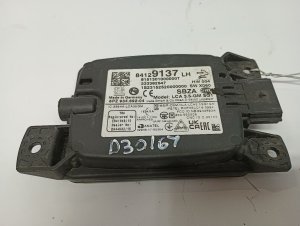
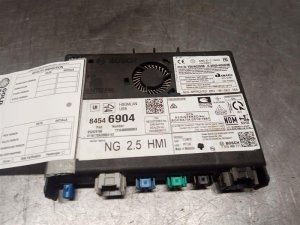
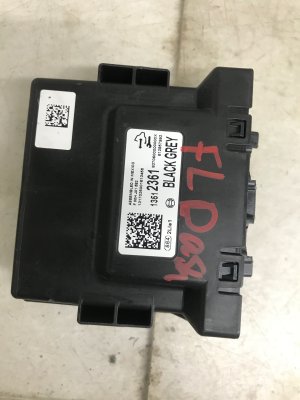
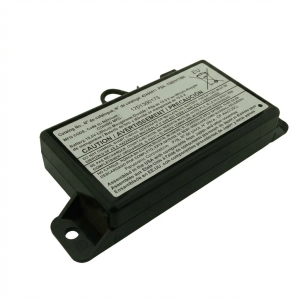
New Aftermarket Parts Available
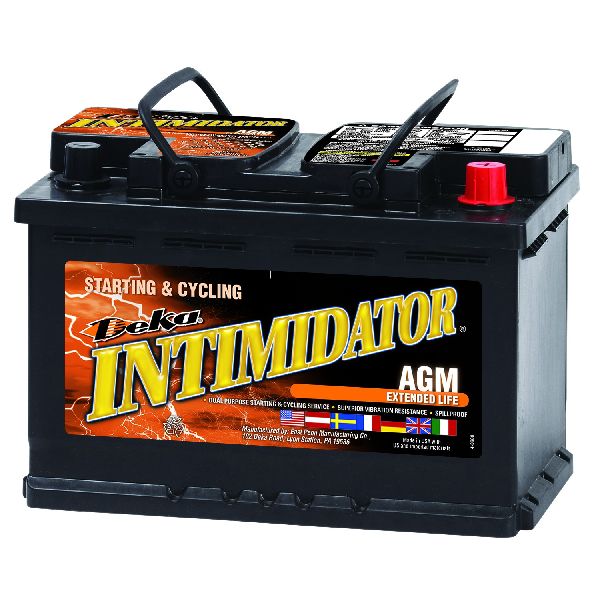


The information in this article is provided for general reference and educational purposes only. Vehicle specifications, procedures, and part compatibility can vary by production date, trim level, and region. Always consult your vehicle's factory service manual and verify part numbers before purchasing or performing repairs. Safety-critical components such as airbags, seat belts, and braking systems should be installed by a qualified professional.
- Buick ENCLAVE:
- 🧭 Diagnostic Flowchart
- 🎬 Helpful Videos
- 🛍️ Shop This Part
- What's Unique About the 2018-2024 Buick ENCLAVE
- Symptoms You May Notice
- Most Likely Causes
- Rare But Worth Checking
- Diagnosis Steps
- Parts You'll Likely Need
- Related Codes That Often Appear With This One
- Technical Service Bulletins (TSBs) & Recalls
- Platform-Specific Known Issues
- Hidden / Shadow Codes Worth Checking
- Scan Tool Commands That Help
- Wiring & Ground Locations
- Real Owner Repair Stories
- OEM Part Supersession History
- 🎟️ Get 5% Off