

B3925 on 2020-2025 Cadillac XT6: 'No FOB Detected' and No-Start Causes
On a 2020-2025 Cadillac XT6, code B3925 almost always indicates a Body Control Module (BCM) software glitch, not a failed part. This typically happens after a battery replacement or jump-start. The fix is a specific software reset procedure (TSB 23-NA-163) performed by a dealer or qualified shop, costing around $150-$400 for labor.
- B3925 on a Cadillac XT6 almost always means a software glitch in the Body Control Module (BCM), not a broken part.
- This issue is most commonly triggered by a weak battery, jump-start, or battery replacement.
- Do NOT replace the
What's Unique About the 2020-2025 Cadillac XT6
The Cadillac XT6 and its platform mates (like the Chevy Traverse, Buick Enclave, and GMC Acadia) use a specific Body Control Module (BCM) known as the 'GEN3R' type. This particular BCM has proven to be highly susceptible to memory corruption following a low-voltage event, such as a weak battery, a jump-start, or even just disconnecting and reconnecting the battery. GM has acknowledged this sensitivity by issuing Technical Service Bulletin #23-NA-163, which outlines a specific, multi-step software-based repair instead of hardware replacement. This is a crucial distinction, as many technicians might mistakenly replace the BCM or keyless entry antennas when the actual problem is a fixable software glitch that requires GM's proprietary GDS2 and SPS software.
Diagnostic Flowchart
Tap your situation to follow the diagnostic path that matches what you're seeing on this vehicle.
Symptoms You May Notice
- No Crank, No Start condition.
- Engine starts but immediately stalls.
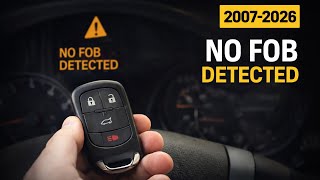
- "No FOB Detected" or "No Remote Detected" message on the driver information center.
- Key fobs are completely inoperative for passive functions (keyless entry, push-to-start).
- Active key fob functions (button presses for lock/unlock) may still work, while passive functions do not. 🎬 See how to start your vehicle with a dead remote
- Replacing the key fob or its battery. While a dead fob battery can cause a 'No Remote Detected' message, it will not set the specific group of codes B3924-B3928.
- Replacing the keyless entry antennas. These antennas are part of the system, but B3925 and its related codes specifically point to the BCM software issue described in the TSB, not an individual antenna failure. 🎬 Watch this guide on fixing 'No Fob Detected' messages
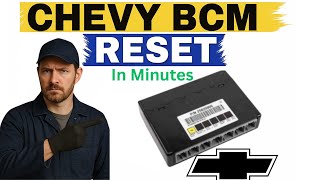
- Replacing the Body Control Module (BCM) unnecessarily. The vast majority of cases are resolved by reprogramming the existing BCM, not replacing it. TSB 23-NA-163 explicitly states not to replace modules before following the bulletin.
Most Likely Causes
- Body Control Module (BCM) Memory Corruption 🔴 High Probability → Shop Body Control Module The GEN3R BCM used in this platform is sensitive to voltage fluctuations. A low battery, jump-start, or battery replacement can trigger this software corruption.
How to confirm: A professional technician will use a GM GDS2 scan tool to confirm that code B3925 is present along with three or more other 'Environment ID' codes (B3924, B3926, B3927, etc.). The presence of code B389A is also a key indicator. The presence of these codes after a recent low-voltage event is the primary confirmation.
Typical fix: The fix is purely software-based. A technician must follow the procedure in TSB 23-NA-163, which involves a special BCM data reset and/or reprogramming, followed by an immobilizer relearn procedure using GM's Service Programming System (SPS). No parts are typically replaced. The TSB outlines a two-stage programming process ('Programming A' and 'Programming B') depending on whether an immobilizer learn was already attempted.
Est. part cost: $0
Rare But Worth Checking
- Faulty 12V Battery: → Shop Vehicle Battery While the BCM glitch is the direct cause of the code, a weak or failing 12V AGM battery is the most common underlying trigger. If the battery is not tested and replaced if necessary, the B3925 code is likely to return. GM vehicles with start/stop technology use AGM batteries that are more sensitive to deep discharge.
- Failed Body Control Module (BCM): → Shop Body Control Module In the very rare event that the BCM is physically damaged (e.g., from a severe short circuit or water intrusion) and does not respond to the reprogramming procedure outlined in TSB 23-NA-163, the module itself will require replacement and programming. A used BCM is not a viable option as it must be programmed to the vehicle's specific VIN and options.
Diagnosis Steps
- Verify the customer complaint: No Crank/No Start, 'No FOB Detected' message.
- Check and fully charge the 12V battery. A healthy battery is required before proceeding. Replace if it fails a load test (voltage below 12.4V at rest is a bad sign).
- Connect a professional scan tool (GM GDS2 recommended) and check for DTCs in the Body Control Module (K9).
- Confirm that B3925 is present along with at least three other codes from the B3924-B3928 range, and likely B389A.
- Using GDS2, navigate to 'Module Diagnostics > [K9] Body Control Module > Identification Information' to verify the BCM is a 'GEN3R' type by checking its Base Model Part Number against the list in TSB 23-NA-163.
- If codes are present and the BCM is a GEN3R, DO NOT replace any parts. Proceed directly to the software repair.
- Follow the specific reprogramming steps outlined in GM Technical Service Bulletin #23-NA-163. This involves using the Service Programming System (SPS) to perform a special data reset ('Programming A' or 'Programming B') and immobilizer relearn.
- After the procedure, clear all DTCs and verify that the vehicle starts and all key fob functions work correctly.
Parts You'll Likely Need
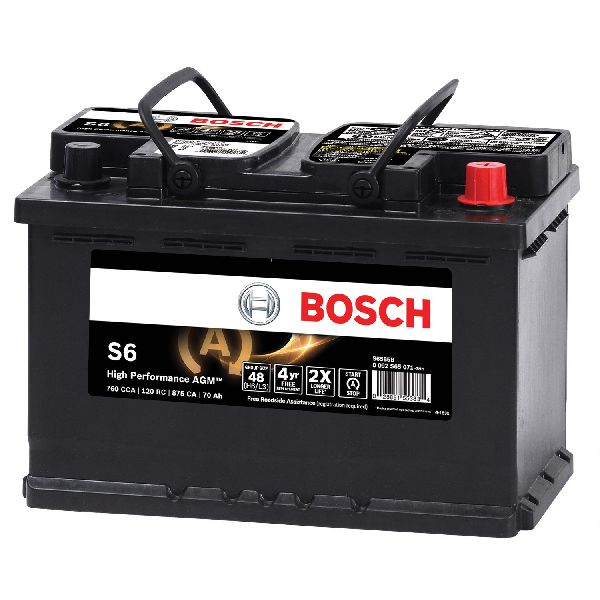
- 12V AGM Battery
(OEM #88864541)— A weak or failing battery is the root cause that triggers the BCM software corruption. It must be in good health before attempting the software fix to prevent recurrence.
Trusted brands: ACDelco
OEM price range: $200-$280
Aftermarket price range: $180-$250
Related Codes That Often Appear With This One
- B389A — This code often precedes the group of environment ID codes and indicates a general BCM fault, prompting the check for the others. TSB 23-NA-163 notes its presence as a prerequisite for the repair procedure.
- B3924, B3926, B3927, B3928 — These are all 'Incorrect Environmental Identifier' codes for different modules. TSB 23-NA-163 states that B3925 will appear with three or more of these codes when this specific fault occurs.
Technical Service Bulletins (TSBs) & Recalls
- 23-NA-163: Provides the specific, multi-step software-based repair procedure to correct the BCM memory corruption that causes codes B3924, B3925, B3926, etc., leading to a no-start condition. It lists eligible GEN3R BCM part numbers and details the 'Programming A' and 'Programming B' steps within the GM Service Programming System (SPS).
Platform-Specific Known Issues
- As documented in TSB #23-NA-163, the GEN3R Body Control Module in the 2020-2025 Cadillac XT6 is prone to memory corruption after a low voltage event, leading to a no-start condition with codes B3924-B3928 set.
- An earlier Engineering Information bulletin (PIE0588A) was created to gather data on this exact issue across multiple GM platforms, indicating it was a known problem during development that led to the creation of TSB 23-NA-163.
Mechanic-Grade Diagnostic Values
- 12V AGM Battery Resting Voltage (State of Charge) — expected: 12.8V or higher (100%). Failure: A resting voltage below 12.4V (60% charge) is a strong indicator of a weak battery that can trigger the BCM glitch. A voltage below 12.2V (40%) is considered weak and requires recharging and testing.
Hidden / Shadow Codes Worth Checking
- B3925 00: The '00' is a standard GM symptom byte meaning 'No Sub Type Information'. It signifies that the primary DTC description ('Incorrect Environmental Identifier Received') contains the complete fault information and no further detail is available. (see via A professional GM scan tool like a GDS2 will display the DTC along with its two-digit symptom byte.)
Scan Tool Commands That Help
- GM SPS (Service Programming System): K9 Body Control Module “Programming A Per Bulletin 23-NA-163 and 23-NA-165 Only” — This is the primary software reset procedure. It should be used when the B3925 code group is present and no immobilizer learn has been attempted yet. It must be followed immediately by an immobilizer relearn for the existing keys.
- GM SPS (Service Programming System): K9 Body Control Module “Programming B Per Bulletin 23-NA-163 Only” — This is a secondary recovery procedure. It should ONLY be used if 'Programming A' and the subsequent immobilizer learn failed to fix the no-start condition, or if a standard immobilizer learn was attempted *before* starting the TSB procedure, which can further corrupt the data.
- GM GDS2: Module Diagnostics > [K9] Body Control Module > Identification Information — This path is used to view the 'Base Model Part Number' (BMPN) of the BCM to confirm it is a 'GEN3R' type and is eligible for the TSB 23-NA-163 procedure.
Wiring & Ground Locations
- K9 Body Control Module (BCM) — The BCM is located inside the center console, accessible from the passenger side of the vehicle.. This is the module that stores the corrupt software and requires reprogramming. Physical access is needed for diagnosis of connectors or rare replacement, but the primary fix is via the OBD-II port.
- BCM Fuses — In the passenger compartment fuse box, located inside the center console on the passenger side. Fuses F1, F7, F13, F17, F21, and F23 are all designated for the Body Control Module.. While a blown fuse is not the common cause for B3925, checking these fuses is a basic step to ensure the BCM is receiving power before proceeding with complex software diagnostics.
Real Owner Repair Stories
- Go-Parts.com repair database, citing owner forums (2018+ Chevrolet Traverse (platform mate)) — Sudden no-start condition, 'No Fob Detected' message on the driver information center.
❌ Tried (didn't work) Replacing the key fob battery, Replacing the 12V vehicle battery without reprogramming the BCM
✅ What actually fixed it The owner took the vehicle to a GM dealer, who performed a BCM software update/reprogram as per TSB 23-NA-163. This resolved the no-start condition and the 'No Fob Detected' message.
OEM Part Supersession History
Multiple (e.g., 13519619, 13527252, 13533817, etc.)→N/A— The fix for this issue is software-based, not hardware. TSB 23-NA-163 lists over 20 different GEN3R BCM part numbers that are susceptible to this software corruption.
Heads up: The issue is not with the part number itself, but the software within it. Replacing the BCM with an identical part number will not fix the issue until it is correctly programmed to the vehicle following the TSB procedure.
Helpful Videos
We Have This Part in Stock

The information in this article is provided for general reference and educational purposes only. Vehicle specifications, procedures, and part compatibility can vary by production date, trim level, and region. Always consult your vehicle's factory service manual and verify part numbers before purchasing or performing repairs. Safety-critical components such as airbags, seat belts, and braking systems should be installed by a qualified professional.
- Cadillac XT6:
- 🧭 Diagnostic Flowchart
- 🎬 Helpful Videos
- 🛍️ Shop This Part
- What's Unique About the 2020-2025 Cadillac XT6
- Symptoms You May Notice
- Most Likely Causes
- Rare But Worth Checking
- Diagnosis Steps
- Parts You'll Likely Need
- Related Codes That Often Appear With This One
- Technical Service Bulletins (TSBs) & Recalls
- Platform-Specific Known Issues
- Mechanic-Grade Diagnostic Values
- Hidden / Shadow Codes Worth Checking
- Scan Tool Commands That Help
- Wiring & Ground Locations
- Real Owner Repair Stories
- OEM Part Supersession History
- 🎟️ Get 5% Off