

OBD-II Code B3926: Incorrect Module Communication
What B3926 means, why it triggers, and how to fix it
- Code B3926 is a GM-specific fault indicating a low-voltage event corrupted the Body Control Module (BCM) memory.
- The primary symptom is a complete no-start condition accompanied by a 'No Fob Detected' dashboard message.
- Do not replace the BCM; the correct repair is a 1-to-2-hour software reprogramming procedure detailed in GM TSBs #21-NA-277 and #23-NA-163.
- Confirm the diagnosis using a professional scan tool to verify B3926 appears alongside master code B389A and other B392x communication codes.
- Bypass the immobilizer temporarily by placing your key fob in the center console's backup slot to drive the vehicle to a repair shop.
What Does B3926 Mean?
B3926 is a General Motors-specific code indicating the Body Control Module (BCM) received an unrecognized signal from the Instrument Cluster. This communication failure disables the anti-theft and keyless start systems, preventing the engine from starting.
Technical definition: GM defines this code as 'Incorrect Environmental Identifier Received From Instrument Cluster'. An 'Environmental Identifier' is a unique digital password shared between the BCM and other modules to verify they belong to the same vehicle. When a voltage drop corrupts the BCM's memory, it rejects communication from the instrument cluster and triggers the code.
Can I Drive With B3926?
No — Do Not Drive. The primary symptom is a no-crank condition that leaves you stranded. The vehicle often refuses to power on to 'Accessory' mode, preventing you from shifting out of Park. This complicates towing and adds $75-$125 in flatbed or dolly fees.
Common Causes
- Failing 12V Vehicle Battery (Very Common) — The root cause of the BCM memory corruption is a failing 12-volt battery. Modern GM vehicles are extremely sensitive to voltage drops. A weak battery testing below 12.4V at rest is the primary trigger for this fault. You must test and replace a bad battery before reprogramming the BCM, or the code will return.
- BCM Memory Corruption (Software Glitch) (Very Common) — This is the direct cause of the code. A voltage drop from a weak battery or jump-start corrupts the BCM's memory. This software glitch prevents the BCM from recognizing other modules. GM technical service bulletins (TSBs #21-NA-277 and #23-NA-163) dictate a specific software reprogramming procedure to fix this.
- Corroded BCM or ECM Ground Connection (Less Common) — A loose or corroded ground strap creates unstable voltage that mimics a dying battery. This instability triggers the exact same BCM memory corruption. Internal faults in a ground splice pack also interrupt the BCM's ground path.
- Failed Passive Entry (PEPS) Antenna (Less Common) — If software fixes fail, the code points to a failed Passive Entry Passive Start (PEPS) antenna or its wiring. The rear bumper antenna frequently fails due to moisture and road debris exposure, particularly on the Chevy Equinox and GMC Terrain.
- Chafed Wiring Harness (Rare) — Wiring harnesses rubbing against vehicle components cause short circuits. GM TSB #23-NA-074 notes the harness near the battery tray support bracket chafes easily, leading to electrical communication issues.
- Radio Frequency Interference (RFI) (Rare) — Aftermarket accessories like dash cams, phone chargers, or metallic window tint disrupt the signal between the key fob and vehicle antennas. This causes a 'No Fob Detected' message and contributes to communication faults.
- Hardware Failure of the BCM (Very Rare) — Actual hardware failure is extremely rare. GM service bulletins explicitly warn technicians not to replace the BCM until software reprogramming is attempted. Only a severe voltage spike from an improper jump-start causes internal BCM damage.
Symptoms
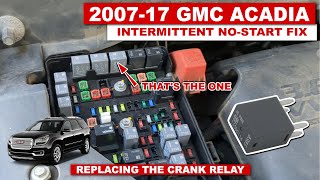
- Engine will not crank or start — The engine refuses to crank when you press the start button, 🎬 Watch this walkthrough if your GMC clicks but won't crank. or it starts and immediately stalls.
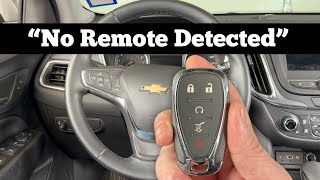
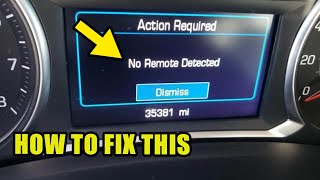
- "No Fob Detected" Message — The driver information center displays a message indicating the key fob cannot be found, even when it is inside the vehicle.
- Vehicle refuses to enter 'Accessory' mode — The vehicle will not power up to accessory mode, preventing you from shifting out of Park or rolling up windows.
- Keyless entry and remote start fail — The key fob buttons for locking, unlocking, and remote start stop functioning because the security system is offline.
- Check Engine Light illuminates (also visible on scanner) — While B3926 is a body code, the resulting P0513 (Incorrect Immobilizer Key) code illuminates the Check Engine Light.
Diagnostic Flowchart
Tap your situation to follow the diagnostic path that matches what you're seeing on this code.
Common Fixes & Costs
- BCM Reprogramming (per TSB #23-NA-163 or #21-NA-277) — Parts: $0, Labor: $150 - $300, ~1.5 hr book time (Professional)
- Replace 12V Vehicle Battery — Parts: $150 - $300, Labor: $50 - $100, ~0.8 hr book time (DIY)
- Clean or Repair Ground Connection — Parts: $5 - $20, Labor: $50 - $150, ~1 hr book time (DIY)
- Replace Passive Entry (PEPS) Antenna — Parts: $15 - $50, Labor: $150 - $400, ~2.5 hr book time (Intermediate)
- Replace Key Fob Battery — Parts: $5 - $15, Labor: $0, ~0.1 hr book time (DIY)
Used vs. New Parts: Buying Guide
When a used part is worth it: Buying a used BCM is a waste of money. The fault is software-related, and the original BCM requires reprogramming. Used BCMs are locked to the donor vehicle's VIN and security system.
Donor-vehicle mileage cap: roughly under 10000 miles for the part to have meaningful remaining life.
Donor quality checklist:
- Match the part number exactly.
- Installing a used BCM introduces new communication faults and prevents the car from starting entirely.
- Most repair shops refuse to install a customer-supplied used BCM due to high programming failure rates.
Decision logic:
- If The vehicle has code B3926 and related communication codes → Do NOT buy a BCM. Pay for the diagnostic and reprogramming service on the original module.
- If A technician definitively proves the original BCM failed internally (very rare) → Buy a new OEM BCM. It comes ready to be programmed to your vehicle's VIN.
- If Budget is extremely tight and you accept the risk → A used BCM is a gamble. It likely will not accept programming for your VIN.
Warranty tradeoff: Used BCMs from salvage yards carry a 30-90 day warranty on the part only. A new OEM BCM installed by a dealer carries a 12-24 month warranty on parts and labor.
Worst-case if a used part fails: $500-1000 if a used BCM fails to program, requiring repeat labor and the purchase of a new BCM.
What Happens If You Wait — Timeline
- Immediate (First occurrence): A low voltage event corrupts the BCM memory. The vehicle immediately fails to start, displaying 'No Fob Detected'. The car is stranded. (MPG impact: N/A (Vehicle is undrivable)% · Added cost: $100 - $300 for a tow to a capable repair shop.)
- 1 day - 1 week (Attempting incorrect fixes): Owner replaces the key fob battery or the 12V vehicle battery without fixing the BCM's corrupted software. The no-start condition persists. (MPG impact: N/A% · Added cost: $10 - $250 in wasted parts, plus continued vehicle downtime.)
- 1 week+ (Misdiagnosis at unqualified shop): A shop unfamiliar with the TSB misdiagnoses the issue as a failed BCM and recommends replacement. (MPG impact: N/A% · Added cost: $1000 - $1500 if the unnecessary repair is approved.)
- Contingent (Damage from improper jump-start): Repeated, improper jump-starts cause actual hardware damage to the BCM, turning the software problem into a real hardware failure. (MPG impact: N/A% · Added cost: $1500+ as the original BCM is now fried and requires replacement.)
Cost of Not Fixing It
- Immediate: Vehicle fails to start or stalls without warning, leaving you stranded. (Added cost: $100 - $300)
- During Towing: Inability to shift out of Park requires a flatbed tow truck or dollies, increasing towing costs. (Added cost: $75 - $125)
- Long-Term: Repeated no-start events and further electrical module glitches occur if the underlying weak battery is ignored. (Added cost: Negligible)
Diagnosis Steps
- Try the Backup Starting Procedure
Place the key fob in the designated backup pocket (usually in the front cupholder or center console armrest) and press the start button. If the car starts, it confirms the fob works but the passive detection system has a fault, allowing you to drive to a repair shop.
Tools: Key Fob (Beginner) - Check the 12V Battery
Use a multimeter to test the battery voltage. It must read at least 12.4V with the engine off. A reading below 12.4V indicates a weak battery that triggered the code. You must replace or fully charge the battery before attempting any software fixes.
Tools: Multimeter (Beginner) - Scan for All Trouble Codes
Use a professional OBD-II scanner capable of reading Body Control Module (B) codes. B3926 rarely appears alone. The definitive signature for BCM software corruption is B3926 appearing alongside B389A and at least two codes from the B3924, B3925, B3927, or B3928 series.
Tools: Professional OBD-II Scan Tool (Intermediate) - Pro Tip: Induce Code B389A for Confirmation
If the B392x code cluster is present but B389A is missing, disconnect the negative battery terminal for 30 seconds and reconnect it. Re-scan for codes. If B389A now appears as 'current', it confirms the BCM memory is corrupted and requires the TSB reprogramming procedure.
Tools: Basic hand tools, Professional OBD-II Scan Tool (Advanced) - Pro Tip: Verify BCM Type
Using a GM GDS2 scan tool, navigate to Module Diagnostics > K9 Body Control Module > Identification Information. Verify if the BCM is a 'GEN3R' type. TSB #23-NA-163 applies to GEN3R modules, while older 'Gen III' modules follow TSB #21-NA-277.
Tools: GM GDS2 Scan Tool (Advanced) - Perform BCM Reprogramming (The TSB Fix)
A dealer or qualified shop must use GM's Service Programming System (SPS) to reprogram the BCM following TSB #23-NA-163 or #21-NA-277. This is a software flash, not a parts replacement.
Tools: GM Service Programming System (SPS) / Techline Connect (Professional) - Advanced: Check BCM Ground Connection
Locate the main ground connection for the BCM under the driver's side dashboard. Measure the resistance between the BCM ground pin and a known good chassis ground. A reading above 2 Ω indicates a poor ground that must be cleaned to prevent voltage fluctuations.
Tools: Multimeter, Basic hand tools, Vehicle-specific wiring diagrams (Advanced) - Advanced: Test PEPS Antenna Circuits
If the TSB software issue is ruled out, test the PEPS antenna circuits. Check the resistance to ground on the antenna circuit; a reading of 2 Ω or greater indicates an open circuit. A signal circuit voltage of 1 V or greater indicates a short to voltage.
Tools: Multimeter, Vehicle-specific wiring diagrams (Advanced) - Replace the Key Fob Battery
If the backup starting procedure works but normal starting fails, replace the key fob battery (typically a CR2032). While rarely the cause of B3926, it resolves generic 'No Fob Detected' messages.
Tools: Small screwdriver, new fob battery (CR2032) (Beginner)
When This Code Triggers (Freeze-Frame Conditions)
- Module Voltage: 9.5 - 11.5V (During a crank attempt with a weak battery)
- Engine State: Off or Stalled (At the moment the code is triggered)
- Ignition Status: On/Run (During the failed power-up or start attempt)
- Ignition Cycles: 0-1 (Code sets on the first ignition cycle after the voltage event)
Related Codes
- P0513 — Incorrect Immobilizer Key. The ECM sets this code because the BCM reports a failed security check. P0513 is the result (engine disabled), while B3926 is the cause.
- B3924, B3925, B3927, B3928 — Incorrect Environmental Identifier codes for other modules. Seeing three or more of these together confirms the system-wide BCM memory corruption described in GM TSBs.
- B389A — Environment Identification. This is the master flag for BCM memory corruption. TSBs instruct technicians to disconnect the battery to intentionally set B389A to confirm the diagnosis.
- B3978, B3979, B3980, B3981 — Incorrect Environmental Identifier codes for restraint modules. Their presence reinforces the diagnosis of BCM memory corruption and requires the same BCM reprogramming fix.
Climate & Environmental Factors
- Cold Weather: Cold temperatures reduce battery efficiency and increase starter power demand. This mismatch causes a significant voltage drop during startup, triggering the BCM memory corruption.
- Humidity / Moisture: Water exposure accelerates the failure of externally mounted PEPS antennas, particularly the rear bumper antenna. Corrosion on the connector causes 'No Fob Detected' messages.
How to Talk to a Mechanic About This Code
Say this: "My GM vehicle won't start and I believe it has the B3926 code cluster. I'd like to schedule a diagnostic to confirm, but please be aware of GM TSB #23-NA-163. I want to authorize a diagnostic and the BCM reprogramming per the TSB, but not a BCM replacement."
This signals you are an informed consumer who knows the likely cause is a software glitch. It directs the shop to the most cost-effective fix and prevents quotes for an unnecessary BCM replacement.
Avoid saying:
- My car won't start, can you fix it?
- I think my computer is fried.
- My key fob stopped working.
Questions to ask before authorizing the repair:
- Did you confirm the presence of the B3926 code cluster, including B389A?
- Have you load-tested the 12V battery to rule it out as the root cause?
- Is the repair you're quoting for the BCM software reprogramming labor as described in the TSB, or for a new BCM part?
- What is your warranty on the BCM programming service?
Where to Take It: Dealer vs Independent vs Chain
- Dealer:
Safest Choice. They have the exact tools required for this specific software fix. The higher labor cost is worth the peace of mind.
Best for: Vehicles under warranty., Guaranteed access to GM's proprietary Techline Connect software., Technicians familiar with the specific TSBs for this code.
Downsides: Highest labor rate., May attempt to upsell other services. (Typical cost: +50% vs. baseline) - Independent Shop:
Good Alternative, With Vetting. Ask: 'Do you have the equipment to reprogram a GM Body Control Module onsite?' If they hesitate, go to the dealer.
Best for: Out-of-warranty vehicles where cost is a primary concern., Shops you have a trusted relationship with.
Downsides: MUST be vetted. Many smaller shops lack the expensive subscription to GM's software required for programming., High risk of misdiagnosis if they are unaware of the TSB. (Typical cost: +0% vs. baseline) - Chain Shop:
AVOID. These shops are not equipped for module-level software repairs. They will waste your time and money on incorrect diagnoses.
Best for: Selling you a new battery, which may be part of the problem.
Downsides: Extremely unlikely to have the capability to perform a BCM reprogram., Highest risk of misdiagnosis and recommending unnecessary parts. (Typical cost: -10% vs. baseline)
When to Walk Away From the Repair
If estimated repair cost exceeds 40-50% of the car's private-party value, consider selling it as-is.
- Car worth $15000, fix is $750: Fix it. The repair cost is only 5% of the vehicle's value.
- Car worth $25000, fix is $450: Fix it. This is a minor cost to restore full function to a valuable vehicle.
- Car worth $8000, fix is $1800: Walk away only if misdiagnosed. A $1,800 quote likely includes an unnecessary BCM replacement. The correct TSB fix should be under $600.
What Scan Tool You Need for This Code
Minimum: A scanner that reads manufacturer-specific Body Control Module (BCM) codes for GM vehicles.
A cheap engine-only code reader will NOT see the B3926 code. It will only show the resulting P0513 immobilizer code, leading to a complete misdiagnosis. You must see the cluster of 'B' codes to confirm the TSB issue.
Budget: BlueDriver Pro (~$100) — Confirms the diagnosis. This Bluetooth dongle reads enhanced codes (ABS, Airbag, BCM) for GM vehicles, allowing you to see the full B3926 code cluster.
Mid-range: Foxwell NT510 Elite for GM (~$180) — Excellent for DIY diagnosis. This handheld scanner provides full-system access to read and clear codes from all modules, including the BCM.
Professional: Autel MaxiCOM MK808 / MK808S (~$450) — Professional-level diagnosis. This tablet scanner offers comprehensive diagnostics for all systems. Note: It cannot perform the final BCM programming fix, which requires a J2534 device.
Rent vs buy: Rent a scanner from a parts store only if you verify it reads GM-specific 'B' (Body) codes. Buying a tool like the BlueDriver is a wise investment for modern GM owners.
How to Clear the Code After You Fix It
- Perform BCM reprogramming per the applicable TSB
- Use a professional scan tool to clear all codes from all modules
- Perform an immobilizer relearn procedure if prompted by the scan tool
- Complete a full GM drive cycle to run all readiness monitors
Drive cycle (~20 minutes): From a cold start (coolant temp below 122°F), idle for 2.5 minutes with A/C on. Accelerate to 55 mph and hold steady for 3 minutes. Coast down to 20 mph without using the brake. Accelerate to 60 mph and hold steady for 5 minutes. Coast down again.
Readiness monitors affected: Catalyst Monitor, Evaporative System Monitor, Oxygen Sensor Monitor, Oxygen Sensor Heater Monitor
Before emissions retest: drive at least 50 miles to fully set monitors.
Watch out for:
- Clearing the code with a basic scanner will not fix the BCM memory corruption; the no-start condition will persist.
- Failure to use a battery maintainer during the BCM reprogramming causes the procedure to fail and permanently damages the module.
- Taking the vehicle for an emissions test before the readiness monitors are 'Ready' results in an automatic failure.
Will This Fail Emissions / State Inspection?
Yes — this code typically fails an OBD-II emissions inspection.
- California: Failure is guaranteed. The associated P0513 code causes an immediate failure. If the battery was disconnected, the test fails due to 'Not Ready' monitors.
- New York: A 'Check Engine' light from the related P0513 code is an automatic fail. Incomplete readiness monitors after a battery disconnect also cause a failure.
- Texas: In the 17 counties requiring emissions testing, an illuminated Check Engine Light (from P0513) or incomplete readiness monitors results in a failed inspection.
Most Commonly Affected Vehicles
- Chevrolet Equinox (2018-2024) — Highly prone to BCM memory corruption. TSB #21-NA-277 applies to earlier models, while #23-NA-163 covers newer models with the 'GEN3R' BCM. The rear bumper PEPS antenna is also a common failure point.
- GMC Terrain (2018-2024) — Shares a platform with the Equinox and suffers from the identical BCM software issue. Also susceptible to rear bumper PEPS antenna failure due to moisture.
- Chevrolet Blazer (2019-2025) — Equipped with the GEN3R BCM that is susceptible to this software fault, as noted in TSB #23-NA-163.
- GMC Acadia (2019-2024) — Frequently experiences this no-start condition after a battery change, requiring a BCM reprogram per TSB #23-NA-163.
- Buick Enclave (2019-2024) — Specifically mentioned in GM engineering bulletins and TSBs for this code cluster.
- Chevrolet Traverse (2018-2024) — As a platform-mate to the Acadia and Enclave, it is affected by the BCM memory corruption issue described in GM TSBs.
- Cadillac XT5 (2018-2025) — Experiences B3926 due to either a failed PEPS antenna or the BCM software glitch after a voltage event.
- Cadillac XT6 (2020-2025) — Highly sensitive to battery voltage events that trigger this code, addressed by TSB #23-NA-163.
- Chevrolet Malibu (2019-2024) — The 'GEN3R' BCM in these models causes this no-start condition after a battery event, addressed by TSB #23-NA-163.
- Cadillac CT5 (2020-2022) — Uses GM's Vehicle Intelligence Platform (VIP) architecture. Technicians must follow VIP-specific programming protocols, such as having the ignition OFF during module programming.
Manufacturer-Specific Notes
- General Motors (Chevrolet, GMC, Buick, Cadillac): This code is exclusively a GM-specific software issue related to BCM memory corruption after a low-voltage event. GM explicitly warns against replacing modules to fix this.
- General Motors (Chevrolet, GMC, Buick, Cadillac): TSB #23-NA-163 provides a programming procedure for newer vehicles with a 'GEN3R' BCM. TSB #21-NA-277 covers older 'Gen III' BCMs and requires contacting GM's Technical Assistance Center for a special VCI number.
- General Motors (Chevrolet, GMC, Buick, Cadillac): For vehicles on the newer Vehicle Intelligence Platform (VIP), such as the 2020+ Cadillac CT5, programming must be performed with the ignition set to 'OFF' to avoid module damage.
- General Motors (Chevrolet, GMC, Buick, Cadillac): There are no active safety recalls for code B3926. The repair is covered under the Bumper-to-Bumper warranty, but out-of-warranty owners must pay for the reprogramming labor.
Real Owner Stories
2020 GMC Acadia - No Start After Battery Change
Owner replaced the 4-year-old battery as preventive maintenance. Immediately after, the vehicle displayed a 'No Fob Detected' message and refused to start.
What they tried:
- Replacing the key fob battery.
- Trying the backup start procedure in the cupholder.
- Towing the vehicle to the dealership.
Outcome: The dealership diagnosed B3926 alongside B389A. They performed the BCM reprogramming procedure outlined in TSB #23-NA-163. The total cost was $250 for 1.5 hours of labor. The car started normally afterward.
Lesson: Even a planned battery replacement triggers this fault. Inform the service advisor about TSB #23-NA-163 to ensure they perform the software fix instead of replacing expensive modules.
2019 Chevy Equinox - Misdiagnosed as a Bad BCM
Vehicle failed to start intermittently, eventually becoming a permanent no-start. An independent shop diagnosed a failed BCM.
What they tried:
- The shop quoted $1,400 to replace and program a new BCM.
- The owner questioned the diagnosis and towed the vehicle to a GM dealership.
Outcome: The GM dealer confirmed the classic cluster of B3926 codes and identified a failing battery causing voltage drops. They replaced the 12V battery and reprogrammed the original BCM per the TSB for under $600.
Lesson: Be skeptical of a 'bad BCM' diagnosis. The issue is almost always software corruption triggered by a voltage problem. A dealer or TSB-aware shop is crucial for correct diagnosis.
2017 Chevrolet Equinox - Unusual Cause: Loose Ground
A salvage title vehicle repaired after a wreck exhibited a no-start condition with multiple communication codes. The BCM and other modules were offline.
What they tried:
- Visually inspecting wiring harnesses.
- Disconnecting modules one-by-one.
- Considering replacing the BCM or ECM.
Outcome: The cause was a loose main ground bolt on the engine block, left untightened after the wreck repair. Tightening the ground bolt restored all communications and resolved the no-start issue at no cost.
Lesson: If reprogramming fails or there is a history of major engine work, checking all major ground connections is a critical diagnostic step.
How to Prevent This Code From Triggering
- Test the 12V Battery Seasonally (Every 6 months (especially before winter)) — The primary trigger for B3926 is a voltage drop. Testing identifies a failing battery (resting voltage below 12.4V) before it causes BCM memory corruption.
- Use a Battery Maintainer for Stored Vehicles (If the car sits for more than 2-3 weeks) — A battery maintainer keeps the battery at an optimal charge, preventing the deep discharge that leads to low-voltage events during startup.
- Follow Proper Jump-Starting Procedure (Whenever jump-starting is necessary) — Improper jump-starting causes voltage spikes that damage the BCM. Always connect positive to positive, and the final negative connection to a chassis ground away from the battery.
- Inspect and Clean Main Ground Connections (Every 2-3 years or during battery replacement) — Corrosion on ground straps creates high resistance, causing voltage instability that mimics a failing battery.
- Avoid Short Trips (Daily habit) — Frequent short drives prevent the alternator from fully recharging the battery, making it vulnerable to the B3926 fault.
Frequently Asked Questions
What exactly is an 'Environmental Identifier'?
An 'Environmental Identifier' is a unique digital password learned by computer modules when they are first installed in a specific vehicle. The BCM constantly challenges other modules to send back this password to prove they belong to the same car. Code B3926 sets when the BCM receives the wrong password back from the Instrument Cluster.
What is the most common misdiagnosis for B3926?
The most expensive mistake is replacing the Body Control Module (BCM). GM TSBs #21-NA-277 and #23-NA-163 explicitly warn technicians NOT to replace any modules before performing the software reprogramming procedure. The root cause is almost always a software glitch, not hardware failure.
Can I fix code B3926 myself?
You can perform basic checks like testing the 12V battery and replacing the key fob battery. However, the actual fix requires reprogramming the BCM with special dealer-level software, which is not a DIY repair.
Will replacing the BCM fix code B3926?
Do not replace the BCM as a first step. The problem is a software glitch, and official GM service bulletins dictate a software reprogram before considering module replacement.
My car won't start because of B3926. How can I get it to a shop?
Place your key fob in the designated backup slot, usually located in the center console cupholder or storage area. This temporarily bypasses the issue and allows you to start the engine and drive to a repair facility.
How much does it cost to fix code B3926?
BCM reprogramming typically costs between $150 and $300, covering 1-1.5 hours of shop labor. If the 12V battery also needs replacement, add another $200-$400 for the part and labor.
Is B3926 covered under warranty?
If your vehicle is under the bumper-to-bumper warranty, this repair is covered. If out of warranty, mention TSBs #21-NA-277 or #23-NA-163 to the service advisor to ensure they perform the correct software procedure.
Will disconnecting the battery fix B3926?
No, disconnecting the battery will not fix the corrupted memory in the BCM. Technicians are actually instructed by TSBs to disconnect the battery to intentionally set a related code (B389A) to confirm the diagnosis.
What is a 'GEN3R' BCM?
GEN3R is a specific generation of Body Control Module used in modern GM vehicles. The primary TSB for fixing code B3926 (#23-NA-163) only applies to vehicles equipped with this specific BCM. Older models use a 'Gen III' BCM and follow a different TSB procedure.
Key Takeaways
- Code B3926 is a GM-specific fault indicating a low-voltage event corrupted the Body Control Module (BCM) memory.
- The primary symptom is a complete no-start condition accompanied by a 'No Fob Detected' dashboard message.
- Do not replace the BCM; the correct repair is a 1-to-2-hour software reprogramming procedure detailed in GM TSBs #21-NA-277 and #23-NA-163.
- Confirm the diagnosis using a professional scan tool to verify B3926 appears alongside master code B389A and other B392x communication codes.
- Bypass the immobilizer temporarily by placing your key fob in the center console's backup slot to drive the vehicle to a repair shop.
Helpful Videos
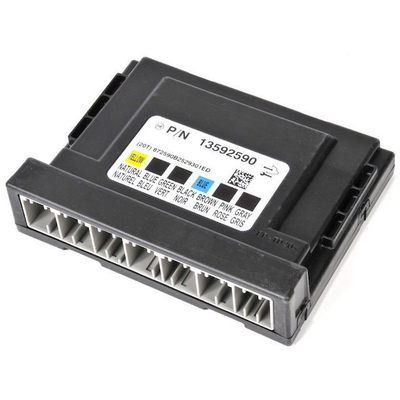
Shop the Parts Behind B3926
Below are the parts most often responsible for code B3926, ranked by how frequently each one is the actual culprit (per the diagnosis above). Tap any to see what we have for your vehicle.




The information in this article is provided for general reference and educational purposes only. Vehicle specifications, procedures, and part compatibility can vary by production date, trim level, and region. Always consult your vehicle's factory service manual and verify part numbers before purchasing or performing repairs. Safety-critical components such as airbags, seat belts, and braking systems should be installed by a qualified professional.
- 🧭 Diagnostic Flowchart
- 🎬 Helpful Videos
- 🛍️ Shop This Part
- What Does B3926 Mean?
- Can I Drive With B3926?
- Common Causes
- Symptoms
- Common Fixes & Costs
- Used vs. New Parts: Buying Guide
- What Happens If You Wait — Timeline
- Cost of Not Fixing It
- Diagnosis Steps
- When This Code Triggers (Freeze-Frame Conditions)
- Related Codes
- Climate & Environmental Factors
- How to Talk to a Mechanic About This Code
- Where to Take It: Dealer vs Independent vs Chain
- When to Walk Away From the Repair
- What Scan Tool You Need for This Code
- How to Clear the Code After You Fix It
- Will This Fail Emissions / State Inspection?
- Most Commonly Affected Vehicles
- Manufacturer-Specific Notes
- Real Owner Stories
- 2020 GMC Acadia - No Start After Battery Change
- 2019 Chevy Equinox - Misdiagnosed as a Bad BCM
- 2017 Chevrolet Equinox - Unusual Cause: Loose Ground
- How to Prevent This Code From Triggering
- Frequently Asked Questions
- What exactly is an 'Environmental Identifier'?
- What is the most common misdiagnosis for B3926?
- Can I fix code B3926 myself?
- Will replacing the BCM fix code B3926?
- My car won't start because of B3926. How can I get it to a shop?
- How much does it cost to fix code B3926?
- Is B3926 covered under warranty?
- Will disconnecting the battery fix B3926?
- What is a 'GEN3R' BCM?
- Key Takeaways
- 🎟️ Get 5% Off