

OBD-II Code B3927: Incorrect Security Code from Brake System
What B3927 means, why it triggers, and how to fix it
- Code B3927 is a critical immobilizer fault affecting 2018 and newer GM vehicles equipped with a 'GEN3R' Body Control Module.
- A weak 12V battery or a jump-start triggers a software glitch in the BCM, causing a no-start condition and a 'Key FOB Not Detected' message.
- Do not replace the BCM, EBCM, or key fobs; the official fix requires a 1.5-hour BCM software reprogram per GM TSB 23-NA-163.
- Confirm the diagnosis by scanning for code B389A alongside three or more codes from the B3924-B3928 range.
- Proactively replacing your AGM battery every 3 to 4 years prevents the low-voltage event that causes this $150-$350 software failure.
What Does B3927 Mean?
B3927 means the Body Control Module (BCM) received an incorrect security password from the Electronic Brake Control Module (EBCM). This failed handshake triggers the anti-theft system and disables the engine. This is a General Motors (GM) specific code, affecting 2018 and newer models equipped with 'GEN3R' BCMs.
Technical definition: The SAE/ISO definition is 'Incorrect Environmental Identifier Received From Electronic Brake Control Module'. The BCM expects a specific security code from the EBCM to verify module pairing, but receives the wrong one. This indicates a central BCM software glitch, not an EBCM hardware fault.
Can I Drive With B3927?
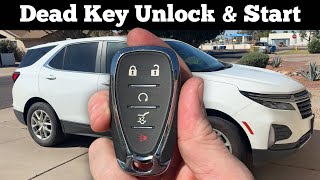
No — Do Not Drive. The vehicle does not crank or start, or it starts and immediately stalls. It is immobile. The transmission shifter often locks in Park, requiring a manual override procedure 🎬 Watch: How to unlock and start with a dead fob. before the vehicle can be towed.
Common Causes
- Body Control Module (BCM) Memory Corruption (Very Common) — A low voltage event—like a dead battery or jump-start—corrupts the BCM's memory. This glitch erases the security keys shared with other modules, triggering the code. GM documents this software vulnerability in Technical Service Bulletins (TSBs) 23-NA-163 and 21-NA-277.
- Weak or Failing 12V Vehicle Battery (Common) — A weak battery directly triggers the BCM memory corruption. Modern vehicles require robust AGM batteries; when voltage drops below 12.4V during cranking, the BCM software crashes. Replacing the battery is necessary but does not fix the corrupted memory on its own.
- Incorrect Repair Attempts (Less Common) — Performing a standard immobilizer key relearn before executing the TSB software reset locks the system further. TSB 23-NA-163 requires a more intensive 'Programming B' routine if a standard relearn was already attempted, and sometimes requires purchasing new key fobs.
- Faulty Keyless Entry (PEPS) Antenna (Rare) — If B3927 appears alone without other communication codes, it indicates a failed Passive Entry Passive Start (PEPS) antenna or wiring. The BCM misinterprets the antenna circuit fault as a security breach.
- Aftermarket Device Interference (Rare) — Poorly installed aftermarket electronics, such as remote starters or OBD-II insurance dongles, interfere with the vehicle's CAN bus communication. This data corruption mimics a module failure and triggers security codes.
- BCM Ground or Power Supply Issue (Rare) — A poor ground connection for the BCM or an intermittent power feed causes voltage drops significant enough to corrupt memory or disrupt communication. Verifying BCM ground integrity is required if reprogramming fails.
- Wiring or Network Communication Fault (Rare) — A damaged wire or corroded connector on the CAN bus corrupts messages between the BCM and EBCM. This is accompanied by multiple communication codes (U-codes) that must be diagnosed first.
- Faulty Electronic Brake Control Module (EBCM) (Very Rare) — While the code names the EBCM, it is rarely the actual cause. An internal EBCM failure is only considered after ruling out all BCM software issues and wiring faults. Replacing the EBCM is a common and costly misdiagnosis.
Symptoms
- Vehicle will not crank or start — Pushing the start button or turning the key results in a single click or complete silence.
- Engine starts and immediately stalls — The engine fires up for one to two seconds and shuts down as the immobilizer activates.
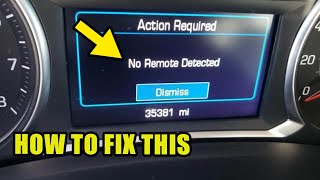
- Key fob unrecognized and inoperative — The dash displays 'Key FOB Not Detected' or 'No Remote Detected', and the fob buttons do not lock or unlock the doors.
- Multiple warning lights — The check engine light illuminates alongside warnings for the ABS, stability control, and security systems.
- Transmission Shifter Locked in Park — The electronic shifter locks in the Park position, preventing the vehicle from rolling.
Diagnostic Flowchart
Tap your situation to follow the diagnostic path that matches what you're seeing on this code.
Common Fixes & Costs
- BCM Reprogramming per TSB ('Programming A') — Parts: $0, Labor: $150-$350, ~1.5 hr book time (Professional)
- Replace 12V Battery and Reprogram BCM
— Parts: $200-$300, Labor: $150-$350, ~2.0 hr book time
(Professional)
Chevrolet Equinox / GMC Terrain: OEM ACDelco Gold 48AGM (GM P/N: 88866268) (Alt: DieHard Platinum AGM H6-AGM, Optima YellowTop DH6)
Chevrolet Malibu: OEM ACDelco Gold 48AGM (GM P/N: 88864541) (Alt: Duralast Platinum AGM H6-AGM, Bosch S6 AGM)
GMC Acadia: OEM ACDelco Gold 94RAGM (GM P/N: 88864542) (Alt: DieHard Platinum AGM H7-AGM, Duralast Platinum AGM H7-AGM) - Perform 'Programming B' Procedure per TSB — Parts: $0, Labor: $250-$450, ~2.0 hr book time (Professional)
- Replace Faulty Keyless Entry Antenna
— Parts: $40-$110, Labor: $150-$300, ~1.5 hr book time
(Intermediate)
Chevrolet Equinox / GMC Terrain: OEM GM P/N: 13595510, 13546098, 13545326 (Alt: Denso (check application)) - Replace Body Control Module (BCM)
— Parts: $300-$600, Labor: $250-$500, ~2.5 hr book time
(Professional)
Chevrolet Equinox: OEM GM P/N: 13517057, 13522387, 13534188 (Alt: Dorman (Remanufactured))
Chevrolet Malibu: OEM GM P/N: 13534191, 13543436 (Alt: N/A - OEM Recommended)
Used vs. New Parts: Buying Guide
When a used part is worth it: For code B3927, the correct fix is reprogramming the original BCM, not replacing it. A used BCM is never a sensible option, as it introduces significant programming and compatibility problems.
Donor quality checklist:
- Most GM dealers refuse to program a used BCM from another vehicle because the VIN is permanently locked.
- Third-party 'cloning' services require your original BCM to be functional for data transfer, which is an unnecessary step when the original BCM is not broken.
Decision logic:
- If The vehicle has code B3927 and related codes per TSB 23-NA-163 → Do NOT buy a new or used BCM. The original BCM is good; it only needs professional reprogramming.
- If A technician definitively proves the BCM has internal hardware failure → Buy a new, genuine OEM BCM. A used BCM is a major risk and may not be programmable to your vehicle.
Warranty tradeoff: A new OEM BCM installed by a dealer carries a 12-month/12,000-mile warranty. A used BCM from a salvage yard has a 30-90 day warranty on the part only, with no coverage for labor and programming costs.
Worst-case if a used part fails: $400-800 if a used BCM fails after install, requiring repeat labor and programming fees, plus the cost of another module.
What Happens If You Wait — Timeline
- Pre-Failure (Weeks to Months): The 12V battery weakens. You notice slower engine cranking on cold mornings, or the auto start/stop system engaging less frequently. No codes are set. (MPG impact: 0%% · Added cost: $0)
- The Trigger Event (Instantaneous): A low voltage event occurs during a crank attempt, corrupting the BCM's memory. Code B3927 and sibling codes set instantly. The security system activates. (MPG impact: 100% (vehicle is undrivable)% · Added cost: $0)
- Immediate Aftermath (0-3 Days): The vehicle is completely disabled and will not start. 'No Remote Detected' appears on the dash. The vehicle must be towed to a repair facility. (MPG impact: 100% (vehicle is undrivable)% · Added cost: $75-$250 for a tow, plus alternative transportation.)
- During Repair (1 Day to 3+ Weeks): If diagnosed correctly using TSB 23-NA-163, the fix is a 1.5-hour reprogram ($150-$350). If misdiagnosed, the owner faces costly parts replacement (BCM, EBCM, key fobs) that do not fix the issue. (MPG impact: 100% (vehicle is undrivable)% · Added cost: $550 to $2000+ in unnecessary parts and labor if misdiagnosed.)
Cost of Not Fixing It
- Immediate: Vehicle does not start or starts and immediately stalls, rendering it immobile. (Added cost: $75-$250 for a tow truck to a repair shop.)
- Ongoing: The vehicle is completely unreliable and cannot be used. There is no 'driving with the problem' for this code. (Added cost: Cost of alternative transportation.)
- During Repair: Incorrect diagnosis leads to the unnecessary replacement of expensive components like the BCM ($550-$1200), key fobs ($150-$400), or EBCM ($800-$1500), without fixing the software issue. (Added cost: $550-$2000+)
Diagnosis Steps
- Check Technical Service Bulletins (TSBs)
GM issued TSB 23-NA-163 and 21-NA-277 describing this exact condition and providing the specific software repair procedure. Providing this TSB number to a technician saves significant diagnostic time and prevents unnecessary parts replacement.
Tools: Internet Access, TSB 23-NA-163 (Beginner) - Attempt the Backup Starting Procedure
Place the key fob in the vehicle's designated emergency backup pocket (usually in the center console or cupholder) and try to start the engine. If it starts, it confirms a passive detection system issue and allows you to drive to a shop.
Tools: Vehicle Owner's Manual, Original Key Fob (Beginner) - Test the 12V Battery
A low voltage state triggers this code. Use an electronic battery tester to check the state of charge and cold cranking amps (CCA). A reading below 12.4V indicates a discharged state. The BCM reprogram fails if the battery is weak.
Tools: Digital Multimeter, Electronic Battery Tester (Beginner) - Scan for All Trouble Codes
Use a professional OBD-II scanner to read Body (B) and Network (U) codes. The presence of B3927 alongside B389A and at least two other codes from the B3924-B3928 series confirms the BCM memory corruption issue described in the TSB.
Tools: Professional OBD-II Scan Tool (Intermediate) - [PRO TIP] Force Set B389A Code for Diagnosis
TSB 23-NA-163 states DTC B389A is the primary indicator of memory corruption. If B389A is missing but other B392x codes are present, disconnect the battery for 30 seconds and reconnect it. This power cycle forces the B389A code to set, confirming the diagnosis.
Tools: 10mm Wrench (for battery terminal) (Intermediate) - [PRO TIP] Verify BCM is 'GEN3R' Type
The TSB repair only applies to 'GEN3R' BCMs. Navigate to Module Diagnostics > Body Control Module > Identification Information on the scan tool. Cross-reference the 'Base Model Part Number' with the eligible list in TSB 23-NA-163.
Tools: Professional OBD-II Scan Tool (GM GDS2) (Professional) - Inspect BCM and EBCM Fuses
Check the fuses supplying power to the Body Control Module and Gateway Module. A blown fuse cuts power and causes communication loss, though this is less common than the software glitch.
Tools: Needle-nose Pliers, Test Light (Beginner) - [ADVANCED] Check BCM Voltage and Grounds
Back-probe the BCM power and ground terminals. Power terminals must read battery voltage (approx. 12.6V). Perform a voltage drop test on the ground circuits; the reading must be less than 0.2V (200mV). Higher readings indicate a poor ground requiring repair.
Tools: Digital Multimeter, Back-probe Pins (Advanced) - [ADVANCED] Check CAN Bus Network Integrity
With the battery disconnected, measure resistance between OBD-II Pin 6 (CAN High) and Pin 14 (CAN Low); it should be 60 ohms. With the battery connected and key on, Pin 6 should read ~2.5-3.5V and Pin 14 should read ~1.5-2.5V. Deviations indicate wiring faults.
Tools: Digital Multimeter (Advanced) - Perform BCM Reprogramming (Professional)
Connect GM's diagnostic software (GDS2) to the online Service Programming System (SPS) and perform the 'Programming A Per Bulletin 23-NA-163' procedure. This resets the BCM software and clears the fault.
Tools: GM GDS2/MDI Interface, SPS Subscription (Professional)
When This Code Triggers (Freeze-Frame Conditions)
- Vehicle Speed: 0 mph (Vehicle is stationary during the key-on or start attempt when the fault is detected.)
- Engine State: Off / Cranking (The code sets during the initial module handshake process, either at key-on/engine-off or during the crank request.)
- Ignition Status: On / Run / Crank (The ignition is on, powering up the vehicle's modules and triggering the security check that fails.)
- Battery Voltage: 9.5V - 12.2V (The freeze frame captures a low voltage reading, reflecting the underlying trigger of the BCM memory corruption.)
Related Codes
- B389A — This code is the primary indicator of BCM memory corruption. TSB 23-NA-163 states B389A must be present to confirm the condition. If missing, technicians cycle battery power to force it to set.
- B3924, B3925, B3926, B3928 — These sibling codes indicate an 'Incorrect Environmental Identifier' from other modules. When three or more appear alongside B389A, it confirms the system-wide BCM software glitch requiring a reprogram.
- P0513 — This code means 'Incorrect Immobilizer Key' and is set by the Engine Control Module (ECM). The corrupted BCM fails to send the security password to the ECM, causing the ECM to set P0513 and disable the engine.
- B1325 — This code for 'Control Module Power Circuit Low Voltage' appears in history alongside the B392x cluster. It confirms the root cause of the BCM memory corruption was a low voltage event.
Climate & Environmental Factors
- Cold Weather: Low temperatures significantly reduce battery power output while increasing the power required to crank the engine. This combination makes the low-voltage event that triggers the BCM memory corruption highly likely during winter.
- High Heat: Prolonged exposure to high summer temperatures degrades battery internals. A battery weakened by heat is highly susceptible to failure when cold weather arrives, triggering the BCM glitch.
How to Talk to a Mechanic About This Code
Say this: "Hi, my car won't start and I suspect it's the known GM issue related to code B3927. It happened right after the battery died. I'd like to schedule a diagnosis, and I want to make sure the technician is aware of Technical Service Bulletin 23-NA-163, as it describes my exact problem."
This language shows you are an informed consumer. It names the specific code and TSB, directing the shop away from a costly misdiagnosis (like replacing the BCM) and toward the correct software repair.
Avoid saying:
- 'My car won't start, I think it's the battery.' (Invites them to replace the battery without addressing the BCM glitch.)
- 'The check engine light is on and it's showing a bunch of codes.' (Too vague, allowing a shop to start a long, expensive diagnostic process.)
- 'My mechanic said I need a new computer.' (Biases them toward replacing the BCM, which is almost always wrong for this code.)
Questions to ask before authorizing the repair:
- Have you confirmed the cluster of codes described in TSB 23-NA-163, including B389A and other B392x codes?
- Have you tested the battery to confirm it's healthy enough to support the reprogramming?
- Is the quoted price for performing the BCM reprogramming procedure outlined in the TSB, not for replacing the module?
- Does your shop have an active GM SPS subscription and the correct tools to perform this software update?
Where to Take It: Dealer vs Independent vs Chain
- Dealer:
Recommended. They have the mandatory tools and subscriptions and are obligated to follow TSB procedures.
Best for: Vehicles under the 3-year/36,000-mile bumper-to-bumper warranty, as this repair is covered., Ensuring the technician has direct access to GM's latest TSBs and the required Techline Connect/SPS programming software.
Downsides: Highest labor rate ($150-$250/hr)., Dealers can still misdiagnose this, so mentioning the TSB is mandatory. (Typical cost: +50% vs. baseline) - Independent Shop:
Acceptable, with caution. Call first and ask specifically if they perform GM BCM online programming via SPS.
Best for: Out-of-warranty vehicles where cost is a primary concern., Shops specializing in GM vehicles that advertise OEM-level diagnostic and programming capabilities.
Downsides: Not all independent shops pay for the expensive GM SPS subscription required for this fix., A shop unfamiliar with this specific GM glitch defaults to replacing the BCM. (Typical cost: +0% vs. baseline) - Chain Shop:
AVOID. These shops are not equipped for module-level software repairs and will misdiagnose the issue.
Best for: Selling you a new battery, which is a trigger for the problem but not the solution.
Downsides: Guaranteed to lack the required GM-specific programming software and subscriptions., High likelihood of misdiagnosis, leading to recommendations for unnecessary part replacements. (Typical cost: -10% vs. baseline)
When to Walk Away From the Repair
If the total estimated repair cost exceeds 50% of the car's current private-party value, evaluate your options.
- Car worth $18000, fix is $650: Fix it. The repair cost (TSB reprogram + new AGM battery) is a small fraction of the vehicle's value.
- Car worth $15000, fix is $2500: Challenge the estimate. A $2500 quote includes an unnecessary BCM or EBCM replacement. Get a second opinion from a shop that knows TSB 23-NA-163.
- Car worth $3000, fix is $400: Fix it. A $400 repair that makes an immobile car drivable again is highly cost-effective.
What Scan Tool You Need for This Code
Minimum: A scanner that reads manufacturer-specific Body (B) and Communication (U) trouble codes. A basic engine-only (P-code) reader is insufficient.
A $20 reader cannot see B3927, B389A, or other required body codes. You cannot diagnose this issue without seeing the full cluster of codes from the BCM.
Budget: BlueDriver Pro / OBDLink MX+ (~$100) — Reads the necessary GM-specific B-codes and U-codes to confirm the diagnostic pattern. This allows a DIYer to confidently instruct a shop on the required TSB repair. It cannot perform the fix.
Mid-range: Foxwell NT510 Elite (with GM software) / XTOOL D7 (~$200) — Offers deeper system access, including viewing live BCM data. They CANNOT perform the online SPS programming required to fix the B3927 glitch. Useful for advanced diagnosis but not the final repair.
Professional: Autel MaxiCOM MK906BT / Launch X431 series (~$500-1200) — Supports J2534 Pass-Thru, allowing the tool to act as the interface between a laptop and the vehicle to perform the official GM SPS online programming (requires a separate, paid GM subscription). This performs the actual repair.
Rent vs buy: For diagnosis only, buying a BlueDriver is a good investment. To perform the actual repair, the tools and subscriptions are too expensive for DIY use. Pay a professional for their tools and access.
How to Clear the Code After You Fix It
- The primary repair (BCM reprogram) is performed with a GM scan tool and clears the code as part of the procedure.
- If the battery was replaced, ensure all connections are tight.
- Perform the GM-specific drive cycle to allow vehicle readiness monitors to become 'Ready' for emissions testing.
Drive cycle (~20 minutes): Cold start, let idle for 2-3 minutes with electrical load (A/C, defroster). Accelerate to 55 mph and hold steady for 3-5 minutes. Coast down to 20 mph without braking. Accelerate again to 55-60 mph and hold for 5 minutes. Coast to a stop. Repeat over a few days of normal driving.
Readiness monitors affected: No emissions readiness monitors are directly affected by B3927, but clearing codes or disconnecting the battery resets all of them to 'Not Ready'.
Before emissions retest: drive at least 50 miles to fully set monitors.
Watch out for:
- Using a standard OBD-II scanner to 'clear' code B3927 fails; the code returns immediately because the underlying BCM memory corruption is unresolved.
- Disconnecting the battery does not clear this fault permanently and resets all emissions readiness monitors, causing an emissions test failure.
Will This Fail Emissions / State Inspection?
Yes — this code typically fails an OBD-II emissions inspection.
- California: An illuminated Check Engine Light results in an automatic smog test failure. After the repair, readiness monitors must be set to 'Ready,' requiring a specific drive cycle.
- New York: The NYVIP3 inspection includes an OBD-II check. An illuminated MIL is an automatic failure. For 2001 and newer vehicles, only one readiness monitor is allowed to be 'Not Ready'.
- Texas: An annual emissions inspection is required in 17 populous counties. An active check engine light causes a failure in these counties.
Most Commonly Affected Vehicles
- Chevrolet Equinox (2018-2024) — Highly susceptible to 'GEN3R' BCM memory corruption from low voltage events, documented in GM TSBs 21-NA-277 and 23-NA-163.
- Chevrolet Malibu (2019-2024) — Prone to BCM memory corruption on E2XX platform models equipped with a 'GEN3R' BCM.
- GMC Acadia (2019-2023) — Sets B3927 with a no-start condition due to BCM software corruption. The fix is a specific reprogramming procedure, not part replacement.
- Chevrolet Traverse (2018-2024) — Shares the C1XX platform and BCM software vulnerability, leading to this code after battery issues.
- Cadillac XT5 / XT6 (2018-2025) — The BCM is sensitive to low voltage, triggering a cluster of security codes including B3927 that disable the vehicle.
- Buick Enclave (2018-2024) — A low voltage event triggers a BCM software glitch, setting B3927 and causing a no-start.
- Chevrolet Blazer (2019-2025) — Features the sensitive 'GEN3R' BCM where low voltage triggers B3927. The fix is a software reset per TSB 23-NA-163.
- GMC Terrain (2018-2024) — Platform-mate to the Equinox, suffering from the identical BCM software vulnerability after a low-voltage event.
- Buick Envision (2019-2020) — Owners report this code appearing after battery replacement, leading to a no-start condition requiring dealer reprogramming.
- Chevrolet Trailblazer (2021-2025) — Uses a 'GEN3R' BCM susceptible to this fault. The 2024-2025 refresh did not change the underlying architecture.
Manufacturer-Specific Notes
- General Motors (Chevrolet, GMC, Buick, Cadillac): This code is almost exclusively a GM-specific issue related to a known software vulnerability in 2018+ models with 'GEN3R' BCMs. The official fix is a software reprogram, not part replacement.
- General Motors (Chevrolet, GMC, Buick, Cadillac): The diagnostic procedure is counter-intuitive. If code B389A is missing, technicians are instructed to cycle battery power to force the code to appear, confirming the fault.
- General Motors (Chevrolet, GMC, Buick, Cadillac): TSB 23-NA-163 contains two software repair paths: 'Programming A' for initial repair, and a more intensive 'Programming B' if a standard key relearn was incorrectly attempted first.
- Ford, Toyota, Honda, Stellantis, Hyundai, Kia, BMW, VW: This code is not used by these manufacturers. It is not part of their diagnostic systems.
Real Owner Stories
2019 Chevy Blazer with 50K miles - The Textbook TSB Fix
On a cold morning, the vehicle would not crank. The dash displayed 'No Remote Detected'. The battery had shown signs of weakness for weeks.
What they tried:
- Tried jumping the vehicle, which failed.
- Replaced the 4-year-old original battery, but the no-start condition persisted.
- Towed the vehicle to an independent shop.
Outcome: The shop initially suspected a bad starter. The owner mentioned TSB 23-NA-163. The shop foreman confirmed the BCM was a 'GEN3R' type and performed the 'Programming A' procedure. The vehicle started immediately. Total cost was $220 for 1.5 hours of labor.
Lesson: Knowing about TSB 23-NA-163 is your most powerful tool. Mentioning it to your service advisor prevents unnecessary parts replacement.
2021 Chevy Trailblazer at 27K miles - A Misdiagnosis Story
The car intermittently failed to start, with dash lights going black and displaying multiple warnings. The problem became permanent, stranding the owner.
What they tried:
- The dealer replaced the battery, which did not solve the intermittent electrical issues.
- After the final failure, the dealer diagnosed a bad BCM and ordered a replacement.
- The owner waited weeks for the part and paid for the new BCM plus programming.
Outcome: While a new BCM fixed the issue (because it comes with fresh software), it was an unnecessary repair. The root cause was BCM memory corruption that could have been fixed with the TSB software procedure on the original module for a fraction of the cost.
Lesson: If a shop recommends replacing the BCM for this code without mentioning TSB 23-NA-163, challenge the diagnosis. It is the most common and costly misdiagnosis for this software problem.
2018 GMC Terrain with 75K miles - The Unusual Antenna Failure
The vehicle suddenly wouldn't start and displayed 'Key FOB Not Detected'. There were no recent battery issues. The emergency start procedure (fob in cupholder) worked, allowing the owner to drive.
What they tried:
- Replaced the key fob battery, which had no effect.
- A scan revealed only code B3927, with none of the other B392x or B389A codes present.
Outcome: The absence of the typical code cluster pointed away from the BCM software glitch. Live data indicated a fault with the rear bumper's passive entry (PEPS) antenna. The technician replaced the antenna (Part #13595510, ~$60) and cleared the code. The problem was resolved.
Lesson: The pattern of stored codes is critical. A cluster of B392x codes plus B389A points to the BCM software glitch. A single, isolated B3927 code indicates a hardware failure like a PEPS antenna.
How to Prevent This Code From Triggering
- Proactively replace the 12V AGM battery every 3-4 years. (Once every 3-4 years) — Proactively replacing the battery before it fails is the single most effective way to prevent the low-voltage event that causes the BCM memory corruption.
- Use a battery tender or maintenance charger. (If the vehicle sits for more than a week) — A maintenance charger keeps the battery above 12.6V, preventing it from dropping into a low-voltage state that triggers the glitch upon starting.
- Ensure battery terminals are clean and tight. (Annually, before winter) — Corroded or loose terminals create high resistance, causing a sudden voltage drop during cranking that triggers the BCM fault.
- Take longer drives regularly. (At least once every 1-2 weeks) — Short trips under 20 minutes do not allow the alternator to fully replenish the battery. Longer drives ensure the battery stays fully charged.
- Install the correct type of battery (AGM). (During battery replacement) — Installing a cheaper, conventional flooded battery instead of the required AGM battery leads to premature failure and increases the risk of the low-voltage event.
Frequently Asked Questions
Can I fix code B3927 myself?
No, this is not a DIY-friendly repair. The definitive fix requires specialized GM diagnostic software (GDS2) and an online Service Programming System (SPS) subscription. Stop DIY efforts after testing the battery and take the vehicle to a professional.
Will replacing my battery fix code B3927?
No. While a weak battery triggers the code, replacing it does not fix the underlying memory corruption. The BCM still requires professional reprogramming after installing the new battery.
My mechanic wants to replace the BCM. Is this correct?
This is almost always a costly misdiagnosis. GM TSB 23-NA-163 explicitly warns technicians NOT to replace the BCM for this condition. The problem is a software glitch requiring a reprogram, not a hardware failure.
What should I tell my mechanic to ensure the correct repair?
Inform your service advisor the car has code B3927 plus a cluster of other B-codes, and won't start after a battery issue. State clearly that you are aware of GM TSB 23-NA-163. This points them directly to the correct software repair and prevents unnecessary parts replacement.
How much does it cost to fix code B3927?
The cost is almost entirely labor for diagnostics and reprogramming. Expect to pay between $150 and $350 for a shop to perform the 1.5-hour BCM software update. Add $200 to $300 if the 12V AGM battery also requires replacement.
What is a 'GEN3R' BCM?
A 'GEN3R' BCM is a specific Body Control Module used in many 2018+ General Motors vehicles that is highly susceptible to memory corruption. The official GM repair procedure in TSB 23-NA-163 only applies to vehicles confirmed to have this specific module.
Can a used BCM be programmed to my car to fix this?
No, using a salvaged BCM is strongly discouraged and unnecessary. Most GM dealers refuse to reprogram used BCMs because the original Vehicle Identification Number (VIN) is permanently locked. Since your original BCM is not physically broken, simply reprogram it.
Key Takeaways
- Code B3927 is a critical immobilizer fault affecting 2018 and newer GM vehicles equipped with a 'GEN3R' Body Control Module.
- A weak 12V battery or a jump-start triggers a software glitch in the BCM, causing a no-start condition and a 'Key FOB Not Detected' message.
- Do not replace the BCM, EBCM, or key fobs; the official fix requires a 1.5-hour BCM software reprogram per GM TSB 23-NA-163.
- Confirm the diagnosis by scanning for code B389A alongside three or more codes from the B3924-B3928 range.
- Proactively replacing your AGM battery every 3 to 4 years prevents the low-voltage event that causes this $150-$350 software failure.
Helpful Videos

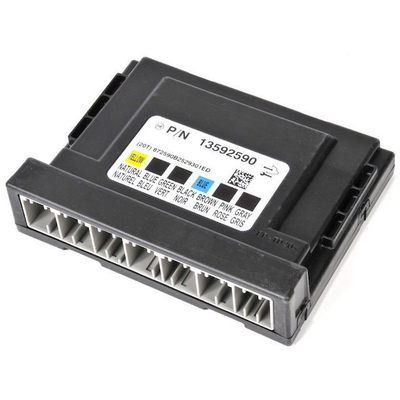
Shop the Parts Behind B3927
Below are the parts most often responsible for code B3927, ranked by how frequently each one is the actual culprit (per the diagnosis above). Tap any to see what we have for your vehicle.



The information in this article is provided for general reference and educational purposes only. Vehicle specifications, procedures, and part compatibility can vary by production date, trim level, and region. Always consult your vehicle's factory service manual and verify part numbers before purchasing or performing repairs. Safety-critical components such as airbags, seat belts, and braking systems should be installed by a qualified professional.
- 🧭 Diagnostic Flowchart
- 🎬 Helpful Videos
- 🛍️ Shop This Part
- What Does B3927 Mean?
- Can I Drive With B3927?
- Common Causes
- Symptoms
- Common Fixes & Costs
- Used vs. New Parts: Buying Guide
- What Happens If You Wait — Timeline
- Cost of Not Fixing It
- Diagnosis Steps
- When This Code Triggers (Freeze-Frame Conditions)
- Related Codes
- Climate & Environmental Factors
- How to Talk to a Mechanic About This Code
- Where to Take It: Dealer vs Independent vs Chain
- When to Walk Away From the Repair
- What Scan Tool You Need for This Code
- How to Clear the Code After You Fix It
- Will This Fail Emissions / State Inspection?
- Most Commonly Affected Vehicles
- Manufacturer-Specific Notes
- Real Owner Stories
- 2019 Chevy Blazer with 50K miles - The Textbook TSB Fix
- 2021 Chevy Trailblazer at 27K miles - A Misdiagnosis Story
- 2018 GMC Terrain with 75K miles - The Unusual Antenna Failure
- How to Prevent This Code From Triggering
- Frequently Asked Questions
- Can I fix code B3927 myself?
- Will replacing my battery fix code B3927?
- My mechanic wants to replace the BCM. Is this correct?
- What should I tell my mechanic to ensure the correct repair?
- How much does it cost to fix code B3927?
- What is a 'GEN3R' BCM?
- Can a used BCM be programmed to my car to fix this?
- Key Takeaways
- 🎟️ Get 5% Off