

B3927 on 2020-2025 Cadillac XT6: No Start & 'FOB Not Detected' Causes and Fixes
On a 2020-2025 Cadillac XT6, code B3927 almost always indicates a Body Control Module (BCM) software glitch, usually caused by a weak battery or jump-start. This is not a failed part. The fix is a BCM reprogram performed by a dealer, as outlined in TSB 23-NA-163, costing between $150 and $400.
- B3927 on a Cadillac XT6 indicates a BCM software problem, not a failed part.
- The issue is almost always triggered by a weak battery, jump-start, or battery replacement.
- Do NOT replace the BCM, key fobs, or starter. This will be a waste of money.
- The correct fix is a BCM software reprogram, which must be done by a dealer or a specialized shop.
- To save time and money, inform your mechanic about GM Technical Service Bulletin #23-NA-163.
What's Unique About the 2020-2025 Cadillac XT6
The Cadillac XT6 and its GM C1XX platform mates use a specific Body Control Module ('GEN3R' BCM) that is susceptible to memory corruption from low voltage events. GM has acknowledged this widespread issue in Technical Service Bulletin #23-NA-163, which explicitly states the problem is a software issue corrected by reprogramming, not by replacing the BCM or other hardware. The TSB specifically warns technicians, "Do not attempt the immobilizer procedure or module replacements before following this bulletin." This is a critical distinction, as replacing expensive modules will not solve the problem.
Diagnostic Flowchart
Tap your situation to follow the diagnostic path that matches what you're seeing on this vehicle.
Symptoms You May Notice
- No Crank / No Start condition.
- Message on dash: 'No FOB Detected' or 'Key Fob Not Detected'.
- Engine starts and immediately stalls.
- Key fobs are inoperative for locking/unlocking doors.
- Service anti-theft deterrent system message.
- Multiple warning lights on the instrument cluster.
- A cluster of 'Incorrect Environmental Identifier' codes stored in the BCM.
- Replacing the Body Control Module (BCM)
- Replacing the Key Fobs
- Replacing the Starter Motor
- Replacing the Electronic Brake Control Module (EBCM)
Most Likely Causes
- Body Control Module (BCM) Software Corruption 🔴 High Probability → Shop Body Control Module This platform uses a specific 'GEN3R' BCM that is sensitive to low voltage, causing its memory to become corrupted. This is a known issue documented by GM in TSB 23-NA-163.
How to confirm: Confirm the presence of B3927 along with three or more other 'Environment ID' codes like B3924, B3925, B3926, or B3928, especially after a recent low battery, jump-start, or battery replacement. A professional scan tool is needed to read these B-codes from the BCM.
Typical fix: The BCM must be reprogrammed by a GM dealer or qualified independent shop using the specific procedure outlined in TSB 23-NA-163. The module itself is not replaced.
Est. part cost: $0 - Weak or Failing 12V Battery 🟡 Medium Probability → Shop Vehicle Battery A low voltage state is the primary trigger for the BCM software corruption. Modern vehicles like the XT6 have a high parasitic draw, and a Reddit user with a 2020 XT6 resolved a 'Service Theft Alarm' warning, often related to BCM issues, by replacing the main vehicle battery after only two years.
How to confirm: Test the 12V battery with a digital multimeter or a professional battery tester. A resting voltage below 12.4V indicates a weak battery. The vehicle may have been slow to crank prior to the no-start failure, or other electrical gremlins may have appeared.
Typical fix: Replace the 12V battery and then have the BCM reprogrammed. Simply replacing the battery will not clear the B3927 code or resolve the no-start condition once the BCM memory is corrupted.
Est. part cost: $180-$350
Diagnosis Steps
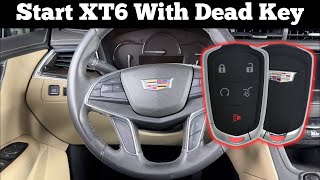
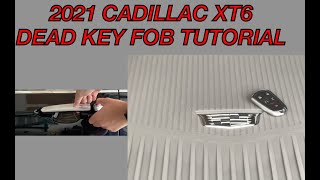
- Attempt an emergency start. Some GM vehicles have a designated pocket in the center console or cupholder to place the fob if the battery is dead. This may or may not work but is worth trying.
- Check and charge the 12V battery. Ensure it is fully charged and healthy before proceeding. A low voltage condition is the root trigger for the software corruption.
- Scan for codes using a professional-grade scan tool capable of reading BCM codes. Do not use a basic engine code reader.
- Confirm if B3927 is present with a cluster of other 'B392x' codes (B3924, B3925, B3926) and/or B389A. A group of these codes points directly to the TSB software issue.
- If the codes are present, do not replace any parts. The vehicle must be taken to a GM dealer or a shop with GM programming capabilities (SPS).
- Provide the service technician with TSB #23-NA-163 to ensure they perform the correct BCM reprogramming procedure instead of attempting unnecessary parts replacement.
Parts You'll Likely Need
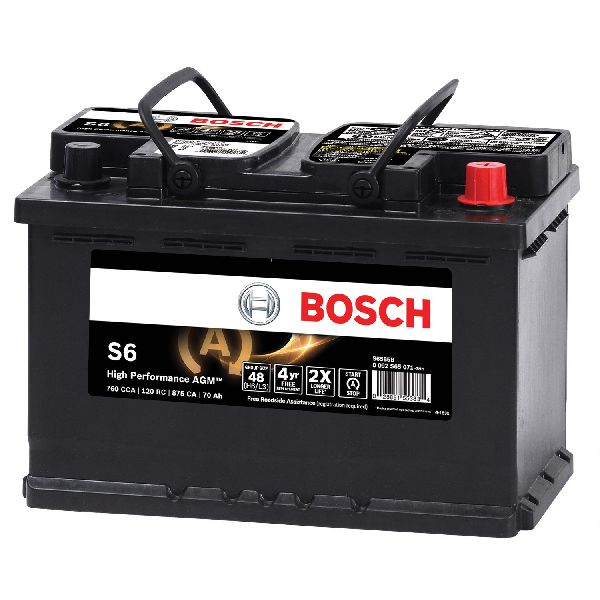
- 12V AGM Battery
(OEM #ACDelco Gold 94RAGM (GM Part No. 88865295))— A weak or failing battery is the most common trigger for the BCM software glitch. While not the direct cause of the code, replacing an old battery is often a necessary prerequisite to the software fix.
Trusted brands: ACDelco, DieHard, Interstate
OEM price range: $250-$350
Aftermarket price range: $180-$280
Related Codes That Often Appear With This One
- B3924, B3925, B3926, B3928 — These are also 'Incorrect Environmental Identifier' codes from other modules (Airbag, HVAC, Instrument Cluster, Telematics). When they appear together with B3927, it strongly confirms the system-wide BCM communication failure described in TSB 23-NA-163.
- P0513 — This code for 'Incorrect Immobilizer Key' is set by the Engine Control Module (ECM) because the corrupted BCM cannot provide the correct security credentials to authorize the engine start.
- B389A — This code for 'Environment Identification' is often a precursor or companion code. TSB 23-NA-163 notes that if B389A is present with three or more other environment ID codes, the special reprogram is the correct fix.
Technical Service Bulletins (TSBs) & Recalls
- 23-NA-163: Information to correct a customer concern of No Crank, No Start, Quick Start/Stall, No FOB Detected, Key FOBs Inoperative, B3924 00, B3925 00, B3926 00, B3927 00, B3928 00 Set.
Platform-Specific Known Issues
- A known issue documented in GM TSB #23-NA-163 describes how a low voltage event can cause the BCM to lose its configuration, setting codes B3924 through B3928 and resulting in a no-start condition.
- The TSB applies specifically to vehicles with a 'GEN3R' BCM, which can be identified by its part number. Affected part numbers include 13518569, 13519619, 13527260, 13533809, and others listed in the bulletin.
Mechanic-Grade Diagnostic Values
- 12V Battery Voltage (engine off) — expected: 12.4V or higher. Failure: Below 12.4V indicates a discharged or failing battery, which is the primary trigger for BCM memory corruption.
- Alternator Charging Voltage (engine running) — expected: 13.7V to 14.7V. Failure: Readings outside this range suggest the charging system is not maintaining battery health, leading to low voltage events.
- Cranking Voltage — expected: 9.0V or higher. Failure: A drop below 9.0V during cranking indicates a weak battery that can easily trigger the BCM fault.
Hidden / Shadow Codes Worth Checking
- Symptom Byte '00': When B3927 is displayed as B3927 00, along with a cluster of other B392x 00 codes, it specifically indicates the 'No Additional Symptom Information' variant. In the context of TSB 23-NA-163, this pattern strongly confirms the software corruption issue rather than a physical circuit or hardware failure. (see via A professional GM-specific scan tool like GDS2 (Global Diagnostic System 2) is required to view symptom bytes.)
Scan Tool Commands That Help
- GDS2: Module Diagnostics > [K9] Body Control Module > Identification Information — This path is used to view the BCM's 'Base Model Part Number' (BMPN) to verify it is a 'GEN3R' BCM. This verification is a mandatory first step before applying the TSB 23-NA-163 fix.
- SPS (Service Programming System): Programming A Per Bulletin 23-NA-163 and 23-NA-165 Only — This is the primary software fix. It is a special function used to reprogram the corrupted BCM memory without replacing the module. This is the first programming step to attempt.
- SPS (Service Programming System): Programming B Per Bulletin 23-NA-163 Only — This is a secondary recovery function. It should ONLY be used if 'Programming A' does not resolve the no-start condition, specifically in cases where an immobilizer learn was incorrectly attempted before following the TSB.
- SPS (Service Programming System): Body Control Module IMMO Learn with Existing Transponder or Remote Key — This immobilizer relearn procedure must be performed immediately after running 'Programming A' to re-link the existing key fobs to the newly programmed BCM.
Wiring & Ground Locations
- Body Control Module (BCM) — Inside the passenger cabin, under the driver's side of the dashboard, typically to the left of the steering column and near the interior fuse block.. Physical access is required to check connections or, in a worst-case scenario, replace the module. However, for this code, replacement is strongly discouraged by GM.
- Instrument Panel Fuse Block Fuses F17 & F21 — In the fuse block located inside the vehicle, accessible from the driver's side.. A 2021 XT6 fuse diagram shows F17 for 'Body control module 1' and F21 for 'Body control module 4'. Checking these fuses is a basic step to rule out a simple power loss to the BCM, although this is a very unlikely cause for this specific software-related code.
- BCM Ground Path — The specific ground point (e.g., G-number) is not identified, but it will be a wire from the BCM harness terminating at a ring terminal bolted to the chassis under the dash.. A poor ground can cause unpredictable module behavior and low voltage conditions. GM explicitly warns in service literature that the negative battery cable MUST be disconnected before servicing any BCM ground path to prevent damage or further issues.
Real Owner Repair Stories
- AcadiaForum.net user report (2019+ GMC Acadia (C1XX platform mate)) — Complete no-crank, no-start condition with a 'Key Fob Not Detected' message immediately after replacing the vehicle's 12V battery.
❌ Tried (didn't work) Replacing key fob batteries., The dealership initially diagnosed a failed BCM and quoted over $1,000 for replacement.
✅ What actually fixed it The owner found TSB 23-NA-163 online and showed it to the service advisor. The technician then performed the BCM reprogram as specified in the bulletin, which completely resolved the problem without replacing any parts. - Reddit user, r/Cadillac (2018 Cadillac XT5 (C1XX platform mate)) — A second key fob would not program to the vehicle.
❌ Tried (didn't work) Replacing the key fob battery., Using an aftermarket key fob., Performing the 30-minute manual key relearn procedure from the owner's manual.
✅ What actually fixed it The manual relearn procedure erased the working key and failed to program any new keys, completely immobilizing the vehicle. The car had to be taken to the dealership for professional programming. This serves as a cautionary tale against attempting manual programming procedures when BCM communication issues are present.
OEM Part Supersession History
Multiple (e.g., 13518569, 13519619, 13527260, etc.)→Varies by VIN— GM frequently updates part numbers to reflect hardware or firmware revisions.
Heads up: Due to the complex supersession chain for GEN3R BCMs, ordering a replacement by part number alone is risky. Reputable vendors state they will supply the correct, current part number based on the vehicle's VIN. The key is ensuring the replacement is a compatible GEN3R BCM.
Helpful Videos

We Have This Part in Stock

The information in this article is provided for general reference and educational purposes only. Vehicle specifications, procedures, and part compatibility can vary by production date, trim level, and region. Always consult your vehicle's factory service manual and verify part numbers before purchasing or performing repairs. Safety-critical components such as airbags, seat belts, and braking systems should be installed by a qualified professional.
- Cadillac XT6:
- 🧭 Diagnostic Flowchart
- 🎬 Helpful Videos
- 🛍️ Shop This Part
- What's Unique About the 2020-2025 Cadillac XT6
- Symptoms You May Notice
- Most Likely Causes
- Diagnosis Steps
- Parts You'll Likely Need
- Related Codes That Often Appear With This One
- Technical Service Bulletins (TSBs) & Recalls
- Platform-Specific Known Issues
- Mechanic-Grade Diagnostic Values
- Hidden / Shadow Codes Worth Checking
- Scan Tool Commands That Help
- Wiring & Ground Locations
- Real Owner Repair Stories
- OEM Part Supersession History
- 🎟️ Get 5% Off