

B3927 on 2019-2024 Chevrolet Malibu: 'No Start' & 'Key FOB Not Detected' Fixes
This code on a 2019-2024 Malibu almost always points to a memory corruption issue in the Body Control Module (BCM), often triggered by a low battery or jump-start. The fix is not a part replacement but a special dealer-level reprogramming of the BCM, as outlined in GM Technical Service Bulletins.
- B3927 on a 2019-2024 Malibu means the vehicle's security system has been triggered, almost always due to a BCM software glitch on a 'GEN3R' module.
- The most common trigger is a weak battery, jump-start, or battery replacement.
- Do NOT replace the BCM, starter, or key fobs. The fix is a dealer-level reprogram of the existing BCM using a specific procedure from TSB 23-NA-163.
- This is not a DIY-friendly repair; it requires specialized GM software (GDS2/SPS) and tools.
- The cost is purely labor for diagnostics and reprogramming, typically 1-2 hours at a dealership or qualified independent shop.
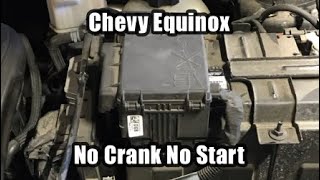
- This issue also affects other GM vehicles like the Chevrolet Equinox and GMC Terrain.
What's Unique About the 2019-2024 Chevrolet MALIBU
The ninth-generation Malibu, along with other vehicles on the same platform, is specifically prone to this issue as documented by General Motors in multiple Technical Service Bulletins (TSBs). The problem isn't a hardware failure but a software vulnerability in the Body Control Module (BCM). A low voltage event—such as a weak battery, jump-starting the car, or replacing the battery—can corrupt the BCM's memory, causing it to lose its 'handshake' with other critical modules and triggering a no-start condition. This issue is specific to vehicles equipped with a 'GEN3R' BCM.
Diagnostic Flowchart
Tap your situation to follow the diagnostic path that matches what you're seeing on this vehicle.
Symptoms You May Notice
- Vehicle will not crank or start ('No Crank, No Start').
- Engine starts and then immediately stalls.
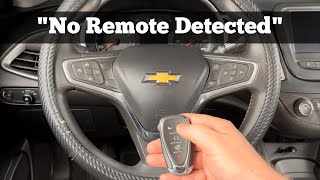
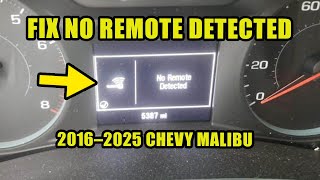
- Message on dash: 'Key FOB Not Detected'.
- Key fobs are completely inoperative (cannot lock/unlock doors).
- Multiple warning lights on the instrument cluster, including ABS and stability control lights.
- Security or anti-theft light may be illuminated or flashing.
- Replacing the key fobs or key fob batteries.
- Replacing the starter motor.
- Replacing the Body Control Module (BCM) unnecessarily. The TSBs explicitly state NOT to replace the module, as the original one just needs to be reprogrammed.
Most Likely Causes
- Body Control Module (BCM) Memory Corruption 🔴 High Probability → Shop Body Control Module As detailed in TSBs 23-NA-163 and 21-NA-277, the GEN3R BCM in these vehicles can experience a memory corruption event following a low voltage situation, jump start, or battery replacement. This is a known software vulnerability.
How to confirm: A professional scan tool will show B3927 along with several other 'Incorrect Environmental Identifier' codes (like B3924, B3925, B3926) and often a B389A code in the BCM. The TSB specifies that three or more of these codes must be present.
Typical fix: The BCM must be reprogrammed by a GM dealer or a qualified shop using a specific procedure in the Service Programming System (SPS). TSB 23-NA-163 outlines two routines: 'Special Data Reset A' for the initial attempt, and 'Special Data Reset B' if an immobilizer learn was already attempted unsuccessfully. No parts are typically replaced.
Est. part cost: $0 - Low Vehicle Battery Voltage 🟡 Medium Probability → Shop Vehicle Battery This is the trigger, not the root cause. Modern vehicles are highly sensitive to voltage, and a weak or failing battery can cause unpredictable electronic module behavior, leading to the BCM corruption described above. The issue often occurs immediately after a jump-start or battery change.
How to confirm: Test the battery with a multimeter or electronic battery tester. A resting voltage below 12.4V indicates a weak battery. The issue often occurs immediately after a jump-start or battery change.
Typical fix: Replace the vehicle's 12V battery if it fails a load test. However, this will NOT fix the B3927 code itself; the BCM will still require reprogramming after the new battery is installed.
Est. part cost: $150-$350
Rare But Worth Checking
- Faulty Electronic Brake Control Module (EBCM): While the BCM is the usual culprit for storing the code, a genuinely faulty EBCM could theoretically send an incorrect signal. This is very unlikely compared to the known BCM software issue and should only be considered after the TSB procedure fails.
- Wiring or Network Communication Fault: A damaged wire or poor connection on the vehicle's CAN bus network could corrupt messages between modules. This would typically be accompanied by U-codes (communication codes) which should be diagnosed first, as stated in the TSBs. A Reddit user with a 2018 Equinox had a similar BCM failure that was ultimately traced to a shorting wire.
Diagnosis Steps
- Confirm the symptoms: No crank, no start, and key fob inoperative.
- Attempt to start the vehicle by placing the key fob in the transmitter pocket in the center console 🎬 Watch: How to find the key fob transmitter pocket location. (as a backup method). If it still doesn't start, this points away from a simple fob battery issue.
- Check and confirm the vehicle's main 12V battery is fully charged and healthy. A weak battery is a common trigger.
- Connect a professional-grade scan tool (like GM's GDS2) to perform a vehicle-wide DTC scan.
- Verify that B3927 is present in the BCM, along with at least two other codes from the B392x series (B3924, B3925, B3926). Also check for B389A.
- Check for TSBs 21-NA-277 and 23-NA-163. Using the scan tool, navigate to the BCM Identification Information screen and confirm the BCM is a 'GEN3R' model as specified in the bulletin.
- Follow the TSB correction precisely. Using the GM Service Programming System (SPS), select 'K9 Body Control Module' and run the special reprogramming routine ('Special Data Reset A' or 'Special Data Reset B'). Do NOT replace the BCM.
- After reprogramming, perform the specified immobilizer relearn procedure with the existing key fobs.
- After reprogramming, clear all DTCs and confirm the vehicle starts and all key fob functions are restored.
Parts You'll Likely Need
- No parts required
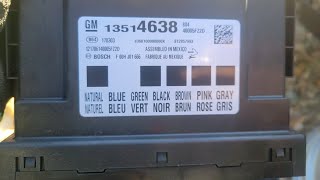
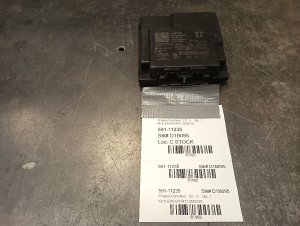
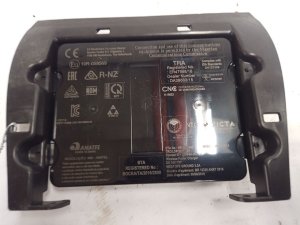
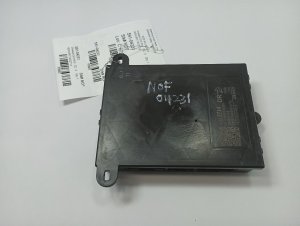
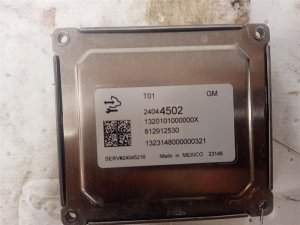
- Affected GEN3R BCM (For reference only 🎬 Watch: How to locate and access the Body Control Module. - DO NOT REPLACE)
Related Codes That Often Appear With This One
- B3924 — Incorrect Environmental Identifier from another module, part of the same BCM memory corruption event.
- B3925 — Incorrect Environmental Identifier Received From HVAC Control Module, part of the same BCM memory corruption event.
- B3926 — Incorrect Environmental Identifier Received From Instrument Cluster, part of the same BCM memory corruption event.
- P0513 — Incorrect Immobilizer Key. This code is set by the Engine Control Module (ECM) when it receives an invalid security signal from the BCM, directly causing the no-start condition.
- B389A — Environment Identification. This code is often set in the BCM alongside the others and is a key indicator that the TSB procedure applies. The TSB even advises disconnecting the battery for 30 seconds to see if this code will set.
Technical Service Bulletins (TSBs) & Recalls
- 23-NA-163: Details the specific BCM reprogramming procedures ('Special Data Reset A' and 'Special Data Reset B') for GEN3R modules to correct a no-start condition after a low-voltage event. It also lists other affected vehicles like the Equinox and Terrain.
- 21-NA-277: An earlier version of the bulletin describing the same no-crank/no-start issue and pointing to a software-based repair rather than module replacement.
Platform-Specific Known Issues
- TSB #23-NA-163 and #21-NA-277 directly address this problem. They state that a low voltage condition can cause a 'memory corruption event in the BCM,' leading to a no-start condition with codes B3924, B3925, B3926, and B3927 set. The official fix is a specific BCM reprogramming procedure, not part replacement.
Scan Tool Commands That Help
- GM Service Programming System (SPS): K9 Body Control Module - Special Data Reset A — This is the primary reprogramming routine to fix the BCM memory corruption as per TSB 23-NA-163. Use this on the first attempt to fix the no-start condition.
- GM Service Programming System (SPS): K9 Body Control Module - Special Data Reset B — Use this secondary routine only if an immobilizer learn was already attempted before running 'Special Data Reset A', and the issue was not corrected.
- GM Service Programming System (SPS): Immobilizer procedure - Body Control Module IMMO Learn with Existing Transponder or Remote Key — This must be performed immediately after running 'Special Data Reset A' to relearn the existing key fobs to the newly reprogrammed BCM.
- GM GDS2: Vehicle Wide DTC report — Used during initial diagnosis to confirm the presence of B3927 and the cluster of other required environmental ID codes (B3924, B3925, B3926, B389A) across all modules.
Wiring & Ground Locations
- Body Control Module (BCM) — Located behind the fuse panel in the center console on the passenger side of the vehicle. On some models, it is behind the left side of the dash.. This is the module that stores the B3927 code and requires reprogramming. A poor connection or damage to this module or its wiring could cause communication issues, though the software corruption is the primary cause.
- BCM Fuses — There are multiple BCM-related fuses. In the interior fuse box (driver's side, under headlight switch), fuses F5, F8, F10, F21, and F41 are related to the BCM. In the under-hood fuse box, fuse F35 is also related.. While a blown fuse is not the direct cause of B3927 (which is a software issue), checking these fuses is a basic diagnostic step to ensure the BCM is receiving power.
- Gateway Module Fuse — In the interior fuse box on the driver's side, fuse F34 is designated for the gateway module.. The gateway module is critical for communication between different CAN bus networks. A loss of power to this module could cause widespread communication DTCs, although this is less specific than the known B3927 software issue.
- Ground G203 — Located in the left kick panel area. On older models, it was specified as being near the BCM.. A poor ground connection for the BCM could cause erratic behavior or low voltage conditions that might trigger the memory corruption issue. Checking major grounds in the BCM area is a valid, though unlikely, diagnostic path if reprogramming fails.
OEM Part Supersession History
13518626→13534191— Part revision or update by the manufacturer.
Heads up: The new part number is a direct replacement for the old one. Both are GEN3R BCMs and would be subject to the same software vulnerability and reprogramming fix.
Model Year Variations Within This Range
- 2023-2024: Starting with the 2023 model year, the 2.0L turbocharged engine and its corresponding 9-speed automatic transmission were discontinued. All Malibu models from 2023 onward are equipped with the 1.5L turbocharged engine and a CVT. This does not change the B3927 diagnosis, as the BCM and electrical architecture remained susceptible.
Helpful Videos

We Have This Part in Stock

The information in this article is provided for general reference and educational purposes only. Vehicle specifications, procedures, and part compatibility can vary by production date, trim level, and region. Always consult your vehicle's factory service manual and verify part numbers before purchasing or performing repairs. Safety-critical components such as airbags, seat belts, and braking systems should be installed by a qualified professional.
- Chevrolet MALIBU:
- 🧭 Diagnostic Flowchart
- 🎬 Helpful Videos
- 🛍️ Shop This Part
- What's Unique About the 2019-2024 Chevrolet MALIBU
- Symptoms You May Notice
- Most Likely Causes
- Rare But Worth Checking
- Diagnosis Steps
- Parts You'll Likely Need
- Related Codes That Often Appear With This One
- Technical Service Bulletins (TSBs) & Recalls
- Platform-Specific Known Issues
- Scan Tool Commands That Help
- Wiring & Ground Locations
- OEM Part Supersession History
- Model Year Variations Within This Range
- 🎟️ Get 5% Off