

B3927 on 2018-2024 Chevrolet Traverse: 'No Start' & 'Key FOB Not Detected' Fixes
On a 2018-2024 Traverse, code B3927 almost always indicates a Body Control Module (BCM) software glitch, usually after a battery replacement or jump-start. This causes a 'No Start' condition. The fix is NOT a new BCM; it requires a special dealer-level software reprogram as detailed in TSB #23-NA-163.
- B3927 on a 2018-2024 Traverse is a critical code that will likely prevent the vehicle from starting.
- The cause is almost always a BCM software glitch triggered by a weak battery, battery replacement, or jump-start.
- Do NOT replace the Body Control Module (BCM), key fobs, or starter. This will not fix the issue and will be a waste of money.
- The correct repair is a special software reprogramming that must be performed by a GM dealer or a qualified shop with the proper tools, referencing TSB #23-NA-163.
What's Unique About the 2018-2024 Chevrolet TRAVERSE
The second-generation Traverse and its GM platform mates using the 'GEN3R' Body Control Module are specifically prone to this software issue. The problem is not a hardware failure but a vulnerability in the BCM's software. A simple low-voltage event, like a weak battery, a jump-start, or even a battery disconnect/reconnect, can trigger this memory corruption. This leads to a no-start condition that is frequently misdiagnosed as a failed BCM or starter. The official fix is a specific software procedure, not a hardware replacement, as explicitly stated in GM Technical Service Bulletins.
Diagnostic Flowchart
Tap your situation to follow the diagnostic path that matches what you're seeing on this vehicle.
Symptoms You May Notice
- Vehicle will not crank or start ('No Crank, No Start').
- Engine starts and then immediately stalls.
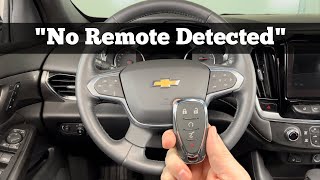
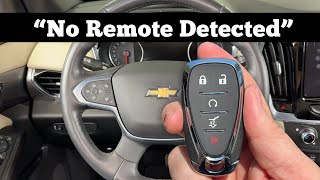
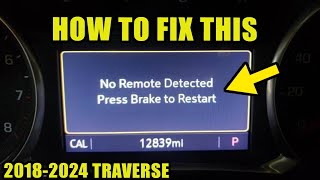
- Message on driver information center: 'No FOB Detected' or 'Key FOB Not Detected'.
- Key fobs are completely inoperative for passive entry and starting (cannot lock/unlock doors via handle, push-button start does not work).
- Multiple warning lights may be present on the instrument cluster.
- The vehicle does not power on to the 'Accessory' or 'Run' mode.
- Replacing the Body Control Module (BCM). TSB #23-NA-163 specifically warns against replacing the BCM, as the issue is with its software, not the hardware. A repair story for a platform-mate GMC Acadia noted a dealer quoted over $1,000 for a BCM replacement, which was avoided by referencing the TSB.
- Replacing the key fobs. The fobs are not faulty 🎬 See how to change your key fob battery first; the BCM has lost its ability to recognize them due to the software glitch.
- Replacing the starter or starter relay. The no-start symptom is due to the BCM's security system not authorizing the start sequence.
- Replacing the Engine Control Module (ECM) or Electronic Brake Control Module (EBCM).
Most Likely Causes
- Body Control Module (BCM) Software Corruption 🔴 High Probability → Shop Body Control Module A low voltage event (weak battery, jump-start, battery replacement, or battery disconnect) can cause a 'memory corruption event' in specific 'GEN3R' Body Control Modules used in these vehicles.
How to confirm: A professional scan tool (GDS2) will show DTC B389A set as current, along with three or more other 'Environment ID' codes, such as B3924, B3925, B3926, and B3927, all with a '00' symptom byte. The TSB notes that if B389A is not present, disconnecting the battery for 30 seconds and reconnecting may cause it to set, confirming the condition. The issue appears immediately after a low-voltage event.
Typical fix: A GM dealer or qualified independent shop must perform a special multi-step BCM reprogramming procedure as outlined in Technical Service Bulletin #23-NA-163. No parts are replaced. The procedure involves running a special function in the Service Programming System (SPS) called 'Programming A Per Bulletin 23-NA-163' followed by an immobilizer relearn.
Est. part cost: $0
Rare But Worth Checking
- Failed Passive Entry Passive Start (PEPS) Antenna or Wiring: In the rare case that B3927 appears by itself without a cluster of other 'Environment ID' codes (like B389A, B3925, etc.), it could point to a hardware failure of a specific keyless entry antenna or its wiring. However, the BCM software issue is far more common for this platform when a no-start condition is present.
Diagnosis Steps
- Verify the vehicle's 12V battery is fully charged and in good health. A weak or recently replaced/jump-started battery is the root trigger for this issue.
- Attempt an emergency start by placing the key fob in the designated transmitter pocket (often in the center console or a cup holder 🎬 Watch: How to find the key pocket for an emergency start) and pressing the start button. This may sometimes bypass the issue temporarily but is unlikely to work if the BCM corruption is severe.
- Connect a professional-grade scan tool (GM GDS2) to the vehicle.
- Using GDS2, navigate to Module Diagnostics > [K9] Body Control Module > Identification Information to verify the BCM is a 'GEN3R' type. The TSB only applies to GEN3R modules.
- Perform a vehicle-wide DTC scan. Look for a current DTC B389A in the BCM, along with three or more codes from the B3924-B3928 range.
- If the specific code pattern and GEN3R BCM type are present, especially after a recent battery event, do not replace any hardware.
- The vehicle must be taken to a GM dealer or a qualified repair shop with access to GM's online Service Programming System (SPS).
- The technician must follow the specific reprogramming steps in TSB #23-NA-163. This involves selecting 'Programming A Per Bulletin 23-NA-163...' in SPS, followed by the 'Body Control Module IMMO Learn with Existing Transponder or Remote Key' procedure.
Parts You'll Likely Need
- No parts required for the primary fix.
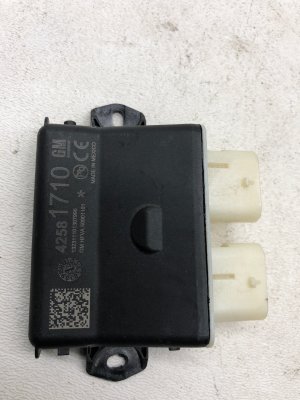
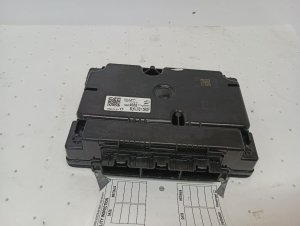
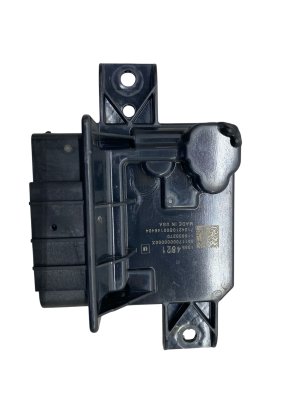
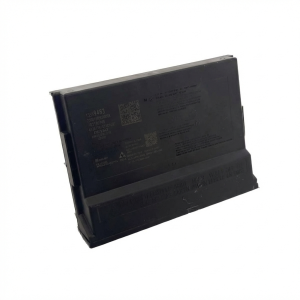
- Body Control Module (BCM) - For Reference Only
Related Codes That Often Appear With This One
- B389A — This code for 'Environment Identification' is the primary indicator that triggers the other B392x codes during the BCM software fault. The TSB procedure is only valid if this code is present.
- B3924 — Incorrect Environmental Identifier from another module, part of the same BCM software corruption issue.
- B3925 — Incorrect Environmental Identifier from the HVAC Control Module, part of the same BCM software corruption issue.
- B3926 — Incorrect Environmental Identifier from the Instrument Cluster, part of the same BCM software corruption issue.
- P0513 — Incorrect Immobilizer Key. This code is set by the Engine Control Module (ECM) when it receives an invalid security signal from the BCM, which is the direct cause of the no-start condition.
Technical Service Bulletins (TSBs) & Recalls
- 23-NA-163: Information to correct a customer concern of No Crank, No Start, Quick Start/Stall, No FOB Detected, Key FOBs Inoperative, B3924 00, B3925 00, B3926 00, B3927 00, B3928 00 Set.
- 21-NA-277: An earlier version of the bulletin describing the same condition.
Platform-Specific Known Issues
- TSB #23-NA-163 was issued by GM to address this specific condition. It details a software corruption event in the BCM following a low-voltage situation, causing a no-start and setting codes B3924, B3925, B3926, B3927, and others. The bulletin provides a specific software-based repair procedure and warns against replacing modules.
- Owner forums contain numerous accounts of this exact failure scenario: a 2018+ Traverse or platform-mate suddenly won't start after the battery dies or is replaced, causing significant confusion until the vehicle is taken to a dealer aware of the TSB.
Mechanic-Grade Diagnostic Values
- System Voltage During BCM Reprogramming — expected: Stable voltage above 11.5V, ideally maintained with a dedicated programming power supply.. Failure: Voltage dropping below 11.5V can interrupt the procedure, causing it to fail and potentially leaving the module in an unrecoverable state.
Hidden / Shadow Codes Worth Checking
- B3927 00: The '00' is a standard GM symptom byte for 'No Additional Information'. In this specific scenario, its presence along with B389A and other B392x codes is the definitive pattern confirming the BCM software corruption outlined in TSB 23-NA-163, rather than a generic or unknown fault. (see via A professional scan tool, such as the dealer-level GM GDS2, will display the full DTC with its two-digit symptom byte.)
Scan Tool Commands That Help
- SPS (Service Programming System): Programming B Per Bulletin 23-NA-163 Only — This is a secondary recovery procedure. Use this ONLY if a standard immobilizer learn was already attempted *before* following the TSB and failed to fix the issue.
- SPS (Service Programming System): Body Control Module IMMO Learn with Existing Transponder or Remote Key — This immobilizer relearn procedure MUST be performed immediately after successfully running the 'Programming A' function as the final step of the standard repair.
- GDS2: Control Functions (Output Controls) — Before reprogramming, a technician can use this function to command BCM outputs like door locks or lights. If the BCM can activate these components, it confirms the module is powered, grounded, and partially functional, making a software corruption diagnosis more likely than a complete hardware failure.
Wiring & Ground Locations
- K9 Body Control Module — Located behind the trim/fuse panel in the center console area of the front passenger footwell. Access may require removing multiple trim panels.. This is the module that suffers the software corruption. Verifying its connectors are secure and free of corrosion is a preliminary check. A poor power or ground connection to the BCM could be the root cause of the low voltage event that triggers the fault.
- BCM Ground Pins — On the BCM's multi-pin connectors, the primary ground wires are typically solid black (BK). Pinout diagrams for similar GM K9 BCMs often show grounds at pins like X1-1, X2-2, or X1-19.. A loose or corroded BCM ground is a common cause of intermittent and unpredictable module behavior, including low voltage conditions. Verifying ground integrity is a crucial step before assuming the module itself is faulty.
- BCM Battery Positive Voltage Pins — On the BCM's multi-pin connectors, these are typically heavy-gauge red (RD) wires, often with a colored stripe. Pinout diagrams for similar GM K9 BCMs show these at various locations, such as X1-3 and X1-4.. A stable power supply is required for normal operation and is critical during reprogramming. Checking for voltage drop at these pins can help diagnose issues with the vehicle's wiring or fuse block.
Model Year Variations Within This Range
- 2018-2024: The TSB #23-NA-163 repair procedure is only applicable to vehicles equipped with a 'GEN3R' Body Control Module. This must be verified using GDS2 to check the BCM's part number against the approved list in the bulletin before attempting the reprogram.
- 2024+: Starting with the 2024 model year, the Traverse began transitioning to GM's new Vehicle Intelligence Platform (VIP or 'Global B') electrical architecture. While the TSB for B3927 extends to 2024, vehicles built on the new platform have fundamentally different module communication and programming requirements (SPS2), which may alter future diagnostic strategies for similar symptoms.
Helpful Videos
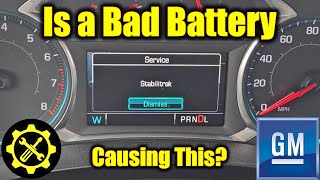
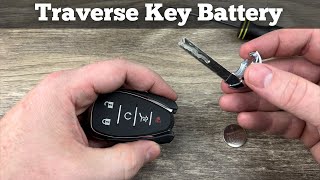
We Have This Part in Stock

The information in this article is provided for general reference and educational purposes only. Vehicle specifications, procedures, and part compatibility can vary by production date, trim level, and region. Always consult your vehicle's factory service manual and verify part numbers before purchasing or performing repairs. Safety-critical components such as airbags, seat belts, and braking systems should be installed by a qualified professional.
- Chevrolet TRAVERSE:
- 🧭 Diagnostic Flowchart
- 🎬 Helpful Videos
- 🛍️ Shop This Part
- What's Unique About the 2018-2024 Chevrolet TRAVERSE
- Symptoms You May Notice
- Most Likely Causes
- Rare But Worth Checking
- Diagnosis Steps
- Parts You'll Likely Need
- Related Codes That Often Appear With This One
- Technical Service Bulletins (TSBs) & Recalls
- Platform-Specific Known Issues
- Mechanic-Grade Diagnostic Values
- Hidden / Shadow Codes Worth Checking
- Scan Tool Commands That Help
- Wiring & Ground Locations
- Model Year Variations Within This Range
- 🎟️ Get 5% Off