

Ultimate Guide to OBD-II Code B3928: The GM No-Start Fault
Why B3928 Triggers a No-Start, and the Exact Steps to Fix It Permanently
- Code B3928 on 2018+ GM vehicles indicates corrupted Body Control Module (BCM) software, not a failed physical part.
- A low-voltage event—such as replacing a dead 12V battery or jump-starting—triggers this memory corruption in 'GEN3R' BCMs.
- Do not replace the BCM or key fobs; the only permanent fix is a 1-hour software reprogramming procedure outlined in GM TSB #23-NA-163, costing $150-$350.
- This fault completely immobilizes the vehicle by activating the anti-theft system, requiring a tow to a dealership or GM-equipped independent shop.
What Does B3928 Mean?
Despite its technical definition pointing to a keyless entry antenna (Antenna 5) fault, B3928 rarely indicates hardware failure. Instead, it is a secondary symptom of software corruption within the Body Control Module (BCM). Detailed in GM Technical Service Bulletin (TSB) #23-NA-163, this glitch occurs after a low-voltage event (like a battery change), causing the BCM to 'forget' programmed key fobs and immobilize the vehicle.
Technical definition: B3928 formally means 'Incorrect Environmental Identifier Received for PEPS Antenna 5.' On affected GM vehicles, it sets as a secondary fault alongside other antenna codes (B3924-B3927). The root-cause code is B389A, signifying memory corruption within a 'GEN3R' BCM. Finding B389A with three or more B392x codes is the definitive diagnostic signature of this software glitch.
Can I Drive With B3928?
No — Do Not Drive. Attempting to drive is impossible. The vehicle is immobilized by its own anti-theft system. It will not crank, or it will start and immediately stall, requiring a tow to a repair facility.
Common Causes
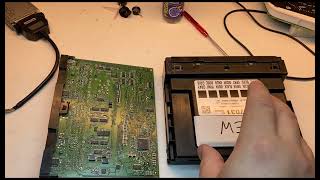
- Body Control Module (BCM) Software Corruption (Very Common) — This is the primary cause. A low voltage event—such as a weak battery, jump-starting, or replacing the battery—corrupts the memory in the 'GEN3R' BCM. This corruption makes the BCM forget the programmed key fobs, triggering the anti-theft system. GM TSB #23-NA-163 addresses this exact software issue, requiring a specific reprogramming procedure, not BCM replacement. 🎬 Watch: Why standard BCM programming and immobilizer setups often fail.
- Weak or Failing 12V Vehicle Battery (Common) — The failing vehicle battery is the catalyst for the BCM software corruption. The battery creates the low-voltage condition responsible for damaging the BCM's software memory. Testing and replacing a weak battery is a critical first step to prevent recurrence.
- Incorrect Repair Procedures (Common) — Technicians unaware of TSB #23-NA-163 attempt standard immobilizer relearns or replace the BCM. On an affected vehicle, these actions fail and trigger code P0513, complicating the repair and requiring new key fobs per TSB #23-NA-165.
- Water Intrusion Damaging the BCM (Less Common) — As outlined in GM TSB #21-NA-183, a leaking HVAC drain hose on certain GM SUVs allows water to drip directly onto the BCM. This causes corrosion, leading to erratic behavior, communication loss, and memory corruption.
- Poor BCM Ground Connection (Rare) — The BCM relies on a solid ground connection to the vehicle's chassis. A loose or corroded ground wire causes intermittent low voltage conditions within the module itself, triggering memory corruption even with a healthy battery.
- Aftermarket Electronics Interference (Rare) — Improperly installed aftermarket devices, especially remote starters and alarm systems that tap into the BCM's wiring, introduce voltage spikes or data conflicts that trigger memory corruption.
- Faulty Passive Entry/Passive Start (PEPS) Antenna (Rare) — An actual hardware failure is extremely rare. A single faulty antenna sets only its corresponding code (e.g., only B3928) and does not cause a no-start condition or a cluster of multiple antenna codes.
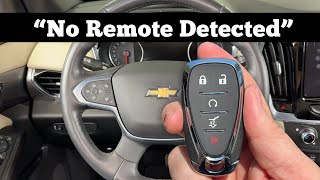
- Dead Key Fob Battery (Rare) — A dead fob battery causes a 'No FOB Detected' message but does NOT set code B3928. Use the backup slot in the center console to start the car and rule this out as the primary cause. 🎬 See how to start your Chevy with a dead fob battery.
Symptoms
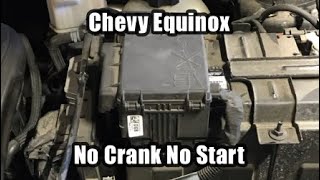
- Vehicle will not crank or start — Pushing the start button results in nothing, or a single click from a relay. 🎬 Watch: Troubleshooting a Chevy Equinox no-start and no-crank condition. The engine does not turn over.
- Engine starts and immediately stalls — The engine fires up for a second or two and immediately shuts down as the immobilizer system cuts fuel and spark.
- 'No FOB Detected' Message — A message appears on the driver information center stating the key fob cannot be found, even when inside the vehicle.
- Key fob functions are inoperative — The buttons on the key fob for locking, unlocking, and remote start do not work.
- Security / Anti-Theft Light is On — The red security indicator light on the dashboard illuminates or flashes, indicating the immobilizer system is active.
Diagnostic Flowchart
Tap your situation to follow the diagnostic path that matches what you're seeing on this code.
Common Fixes & Costs
- BCM Reprogramming per TSB #23-NA-163 — Parts: $0, Labor: $150-$350 (1-2 hours of diagnostic and programming labor), ~1.5 hr book time (Professional)
- Replace 12V Vehicle Battery
— Parts: $200-$300 (AGM Battery), Labor: $50-$100, ~0.5 hr book time
(DIY)
Chevrolet Equinox / GMC Terrain: OEM
Chevrolet Traverse: OEM
All: OEM - BCM Water Damage Repair & Prevention
— Parts: $10-$50 (for new drain hose/clamp), Labor: $150-$300 (to access, clean corrosion, and reroute drain), ~2 hr book time
(Advanced)
Chevrolet Equinox / GMC Terrain: OEM
Chevrolet Traverse: OEM - Replace Body Control Module (BCM)
— Parts: $350-$600, Labor: $200-$400 (includes programming), ~2.5 hr book time
(Professional)
Chevrolet Equinox: OEM
GMC Terrain: OEM
Chevrolet Traverse: OEM
All: OEM - Replace Key Fob Battery
— Parts: $5-$15 (per fob), Labor: $0, ~0.1 hr book time
(DIY)
Most affected models: OEM
DIY vs Professional
- BCM Reprogramming per TSB #23-NA-163 — Beginner: No
Tools: GM MDI 2 interface, GDS2 software, and a paid subscription to the GM Service Programming System (SPS). - Replace 12V Vehicle Battery — Beginner: Yes
Tools: Socket set (typically 10mm, 13mm), terminal cleaner brush, and an OBD-II port memory saver device. - BCM Water Damage Repair & Prevention — Beginner: No
Tools: Trim removal tools, socket set, flashlight, electronic contact cleaner, dielectric grease, new drain hose. - Replace Body Control Module (BCM) — Beginner: No
Tools: Trim removal tools, socket set. The physical swap is possible for a DIYer, but the mandatory programming is not.
Used vs. New Parts: Buying Guide
When a used part is worth it: Buying a used BCM is strongly discouraged. The problem is a software vulnerability in the original part; a used part has the same vulnerability. Modern GM BCMs are VIN-locked and cannot be reprogrammed to a different vehicle by most shops.
Donor-vehicle mileage cap: roughly under 20000 miles for the part to have meaningful remaining life.
Donor quality checklist:
- Part number must match EXACTLY.
- Verify the seller's policy on VIN-locked modules; many are sold 'as-is' and are unusable.
- Avoid modules from flood-damaged vehicles, as internal corrosion is guaranteed.
Decision logic:
- If The original BCM is not physically damaged (e.g., by water) → Do NOT replace it. The correct fix is reprogramming per TSB #23-NA-163.
- If The original BCM is confirmed to be physically damaged (water, short circuit) → Buy a new OEM BCM. The cost and risk of trying to program a used, VIN-locked module are too high.
- If A new OEM BCM is on backorder and you must use a salvaged part → Use a cloning service that transfers all data from your original BCM to the donor BCM before installation.
Warranty tradeoff: Used parts from salvage yards typically have a 30-90 day warranty on the part only, not labor. New OEM parts installed by a dealer usually carry a 12-24 month warranty on parts and labor.
Worst-case if a used part fails: $500-1000 if a used BCM cannot be programmed. This includes the cost of the used part, programming attempt labor, and diagnostic time, after which you still need to buy a new BCM.
What Happens If You Wait — Timeline
- Event Trigger (Instant): A low-voltage event occurs (e.g., battery change, cold crank). The 'GEN3R' BCM's memory becomes corrupted, forgetting the key fob data. The anti-theft system activates. (MPG impact: Not Applicable (Vehicle is immobilized)% · Added cost: $100 - $200 (mandatory tow to a repair facility))
- 1-3 Days (Initial Diagnosis): Vehicle is at a repair shop. A correct diagnosis identifies TSB #23-NA-163, and the BCM is reprogrammed. An incorrect diagnosis blames the BCM hardware. (MPG impact: Not Applicable% · Added cost: $150 - $350 (Cost for correct diagnosis and reprogramming).)
- 1-2 Weeks (Misdiagnosis and Failed Repair): A shop unaware of the TSB replaces the BCM. The vehicle still won't start because the root cause wasn't addressed. The owner pays for parts and labor that did not fix the issue. (MPG impact: Not Applicable% · Added cost: $800 - $1500 (Cost of the unnecessary BCM, programming attempt, and vehicle downtime).)
- 2+ Weeks (Compounded Problems): Incorrect repair attempts trigger new faults, like P0513. The fix now requires following TSB #23-NA-165, mandating the purchase and programming of two new key fobs. (MPG impact: Not Applicable% · Added cost: $1200 - $2000+ (Original misdiagnosis cost + new key fobs + correct reprogramming labor).)
Cost of Not Fixing It
- Immediate: Vehicle is completely immobilized and will not start. You will be stranded. (Added cost: $100 - $200 for towing service to a repair shop.)
- Days to Weeks: Incorrect diagnosis by a shop unaware of the TSB leads to unnecessary, expensive parts replacement (new BCM, keys, etc.) that does not fix the problem. (Added cost: $800 - $1500 for misdiagnosed repairs.)
- Ongoing: There is no 'driving with the problem.' The vehicle remains a non-functional paperweight until the BCM is correctly reprogrammed. (Added cost: N/A)
Diagnosis Steps
- Try the Key Fob Backup Procedure
Before any other steps, try starting the car using the backup method. Look for a designated pocket inside the center console or on the steering column. Place your key fob in this slot and try to start the engine. If it starts, it gets the car running temporarily but does not fix the underlying code.
Tools: Vehicle Owner's Manual (Beginner) - Test the Vehicle's 12V Battery
Since a low-voltage event is the primary trigger, comprehensively test the main car battery. Use a multimeter to check static voltage. A healthy battery reads at least 12.6 volts. A reading below 12.4V indicates a need for charging, and below 12.0V suggests a discharged or failing battery that triggered the fault.
Tools: Multimeter or professional battery tester (Beginner) - Scan for All Trouble Codes (B, C, P, U)
Use a professional-grade OBD-II scanner to read Body (B), Chassis (C), Powertrain (P), and Network (U) codes. Check for B3928 along with B389A, B3924, B3925, B3926, and B3927. The presence of B389A and three or more B392x codes is definitive proof of the TSB #23-NA-163 software issue.
Tools: Professional OBD-II Scan Tool (GM GDS2 recommended) (Advanced) - Pro Tip: Force-Set Diagnostic Codes for Confirmation
If the vehicle has a no-start condition but code B389A is not currently set, TSB #23-NA-163 advises disconnecting the negative battery terminal for a minimum of 30 seconds, then reconnecting it. Re-scan the vehicle. This forces the BCM to re-evaluate its state and set the B389A code, confirming the diagnosis.
Tools: 10mm wrench, Professional OBD-II Scan Tool (Advanced) - Verify the BCM Part Number is 'GEN3R'
Navigate to the BCM's 'Identification Information' screen on your scan tool. Check the 'Base Model Part Number' (BMPN) against the list in TSB #23-NA-163 (e.g., 13518569, 13533809). This confirms the vehicle has the specific 'GEN3R' BCM susceptible to this software glitch.
Tools: Professional OBD-II Scan Tool (Advanced) - Pro Tip: Inspect BCM for Water Damage
On affected SUVs (Equinox, Traverse, Acadia), physically inspect the BCM and wiring harness for water intrusion or corrosion. The BCM is located under the center console. Look for staining or damp carpet, pointing to a leaking HVAC drain hose (TSB #21-NA-183). This must be corrected before programming.
Tools: Flashlight, trim removal tools (Advanced) - Verify BCM Voltage and Ground Integrity
Using live data, monitor the BCM's voltage PID. It should match battery voltage (12.0-12.6V engine off). If voltage is low or erratic, perform a voltage drop test on the main BCM ground wire (often G218). A reading over 0.1-0.2 volts indicates a poor ground that must be repaired before programming.
Tools: Professional OBD-II Scan Tool, Multimeter (Advanced) - Check CAN Bus Communication Status
Perform a network test to check the communication status of all modules. Look for 'U' codes, such as U0140 (Lost Communication With Body Control Module). A loss of communication indicates a severe BCM failure from water damage or a wiring issue that must be addressed first.
Tools: Professional OBD-II Scan Tool (Advanced) - Confirm Fuel Cut-Off as a Symptom
For 'start and stall' symptoms, connect a fuel pressure gauge to the fuel rail. With Key On, Engine Off, pressure should jump to specification (50-60 PSI) and hold. When attempting to start, watch for pressure to drop to 0 PSI as the engine stalls, confirming the BCM is commanding the fuel pump off.
Tools: Fuel pressure gauge (Advanced) - Perform BCM Reprogramming per TSB #23-NA-163
If all conditions are met (GEN3R BCM, B389A + B392x codes), a GM dealer or qualified independent shop must use the GM Service Programming System (SPS) to perform a special software procedure. Do NOT replace the BCM or perform a standard immobilizer relearn before this update.
Tools: GM Service Programming System (SPS) software, MDI 2 interface tool (Professional)
When This Code Triggers (Freeze-Frame Conditions)
- Control Module Voltage: 9.5 - 11.5 Volts (During a failed crank attempt; this voltage drop is the trigger.)
- Engine RPM: 0 RPM (Key-On, Engine-Off state when the BCM fails the key security check.)
- Vehicle Speed: 0 mph (Vehicle is stationary.)
- Engine Coolant Temp: Ambient Temperature (The fault typically occurs during a cold start after the vehicle has been sitting.)
Related Codes
- B389A — The primary root cause code for BCM memory corruption. Finding B389A plus three or more B392x codes is definitive proof that TSB #23-NA-163 applies.
- B3924, B3925, B3926, B3927 — Codes for the other keyless entry antennas. Seeing three or more together with B3928 confirms a central BCM software fault.
- P0513 — Incorrect Immobilizer Key. Appears after incorrect repair attempts for the B389A/B3928 issue, requiring new key fobs per TSB #23-NA-165.
- U0140 — Lost Communication With Body Control Module. Indicates a complete communication failure, pointing to internal BCM damage or wiring issues.
Climate & Environmental Factors
- Cold Weather: Low temperatures dramatically reduce battery power output. This increased voltage drop during cranking is the primary trigger for BCM memory corruption.
- High Humidity / Heavy Rain: Increases the likelihood that a clogged HVAC evaporator drain hose overflows onto the BCM, causing physical water damage.
- Short Trip Driving: Leaves the battery semi-discharged, increasing the risk of a significant voltage drop on the next startup.
How to Talk to a Mechanic About This Code
Say this: "My car won't start and I suspect the BCM software issue described in GM TSB #23-NA-163. I need a diagnosis to confirm codes B389A and B3928, and a quote for the BCM reprogramming procedure only. Please do not quote parts replacement."
This immediately signals that you are an informed customer. It names the specific TSB, expected codes, and correct repair, steering the shop away from a costly BCM replacement.
Avoid saying:
- My car won't start, I think it's the battery.
- The key fob isn't working, can you look at it?
- Just do whatever it takes to get it running.
Questions to ask before authorizing the repair:
- Did you confirm the presence of code B389A along with multiple B392x codes, as specified in TSB #23-NA-163?
- Is my vehicle still under any warranty, or is there a GM Special Coverage policy that applies to this TSB that would cover the cost?
- Can you confirm the repair will be the software reprogram only, and you will not be replacing the BCM or any other hardware?
- What is your 'all-in' price for the diagnostic time and the BCM reprogramming labor?
Where to Take It: Dealer vs Independent vs Chain
- Dealer:
Highly Recommended. The dealer is the most reliable path to a correct fix for this software issue. They must follow the TSB and have the proprietary tools.
Best for: Vehicles under warranty., This specific B3928/B389A fault, as they are most familiar with the TSB and have direct access to the required GM software., Checking for any applicable 'Special Coverage' policies that may make the repair free.
Downsides: Highest labor rate, typically $150-$250/hour. (Typical cost: +50% vs. baseline) - Independent Shop:
Acceptable, with caution. You MUST confirm the shop has the GM SPS software and is familiar with TSB #23-NA-163. If unsure, go to a dealer.
Best for: Out-of-warranty vehicles where the owner has a trusted relationship with the shop.
Downsides: May not have the expensive subscription to GM's Service Programming System (SPS)., Less familiarity with this specific TSB can lead to misdiagnosis (BCM replacement)., Cannot check for or apply GM Special Coverage policies. (Typical cost: +0% vs. baseline) - Chain Shop:
AVOID. Chain shops lack manufacturer-specific programming tools and will likely misdiagnose this as a bad battery or starter.
Best for: Simple services like battery testing or replacement (but use a memory saver!).
Downsides: Almost never have the required manufacturer-specific programming tools., High likelihood of misdiagnosing the issue as a bad battery, alternator, or starter, leading to unnecessary repairs. (Typical cost: -10% vs. baseline)
When to Walk Away From the Repair
If the estimated repair cost exceeds 50% of the car's value, consider selling it.
- Car worth $12000, fix is $350: Fix it. The repair cost is a tiny fraction of the vehicle's value. This is a simple decision.
- Car worth $12000, fix is $1500: Fix it, but get a second opinion. A $1500 cost implies a misdiagnosis (like a BCM replacement). The correct reprogramming repair is much cheaper.
- Car worth $3000, fix is $1500: Walk away. This scenario implies the vehicle has major pre-existing damage to have such a low value. Paying 50% of its value for a single repair is not economical.
What Scan Tool You Need for This Code
Minimum: A scanner that can read manufacturer-specific Body Control Module (BCM) codes (B-codes) for GM vehicles. A basic engine code reader will NOT see code B3928.
A standard $20-$50 OBD-II reader only accesses generic Powertrain (P-codes). It cannot communicate with the BCM, so it will report 'No Codes Found' while your car is completely dead.
Budget: BlueDriver Pro (~$99) — Confirms it can read enhanced GM BCM codes. Sufficient to confirm B3928 and B389A.
Mid-range: XTOOL IP500 for GM / Foxwell NT510 Elite with GM Software (~$150) — Offers deeper GM-specific diagnostics, reading all BCM codes and live data.
Professional: Autel MaxiCOM MK808 / XTOOL D7 (~$450-600) — Provides full OE-level diagnostics. Essential for identifying a water-damaged BCM by observing communication loss.
Rent vs buy: For this specific code, since the ultimate repair requires professional programming, you only need a scanner for the initial diagnosis. If you don't plan to do more DIY work, having the tow truck take it directly to a recommended shop is more efficient than buying a scanner first.
How to Clear the Code After You Fix It
- BCM must be reprogrammed by a professional using GM SPS software per TSB #23-NA-163.
- Use a professional scan tool to clear all DTCs from all modules.
- Perform the GM Universal Drive Cycle to run all readiness monitors.
Drive cycle (~20 minutes): From a cold start (coolant temp below 122°F), idle for 2-3 minutes. Accelerate to and maintain 55 mph for 5-7 minutes. Decelerate to 20 mph without braking. Accelerate moderately back to 55 mph for 5 minutes. Decelerate and come to a stop.
Readiness monitors affected: All monitors will be reset to 'Not Ready' after BCM programming.
Before emissions retest: drive at least 50 miles to fully set monitors.
Watch out for:
- Simply clearing the code with a scan tool will not fix the issue; the code returns immediately because the BCM memory remains corrupt.
- Disconnecting the battery will not fix the problem and is the exact event that often causes it.
- Failure to complete a full drive cycle after reprogramming results in a failed emissions test due to 'Not Ready' monitors.
Will This Fail Emissions / State Inspection?
Yes — this code typically fails an OBD-II emissions inspection.
- California: A vehicle that will not start cannot be tested. After BCM reprogramming, all readiness monitors reset and require a full drive cycle to pass.
- New York: An active anti-theft light or no-start condition is an automatic failure of the safety inspection.
- Texas: The vehicle fails because the OBD-II test cannot be performed on a non-starting engine.
Most Commonly Affected Vehicles
- Chevrolet Equinox (2018-2023) — Explicitly listed in TSB #23-NA-163. Uses the 'GEN3R' BCM susceptible to memory corruption. Also listed in TSB #21-NA-183 for potential BCM water damage.
- GMC Terrain (2018-2024) — Platform-mate to the Equinox, shares the same 'GEN3R' BCM, and is listed in TSB #23-NA-163.
- Chevrolet Traverse (2018-2024) — Uses the 'GEN3R' BCM and is explicitly listed in TSB #23-NA-163. Also susceptible to BCM water damage from HVAC drain per TSB #21-NA-183.
- Buick Enclave (2018-2024) — Listed in TSB #23-NA-163 as a vehicle affected by the 'GEN3R' BCM memory corruption issue.
- Chevrolet Blazer (2019-2025) — Prone to the no-start condition caused by the 'GEN3R' BCM software fault after a low-voltage event.
- GMC Acadia (2019-2023) — Shares the same electronics platform and is included in TSB #23-NA-163 for 'GEN3R' BCM memory corruption.
- Cadillac XT5 / XT6 (2020-2025) — These luxury models use the affected 'GEN3R' BCM and are prone to the same no-start failure.
- Chevrolet Malibu (2019-2024) — This sedan uses the same 'GEN3R' BCM and is explicitly mentioned in TSB #23-NA-163.
- Buick Envision (2021-2024) — Shares its platform and electronics with other affected GM models, making it susceptible to the 'GEN3R' BCM software fault.
- Cadillac XT4 (2019-2025) — Utilizes the same generation of GM electronics and 'GEN3R' BCM, making it prone to the no-start condition from software corruption.
Manufacturer-Specific Notes
- General Motors: GM issued TSB #23-NA-163, explicitly warning dealers NOT to replace the BCM or key fobs as a first step. The correct fix is a specific BCM reprogramming procedure.
- General Motors: Two distinct reprogramming paths exist in the TSB: 'Programming A' for initial repair, and 'Programming B' if an incorrect immobilizer learn was already attempted.
- General Motors: TSB #23-NA-165 addresses situations where incorrect repair attempts lead to code P0513, requiring two brand new key fobs.
- General Motors: On popular SUV models (Equinox, Traverse), the BCM is physically vulnerable to water damage from a leaking HVAC drain hose (TSB #21-NA-183).
- General Motors: GM frequently issues 'Special Coverage Policies' for known issues. Owners should ask their dealer to check for active coverage related to TSB #23-NA-163.
Real Owner Stories
2019 Chevy Equinox stranded after DIY battery replacement
The owner replaced a weak battery on their 2019 Equinox in their driveway. After connecting the new battery, the car was completely dead—no crank, a 'No FOB Detected' message on the dash, and inoperative key fobs.
What they tried:
- Replacing the battery in the key fob, which had no effect.
- Attempting to jump-start the car, which also failed.
Outcome: The vehicle was towed to a GM dealership. The dealer identified the BCM software corruption covered by TSB #23-NA-163 and performed the reprogramming procedure without replacing parts. The total cost was $250 for diagnostic and programming labor.
Lesson: A low-voltage event during a battery swap is the classic trigger for this fault. Never assume the new battery is faulty; the problem is the BCM's software. Inform the service advisor about TSB #23-NA-163 to avoid misdiagnosis.
2018 GMC Terrain misdiagnosed with a bad BCM, leading to expensive, failed repairs
After failing to start, the vehicle was towed to an independent repair shop. The shop scanned multiple BCM-related faults and concluded the BCM hardware had failed.
What they tried:
- The shop installed a new aftermarket BCM for $950. The new BCM could not be programmed correctly, and the no-start condition remained.
- The shop suggested replacing all key fobs and antennas for an additional $800.
Outcome: The owner towed the vehicle to a GM dealership. The dealer reinstalled the original BCM and performed the correct TSB #23-NA-163 reprogramming procedure. The vehicle started perfectly, but the owner lost the initial $950 from the incorrect repair.
Lesson: Shops unaware of this GM TSB default to replacing the BCM—a costly, incorrect repair. If a shop suggests BCM replacement for these symptoms, demand they review TSB #23-NA-163 first.
2020 Chevy Traverse with intermittent no-start and BCM water damage
The owner experienced intermittent 'No FOB Detected' messages and no-start events that resolved after letting the car sit. The problem became permanent after a heavy rainstorm.
What they tried:
- Testing the battery, which was healthy.
- A local mechanic attempted to scan the vehicle but could not establish communication with the BCM.
Outcome: A dealer found damp carpet on the passenger side, diagnosing a clogged HVAC evaporator drain hose leaking water directly onto the BCM. The repair required replacing the water-damaged BCM ($700), cleaning connectors, and rerouting the drain hose per TSB #21-NA-183 ($250).
Lesson: Water intrusion from the HVAC drain directly causes BCM failure on affected GM SUVs. If symptoms worsen with rain, physically inspect the BCM for water damage before attempting software repairs.
How to Prevent This Code From Triggering
- Use an OBD-II Memory Saver during battery replacement (Every time the battery is disconnected or replaced) — This is the single most effective prevention. A memory saver provides constant low voltage to the vehicle's modules, preventing the voltage drop that corrupts the BCM's memory and triggers the B3928 fault.
- Test the 12V AGM battery annually, especially before winter (Once per year) — The B3928 fault is triggered by a low-voltage event, most often caused by a weak battery struggling to crank a cold engine. Proactively replacing a weak battery prevents the trigger event.
- Use a battery tender/maintainer for vehicles stored for long periods (For any storage longer than 2-3 weeks) — Prevents the battery from discharging to a low state of charge, ensuring voltage does not drop to a critical level on the first startup after storage.
- Inspect and clean the HVAC evaporator drain hose (SUV models) (Every 2-3 years or if you notice reduced A/C airflow) — On models like the Equinox and Traverse, a clogged drain causes water to leak onto the BCM. Keeping this drain clear prevents physical water damage that mimics the B3928 software fault.
Frequently Asked Questions
Can I still drive my car with a B3928 code?
No. The code signifies the anti-theft system is active and prevents the engine from starting. The vehicle is immobilized and requires a tow.
My car won't start after I changed the battery, is this related?
Yes, this is the most common trigger. The voltage drop during a battery change corrupts the Body Control Module's memory on affected GM vehicles, causing it to forget your keys.
Do I need to buy a new BCM or key fobs?
No. The official GM service bulletin specifically warns against replacing parts as the first step. The problem is software-related and requires reprogramming.
Can I fix code B3928 myself?
No. The repair requires proprietary GM diagnostic and programming software (GDS2 and SPS) available only to dealerships and specialized shops.
What is the most common misdiagnosis for code B3928?
The most common mistake is replacing the BCM, antennas, or key fobs. Technicians unaware of TSB #23-NA-163 assume a hardware failure instead of the actual software glitch.
A repair shop says I need a new BCM. What should I ask them?
Ask if they reviewed GM TSB #23-NA-163 and confirmed the presence of code B389A. Also, ask if they checked for any GM Special Coverage policies that make the repair free.
What is a 'GEN3R' BCM?
'GEN3R' is the specific Body Control Module used in these affected GM vehicles. This hardware version is uniquely susceptible to the memory corruption issue detailed in TSB #23-NA-163.
Will disconnecting the battery fix code B3928?
No. Disconnecting the battery for 30 seconds helps confirm the fault by setting code B389A, but it will not fix the corrupted memory. The BCM requires professional reprogramming.
Why does my key fob not work after the car wash?
On SUVs like the Equinox or Traverse, high-pressure water exacerbates leaks in the HVAC drain system. This allows water to contact the BCM, causing electrical faults.
How can I prevent code B3928 from happening?
Maintain a healthy 12V battery and always use an OBD-II memory saver during battery replacement. This provides continuous power to the vehicle's modules, preventing the low-voltage trigger.
Key Takeaways
- Code B3928 on 2018+ GM vehicles indicates corrupted Body Control Module (BCM) software, not a failed physical part.
- A low-voltage event—such as replacing a dead 12V battery or jump-starting—triggers this memory corruption in 'GEN3R' BCMs.
- Do not replace the BCM or key fobs; the only permanent fix is a 1-hour software reprogramming procedure outlined in GM TSB #23-NA-163, costing $150-$350.
- This fault completely immobilizes the vehicle by activating the anti-theft system, requiring a tow to a dealership or GM-equipped independent shop.
Helpful Videos

Shop the Parts Behind B3928
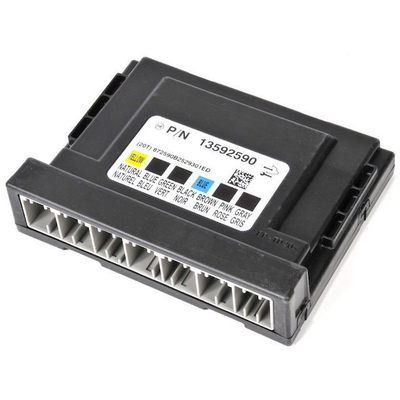
Below are the parts most often responsible for code B3928, ranked by how frequently each one is the actual culprit (per the diagnosis above). Tap any to see what we have for your vehicle.



The information in this article is provided for general reference and educational purposes only. Vehicle specifications, procedures, and part compatibility can vary by production date, trim level, and region. Always consult your vehicle's factory service manual and verify part numbers before purchasing or performing repairs. Safety-critical components such as airbags, seat belts, and braking systems should be installed by a qualified professional.
- 🧭 Diagnostic Flowchart
- 🎬 Helpful Videos
- 🛍️ Shop This Part
- What Does B3928 Mean?
- Can I Drive With B3928?
- Common Causes
- Symptoms
- Common Fixes & Costs
- DIY vs Professional
- Used vs. New Parts: Buying Guide
- What Happens If You Wait — Timeline
- Cost of Not Fixing It
- Diagnosis Steps
- When This Code Triggers (Freeze-Frame Conditions)
- Related Codes
- Climate & Environmental Factors
- How to Talk to a Mechanic About This Code
- Where to Take It: Dealer vs Independent vs Chain
- When to Walk Away From the Repair
- What Scan Tool You Need for This Code
- How to Clear the Code After You Fix It
- Will This Fail Emissions / State Inspection?
- Most Commonly Affected Vehicles
- Manufacturer-Specific Notes
- Real Owner Stories
- 2019 Chevy Equinox stranded after DIY battery replacement
- 2018 GMC Terrain misdiagnosed with a bad BCM, leading to expensive, failed repairs
- 2020 Chevy Traverse with intermittent no-start and BCM water damage
- How to Prevent This Code From Triggering
- Frequently Asked Questions
- Can I still drive my car with a B3928 code?
- My car won't start after I changed the battery, is this related?
- Do I need to buy a new BCM or key fobs?
- Can I fix code B3928 myself?
- What is the most common misdiagnosis for code B3928?
- A repair shop says I need a new BCM. What should I ask them?
- What is a 'GEN3R' BCM?
- Will disconnecting the battery fix code B3928?
- Why does my key fob not work after the car wash?
- How can I prevent code B3928 from happening?
- Key Takeaways
- 🎟️ Get 5% Off