

B3928 on 2018-2024 Buick Enclave: 'No FOB Detected' Causes and Fixes
On a 2018-2024 Buick Enclave, code B3928 almost always indicates a Body Control Module (BCM) memory corruption, not a failed part. This is typically triggered by a low voltage event like a jump-start or battery change. The fix is a specific BCM reprogramming procedure outlined in GM TSB #23-NA-163, which must be performed by a dealer or qualified shop with GM's proprietary software.
- Code B3928 on a 2018-2024 Enclave, especially with companion codes, is almost always caused by a BCM software glitch, not a failed part.
- The problem is usually triggered by a jump-start, a weak battery, or a battery replacement.
- Do not replace the BCM or key fobs. The correct repair is a specific BCM reprogramming procedure outlined in TSB #23-NA-163.
- This repair requires a GM dealer or a specialized shop with GM programming tools (GDS2 and SPS).
- Ensure the vehicle's 12V battery is healthy to prevent the problem from happening again.
- This is a known issue across many GM SUVs from this era, including the Chevy Traverse, GMC Acadia, and Cadillac XT5/XT6.
What's Unique About the 2018-2024 Buick ENCLAVE
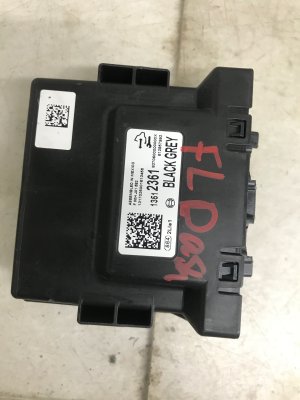
The second-generation Buick Enclave and its platform mates (like the Chevy Traverse, GMC Acadia, and Cadillac XT5) use a specific Body Control Module known as the 'GEN3R'. This particular module has a documented susceptibility to memory corruption following a low-voltage event, such as a battery replacement, jump-start, or even a temporary disconnect. GM issued Technical Service Bulletin #23-NA-163 to address this exact scenario, providing a software-based repair procedure instead of hardware replacement.
Diagnostic Flowchart
Tap your situation to follow the diagnostic path that matches what you're seeing on this vehicle.
Symptoms You May Notice
- Vehicle will not crank or start ('No Crank, No Start')
- Engine starts but immediately stalls
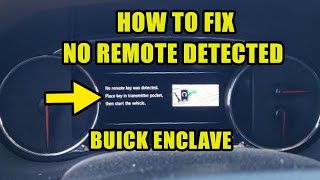
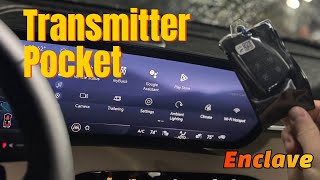
- "No FOB Detected" mess 🎬 Watch: How to find the hidden key pocket to start your Enclave.age on the driver information center
- Key fob functions (lock/unlock/remote start) are inoperative
- Multiple, seemingly unrelated warning lights on the dashboard.
- Security system light may be flashing or on steadily.
- Replacing the Body Control Module (BCM)
- Replacing the key fob
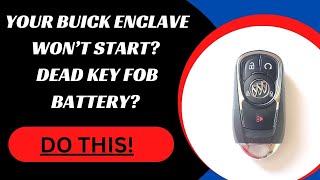
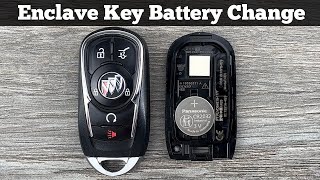
- Replacing the key fob battery 🎬 Watch: How to properly replace your key fob battery yourself.
- Replacing the starter motor
- Replacing all keyless entry antennas
Most Likely Causes
- Body Control Module (BCM) Memory Corruption 🔴 High Probability → Shop Body Control Module The GEN3R BCM used in these vehicles is known to be sensitive to voltage fluctuations. A low battery, jump-start, or battery replacement can trigger a memory corruption event, which GM has acknowledged in TSB 23-NA-163.
How to confirm: A professional scan tool will show B3928 along with three or more other antenna codes (B3924, B3925, B3926, B3927) and, crucially, a B389A code in the BCM. A technician must then use GM's GDS2 diagnostic software to verify the BCM is an eligible 'GEN3R' type by checking its part number against the list in the TSB.
Typical fix: Reprogram the BCM using the specific multi-step procedure outlined in GM Technical Service Bulletin #23-NA-163. This is a software fix performed by a dealer or a shop with GM programming capabilities. The procedure involves a 'Special Data Reset A' or 'Programming A' followed by an immobilizer relearn.
Est. part cost: $0 - Faulty Keyless Entry Antenna ⚪ Low Probability → Shop Antenna While less common than the BCM issue for this specific code cluster, individual antennas can fail due to physical damage, moisture intrusion, or wiring faults. This is more likely if only B3928 is present without the other codes.
How to confirm: If B3928 appears by itself without the other B392x codes and without B389A, the antenna is more suspect. A technician can use a scan tool to monitor the signal from the specific antenna and inspect its wiring and connector for damage.
Typical fix: Replace the faulty keyless entry antenna and its connector if damaged. The new antenna does not require programming. Common part numbers include 13580788, depending on location.
Est. part cost: $30-$120 - Low Vehicle Battery Voltage ⚪ Low Probability → Shop Vehicle Battery This is not the direct cause of the code, but it is the primary trigger for the BCM memory corruption. The sensitive GEN3R BCM can glitch during the voltage drop and subsequent surge of a battery replacement or jump-start.
How to confirm: Test the 12V battery's state of charge, cranking amps, and overall health. A battery failing a load test is a strong indicator that it caused the BCM issue. A parasitic draw test can also be performed to see if a module is staying awake and draining the battery.
Typical fix: Replace the weak or failing 12V battery. This must be done *before* or at the same time as the BCM reprogram to prevent the issue from recurring immediately.
Est. part cost: $150-$350
Rare But Worth Checking
- Failed Previous Repair Attempt:
Diagnosis Steps
- Verify the customer complaint: No start, 'No FOB Detected' message.
- Scan the Body Control Module (BCM) for DTCs with a professional GM-compatible scan tool (GDS2).
- Confirm the presence of DTC B389A, along with B3928 and at least two other codes from the B3924-B3927 range.
- Check for and follow Technical Service Bulletin #23-NA-163. Note that this TSB has been revised multiple times to include more vehicles and update procedures.
- Test the vehicle's 12V battery to ensure it is fully charged and healthy. Replace if necessary to prevent recurrence.
- Using GM's GDS2 software, navigate to Module Diagnostics > [K9] Body Control Module > Identification Information and verify the BCM is a 'GEN3R' model eligible for the TSB procedure by checking the part number.
- If conditions are met, use GM's Service Programming System (SPS) and select 'Programming A Per Bulletin 23-NA-163'. DO NOT perform a standard immobilizer learn first.
- After programming, perform the 'Body Control Module IMMO Learn with Existing Transponder or Remote Key' procedure.
- If the issue persists because a standard learn was attempted previously, perform the 'Programming B Per Bulletin 23-NA-163 Only' procedure, followed by the 'Engine Control Module and Body Control Module IMMO Learn'.
- After programming, clear all DTCs and confirm the vehicle now starts and all key fob functions work correctly with all fobs.
Parts You'll Likely Need
- Body Control Module (BCM) Reprogramming
(OEM #Labor Op 2889808)— This is a software fix, not a physical part. It is the primary solution identified by GM to correct the memory corruption that causes code B3928 and its related symptoms. The labor operation number is for warranty claims but identifies the specific job.
OEM price range: $150-$300
Aftermarket price range: N/A - Keyless Entry Antenna
(OEM #13580788)— Only needed in the rare case that the BCM is not the issue and an individual antenna has failed. This part number is a common replacement for various antenna locations, but others may be used depending on the specific antenna's position in the vehicle.
Trusted brands: ACDelco, GM Genuine Parts
OEM price range: $90-$195
Aftermarket price range: $30-$80
Related Codes That Often Appear With This One
- B3924, B3925, B3926, B3927 — These are companion codes for the other keyless entry antennas. When three or more of these codes are present together with B3928, it strongly indicates the BCM memory corruption issue described in TSB 23-NA-163.
- B389A — This code is often set in the BCM alongside the antenna codes and is a key indicator for technicians to follow the TSB procedure. The TSB explicitly states to check for a current B389A code as a prerequisite for the special reprogram.
Technical Service Bulletins (TSBs) & Recalls
- 23-NA-163: No Crank, No Start, Quick Start/Stall, No FOB Detected, Key FOBs Inoperative, B3924 00, B3925 00, B3926 00, B3927 00, B3928 00 Set. This is the primary document for this issue. It has been revised multiple times (e.g., Nov 2023, Aug 2024, Mar 2025) to add more models and refine the repair procedure.
Platform-Specific Known Issues
- A known issue exists where a low voltage event (jump-start, battery change) can cause memory corruption in the GEN3R Body Control Module, leading to a no-start condition and setting codes B3924 through B3928.
- GM has issued TSB #23-NA-163 which explicitly details a software reprogramming procedure to fix this condition without replacing the BCM. This TSB has been updated several times, expanding the model years and list of affected vehicles.
- Owner forums for the Enclave and its platform mates are filled with reports of this exact failure scenario, often expressing frustration at initial misdiagnoses (like replacing the battery or fob) before the TSB is discovered and applied.
Mechanic-Grade Diagnostic Values
- Keyless Entry Antenna Low Reference Circuit to Ground — expected: Less than 30 Ω. Failure: Resistance greater than 30 Ω indicates a poor ground connection for the keyless entry system.
- Keyless Entry Antenna Signal Circuit to Ground — expected: Less than 1 V (Key ON, Engine OFF). Failure: 1 V or greater indicates a short to voltage on the signal circuit.
Scan Tool Commands That Help
- GDS2: Module Diagnostics > [K9] Body Control Module > Identification Information — This is the first step to verify the BCM is a 'GEN3R' type and its Base Model Part Number (BMPN) is on the eligible list in TSB #23-NA-163 before attempting any programming.
- SPS (Service Programming System): Programming A Per Bulletin 23-NA-163 and 23-NA-165 Only — This is the primary software recovery procedure for a vehicle that has not had a previous failed immobilizer learn attempt. It must be followed by the 'Body Control Module IMMO Learn with Existing Transponder or Remote Key' procedure.
- SPS (Service Programming System): Programming B Per Bulletin 23-NA-163 Only — This is the secondary recovery procedure to be used ONLY if a standard immobilizer learn was already attempted and failed to fix the issue. It must be followed by the 'Engine Control Module and Body Control Module IMMO Learn' procedure.
Wiring & Ground Locations
- K9 Body Control Module (BCM) — Inside the passenger cabin, under the driver's side of the dashboard, to the left of the steering column. It is often mounted near or integrated with the interior fuse block.. This is the module that experiences memory corruption. Physical access is needed to check its part number label or to replace it if reprogramming fails.
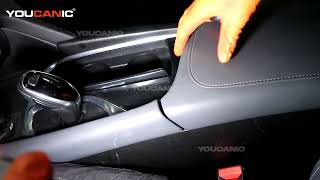
- Keyless Entry Transmitter Pocket — Inside the center console armrest storage area. You may need to remove a liner or tray to see the indentation shaped like the key fob.. This is the backup location to place the key fob to start the vehicle when the passive entry system fails, allowing the car to be moved to a service center.
- Passive Keyless Entry (PKE) Antennas — Multiple small antennas are hidden throughout the vehicle, including inside door handles, bumpers, the center console, and rear cargo area.. While rarely the cause when all codes are set, a single antenna can fail. Knowing their general locations helps in diagnosis if only B3928 is present.
- G103 (Ground) — On the cowl at the left rear of the engine compartment, typically above the brake booster.. This is a major ground point that serves the BCM and the Remote Control Door Lock Receiver. A poor connection here could cause low voltage or communication issues, potentially triggering the BCM corruption.
Real Owner Repair Stories
- Go-Parts.com article on platform-mate GMC Acadia (2019-2023 GMC Acadia) — 'No FOB Detected' message, no-start condition.
❌ Tried (didn't work) Replacing key fob battery, Using the backup key slot (temporary fix), Replacing the keyless entry antenna
✅ What actually fixed it A dealer-level BCM reprogram according to GM Technical Service Bulletin #23-NA-163 was the final solution.
OEM Part Supersession History
Multiple, see list→N/A - List of affected parts— This is a list of eligible 'GEN3R' BCM Base Model Part Numbers (BMPNs) that are covered by TSB 23-NA-163. If the BCM part number is on this list, it should be reprogrammed, not replaced.
Heads up: Eligible BMPNs: 13518569, 13518570, 13518602, 13518603, 13519619, 13519620, 13519648, 13527252, 13527260, 13527261, 13527297, 13527298, 13527827, 13529492, 13529493, 13533809, 13533813, 13533814, 13533817, 13533821. If the BCM is not on this list, the TSB does not apply.
Model Year Variations Within This Range
- 2018-2024: TSB 23-NA-163 was revised in August 2024 to officially add the Buick Enclave, Cadillac XT5/XT6, and Chevrolet Blazer/Traverse to the list of affected vehicles and update the model years. This confirms the issue spans the entire generation and is not limited to earlier models.
Helpful Videos


We Have This Part in Stock
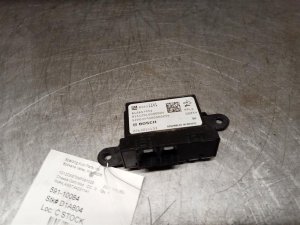
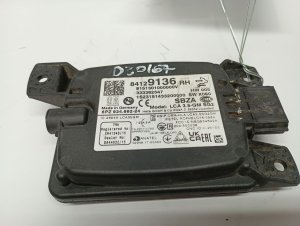
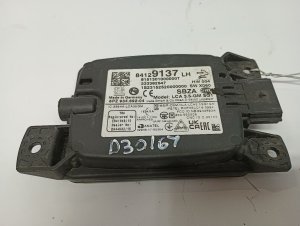
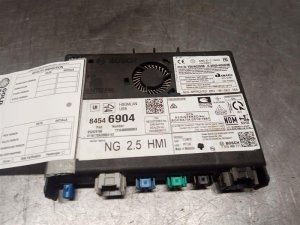

The information in this article is provided for general reference and educational purposes only. Vehicle specifications, procedures, and part compatibility can vary by production date, trim level, and region. Always consult your vehicle's factory service manual and verify part numbers before purchasing or performing repairs. Safety-critical components such as airbags, seat belts, and braking systems should be installed by a qualified professional.
- Buick ENCLAVE:
- 🧭 Diagnostic Flowchart
- 🎬 Helpful Videos
- 🛍️ Shop This Part
- What's Unique About the 2018-2024 Buick ENCLAVE
- Symptoms You May Notice
- Most Likely Causes
- Rare But Worth Checking
- Diagnosis Steps
- Parts You'll Likely Need
- Related Codes That Often Appear With This One
- Technical Service Bulletins (TSBs) & Recalls
- Platform-Specific Known Issues
- Mechanic-Grade Diagnostic Values
- Scan Tool Commands That Help
- Wiring & Ground Locations
- Real Owner Repair Stories
- OEM Part Supersession History
- Model Year Variations Within This Range
- 🎟️ Get 5% Off