

B3928 on 2020-2025 Cadillac XT6: 'No FOB Detected' and No-Start Causes
This code almost always points to a Body Control Module (BCM) software glitch, not a bad part. It's often triggered by a jump-start or battery change and causes a no-start condition with a 'No FOB Detected' message. A key indicator is the presence of code B389A alongside B3924-B3928. The fix is a specific dealer reprogram covered by TSB #23-NA-163; do not replace parts first.
- Code B3928 on a 2020-2025 Cadillac XT6 is most likely due to a BCM software glitch, not a failed part.
- The problem is usually triggered by a jump-start, battery change, or other low-voltage event.
- Look for code B389A along with the B3924-B3928 family of codes as a strong confirmation of the issue.
- Do not replace the key fob battery, BCM, or any antennas. The correct fix is a dealer-level BCM reprogram according to TSB #23-NA-163.
- This is not a DIY repair; it requires specialized GM programming tools (SPS) and knowledge of the TSB.
- The vehicle is unreliable to drive and may leave you stranded until this issue is resolved.
What's Unique About the 2020-2025 Cadillac XT6
On the Cadillac XT6 and dozens of related GM platforms using the 'GEN3R' Body Control Module, a low-voltage event (like a dead battery, jump-start, or even just disconnecting the battery) can corrupt the BCM's memory. This triggers a cascade of antenna-related codes (B3924 through B3928) simultaneously, often accompanied by code B389A. GM is aware of this widespread software issue and released Technical Service Bulletin #23-NA-163 with a specific reprogramming procedure to fix it without replacing any hardware.
Diagnostic Flowchart
Tap your situation to follow the diagnostic path that matches what you're seeing on this vehicle.
Symptoms You May Notice
- "No FOB Detected" message on the driver information center
- Vehicle will not crank or start
- Engine starts but immediately stalls
- Key fob functions (lock/unlock/remote start) are inoperative
- "Service Keyless Entry System" message
- Inability to shift the transmission out of Park
- Replacing the key fob battery
- Replacing the keyless entry antenna without first attempting the BCM reprogram
- Replacing the vehicle's main 12V battery (while a low battery may trigger the fault, a new battery will not fix the resulting BCM corruption)
- Replacing the Body Control Module before performing the reprogramming procedure specified in TSB #23-NA-163. 🎬 See this guide on fixing the GM No Fob Detected issue
Most Likely Causes
- Body Control Module (BCM) Memory Corruption 🔴 High Probability → Shop Body Control Module A known software sensitivity in specific 'GEN3R' BCMs can cause memory corruption following a low-voltage event like a battery replacement, jump-start, or temporary battery disconnect.
How to confirm: Confirm the issue appeared after a battery-related event. Scan the BCM and look for code B389A 00 set as current, along with three or more codes from the B3924-B3928 range. If B389A is not present, TSB #23-NA-163 advises disconnecting/reconnecting the battery for 30 seconds and re-checking. A GM dealer can 🎬 Watch: How to perform a BCM relearn without special tools confirm the BCM is an eligible 'GEN3R' unit and proceed with the TSB.
Typical fix: Reprogramming the Body Control Module using the specific multi-step procedure outlined in TSB #23-NA-163. This is a software fix performed by a dealer or qualified shop with GM's SPS software.
Est. part cost: $0
Rare But Worth Checking
- Faulty Keyless Entry Antenna: → Shop Antenna While the code points to an antenna circuit, an actual hardware failure is much less common than the BCM software issue. This should only be considered after the BCM reprogram has been performed and the code returns.
- Wiring Harness Damage: Damage to the wiring between the BCM and the specific keyless entry antenna could cause this code, but it is unlikely to occur with the other related antenna codes simultaneously.
- Faulty Body Control Module (BCM): → Shop Body Control Module In very rare cases, the BCM itself may have a hardware failure that prevents it from being reprogrammed or communicating correctly. This is a last resort after all other diagnostics have failed. TSB #23-NA-163 must be attempted first.
Diagnosis Steps
- Confirm the symptoms, such as 'No FOB Detected' and a no-start condition.
- Ask the owner if the issue occurred immediately after a battery replacement, jump-start, battery charging, or other low-voltage event.
- Scan the Body Control Module (BCM) for all DTCs. Note if code B389A 00 is current, along with three or more codes from the B3924-B3928 range. This combination strongly indicates the TSB applies.
- If B389A is not present, disconnect and reconnect the vehicle's battery for at least 30 seconds, then check for the DTC again.
- Reference GM Technical Service Bulletin #23-NA-163. The bulletin explicitly warns: 'Do not attempt the immobilizer procedure or module replacements before following this bulletin.'
- Using a GM GDS2 scan tool, navigate to Module Diagnostics > [K9] Body Control Module > Identification Information and verify the 'Base Model Part Number' (BMPN) is on the list of eligible GEN3R BCMs in the TSB (e.g., 13518569, 13533817, etc.). If it is not, the TSB does not apply.
- If the BCM is eligible, connect the vehicle to GM's Service Programming System (SPS).
- Follow the specific BCM programming steps outlined in TSB #23-NA-163, starting with 'Programming A'. This is a special function, not a standard reprogram.
- After reprogramming, use SPS to perform the 'Body Control Module IMMO Learn with Existing Transponder or Remote Key' procedure.
- Verify that the vehicle starts and all key fob functions work correctly with all available fobs. Clear all DTCs.
- If the code returns after the 'Programming A' procedure, the TSB provides a secondary 'Programming B' procedure to follow.
- Only if the TSB reprogramming fails should you proceed with standard diagnostics for the antenna circuit, including inspecting wiring and testing the antenna itself.
Parts You'll Likely Need
- No parts typically required — The most common cause is a software issue fixed by reprogramming the existing Body Control Module, as documented in TSB #23-NA-163.
OEM price range: $0
Aftermarket price range: $0 - Eligible GEN3R Body Control Module (for verification)
(OEM #13518569, 13518570, 13518602, 13518603, 13519619, 13519620, 13519648, 13527252, 13527260, 13527261, 13527297, 13527298, 13527827, 13529492, 13529493, 13533809, 13533813, 13533814, 13533817, 13533821)— This is not a replacement part list. These are the OEM part numbers for the BCMs that are known to be affected by the software glitch. A technician must verify the vehicle has one of these modules to confirm TSB #23-NA-163 is the correct procedure.
Trusted brands: ACDelco (OEM)
OEM price range: $0 (Reprogram only)
Aftermarket price range: $0 (Reprogram only)
Related Codes That Often Appear With This One
- B389A — Per TSB #23-NA-163, this code is a key indicator of the BCM memory corruption event. It will often be set as 'current' along with the antenna codes. The TSB even advises cycling battery power to see if this code appears.
- B3924 — Part of the same family of keyless entry antenna codes triggered by BCM memory corruption per TSB #23-NA-163.
- B3925 — Part of the same family of keyless entry antenna codes triggered by BCM memory corruption per TSB #23-NA-163.
- B3926 — Part of the same family of keyless entry antenna codes triggered by BCM memory corruption per TSB #23-NA-163.
- B3927 — Part of the same family of keyless entry antenna codes triggered by BCM memory corruption per TSB #23-NA-163.
Technical Service Bulletins (TSBs) & Recalls
- 23-NA-163: Addresses a No Crank, No Start, or inoperative key fob condition by providing a specific BCM reprogramming procedure to correct memory corruption caused by low-voltage events. It warns technicians not to replace modules and to look for code B389A as a key indicator. It applies only to specific 'GEN3R' BCM part numbers.
Platform-Specific Known Issues
- A known issue documented in TSB #23-NA-163 describes how a low-voltage event can cause BCM memory corruption in vehicles with a 'GEN3R' BCM. This leads to a no-start condition and sets codes B3924 through B3928, often with B389A. The official fix is a specific BCM reprogram, not part replacement. This issue is not unique to the XT6 and affects a wide range of GM vehicles from 2018-2025.
Mechanic-Grade Diagnostic Values
- Keyless Entry Antenna Signal Circuit Resistance — expected: Less than 2 Ω end to end. Failure: 2 Ω or greater indicates an open or high resistance in the circuit.
- Keyless Entry Antenna Signal Circuit to Ground — expected: Infinite resistance (OL). Failure: Less than infinite resistance indicates a short to ground.
- Keyless Entry Antenna Voltage (activated) — expected: Greater than 1 V. Failure: Less than 1 V when the antenna is activated (e.g., by pressing a door handle button) may indicate a faulty antenna or circuit.
Scan Tool Commands That Help
- GM Service Programming System (SPS): K9 Body Control Module “Programming A Per Bulletin 23-NA-163 and 23-NA-165 Only” — This is the primary software fix for the BCM memory corruption that causes codes B3924-B3928. This is the first step in the TSB repair procedure.
- GM Service Programming System (SPS): Immobilizer procedure “Body Control Module IMMO Learn with Existing Transponder or Remote Key” — This must be performed immediately after 'Programming A' to relearn the existing key fobs to the newly reprogrammed BCM.
- GM Service Programming System (SPS): K9 Body Control Module “Programming B Per Bulletin 23-NA-163 Only” — This is a secondary procedure to be used ONLY if 'Programming A' and the subsequent IMMO learn do not resolve the no-start condition.
- GM GDS2: Module Diagnostics > [K9] Body Control Module > Identification Information — Used to view the 'Base Model Part Number' (BMPN) of the BCM to verify it is a 'GEN3R' unit and eligible for the TSB #23-NA-163 procedure.
- EL-52545 TPMS and RF Tool: Signal Detect > Fob/Key I.D. — This function reads the VIN programmed into a key fob. It is used to verify that a fob belongs to the vehicle being serviced, which is a required step for any key fob warranty replacement to rule out a mismatched fob.
Wiring & Ground Locations
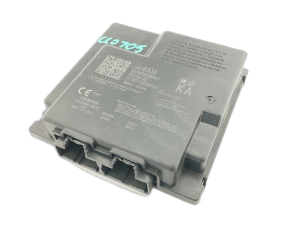
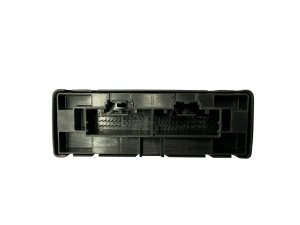
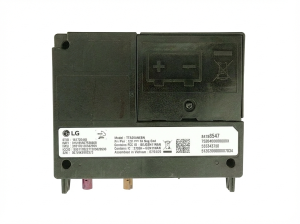
- K9 Body Control Module (BCM) — Under the driver's side dashboard, to the far left, behind the upper kick panel. It is typically held by two plastic clips.. The BCM is the module that stores the fault, requires reprogramming, and is the central hub for all keyless entry antenna wiring. Physical access is needed for replacement or to test wiring at its connectors.
- BCM Ground — A primary ground for the BCM is located at the left A-pillar/cowl side area.. A poor ground connection can cause erratic behavior in the BCM, mimicking module failure or software corruption. Verifying this ground is secure is a fundamental step if software fixes do not work.
- Keyless Entry Antenna 5 — While diagrams specify antennas for front, rear, and doors, 'Antenna 5' in this context is typically one of the interior antennas used for passive start authorization, often located in the center console or rear cargo area.. Although rarely the cause, if the TSB reprogram fails and only B3928 returns, this is the physical component and associated wiring that must be inspected for damage or failure.
- BCM Connector C2280C (Example) — One of several multi-pin connectors on the Body Control Module.. Wiring diagrams show that pins on this specific connector series are used for the keyless entry antennas. For example, Pins 30 (VPK53, GY-BU) and 32 (RPK53, WH-VT) are the ANT+ and ANT- signals for a rear antenna, which would be tested here if a hardware fault is suspected.
Helpful Videos
We Have This Part in Stock

The information in this article is provided for general reference and educational purposes only. Vehicle specifications, procedures, and part compatibility can vary by production date, trim level, and region. Always consult your vehicle's factory service manual and verify part numbers before purchasing or performing repairs. Safety-critical components such as airbags, seat belts, and braking systems should be installed by a qualified professional.
- Cadillac XT6:
- 🧭 Diagnostic Flowchart
- 🎬 Helpful Videos
- 🛍️ Shop This Part
- What's Unique About the 2020-2025 Cadillac XT6
- Symptoms You May Notice
- Most Likely Causes
- Rare But Worth Checking
- Diagnosis Steps
- Parts You'll Likely Need
- Related Codes That Often Appear With This One
- Technical Service Bulletins (TSBs) & Recalls
- Platform-Specific Known Issues
- Mechanic-Grade Diagnostic Values
- Scan Tool Commands That Help
- Wiring & Ground Locations
- 🎟️ Get 5% Off