

OBD-II Code B3935: Transponder Authentication Error
The Ultimate 2026 Guide to What B3935 Means, Why It Triggers, and How to Fix It
- Code B3935 indicates your GM vehicle's anti-theft system failed to authenticate the ignition key, actively disabling the engine and causing a no-start condition.
- Radio Frequency Interference (RFI) is the number one cause; fix this for $0 by removing all other fobs, access cards, and aftermarket USB chargers from the vehicle.
- Test your spare key immediately; if the vehicle starts, your primary key's internal transponder chip has failed and requires a $150 to $300 replacement.
- Never authorize a $900+ Body Control Module (BCM) replacement without first verifying TSB PI1180A for a simple software update, which fixes this issue on 2014-2015 GM trucks.
What Does B3935 Mean?
Code B3935 indicates your vehicle's anti-theft system is preventing the engine from starting due to a key authentication failure. The computer detects the key but cannot verify its security credentials via an electronic 'handshake'. Assuming a theft attempt, the system immobilizes the engine by disabling the starter or fuel supply.
Technical definition: The official SAE/OBD-II definition for B3935 (specific to General Motors) is 'Transponder Authentication Error'. The Body Control Module (BCM) or Theft Deterrent Module (TDM) energizes the ignition key's transponder at 125 kHz and recognizes it as a learned key, but the subsequent cryptographic challenge-and-response calculation fails. Professional scan tools often display symptom byte 'B3935 57', explicitly confirming the cryptographic calculation failed due to a corrupted signal or faulty key chip.
Can I Drive With B3935?
No — Do Not Drive. The anti-theft system actively immobilizes the engine, causing a no-crank, no-start, or start-and-stall condition. The vehicle is completely unreliable and will leave you stranded.
Common Causes
- Radio Frequency Interference (RFI) (Very Common) — Other electronic devices easily jam the 125 kHz signal between the key and the vehicle. GM TSBs warn that competing key fobs, RFID access cards, toll passes, and unshielded USB phone chargers are the most frequent triggers for this code.
- Damaged or Faulty Ignition Key Transponder (Common) — The small electronic transponder chip inside the key head (e.g., a Philips 46) fails over time. Dropping the key, water exposure, or internal electronic degradation prevents it from completing the security handshake.
- Weak or Dead Key Fob Battery (Common) — While the transponder is often powered passively, a weak CR2032 or CR2450 battery in the key fob disrupts communication, especially in push-to-start systems where active detection is critical.
- Body Control Module (BCM) Software Glitch (Less Common) — On 2014-2015 GM trucks and SUVs, a known BCM software flaw incorrectly reads key data. This sets both B3935 and B2955 codes and requires a dealer software update per TSB PI1180A.
- Aftermarket Remote Start or Alarm System Failure (Less Common) — Improperly installed or failing aftermarket remote start bypass modules interrupt the factory key authentication process, directly causing a B3935 code and a no-start condition.
- Low Vehicle Battery Voltage (Less Common) — System voltage dropping below 9.0V during the key-on cycle causes the BCM to behave erratically and fail authentication. This triggers false security codes, especially after a jump-start or with an aging battery.
- Corroded or Loose BCM Ground Connection (Rare) — On GM trucks and vans, the main BCM ground point (G218 in the driver's kick panel) corrodes or loosens. This poor ground causes intermittent BCM malfunctions and false security codes.
- Faulty Immobilizer Antenna (Exciter Coil) (Rare) — The exciter coil ring around the ignition cylinder powers and communicates with the key. A broken coil or damaged wiring creates an open circuit, preventing transponder communication.
- Failed Body Control Module (BCM) or Theft Deterrent Module (TDM) (Very Rare) — The control module itself fails internally, though this is extremely rare compared to interference or key issues. This requires module replacement and professional programming.
Symptoms
- Engine will not crank or start — Complete no-crank, no-start condition when turning the key or pressing the button.
- Engine starts and immediately stalls — The engine fires for one to two seconds before the immobilizer cuts fuel or spark.
- Security light is on or flashing — A dashboard warning light (car with a padlock) illuminates or flashes, indicating an active security lockout.
- “Service Theft Deterrent System” message on dash — The driver information center displays a security fault warning or a 'No Fob Detected' message.
- Alarm sounds unexpectedly — Security system confusion triggers the vehicle's alarm when attempting to open the door or start the engine.
Diagnostic Flowchart
Tap your situation to follow the diagnostic path that matches what you're seeing on this code.
Common Fixes & Costs
- Isolating Key from RFI Sources — Parts: $0, Labor: $0, ~0.1 hr book time (DIY)
- Replace Ignition Key and Program — Parts: $50-$200, Labor: $80-$150, ~1 hr book time (Professional)
- Reprogram Body Control Module (BCM) — Parts: $0, Labor: $125-$250, ~1 hr book time (Professional)
- Repair/Clean BCM Ground Connection (G218) — Parts: $0-$5, Labor: $50-$150, ~1 hr book time (Intermediate)
- Replace Body Control Module (BCM) — Parts: $300-$600, Labor: $150-$300, ~2 hr book time (Professional)
Used vs. New Parts: Buying Guide
When a used part is worth it: A used Body Control Module (BCM) from a donor with the exact same part number is a cost-saving option, but it is a high-risk, professional-only job. It makes sense only if you have access to a reputable shop that explicitly confirms they will reprogram a used module for your specific vehicle.
Donor-vehicle mileage cap: roughly under 100000 miles for the part to have meaningful remaining life.
Donor quality checklist:
- Part number must be an exact match.
- Verify the donor vehicle was not scrapped due to electrical or flood damage.
- Purchase from a reputable seller who guarantees the part is functional and accepts returns.
Decision logic:
- If The vehicle is still under warranty or a special service campaign is active → Use a new OEM part installed by the dealer to ensure coverage.
- If The cost of a new BCM is prohibitive and you accept the risk → A used BCM is an option, but factor in that the labor for installation and programming is the same, and if the used part fails, you pay for labor twice.
- If The part is an ignition key → Never buy used. The transponder is a one-time-programmable component. Always buy a new key and have it professionally programmed.
Warranty tradeoff: Used BCMs typically have a 30-90 day warranty at best and are often not returnable once installed. New OEM or aftermarket parts carry a 1-year to limited lifetime warranty. The programming labor itself is never warrantied if the supplied used part is faulty.
Worst-case if a used part fails: $400-$800. If the used BCM is defective or cannot be programmed, you lose the money spent on the part and still pay for the initial diagnostic and programming attempt, plus the cost of a new BCM and a second programming fee.
What Happens If You Wait — Timeline
- Immediate: The engine will not crank or starts and immediately stalls. The security light illuminates or flashes. The vehicle is completely immobilized. (MPG impact: N/A% · Added cost: $75-$250 (Cost of towing if you cannot resolve the issue on-site.))
- 0-24 Hours: If the issue is intermittent (often due to RFI), the car starts later, but the code remains stored. You face a high risk of being stranded again at any moment. (MPG impact: 0%% · Added cost: $100-$200 (Potential cost for an initial diagnostic fee at a shop.))
- 1-3 Days: The vehicle is at a repair shop. The risk is financial, based on the technician's diagnostic path. A common misdiagnosis is replacing the battery or starter. (MPG impact: 0%% · Added cost: $300-$700 (Cost of an incorrect repair, such as a new battery and starter, plus continued diagnostic fees.))
- 3+ Days: After simpler misdiagnoses fail, a shop incorrectly condemns the Body Control Module (BCM). This is the most expensive and common major misdiagnosis for B3935. (MPG impact: 0%% · Added cost: $900-$1500 (Cost for a new BCM plus programming, which fails to fix the root cause if it was RFI or a bad ground.))
Cost of Not Fixing It
- Immediate: The vehicle will not start, leaving you stranded. This is the primary and immediate consequence. (Added cost: $75-$250 for a tow truck.)
- 1-3 Days: Incurring unnecessary diagnostic fees or parts costs by not following the proper diagnostic procedure (i.e., not checking for RFI first). (Added cost: $150-$500 for incorrect diagnostics or replacing unnecessary parts like the battery or starter.)
- 1+ Week: The most expensive misdiagnosis is premature BCM replacement. If a shop replaces the BCM without ruling out simpler causes, the problem persists, and you pay for a costly and unnecessary repair. (Added cost: $800-$1500 for an unnecessary BCM replacement and programming.)
Diagnosis Steps
- Perform RFI (Radio Frequency Interference) Test
Remove the ignition key from your keychain so it is completely isolated. Unplug ALL aftermarket accessories from the car, especially USB chargers, dash cams, and GPS units. Try to start the vehicle. If it starts, RFI was the cause.
Tools: ['None'] (Beginner) - Try the Spare Key
If the RFI test fails, attempt to start the vehicle with a known-good spare key. If the spare key works consistently, the primary key's transponder has failed and requires replacement.
Tools: ['None'] (Beginner) - Replace Key Fob Battery
For keyless start systems, replace the coin battery (CR2032 or CR2450) inside the key fob. If the battery is dead, placing the fob in the designated transmitter pocket (e.g., center console cupholder) often allows the vehicle to start.
Tools: ['Small flathead screwdriver'] (Beginner) - Scan for Codes and Check TSBs
Use an OBD-II scanner capable of reading body codes to confirm B3935. Look for related codes like B3055, B3060, or B2955. If B2955 is present on a 2014-2015 GM truck/SUV, TSB PI1180A dictates a required BCM software update.
Tools: ['OBD-II Scanner'] (Intermediate) - Perform Security Relearn Procedure
Turn the key to 'ON' (do not start) for 10 minutes until the security light stops flashing or goes out, then turn it 'OFF' for 5-10 seconds. Repeat this two more times for a total of three 10-minute cycles. On the fourth attempt, try to start the engine.
Tools: ['None'] (Beginner) - Inspect and Test Immobilizer Antenna (Exciter Coil)
Visually inspect the wiring and connector at the immobilizer antenna around the ignition cylinder. Disconnect the coil and test its resistance with a multimeter. The expected reading is 5-20 Ohms. A reading of OL (Open Loop) or near 0 Ohms indicates a failed coil.
Tools: ['Multimeter'] (Advanced) - Check Critical Voltages and Grounds
Verify battery voltage is above 12.4V at rest and does not drop below 9.0V during key-on. On GM trucks/vans, locate, disconnect, clean, and securely retighten the primary BCM ground point (G218) behind the driver-side kick panel.
Tools: ['Multimeter', 'Socket set'] (Advanced) - Analyze Live Data with Advanced Scan Tool
Navigate to the BCM/TDM live data. The 'Transponder Key' parameter must read 'Present' when the key is on. Check for symptom bytes. 'B3935 57' confirms the key was recognized but the cryptographic handshake failed (bad chip or RFI). 'B3935 3A' means an incorrect transponder was read.
Tools: ['Professional Scan Tool (e.g., GM GDS2)'] (Advanced)
When This Code Triggers (Freeze-Frame Conditions)
- Vehicle Speed: 0 mph (Vehicle is stationary during key-on authentication.)
- Engine RPM: 0 RPM (Engine is not running when the authentication failure occurs.)
- Ignition Status: ON/RUN (The code is set when the key is turned to the 'ON' or 'RUN' position, initiating the security check.)
- BCM Voltage: 11.5V - 12.5V (System voltage at the time of the fault. A value below 10V indicates a weak battery is a contributing factor.)
- Outside Air Temperature: Ambient Temperature (Indicates the temperature when the fault occurred, helping diagnose intermittent issues related to temperature extremes.)
Related Codes
- B3055 — This code for 'No Transponder Modulation' often appears with B3935. It means the security module detected no signal from the key at all.
- B3060 — This code for 'Unprogrammed Transponder' is triggered by the same interference that causes B3935. The corrupted signal makes the BCM think an unknown key is being used.
- B2955 — When this code appears with B3935 on 2014-2015 GM trucks and SUVs, it specifically points to a BCM software glitch requiring a dealer reprogram per TSB PI1180A.
- C0750, C0755, C0760, C0765, C0775 — These are Tire Pressure Monitor (TPM) sensor codes. GM TSB PIC5650M notes that powerful RFI disrupts both the key's 125 kHz signal and the TPM system's radio frequency simultaneously.
Climate & Environmental Factors
- Humidity / Water Ingress: High humidity and direct water intrusion cause corrosion on wiring, connectors, and internal BCM components. This electronic damage leads to the failure of the immobilizer system's authentication process.
- Temperature Extremes (Heat/Cold): Extreme cold reduces battery efficiency, leading to low voltage conditions during startup. Extreme heat stresses solder joints and components within the BCM and key transponder, causing intermittent failure.
How to Talk to a Mechanic About This Code
Say this: "My car has a no-start condition with a security light on, and my scanner is showing a B3935 code. I've already tried isolating the key from RFI sources and tested the spare key with no luck. I'd like to book a diagnostic appointment. Please check for any applicable TSBs, like PI1180A, before recommending major part replacements."
This signals you are an informed customer who has already performed the basic, most common free fixes. It steers the technician away from charging you for simple steps and directs them toward more advanced diagnostics (like TSBs), preventing a premature and expensive misdiagnosis of a bad BCM.
Avoid saying:
- My car won't start.
- The security light is on, can you just fix it?
- I think I need a new computer.
Questions to ask before authorizing the repair:
- Did you find any Technical Service Bulletins related to B3935 for my vehicle's VIN?
- If you are recommending a new key, can this be done by a locksmith for less?
- If you are recommending a BCM replacement, can you show me the diagnostic data that proves the module is faulty and not the wiring, ground, or antenna?
- What is the warranty on the recommended parts and the labor?
Where to Take It: Dealer vs Independent vs Chain
- Dealer:
Recommended only if a specific software update TSB applies or if the vehicle is under warranty. Otherwise, start with a more cost-effective option.
Best for: Vehicles under warranty., Cases where a BCM software update is the known fix (e.g., TSB PI1180A for 2014-2015 models)., Complex diagnostics after an independent shop has failed.
Downsides: Highest labor rates., Quick to recommend expensive BCM replacement without exhausting all other options. (Typical cost: +50% vs. baseline) - Independent Shop:
A good fit for most B3935 scenarios, especially for hardware-related fixes like a bad ground or ignition cylinder. A specialized automotive locksmith is also an excellent choice if the issue points to a bad key.
Best for: Out-of-warranty vehicles., Diagnosing common causes like faulty keys, bad ground connections, or failed immobilizer antennas., Getting a second opinion on a dealer's BCM replacement quote.
Downsides: Diagnostic skill varies greatly; choose a shop with strong electrical diagnostic reviews., May lack the expensive subscription-based tools to perform a BCM software flash. (Typical cost: +0% vs. baseline) - Chain Shop:
AVOID for B3935 diagnosis and repair. The risk of misdiagnosis and paying for unnecessary parts is very high.
Best for: Simple battery testing or replacement.
Downsides: Technicians are rarely equipped or trained for complex electrical or anti-theft diagnostics., High likelihood of misdiagnosis (e.g., selling a battery or starter) or recommending an unnecessary, expensive part., Generally unable to program keys or modules. (Typical cost: -10% vs. baseline)
When to Walk Away From the Repair
If the estimated repair cost exceeds 50% of the car's private-party value, seriously consider selling the car as-is or trading it in rather than repairing it.
- Car worth $15000, fix is $350: Fix it. A new key and programming is a minor cost relative to the vehicle's value.
- Car worth $4000, fix is $1200: Borderline. This is a significant percentage of the car's value. Get a second opinion before authorizing a BCM replacement, as it might be a misdiagnosis.
- Car worth $2500, fix is $1200: Walk away. The repair cost is nearly half the car's value. It is not a sound financial decision.
What Scan Tool You Need for This Code
Minimum: A scanner that reads GM-specific Body Control Module (BCM) codes. A basic engine code reader (that only reads 'P' codes) fails to see the B3935 code.
A standard $20 scanner shows 'No Codes Found' because it cannot communicate with the BCM, which is where security codes are stored. You waste time and money thinking there is no electronic fault.
Budget: BlueDriver Pro (~$100) — Confirms the presence of B3935 and related BCM codes, reads freeze-frame data, and allows you to view live data from the BCM to aid in diagnosis.
Mid-range: Foxwell NT510 Elite for GM (~$180) — Provides full GM-specific BCM code reading, live data, and bidirectional controls to test components. It performs system-specific functions like key relearn procedures.
Professional: Autel MaxiCOM MK808 / XTOOL D7 (~$450-700) — Offers extensive bidirectional control, allowing a user to command modules and test functions. These tools perform advanced functions like BCM setup and configuration after a module replacement.
Rent vs buy: For a one-time diagnosis, many AutoZone or O'Reilly Auto Parts locations scan your vehicle for free with a tool capable of reading BCM codes. Buying a budget-friendly scanner is a good investment if you plan to do future DIY car maintenance.
How to Clear the Code After You Fix It
- Fix the root cause (e.g., remove RFI, replace key).
- Use an OBD-II scan tool capable of reading body codes to clear the B3935 DTC.
- If the security light is still on, perform the 30-minute key relearn procedure.
Drive cycle (~30 minutes): A specific drive cycle is not required to clear this code, but it is required to set emissions readiness monitors after a battery disconnect or BCM replacement. A typical GM cycle involves a cold start, 5-10 minutes of city driving, and 10-15 minutes of steady highway-speed driving.
Readiness monitors affected: Evaporative System Monitor, Catalyst Monitor, O2 Sensor Monitor
Before emissions retest: drive at least 50 miles to fully set monitors.
Watch out for:
- Simply clearing the code with a scanner fails; the code returns immediately if the underlying authentication fault is not fixed.
- Disconnecting the battery fails to clear this code from the BCM's history and resets all emissions readiness monitors, causing a failed smog test.
Will This Fail Emissions / State Inspection?
Yes — this code typically fails an OBD-II emissions inspection.
- California: An active B3935 code causes an automatic failure of the OBD-II portion of the smog check. Additionally, if the battery was disconnected or the BCM was replaced to fix the issue, the readiness monitors will be incomplete, also resulting in a failure. The vehicle must be driven through a complete drive cycle to set the monitors before re-testing.
- New York: All vehicles registered in New York must pass an annual safety and emissions inspection. The presence of an active security system code like B3935 and the associated warning light results in an automatic failure.
- Texas: In the 17 Texas counties that require emissions testing, an OBD-II scan is performed. A B3935 code causes the vehicle to fail this scan. Even if the code is cleared, the vehicle cannot be tested until the readiness monitors are set, which requires a drive cycle.
Most Commonly Affected Vehicles
- Chevrolet Equinox / GMC Terrain (2015-2022) — Highly susceptible to RFI. Early models (2015) are specifically called out in TSB PI1180A for a BCM software glitch when code B2955 is also present.
- Chevrolet Silverado / GMC Sierra (2007-2014) — Prone to RFI issues and faulty ignition lock cylinders. 2014 models are mentioned in TSB PI1180A for a BCM software glitch when B3935 and B2955 appear together. Poor BCM ground connections (G218) are also common.
- Chevrolet Express / GMC Savana (2012-2022) — Extremely common issue due to RFI from aftermarket accessories used in work vans. GM TSBs PIC5650L and PIC5650M directly address this, warning technicians not to replace parts before ruling out RFI.
- Chevrolet Trax (2013-2020) — Very sensitive to RFI from other fobs and cards on the keychain. TSBs PIC5650L/M apply.
- Chevrolet Colorado / GMC Canyon (2015-2022) — RFI is the primary cause, but 2015 models are noted for the BCM software glitch (TSB PI1180A) if code B2955 is also set.
- Chevrolet Suburban / Tahoe (2015-2020) — Affected by the BCM software issue (TSB PI1180A) in the 2015 model year when B3935 is paired with B2955. Later models are primarily affected by RFI and weak key fob batteries.
- Ford F-150, Ranger, Explorer, Transit (1998-Present) — Ford does not use code B3935. The equivalent issue sets PATS codes like B1600, B1601, B1681, or B1232. The causes (bad key, RFI, faulty transceiver) are identical.
- Nissan Altima, Sentra, Rogue (2005-2015) — Nissan does not use code B3935. A similar NATS authentication error sets codes like P1610, P1614, or P1615. Causes include weak vehicle battery, RFI, and failed keys.
- Honda Accord, Civic, CR-V (2003-2017) — Honda does not use code B3935. The equivalent problem flashes a green key symbol and stores codes 81 or 85. Causes are identical, though a failing PGM-FI main relay also mimics these symptoms.
Manufacturer-Specific Notes
- General Motors (Chevrolet, GMC): GM has issued multiple Technical Service Bulletins (e.g., PIC5650F, PIC5650L, PIC5650M, PIE0232) explicitly warning technicians NOT to replace parts for a B3935 code until Radio Frequency Interference is completely ruled out. They state the number one cause is external interference from items on the owner's keychain or aftermarket electronics.
- Ford: Ford's PATS system requires a minimum of two programmed keys stored in memory to allow a user to program additional keys themselves. If only one key remains, the vehicle must be taken to a dealer or qualified locksmith with specialized equipment, significantly increasing the cost.
- Nissan: The Nissan Anti-Theft System (NATS) is notoriously sensitive to low vehicle battery voltage. A battery that is weak but still turns on the lights fails to provide stable voltage for NATS modules to communicate, leading to a no-start and codes like P1610-P1615.
- Honda: On many Honda models, a flashing green key light indicates an immobilizer issue. However, a very common point of failure that mimics this is the PGM-FI Main Relay. This relay develops cracked solder joints over time, causing intermittent no-start conditions often misdiagnosed as immobilizer problems.
Real Owner Stories
2016 Chevy Express 3500 work van suddenly won't start.
A contractor experienced a sudden no-crank condition with the security light on, stranding the van at a job site.
What they tried:
- Attempted jump-starting, suspecting a dead battery.
- Called a mobile mechanic who scanned code B3935 and suggested replacing the key or BCM.
Outcome: Following forum advice, the owner removed the ignition key from a large keychain holding two other fobs and an access card. The isolated key started the van immediately. The cause was RFI.
Lesson: RFI is the primary cause. Always perform the free test of isolating the key from all other fobs, cards, and aftermarket phone chargers before paying for diagnostics.
2014 Chevy Silverado with 85,000 miles has intermittent no-start and 'Service Theft Deterrent System' message.
The truck randomly failed to start. The spare key did not resolve the issue, pointing to a vehicle-side fault.
What they tried:
- Replaced the key fob battery.
- Performed the 30-minute security relearn procedure multiple times without success.
Outcome: A dealer technician found codes B3935 and B2955 stored. Referencing TSB PI1180A, they reprogrammed the BCM with updated software for $180, permanently fixing the issue.
Lesson: If a 2014-2015 GM truck or SUV displays both B3935 and B2955, a software glitch is the cause. Insist the shop references TSB PI1180A for a software update rather than replacing the BCM.
2009 GMC Yukon owner was told they needed a new BCM for over $1,000.
The vehicle would not start and displayed the security light. A local shop scanned code B3935 and diagnosed a failed Body Control Module.
What they tried:
- Paid $250 for a new cut and programmed key, which did not fix the no-start.
- Received a $1,100 quote to replace and program a new BCM.
Outcome: An independent mechanic diagnosed a failed immobilizer antenna within the lock cylinder. Replacing the ignition lock cylinder (ACDelco D1432D, $180) and performing the relearn procedure resolved the issue. The BCM was perfectly fine.
Lesson: BCM replacement is a last resort. A faulty immobilizer antenna (exciter coil) mimics a BCM failure and is significantly cheaper to repair. Always get a second opinion.
How to Prevent This Code From Triggering
- Isolate the Ignition Key (Daily habit) — Keeps the key's 125 kHz transponder signal clear from interference caused by other key fobs, RFID access cards, and toll passes.
- Use High-Quality Vehicle Accessories (When purchasing) — Cheap, unshielded aftermarket accessories, especially USB chargers and LED lights, emit significant RFI that jams the key authentication signal.
- Protect the Key Fob from Physical Damage (Ongoing) — Dropping the key or exposing it to water damages the transponder chip and its delicate internal connections. A protective silicone case reduces impact damage.
- Maintain Vehicle Battery Health (Annually) — A weak battery providing below 12.4V at rest causes erratic BCM behavior during startup, leading to false security codes. Replace the battery every 3-5 years.
- Store Spare Key in a Faraday Pouch (When not in use) — Storing spare keys inside the vehicle causes signal interference. An RFID-blocking pouch prevents this and protects the key from being electronically copied by thieves.
Frequently Asked Questions
Can I just bypass the B3935 code?
No, you cannot simply bypass it. This code represents the vehicle's anti-theft system actively disabling the engine. The underlying communication issue between the key and the car must be resolved for the vehicle to start.
Why did my car start fine yesterday but won't start today with code B3935?
This is classic behavior for Radio Frequency Interference (RFI). A new phone charger, a different key fob on your ring, or parking in an area with high radio traffic disrupts the signal. This causes an intermittent no-start condition.
Will a new car battery fix a B3935 code?
A weak vehicle battery dropping below 9.0V during startup causes unpredictable electronic issues, including false B3935 codes. However, RFI or a damaged key is far more common. Always test the battery, but do not assume replacing it fixes the code.
My mechanic wants to replace the BCM for $900. Is this necessary?
This is the absolute last resort. Insist the shop first performs the RFI check, tests the spare key, checks for software updates (TSBs), and inspects the BCM ground connection. Replacing the BCM without ruling out simpler causes is a common, expensive misdiagnosis.
What's the difference between a 'no-crank' and 'crank-no-start' with this code?
A 'no-crank' points to the BCM disabling the starter relay immediately. A 'crank-no-start' or 'start-and-stall' means the BCM allowed the starter to engage but instructed the ECM to disable fuel or spark. Both confirm an active immobilizer event.
I installed an aftermarket remote starter and now my car won't start. Is it related to the B3935 code?
Yes, it is highly likely. Aftermarket remote start systems use a bypass module wired into the anti-theft system. If this module fails or loses programming, it prevents factory key authentication and directly triggers code B3935.
What does the code 'B3935 57' on my mechanic's scan tool mean?
The '57' symptom byte means 'Cryptographic Calculation Failed'. It confirms the car recognized your key as valid, but the final security handshake failed. This strongly points to RFI scrambling the signal or a failing chip inside your key.
What is the most common misdiagnosis for B3935?
The most expensive misdiagnosis is replacing the Body Control Module (BCM) prematurely without checking for Radio Frequency Interference (RFI) or software updates. Another common mistake is replacing the starter or battery due to the no-start symptom without scanning for security codes.
Key Takeaways
- Code B3935 indicates your GM vehicle's anti-theft system failed to authenticate the ignition key, actively disabling the engine and causing a no-start condition.
- Radio Frequency Interference (RFI) is the number one cause; fix this for $0 by removing all other fobs, access cards, and aftermarket USB chargers from the vehicle.
- Test your spare key immediately; if the vehicle starts, your primary key's internal transponder chip has failed and requires a $150 to $300 replacement.
- Never authorize a $900+ Body Control Module (BCM) replacement without first verifying TSB PI1180A for a simple software update, which fixes this issue on 2014-2015 GM trucks.
Shop the Parts Behind B3935
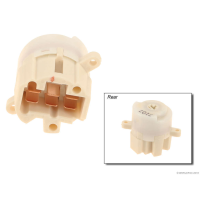
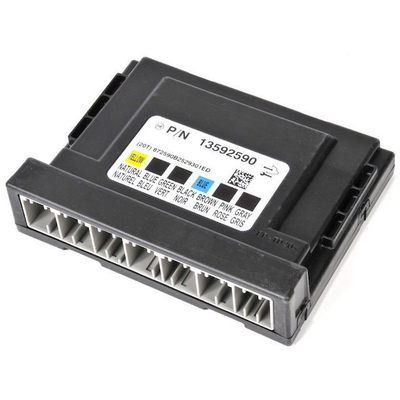
Below are the parts most often responsible for code B3935, ranked by how frequently each one is the actual culprit (per the diagnosis above). Tap any to see what we have for your vehicle.





The information in this article is provided for general reference and educational purposes only. Vehicle specifications, procedures, and part compatibility can vary by production date, trim level, and region. Always consult your vehicle's factory service manual and verify part numbers before purchasing or performing repairs. Safety-critical components such as airbags, seat belts, and braking systems should be installed by a qualified professional.
- 🧭 Diagnostic Flowchart
- 🛍️ Shop This Part
- What Does B3935 Mean?
- Can I Drive With B3935?
- Common Causes
- Symptoms
- Common Fixes & Costs
- Used vs. New Parts: Buying Guide
- What Happens If You Wait — Timeline
- Cost of Not Fixing It
- Diagnosis Steps
- When This Code Triggers (Freeze-Frame Conditions)
- Related Codes
- Climate & Environmental Factors
- How to Talk to a Mechanic About This Code
- Where to Take It: Dealer vs Independent vs Chain
- When to Walk Away From the Repair
- What Scan Tool You Need for This Code
- How to Clear the Code After You Fix It
- Will This Fail Emissions / State Inspection?
- Most Commonly Affected Vehicles
- Manufacturer-Specific Notes
- Real Owner Stories
- 2016 Chevy Express 3500 work van suddenly won't start.
- 2014 Chevy Silverado with 85,000 miles has intermittent no-start and 'Service Theft Deterrent System' message.
- 2009 GMC Yukon owner was told they needed a new BCM for over $1,000.
- How to Prevent This Code From Triggering
- Frequently Asked Questions
- Can I just bypass the B3935 code?
- Why did my car start fine yesterday but won't start today with code B3935?
- Will a new car battery fix a B3935 code?
- My mechanic wants to replace the BCM for $900. Is this necessary?
- What's the difference between a 'no-crank' and 'crank-no-start' with this code?
- I installed an aftermarket remote starter and now my car won't start. Is it related to the B3935 code?
- What does the code 'B3935 57' on my mechanic's scan tool mean?
- What is the most common misdiagnosis for B3935?
- Key Takeaways
- 🎟️ Get 5% Off