

B3935 on 2016-2019 Buick Cascada: Security Light, No-Start Causes and Fixes
On a 2016-2019 Buick Cascada, code B3935 indicates a key authentication failure, causing a no-start and security light. Before replacing parts, check for radio frequency interference (RFI) from devices like phone chargers, other key fobs, or even aftermarket LED lights, as advised by GM Technical Service Bulletins (PIC5650 series). Removing sources of RFI is the most likely and cost-free fix. If RFI is not the cause, the next step is to try the spare key or place the key in the designated transm
- B3935 means your car's security system doesn't recognize your key.
- The most likely cause is interference from a phone charger, another fob, or another electronic device. Remove these items first.
- Do not replace any expensive parts like the BCM until you have tried removing all interference sources, testing your spare key, and replacing the key fob battery.
- If the problem persists, professional diagnosis is needed as it may involve a faulty key or control module requiring special programming tools.
What's Unique About the 2016-2019 Buick CASCADA
For the Buick Cascada and other GM vehicles of this era, General Motors issued specific Technical Service Bulletins (TSBs), namely the PIC5650 series (up to at least version M), regarding code B3935. These bulletins strongly emphasize that external Radio Frequency Interference (RFI) is a primary cause for this intermittent no-start condition. The TSBs explicitly warn technicians *not* to replace any parts for this concern until all sources of RFI—including aftermarket chargers, LED lights, and even other keys on the keychain—have been thoroughly ruled out.
Diagnostic Flowchart
Tap your situation to follow the diagnostic path that matches what you're seeing on this vehicle.
Symptoms You May Notice
- Intermittent no-crank or no-start condition.
- Engine starts and immediately stalls.
- Security indicator light is illuminated or flashing on the dashboard.
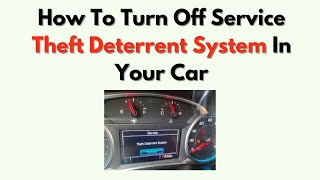
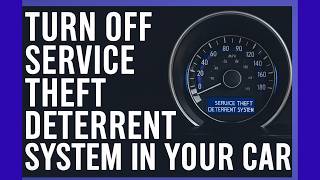
- A 'Service Theft Deterrent System' message may appear on the driver information center. 🎬 Watch: How to address the Service Theft Deterrent message.
- A 'No Fob Detected' message may appear, even with the key inside the vehicle.
- The vehicle may start successfully if the key fob is placed in the designated transmitter pocket.
- Replacing the Body Control Module (BCM) or ignition switch without first ruling out Radio Frequency Interference (RFI) and key fob battery issues. GM TSBs PIC5650 series specifically advise against this.
- Replacing the starter motor, when the no-start is actually caused by the security system disabling the starting circuit.
- Replacing the car's main battery without diagnosing the underlying immobilizer fault.
Most Likely Causes
- Radio Frequency Interference (RFI) 🔴 High Probability As documented in GM TSBs PIC5650G, K, L, and M, the vehicle's security system (which operates on 315 MHz, 433 MHz, and 125 kHz frequencies) is sensitive to external radio signals. Common sources include aftermarket phone chargers (especially USB types), dash cams, other key fobs on the same keychain, building access cards, toll passes, and even aftermarket LED lighting.
How to confirm: Remove all aftermarket electronic devices and extra keys/fobs from the vehicle and keychain. Try starting the car with only the single Cascada key present. If the car starts reliably, RFI was the cause. The issue is often intermittent and hard to duplicate for a technician, making this step crucial.
Typical fix: Identify and remove the source of the interference. This is often a zero-cost fix.
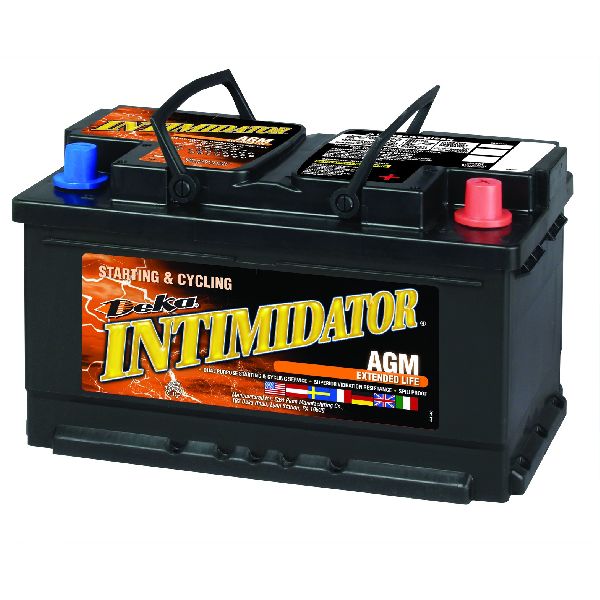
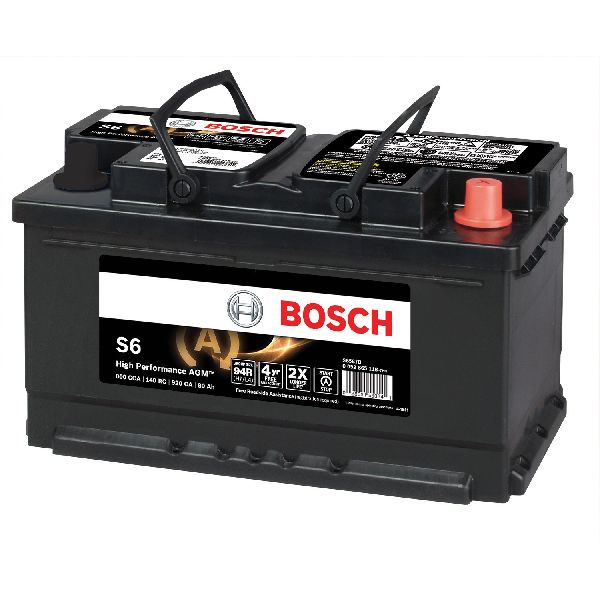
Est. part cost: $0 - Weak or Dead Key Fob Battery 🟡 Medium Probability → Shop Vehicle Battery
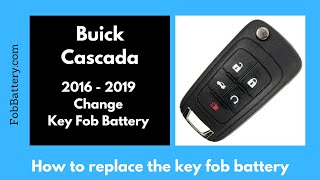
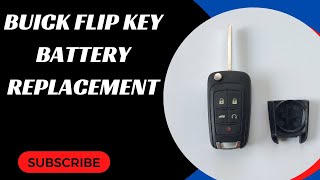
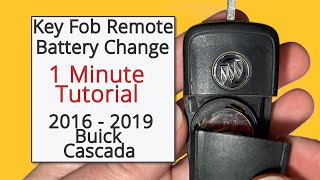
How to confirm: Try using the spare key fob. If the spare key works consistently, the battery in the primary key is the likely issue. You can also try placing the problematic key in the designated transmitter pocket, which is located under the cup holder in the center console; this allows the car to start even with a weak fob battery. The car uses a CR2032 battery. 🎬 Watch: How to replace your Cascada key fob battery.
Typical fix: Replace the CR2032 battery inside the key fob.
Est. part cost: $2-$10 - Faulty Key Fob ⚪ Low Probability → Shop Keyless Entry Transmitter Damage from being dropped or getting wet can cause the internal transponder chip to fail.
How to confirm: If a new battery and removing RFI sources doesn't help, and the spare key works perfectly, the transponder chip in the original key may have failed. A locksmith or dealer can test the key's signal.
Typical fix: Replace and program a new key fob. This requires a professional locksmith or dealer.
Est. part cost: $150-$400 - Faulty Body Control Module (BCM) or Outdated Software ⚪ Low Probability → Shop Body Control Module
How to confirm: This is a last resort after all other causes are eliminated. Requires professional diagnosis with a GM-specific scan tool to check BCM communication and function. In some cases, a software update may be available, as noted in TSB PI1180A for other GM models with similar issues.
Typical fix: Reprogram or replace the Body Control Module. This must be done by a dealer or qualified shop with programming capabilities.
Est. part cost: $400-$800
Rare But Worth Checking
- Faulty Immobilizer Antenna/Reader Coil: → Shop Antenna The coil around the ignition switch (or in the keyless start button area) energizes the key's transponder. If it fails, it cannot read the key. This is less common than key or interference issues but can happen due to electrical failure.
- Wiring Harness Issue: A damaged or corroded wire between the BCM and the immobilizer antenna can cause an intermittent loss of communication, triggering the code.
Diagnosis Steps
- Check for any Technical Service Bulletins (TSBs) related to your vehicle's VIN. The PIC5650 series (G, K, L, M) is highly relevant.
- Question the driver about any aftermarket electronics (phone chargers, dash cams, LED lights) or other fobs/cards on their keychain.
- Remove ALL potential sources of Radio Frequency Interference (RFI) from the vehicle and the keychain.
- Attempt to start the vehicle with all RFI sources removed.
- If the issue persists, try the spare key fob.
- If the spare key works, replace the CR2032 battery in the original key fob.
- If the issue still persists with both keys, try placing the key fob in the designated transmitter pocket. For the Cascada, this is located by removing the cup holder insert from the center console. Place the fob in the pocket with buttons facing up and attempt to start the car.
- If a new battery doesn't fix the original key, and the pocket start works, the key's transmitter may be weak or failing.
- If neither key works and RFI is ruled out, have a professional scan the BCM for codes and live data.
- Follow the specific diagnostic procedure for B3935 in the factory service manual, which may involve testing the immobilizer antenna and wiring.
- As a final step, diagnosis will point toward a faulty BCM, which may need reprogramming or replacement. 🎬 See this guide on BCM location and removal. Check for available software updates first.
Parts You'll Likely Need
- Key Fob Battery
(OEM #CR2032)— A weak battery is a common cause for an intermittent signal, leading to authentication failure.
Trusted brands: Energizer, Duracell, Panasonic
OEM price range: $5-$10
Aftermarket price range: $2-$5 - Key Fob / Transmitter
(OEM #13599912, 13586490, 13599913 (FCC ID: KR55WK50073))— If the internal transponder chip fails, the key itself must be replaced and programmed to the vehicle. Always verify the part number with a dealer using your VIN.
Trusted brands: ACDelco (OEM), NorthCoast Keyless (OEM Refurbished)
OEM price range: $119.99
Aftermarket price range: $29.77 - $75.00
Related Codes That Often Appear With This One
- B3055 — This code relates to a problem with the key transponder itself. It is often set alongside B3935 when a key is not recognized.
- B3060 — This code points to an issue with the immobilizer antenna (unpowered transponder). It indicates a problem with the car's ability to read the key, which can lead to the B3935 authentication failure.
Technical Service Bulletins (TSBs) & Recalls
- PIC5650M: Supersedes previous versions and warns against replacing parts for a no-start with B3935 before checking for aftermarket equipment and other sources of Radio Frequency Interference (RFI). It provides an extensive list of potential RFI sources including phone chargers, LED lights, and toll passes.
- PIC5650L: An earlier version of the TSB that specifically mentions B3935 in relation to no-start/stall concerns and asks technicians to inquire about Radio Frequency Identification devices.
- PI1180A: While not for the Cascada specifically, this TSB for 2014-2015 GM trucks and SUVs addresses a no-start with B3935 and B2955, and the fix is a BCM software update, indicating a precedent for software-related fixes for this code within GM.
Platform-Specific Known Issues
- The 2016-2019 Buick Cascada is explicitly mentioned in GM TSBs PIC5650L and PIC5650M, which highlight the platform's sensitivity to RFI causing intermittent no-start conditions with code B3935.
- The transmitter pocket for emergency starting is located under the cup holder insert in the center console, which is not an intuitive location for all drivers.
- Owners on forums like AACA have noted that while mechanical parts are often shared with other GM vehicles, some model-specific parts can be challenging to source since the car was only sold for four model years and GM has since sold Opel.
Mechanic-Grade Diagnostic Values
- Immobilizer Reader Coil Resistance — expected: 18 - 24 ohms. Failure: A reading outside this range indicates a faulty reader coil.
- Immobilizer Reader Coil Voltage (Key ON) — expected: Should be >80mV, then drop to ~70mV.. Failure: A reading less than ~20mV indicates a fault in the immobilizer circuit or a poor connection. Fluctuations when wiggling connectors point to a bad contact.
Hidden / Shadow Codes Worth Checking
- B2955: Security Sensor Data Circuit Malfunction. This code often sets with B3935 and may indicate that a BCM software update is required to fix the no-start condition. (see via A GM-specific scan tool (GDS2/Tech2) is required. TSB PI1180A specifically addresses the combination of B3935 and B2955.)
Scan Tool Commands That Help
- GM Service Programming System (SPS) with GDS2/Tech2: Body Control Module Programming and Setup — This function is used to reprogram the BCM with updated software calibrations. It is specifically called for in TSB PI1180A to fix a no-start condition where both B3935 and B2955 are present.
- GM Service Programming System (SPS) with GDS2/Tech2: Immobilizer Learn / All Keys Lost Programming — This procedure is required when replacing a key fob or the BCM. It involves a 30-minute relearn procedure (3 cycles of 10 minutes each) to teach the BCM the new key's transponder value.
Wiring & Ground Locations
- K9 Body Control Module (BCM) — Located on the passenger side of the vehicle, behind the panel along the bottom of the center console. It is tucked into a slot and has seven multi-pin connectors.. The BCM is the central module for the immobilizer system. It receives the signal from the key's transponder via the reader coil and decides whether to authorize engine start. All diagnostic paths for B3935 lead to or from the BCM.
- G103 — Located at the left rear of the engine compartment on the cowl, above the brake booster.. This is a primary ground point for multiple critical components, including the Body Control Module (BCM), Instrument Panel Cluster (IPC), and Data Link Connector (DLC). A poor connection at G103 can cause intermittent communication issues and trigger various BCM-related codes, including B3935.
- Immobilizer Reader Coil — This is an antenna ring located around the ignition lock cylinder (for keyed ignition) or integrated near the push-start button.. This coil energizes the transponder chip in the key and receives its signal. A failure of the coil or its wiring to the BCM is a direct cause for codes like B3060 and can lead to a B3935 authentication failure. An eBay listing for a complete immobilizer kit shows this part (PN 13500157).
Real Owner Repair Stories
- Carly Community Forum (2019 Buick Cascada, 43,539 km) — The engine won't start.
✅ What actually fixed it The owner suspected battery cable connections. After advice from another user, they checked and found the connections were not properly secured. After cleaning the terminals and ensuring a firm connection, the car started successfully.
OEM Part Supersession History
13599912→13599913— Part number update or revision by GM.
Heads up: Part sellers list 13599912 and 13599913 as interchangeable for the Buick Cascada. Both are associated with FCC ID KR55WK50073. Part number 13586490 is also linked to the same FCC ID but is primarily listed for other GM vehicles like the Chevrolet Impala and Sonic, though it may be compatible.
Helpful Videos

We Have This Part in Stock



The information in this article is provided for general reference and educational purposes only. Vehicle specifications, procedures, and part compatibility can vary by production date, trim level, and region. Always consult your vehicle's factory service manual and verify part numbers before purchasing or performing repairs. Safety-critical components such as airbags, seat belts, and braking systems should be installed by a qualified professional.
- Buick CASCADA:
- 🧭 Diagnostic Flowchart
- 🎬 Helpful Videos
- 🛍️ Shop This Part
- What's Unique About the 2016-2019 Buick CASCADA
- Symptoms You May Notice
- Most Likely Causes
- Rare But Worth Checking
- Diagnosis Steps
- Parts You'll Likely Need
- Related Codes That Often Appear With This One
- Technical Service Bulletins (TSBs) & Recalls
- Platform-Specific Known Issues
- Mechanic-Grade Diagnostic Values
- Hidden / Shadow Codes Worth Checking
- Scan Tool Commands That Help
- Wiring & Ground Locations
- Real Owner Repair Stories
- OEM Part Supersession History
- 🎟️ Get 5% Off