

B3935 on 2016-2023 Buick Enclave: Understanding and Fixing the No-Start Security Fault
Code B3935 on a Buick Enclave means the vehicle's security system is preventing it from starting. This is most often caused by radio frequency (RF) interference from other devices on your keychain. Before replacing any parts, remove all other keys and electronic devices from your Enclave's key fob and try starting the vehicle again.
- B3935 means your car's security system is preventing it from starting.
- The most likely cause is interference from other keys or access cards on your keyring. Isolate your Enclave key and try again.
- Do not replace expensive parts like the BCM or starter until you have ruled out interference and key fob issues.
- Trying the spare key is a crucial diagnostic step.
- If a key fob battery is suspected, replacing the CR2032 battery is a cheap and easy first step.
What's Unique About the 2016-2023 Buick ENCLAVE
On this generation of Buick Enclave and other GM vehicles, the immobilizer system is known to be sensitive. Manufacturer Technical Service Bulletins (TSBs) specifically highlight that intermittent no-start conditions with code B3935 are frequently caused by Radio Frequency Identification (RFID) devices kept on the same keyring as the vehicle's key fob. Technicians are explicitly advised not to replace any parts until this external interference is ruled out, as it is the most common and often overlooked cause. TSB PIC5650M lists numerous sources of interference, including other vehicle keys, toll passes, building access cards, and even aftermarket LED lights or USB chargers plugged into the vehicle.
Diagnostic Flowchart
Tap your situation to follow the diagnostic path that matches what you're seeing on this vehicle.
Generation note: The 2016-2023 year range covers the end of the first generation (2016-2017) and the beginning of the second generation (2018-2023) Buick Enclave. While the underlying immobilizer system logic is similar, the specific modules and key fob designs differ. The first generation uses a 315 MHz key fob, while the second generation uses a 433 MHz smart key. However, the primary cause of RFID interference and the associated TSBs apply to both generations.
Symptoms You May Notice
- Engine does not crank (no-crank, no-start)
- Engine starts and then immediately shuts off (start-stall)
- Solid or flashing security indicator light on the dashboard.
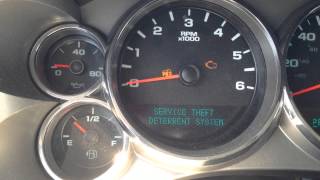
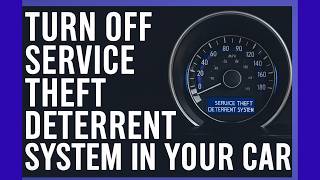
- Message on the driver information center like "Service Theft Deterrent System" or "No Fob Detected".
- Replacing the vehicle's main 12V battery
- Replacing the starter motor
- Replacing the Body Control Module (BCM) without thorough diagnosis
Most Likely Causes
- Radio Frequency (RF) Interference 🔴 High Probability As documented in GM TSBs PIC5650L and PIC5650M, the vehicle's immobilizer system is sensitive to external radio signals. Other key fobs, office access cards, or any device with an RFID chip can interfere with the communication between the Enclave's key and the car's security antenna. TSB PIC5650M provides an extensive list of potential sources, including toll passes, fuel station speed passes, aftermarket LED lighting, and even certain USB phone chargers.
How to confirm: Remove all other keys, fobs, and RFID cards from the keyring. Use only the Buick Enclave key to try and start the vehicle. If the vehicle starts consistently, interference was the cause. Also, remove any aftermarket chargers or devices plugged into the vehicle's power outlets.
Typical fix: Keep the vehicle key on its own ring or separate from other electronic devices. Identify and remove any aftermarket devices causing interference.
Est. part cost: $0 - Weak or Dead Key Fob Battery 🟡 Medium Probability → Shop Vehicle Battery While the key's transponder chip is passive and powered by the car's antenna, a weak main battery in the fob can cause erratic behavior in the complex electronics of push-to-start systems, preventing other functions from working correctly and potentially contributing to the error.
How to confirm: Try the vehicle's second key fob. If that works, replace the battery in the problematic fob. For push-to-start models (2018+), place the fob in the designated transmitter pocket (often in the center console or glove box) as described in the owner's manual, which allows the car to read the chip even with a dead battery.
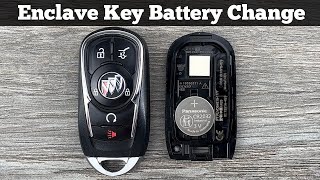
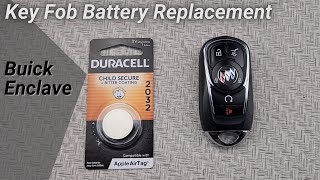
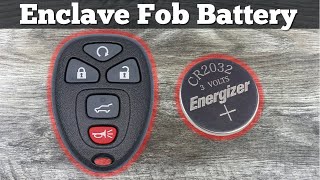
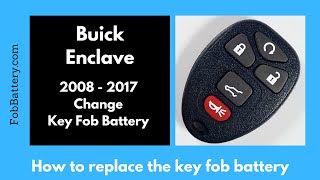
Typical fix: Replace the CR2032 battery inside the key fob.
Est. part cost: $2-$10 - Defective Key Fob ⚪ Low Probability → Shop Keyless Entry Transmitter
How to confirm: If a new battery and removing RF interference don't work, but the vehicle's second key works perfectly, the first key is likely faulty. A locksmith or dealership can test the transponder.
Typical fix: Replace and program a new key fob. This must be done by a dealership or a qualified automotive locksmith.
Est. part cost: $75-$400
Rare But Worth Checking
- Body Control Module (BCM) Software Glitch: → Shop Body Control Module A specific TSB (PI1180A) was issued for some 2014-2015 GM trucks and SUVs for B3935 accompanied by B2955, which was resolved by a BCM software update. While not specific to the Enclave in this document, it indicates that software issues can be a cause and a reflash might be a solution if all other causes are ruled out, particularly if both codes are present.
- Faulty Body Control Module (BCM) or Theft Deterrent Module (TDM): → Shop Anti-Theft Control Module This is a rare cause. The TSBs specifically advise against replacing modules for this code unless all other possibilities, especially RF interference, have been exhausted. A Reddit user with a 2015 Enclave reported being unable to solve a persistent anti-theft issue even after trying all common fixes, highlighting the complexity that can lead to misdiagnosis.
- Damaged Wiring or Antenna Ring: The antenna that energizes and reads the key transponder is located around the ignition lock cylinder or push-start button. Damage to this component or its wiring could prevent a proper signal exchange, but this is uncommon.
Diagnosis Steps
- Check for a security light on the dashboard. Its presence confirms a theft-deterrent issue.
- Remove the Buick Enclave key from the keyring, separating it from all other keys, fobs, and access cards. Attempt to start the vehicle with the isolated key.
- If the vehicle has a push-button start, try placing the key fob in the designated transmitter pocket as shown in the owner's manual. This provides a stronger connection and can overcome a weak fob battery or minor interference.
- Try the second key fob. If the vehicle starts and runs normally with the second key, the issue lies with the first key (either its battery or the key itself).
- Replace the battery (typically a CR2032) in the non-working key fob.
- If the issue persists with both keys and after ruling out interference, consider a 'Security Relearn Procedure'. This typically involves turning the key to the 'ON' position for 10 minutes until the security light goes out, turning it off for 5-10 seconds, and repeating the cycle two more times (for a total of three cycles and about 30 minutes). After the third cycle, turn the key off and then try to start the vehicle normally.
- If the vehicle still won't start, a professional scan tool is needed to observe data from the BCM/TDM and confirm if the key is being seen. At this point, the issue may be a faulty module or wiring, requiring professional diagnosis.
Parts You'll Likely Need
- Key Fob Battery
(OEM #CR2032)— A weak battery can cause intermittent communication issues with the vehicle's security system.
Trusted brands: Energizer, Duracell, Panasonic
OEM price range: $5-$10
Aftermarket price range: $2-$5 - Keyless Entry Remote Fob (2016-2017)
(OEM #15913415, 22936101, 20952477 (FCC ID: OUC60270, OUC60221))— If the internal transponder chip or circuitry of the key fails, the entire fob must be replaced and programmed to the vehicle. This generation uses a 315 MHz frequency.
Trusted brands: ACDelco (OEM), Dorman
OEM price range: $150-$250
Aftermarket price range: $75-$150 - Smart Key Fob (2018-2023)
(OEM #13521090, 13506668 (FCC ID: HYQ4EA))— If the internal transponder chip or circuitry of the smart key fails, the entire fob must be replaced and programmed to the vehicle. This generation uses a 433 MHz frequency.
Trusted brands: ACDelco (OEM), FOBIKO
OEM price range: $200-$350
Aftermarket price range: $85-$175
Related Codes That Often Appear With This One
- B3055 — Relates to a problem with the key transponder. Often set together with B3935 during a security system fault.
- B3060 — Indicates an issue with the transponder antenna circuit. It's part of the same system and can be triggered by similar interference or hardware faults.
- C0750, C0755, C0760, C0765, C0775 — These codes relate to the Tire Pressure Monitoring System (TPMS), which also uses radio frequency communication. Severe RF interference can sometimes affect multiple vehicle systems, causing these codes to appear alongside B3935.
Technical Service Bulletins (TSBs) & Recalls
- PIC5650M: Supersedes previous versions. Details intermittent no-crank/no-start or stall with security light on. Lists B3935 and associated DTCs. Provides an extensive list of potential RFI sources from aftermarket devices and advises against part replacement until RFI is ruled out.
- PIC5650L: Specifically advises against replacing parts for B3935 and points to Radio Frequency Identification interference as a likely c
Platform-Specific Known Issues
- This platform is highly susceptible to Radio Frequency Interference causing this code, as documented in TSBs PIC5650M and PIC5650L. The bulletins explicitly state that technicians should investigate for RFID devices on the owner's keychain before replacing any components.
- TSB PIC5650M provides a detailed list of non-obvious RFI sources, including aftermarket LED interior/exterior lights, USB power banks, and even decorative 'Bedazzle Trim Rings' around the ignition cylinder.
Mechanic-Grade Diagnostic Values
- Scan Tool Immobilizer Data — expected: When a known-good key is used, parameters like 'Transponder Key Present' should read 'Yes' and 'Invalid Key' should read 'No'.. Failure: If 'Transponder Key Present' reads 'No' or 'Invalid Key' reads 'Yes' intermittently, it points towards RF interference or a faulty key/antenna. If it's always 'No', it suggests a hard failure of the key or antenna.
Hidden / Shadow Codes Worth Checking
- B3935 57: The '57' is a symptom byte indicating 'Transponder Authentication Error'. It specifies that the key's transponder was read and recognized, but it failed the cryptographic challenge-response calculation with the BCM/TDM. (see via GM GDS2 or a professional scan tool capable of reading manufacturer-specific symptom bytes.)
Scan Tool Commands That Help
- GDS2: Immobilizer Learn / Add or Replace Key Fobs — This function is required after replacing a key fob or the Body Control Module (BCM). The GDS2 tool guides the technician through a 10-minute security wait procedure to program new keys into the vehicle's immobilizer memory.
- GDS2: Body Control Module Programming and Setup — If the BCM itself is replaced, it must be programmed with the vehicle's specific information (VIN, RPO codes) using the SPS (Service Programming System) via TIS2Web, followed by the Immobilizer Learn procedure to recognize the vehicle's keys.
Wiring & Ground Locations
- K9 Body Control Module (BCM) — On 2018+ Enclave models, the BCM is located inside the cabin, behind the lower panel on the passenger side of the center console. On first-generation models (2016-2017), it is typically behind the driver-side lower dashboard, near the steering column.. The BCM is the central module for the immobilizer system on later models. All key authentication signals, antenna inputs, and communication with the ECM pass through it. A poor connection, water damage, or a bad ground at the BCM can directly cause code B3935.
- G103 / G300-series Grounds — Key grounds for the BCM and related interior modules are often located on the cowl in the engine compartment (G103) or inside the cabin behind kick panels or seats (G300-series). A GM service bulletin warns that removing a BCM ground while the battery is connected can damage the module.. A loose or corroded ground connection for the BCM can cause a variety of intermittent electrical issues, including failure to authenticate the key, leading to a B3935 code.
Real Owner Repair Stories
- Camaro5 Forum user 'RedTexasSS' (2012 Chevrolet Camaro SS (similar GM Pass-Key III+ system)) — No crank, no start, 'Service Theft Deterrent System' message, security light on.
❌ Tried (didn't work) Disconnecting and reconnecting the battery., An initial attempt at the 30-minute key relearn procedure.
✅ What actually fixed it A Snap-on scanner revealed code B3935. The original switchblade key had failed internally. A new, inexpensive standard key was cut by a locksmith. The 30-minute (3x10 min cycles) key relearn procedure was performed successfully with the new key, which allowed the car to start. A new OEM-style switchblade key was then purchased and programmed using the 'add key' procedure.
Model Year Variations Within This Range
- 2016-2017 vs 2018-2023: The diagnostic scan tool changes. First-generation models up to 2017 are primarily diagnosed using the Tech2/Tech2Win software. Second-generation models from 2018 onwards use the newer GDS2 (Global Diagnostic System 2) platform for all module diagnostics, including immobilizer functions.
- 2016-2017 (First Gen) vs 2018-2023 (Second Gen): The location of the Body Control Module (BCM) differs. On first-generation Enclaves, the BCM is typically found behind the lower dashboard on the driver's side. On second-generation models, it is located behind a panel on the passenger side of the center console.
Helpful Videos
We Have This Part in Stock

The information in this article is provided for general reference and educational purposes only. Vehicle specifications, procedures, and part compatibility can vary by production date, trim level, and region. Always consult your vehicle's factory service manual and verify part numbers before purchasing or performing repairs. Safety-critical components such as airbags, seat belts, and braking systems should be installed by a qualified professional.
- Buick ENCLAVE:
- 🧭 Diagnostic Flowchart
- 🎬 Helpful Videos
- 🛍️ Shop This Part
- What's Unique About the 2016-2023 Buick ENCLAVE
- Symptoms You May Notice
- Most Likely Causes
- Rare But Worth Checking
- Diagnosis Steps
- Parts You'll Likely Need
- Related Codes That Often Appear With This One
- Technical Service Bulletins (TSBs) & Recalls
- Platform-Specific Known Issues
- Mechanic-Grade Diagnostic Values
- Hidden / Shadow Codes Worth Checking
- Scan Tool Commands That Help
- Wiring & Ground Locations
- Real Owner Repair Stories
- Model Year Variations Within This Range
- 🎟️ Get 5% Off