

B3935 on 2021-2022 Buick Encore: No-Start Causes and Security System Fixes
Code B3935 on a 2021-2022 Buick Encore almost always means the vehicle's security system is preventing it from starting due to radio frequency interference. The most likely fix is free: remove all other keys, fobs, and access cards from your keychain and try starting the car again.
- B3935 means your Encore's anti-theft system is preventing it from starting.
- The most common cause is Radio Frequency Interference (RFI). Before any repairs, isolate your car key from all other fobs, cards, and electronics and try again.
- Do not replace the starter or BCM. The issue is almost always related to key authentication, not a major mechanical or electronic component failure.
- If isolating the key doesn't work, try your spare key or replace the CR2032 battery in your primary key fob.
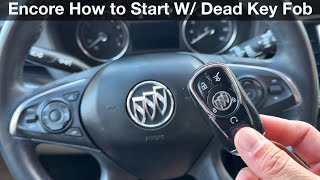
- If the key fob battery is dead, you can still start the car by placing the fob in the transmitter pocket located in the front cup holder.
What's Unique About the 2021-2022 Buick ENCORE
On this generation of Buick Encore and its platform-mate, the Chevrolet Trax, the immobilizer system is known to be highly sensitive. Multiple GM Technical Service Bulletins (TSBs), including PIC5650M and PIC5650L, explicitly warn technicians that intermittent no-start conditions with code B3935 are frequently caused by external Radio Frequency Interference (RFI). Technicians are advised not to replace any parts until RFI from devices like other key fobs, building access cards, aftermarket LED lights, or even low-quality phone chargers has been completely ruled out.
Diagnostic Flowchart
Tap your situation to follow the diagnostic path that matches what you're seeing on this vehicle.
Symptoms You May Notice
- Intermittent no-crank or no-start condition. [Bulletin #PIC5650M, 9]
- Engine starts and then immediately stalls. [Bulletin #PIC5650M, 9]
- Security indicator light is illuminated on the dashboard. [Bulletin #PIC5650M, 3]
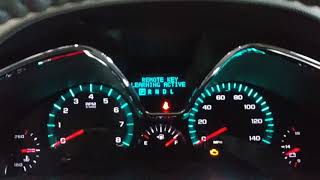
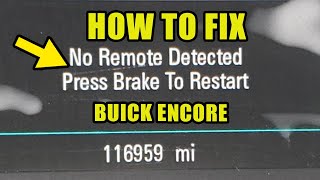
- A "No Remote Detected" message may appear on the driver information center.
- A single, slow wipe of the windshield wipers when attempting to start the engine.
- Clicking sound from the dash, similar to a dead battery, but dash lights are on.
- Replacing the starter motor. The starter is usually not the problem; the security system is preventing it from engaging.
- Replacing the vehicle's main 12V battery. While a very low battery can cause various electrical issues, if the dash lights up but the car won't start with a security light on, the battery is not the primary suspect.
Most Likely Causes
- Radio Frequency Interference (RFI) 🔴 High Probability GM TSBs PIC5650M and PIC5650L specifically identify RFI as a primary cause for this code on modern GM vehicles due to a sensitive immobilizer system that operates on the 125 kHz frequency.
How to confirm: Remove the Encore's key fob from your keychain. Isolate it from all other keys, fobs, access cards, and electronic devices. Try to start the vehicle with only the Encore key present. If it starts reliably, RFI was the cause.
Typical fix: Keep the vehicle key separate from other electronic devices. Common sources of interference include other car keys, building access cards, toll passes, aftermarket LED lighting, and low-quality aftermarket phone chargers plugged into the 12V outlet. The fix is typically free.
Est. part cost: $0 - Weak or Dead Key Fob Battery 🟡 Medium Probability → Shop Vehicle Battery The key fob requires sufficient battery power to communicate its transponder information. A weak battery can lead to a failed authentication handshake, especially in cold weather.
How to confirm: Try starting the vehicle with the spare key. If the spare key works consistently, the primary key's battery is likely weak. You can also try placing the key fob in the designated transmitter pocket (in the front cup holder) which allows the car to start even with a weak battery.
Typical fix: Replace the CR2032 battery inside the key fob.
Est. part cost: $2-$10 - Damaged or Faulty Key Fob ⚪ Low Probability → Shop Keyless Entry Transmitter Dropping the key or exposing it to moisture can damage the internal transponder chip, preventing it from communicating correctly.
How to confirm: If the spare key works perfectly and the primary key fails even after a battery change and being isolated from RFI sources, the primary key itself is likely faulty.
Typical fix: The key fob must be replaced and programmed to the vehicle by a dealership or a qualified automotive locksmith. A dealership may quote up to $495 for a replacement, while a locksmith may be cheaper.
Est. part cost: $150-$400
Rare But Worth Checking
- Loose or Corroded BCM Ground: A poor ground connection for the Body Control Module (BCM) can cause a wide range of intermittent electrical issues, including the failure to authenticate the key. On similar GM platforms, ground G103 (often located on the cowl above the brake booster) is a critical ground for the BCM and other security-related components. Inspecting this ground for corrosion or looseness can resolve unexplained electrical faults.
- Faulty Body Control Module (BCM): → Shop Body Control Module While rare, the BCM itself can fail. TSBs strongly advise ruling out all other possibilities first. This is a last-resort diagnosis after RFI, key fob, and wiring issues have been eliminated.
Diagnosis Steps
- Isolate the Key: Remove the Buick Encore key fob from all other keys, fobs, and RFID cards on your keychain. Try to start the vehicle. This is the most important first step.
- Check for Interior RFI: Unplug any aftermarket devices from the 12V power outlets or USB ports (e.g., phone chargers, dash cams, aftermarket LED lights) and try starting the vehicle again.
- Try the Spare Key: Attempt to start the vehicle with your second key fob. If it works, the issue lies with your primary key fob (likely the battery or an internal fault).
- Use the Transmitter Pocket: If the key fob battery is suspected to be dead, place the fob in the transmitter pocket located in the front cup holder and attempt to start the engine. This is a backup method designed for a weak fob battery.
- Replace Key Fob Battery: If the spare key works or using the transmitter pocket works, replace the CR2032 battery in the problematic key fob.
- Inspect BCM Grounds: If the problem persists, a more advanced step is to inspect the main ground connections for the Body Control Module for tightness and corrosion. Specifically check ground G103, which on some GM vehicles is on the cowl near the brake booster.
- Scan for Other Codes: Use an OBD-II scanner to check for other related codes like B3055 or B3060, which can confirm a security system fault.
- Seek Professional Diagnosis: If none of the above steps resolve the issue, the problem may be a faulty key, a bad immobilizer antenna, or a BCM issue, which will require diagnosis by a dealer or qualified technician with a GM-specific scan tool.
Parts You'll Likely Need
- Key Fob Battery
(OEM #CR2032)— A weak battery is a common cause for the key fob failing the authentication challenge with the vehicle.
Trusted brands: Energizer, Duracell, Panasonic
OEM price range: $5-$10
Aftermarket price range: $2-$8 - Key Fob / Remote
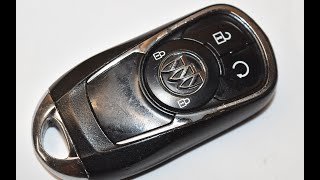
(OEM #13534465)— If the internal transponder chip is damaged, the entire key fob will need to be replaced and programmed to the vehicle. The FCC ID is often HYQ4AS.
Trusted brands: ACDelco (OEM), Standard Motor Products
OEM price range: $200-$400
Aftermarket price range: $75-$200
Related Codes That Often Appear With This One
- B3055 — This code means 'No Transponder Modulation or No Transponder,' indicating a failure to read the key. It is frequently set alongside B3935, as noted in TSBs PIC5650M and PIC5650L, often due to the same RFI or key-related issues.
- B3060 — This code for 'Unprogrammed Transponder' can also appear with B3935 during a failed authentication attempt. It is also mentioned in TSBs PIC5650M and PIC5650L.
Technical Service Bulletins (TSBs) & Recalls
- PIC5650M: Details intermittent no crank/start/stall with security light on, lists B3935 and advises checking for RFI from a long list of sources including other fobs, access cards, and aftermarket electronics.
- PIC5650L: Explicitly warns against replacing parts for B3935 and points to Radio Frequency Identification devices as a likely cause. [Bulletin #PIC5650L, 7]
- PIC5650K: A newer version of the TSB that reiterates the RFI issue and suggests technicians use RF meters to sniff for interference around the 125 kHz, 315 MHz, and 433 MHz frequencies.
Platform-Specific Known Issues
- As per TSB #PIC5650L, technicians are specifically instructed *not* to replace any parts for this concern until investigating if the customer uses any Radio Frequency Identification (RFID) devices on their keychain. [Bulletin #PIC5650L, 7]
- TSB #PIC5650M lists B3935 as a key code for an intermittent no-crank, no-start, or start/stall condition related to the security system. It also lists a wide array of potential RFI sources including aftermarket LED lights and USB chargers. [Bulletin #PIC5650M, 7]
- A user on r/MechanicAdvice with a similar GM vehicle described symptoms including a clicking sound and a single slow windshield wipe when the anti-theft system was active, which matches owner experiences with B3935.
Mechanic-Grade Diagnostic Values
- Immobilizer Antenna Coil Resistance — expected: A readable resistance value (specific value not published, but should not be an open or short circuit).. Failure: An open circuit (infinite resistance) or a short circuit (near zero resistance) indicates a faulty antenna coil.
Hidden / Shadow Codes Worth Checking
- B3935 57: This is a symptom byte that specifies 'Transponder Authentication Error'. It confirms the issue is with the cryptographic challenge/response calculation after the key's initial value has been successfully read, pointing more toward a faulty key chip or RFI rather than a completely unknown key. (see via GM GDS2, Tech2, or other professional-level scan tools capable of reading manufacturer-specific symptom bytes.)
Scan Tool Commands That Help
- GDS2 (GM Global Diagnostic System 2): Module Diagnostics > Remote Control Door Lock Receiver > Configure/Reset Functions > Add or Replace Key Fobs — This function is used to program a new or replacement key fob to the vehicle after the original is lost or confirmed faulty.
- GDS2 (GM Global Diagnostic System 2): Immobilizer Learn — This is a required procedure after replacing the Body Control Module (BCM) or Engine Control Module (ECM) to synchronize the security information between the modules and the vehicle's keys.
- GDS2 (GM Global Diagnostic System 2): Clear All DTCs — After a repair is completed (like replacing a key fob battery or removing an RFI source), this command should be used to clear the B3935 code and extinguish the security light.
Wiring & Ground Locations
- Body Control Module (BCM) — Located in the center console, accessible from the passenger side footwell after removing the lower trim panel.. The BCM is the central module for the theft deterrent system. All key authentication signals are processed here. Loose connectors or water intrusion at the BCM can directly cause B3935.
- G103 — On many GM platforms, this ground is located on the cowl at the left rear of the engine compartment, above the brake booster.. G103 is a critical ground point for the BCM, Instrument Panel Cluster (IPC), and the Data Link Connector (DLC). A loose or corroded connection here can cause intermittent voltage drops to the BCM, leading to failed key authentication.
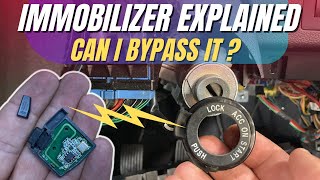
- Immobilizer Antenna — This is a ring-shaped antenna located around the ignition lock cylinder, where you insert the key. For push-to-start models, multiple antennas are placed around the cabin.. This antenna powers the key's transponder and reads its signal. A failure or wiring damage to this component will prevent the BCM from ever seeing the key, leading to codes B3055 or B3935.
Helpful Videos
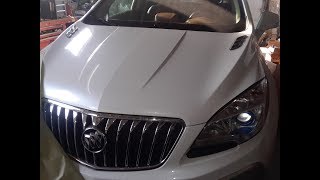
We Have This Part in Stock


The information in this article is provided for general reference and educational purposes only. Vehicle specifications, procedures, and part compatibility can vary by production date, trim level, and region. Always consult your vehicle's factory service manual and verify part numbers before purchasing or performing repairs. Safety-critical components such as airbags, seat belts, and braking systems should be installed by a qualified professional.
- Buick ENCORE:
- 🧭 Diagnostic Flowchart
- 🎬 Helpful Videos
- 🛍️ Shop This Part
- What's Unique About the 2021-2022 Buick ENCORE
- Symptoms You May Notice
- Most Likely Causes
- Rare But Worth Checking
- Diagnosis Steps
- Parts You'll Likely Need
- Related Codes That Often Appear With This One
- Technical Service Bulletins (TSBs) & Recalls
- Platform-Specific Known Issues
- Mechanic-Grade Diagnostic Values
- Hidden / Shadow Codes Worth Checking
- Scan Tool Commands That Help
- Wiring & Ground Locations
- 🎟️ Get 5% Off