

B3935 on 2020-2025 Cadillac CT4: No-Start and Security Fault Causes
On a 2020-2025 Cadillac CT4, code B3935 indicates a security system failure, usually causing a no-start or stall. The most common cause is Radio Frequency (RF) interference from other key fobs, access cards, or even phones and aftermarket chargers near the vehicle's key. Before replacing any parts, remove all other devices from your keychain and from inside the car, and try starting again. If that fails, place the fob in the dedicated transmitter pocket in the center console. This is a known iss
- B3935 means your CT4's anti-theft system has failed to authenticate the key, preventing the engine from starting.
- The most common cause is Radio Frequency (RF) interference. Before any repair, remove all other keys, fobs, cards, and aftermarket chargers from the car and keychain and try again.
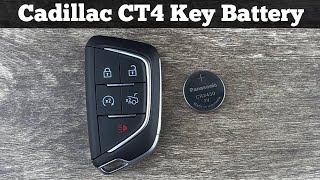
- If interference is not the cause, try replacing the key fob's CR2450 battery or using the spare key.
- Do not replace the BCM or other expensive parts until all interference and key-related issues have been thoroughly ruled out, as per GM's own service bulletins.
What's Unique About the 2020-2025 Cadillac CT4
The security system in the Cadillac CT4 and its platform mates (like the Cadillac CT5 and Chevrolet Camaro) is known to be highly sensitive to Radio Frequency (RF) interference. GM has issued multiple Technical Service Bulletins (TSBs), including #PIC5650L and #PIC5650M, specifically warning technicians *not* to replace parts for a B3935 code until RF interference has been ruled out. This is a significant departure from many other vehicles where a code immediately suggests a faulty component. The TSB lists common culprits including other vehicle keys, toll passes, aftermarket LED lights, and even certain USB phone chargers.
Diagnostic Flowchart
Tap your situation to follow the diagnostic path that matches what you're seeing on this vehicle.
Symptoms You May Notice
- Intermittent no-crank or no-start condition.
- Engine starts and immediately stalls.
- Security indicator light illuminated on the dashboard.
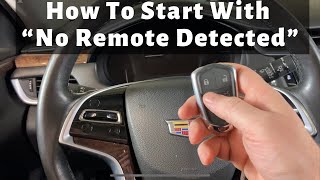
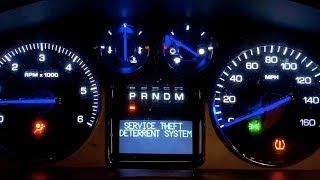
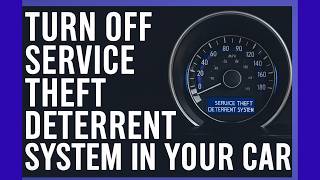
- Message on the Driver Information Center (DIC) related to the key or security system, such as 'No Remote Detected' or 'Service Theft Deterrent System'.
- Passive entry (keyless door unlocking) may be inoperative.
- Replacing the starter motor
- Replacing the vehicle's 12V battery without diagnosing the security system
- Replacing the Body Control Module (BCM) before ruling out RF interference and key fob issues, as warned against in TSBs.
Most Likely Causes
- Radio Frequency (RF) Interference 🔴 High Probability The vehicle's security system is sensitive to external signals. GM TSBs #PIC5650L and #PIC5650M directly address this as a primary cause for intermittent no-starts with code B3935. Interfering items can include other key fobs, building access cards, toll passes, aftermarket LED lighting, and unshielded USB chargers.
How to confirm: Remove all other key fobs, RFID-enabled credit/access cards, and electronic devices (especially aftermarket chargers) from the keychain and from the area near the ignition or key fob pocket. Attempt to start the vehicle with only the CT4 key present. If the vehicle starts, you have confirmed RFI is the cause.
Typical fix: Isolate the vehicle's key fob from other RF-emitting devices. No parts are required. Advise the owner to keep the key on a separate ring.
Est. part cost: $0 - Weak or Defective Key Fob 🟡 Medium Probability → Shop Keyless Entry Transmitter
How to confirm: Try starting the vehicle with the spare key fob. If the spare key works consistently, the primary key is likely the issue. Also, try replacing the battery in the suspect key fob (CR2450 for the CT4). 🎬 Watch: How to replace your CT4 key fob battery. If the battery is weak, placing the fob in the dedicated transmitter pocket (in the center console) may allow the vehicle to start, which also confirms a signal strength problem.
Typical fix: Replace the battery (typically a CR2450) in the key fob. If the transponder chip inside the fob has failed, the entire key fob will need to be replaced and programmed by a dealer or qualified locksmith.
Est. part cost: $5-$400 - Body Control Module (BCM) Software Glitch ⚪ Low Probability → Shop Body Control Module Software-related logic errors can occur in complex electronic modules. TSB PI1180A was issued for other GM vehicles to correct a no-start with B3935 and B2955 by reprogramming the BCM, indicating a precedent for software fixes.
How to confirm: This requires a professional scan tool to check for related codes (like B2955) and to verify the current BCM software calibration against the latest version available from GM.
Typical fix: Reprogram the BCM with the latest software calibration using the GM Service Programming System (SPS). This must be done by a dealer or a properly equipped independent shop.
Est. part cost: $0 (if under warranty) - $200
Rare But Worth Checking
- Faulty Keyless Entry Control Module (KCM) or Antenna:
- Poor BCM Ground Connection:
Diagnosis Steps
- Verify the B3935 code is active using a compatible OBD-II scanner that can read Body codes.
- Question the driver about any items on their keychain or new electronic devices in the car (e.g., phone chargers, dash cams, toll passes, LED lights).
- CRITICAL FIRST STEP: Remove ALL other keys, fobs, access cards, and electronic devices from the vehicle. Attempt to start the engine with only the Cadillac CT4 key fob present.
- If the vehicle starts, the issue is RF interference. Advise keeping the key fob isolated.
- If the vehicle does not start, place the key fob into the dedicated transmitter pocket (located in the center console area) and attempt to start. 🎬 See how to start your Cadillac with a dead remote. If it starts now, this points to a weak key fob battery or a signal strength issue.
- If the vehicle still does not start, try using the spare key fob. If the spare key works, the primary key fob is faulty.
- Replace the battery (CR2450) in the suspect key fob. If that fails, the fob itself needs replacement and programming.
- If neither key works, check the vehicle's main 12V battery to ensure it is fully charged (above 12.4V) and has clean, tight connections, as low system voltage can cause module communication errors.
- If the problem persists, the vehicle requires professional diagnosis to check for BCM software updates (especially if code B2955 is present), inspect KCM/BCM wiring and grounds, or test the keyless entry antennas.
Parts You'll Likely Need
- Key Fob Battery
(OEM #CR2450)— A weak battery can cause intermittent communication between the key and the vehicle, leading to authentication failure. This is a simple and inexpensive first step in diagnosis.
Trusted brands: Energizer, Duracell, Panasonic
OEM price range: $5-$15
Aftermarket price range: $2-$10 - Key Fob
(OEM #13538860 (or alternates like 13548127, 13536990, 13541988))— If the internal transponder chip is damaged, the entire key fob must be replaced and programmed to the vehicle.
Trusted brands: ACDelco (OEM)
OEM price range: $200-$400
Aftermarket price range: $75-$200
Related Codes That Often Appear With This One
- B3055 — Indicates 'No Transponder Modulation or No Transponder', often set with B3935 when RF interference blocks the key's signal entirely. Cited together in TSB #PIC5650M.
- B3060 — Indicates 'Unprogrammed Transponder'. Can appear with B3935 if the system has a glitch during an authentication attempt. Cited together in TSB #PIC5650M.
- B2955 — Relates to a 'Security Sensor Data Circuit Malfunction'. When seen with B3935, it can point to a BCM software issue that may be correctable with a reflash, per TSB PI1180A on other GM models.
- C0750, C0755, C0760, C0765, C0775 — These are Tire Pressure Monitor (TPM) sensor codes. TSB #PIC5650M notes that since the TPM and keyless entry systems both use RF signals managed by the BCM, severe interference can trigger faults in both systems simultaneously.
Technical Service Bulletins (TSBs) & Recalls
- PIC5650M: Addresses intermittent no-crank, no-start, or start/stall with security light on, listing B3935 as a possible DTC. Explicitly warns against parts replacement before investigating RFI from a long list of potential sources like chargers and other fobs.
- PIC5650L: Predecessor to PIC5650M, specifically warns against replacing parts for B3935 and points to RF interference as the primary diagnostic step.
- PI1180A: While not specific to the CT4, it establishes a precedent on other GM models for fixing a B3935 + B2955 combination with a BCM software update.
Platform-Specific Known Issues
- As per GM Technical Service Bulletin #PIC5650L, technicians are explicitly advised *not* to replace any parts for an intermittent no-start with code B3935 until they have investigated potential Radio Frequency Identification (RFID) interference from devices the customer may be using.
- TSB #PIC5650M expands on this, noting that an intermittent no-crank, no-start, or stall with the security light on can be caused by this code, often in conjunction with others like B3055 and B3060. It points to RF interference as a primary cause to investigate before component replacement.
Mechanic-Grade Diagnostic Values
- High-Speed GMLAN (CAN Bus) Network Resistance — expected: Approximately 60 Ohms (measured with battery disconnected at the DLC pins 6 and 14). Failure: A reading of 120 Ohms indicates an open circuit or a module/terminating resistor is offline. A reading near 0 Ohms indicates a short circuit between the CAN high and low wires.
Hidden / Shadow Codes Worth Checking
- B3935 57: Indicates 'Transponder Authentication Error'. This is a GM-specific symptom byte that confirms the BCM read the key's transponder, but the cryptographic challenge/response calculation failed. It points more toward a faulty key chip or RF interference rather than an unknown key. (see via A professional GM-specific scan tool like the GDS2 (Global Diagnostic System 2) or Tech2 is required to view symptom bytes.)
Scan Tool Commands That Help
- GDS2: Module Diagnostics > BCM > Immobilizer Learn — Used after replacing a key fob or the Body Control Module (BCM) to program new keys to the vehicle's immobilizer system. This function guides the technician through the security relearn process.
- GDS2: Module Diagnostics > RCDLR > Add/Replace Key Fobs — Used to add a new key fob to the vehicle when at least one working fob is already present. This is a common procedure for customers who need an additional spare key.
- GDS2: Module Diagnostics > BCM > Control Functions — Allows a technician to perform bi-directional controls, such as commanding door locks or lights to activate. For B3935, this can be used to verify that the BCM is powered, grounded, and capable of commanding other body functions, helping to isolate the fault to the security system specifically.
Wiring & Ground Locations
- Body Control Module (BCM) — Located on the right-hand (RH) side of the dash for the 2020 Cadillac CT4.. This is the central module responsible for processing the key fob signal. All related wiring for power, ground, and communication antennas terminates here. Physical access is required for advanced diagnostics like checking pin voltages or ground integrity.
- G103 (Typical GM Ground) — On many GM platforms, this ground is located at the left rear of the engine compartment on the cowl, above the brake booster.. This specific ground point is often used for the BCM, Instrument Panel Cluster (IPC), and Data Link Connector (DLC). A loose or corroded G103 can cause intermittent communication issues and false security codes like B3935. While not confirmed specifically for the CT4, it is a primary location for a technician to inspect when suspecting a ground issue.
- Transmitter Pocket — Inside the center console storage area. The top tray and rubber mat may need to be removed to access it.. This pocket contains a low-frequency antenna that can read the key fob even if the fob's battery is dead or weak. Successfully starting the car by placing the fob here strongly indicates a key fob signal strength issue (weak battery) rather than a BCM or other module failure.
"I Checked Everything" — The Actual Cause
- The most common 'I checked everything' scenario for B3935 is when a technician confirms the battery is good, the starter is functional, and the BCM communicates on the scan tool, yet the vehicle intermittently fails to start. The actual cause is often Radio Frequency Interference (RFI) from an aftermarket USB charger, a new building access card on the keychain, or another key fob. Standard diagnostic procedures will not find this, as the fault is caused by an external signal jamming the key's authentication handshake, not a failed vehicle component. The fix is to identify and remove the source of RFI, as outlined in GM's TSBs.
OEM Part Supersession History
13538860→13560906— Part number consolidation and potential minor revisions by the manufacturer.
Heads up: Part number 13538860 is listed as being replaced by or interchangeable with 13548127, 13536990, 13541988, and ultimately 13560906. When ordering, it is critical to verify the correct part for the vehicle's specific VIN and options, as there can be variations.
Helpful Videos
We Have This Part in Stock


The information in this article is provided for general reference and educational purposes only. Vehicle specifications, procedures, and part compatibility can vary by production date, trim level, and region. Always consult your vehicle's factory service manual and verify part numbers before purchasing or performing repairs. Safety-critical components such as airbags, seat belts, and braking systems should be installed by a qualified professional.
- Cadillac CT4:
- 🧭 Diagnostic Flowchart
- 🎬 Helpful Videos
- 🛍️ Shop This Part
- What's Unique About the 2020-2025 Cadillac CT4
- Symptoms You May Notice
- Most Likely Causes
- Rare But Worth Checking
- Diagnosis Steps
- Parts You'll Likely Need
- Related Codes That Often Appear With This One
- Technical Service Bulletins (TSBs) & Recalls
- Platform-Specific Known Issues
- Mechanic-Grade Diagnostic Values
- Hidden / Shadow Codes Worth Checking
- Scan Tool Commands That Help
- Wiring & Ground Locations
- "I Checked Everything" — The Actual Cause
- OEM Part Supersession History
- 🎟️ Get 5% Off