

B3935 on 2020-2025 Cadillac CT5: No-Start & Security Light Causes and Fixes
On a 2020-2025 Cadillac CT5, code B3935 almost always indicates Radio Frequency Interference (RFI) is preventing the car from starting, not a broken part. The fix is usually free: remove aftermarket phone chargers, dash cams, and other fobs from the keychain and vehicle interior. Do not replace any parts until RFI is ruled out, as advised by GM Technical Service Bulletins.
- B3935 on your CT5 is a security code, not a mechanical problem. Do not replace the starter or battery.
- The most likely cause is Radio Frequency Interference (RFI). Your first and most important diagnostic step is to remove all other keys, fobs, and aftermarket electronics from the vehicle.
- If the key fob battery is weak, it needs a CR2450, not a CR2032.
- Use the transmitter pocket inside the center console as a reliable way to start the car if you are stranded due to RFI or a weak fob battery.
What's Unique About the 2020-2025 Cadillac CT5
The 2020-2025 Cadillac CT5 uses GM's newer Global B electrical architecture, a highly secure and complex system. While the B3935 code exists on older GM vehicles, on this platform it is exceptionally sensitive to external radio frequencies operating near the 125 kHz range of the immobilizer system. Manufacturer TSBs PIC5650L and PIC5650M specifically warn technicians that this code, accompanied by a no-start condition, is very likely caused by RFI and that parts should not be replaced until this is ruled out. [TSB #PIC5650M, TSB #PIC5650L]
Diagnostic Flowchart
Tap your situation to follow the diagnostic path that matches what you're seeing on this vehicle.
Symptoms You May Notice
- Intermittent no-crank, no-start condition. [TSB #PIC5650M, TSB #PIC5650L]
- Engine stalls immediately after starting. [TSB #PIC5650M, TSB #PIC5650L, 4]
- Security light illuminated on the dashboard. [TSB #PIC5650M, TSB #PIC5650L]
- "No Fob Detected" message on the driver information center. 🎬 Watch this video for tips on resetting a 'No Key Detected' message.
- Poor or no Remote Keyless Entry (RKE) range.
- Replacing the Body Control Module (BCM). TSBs PIC5650L and PIC5650M explicitly warn against replacing parts for this code until RFI is ruled out. [TSB #PIC5650L, TSB #PIC5650M]
- Replacing the starter motor. B3935 is an electronic security issue causing a 'no-crank' condition, not a mechanical starter failure.
- Replacing the vehicle's main 12V battery without proper testing. While a low battery can cause many electrical problems, B3935 points specifically to a key authentication failure.
Most Likely Causes
- Radio Frequency Interference (RFI) 🔴 High Probability As documented extensively in GM TSBs PIC5650L and PIC5650M, the vehicle's immobilizer system is sensitive to external radio signals. Common sources include aftermarket phone chargers (especially USB-C), dash cams, aftermarket LED lights, other key fobs, or RFID-enabled cards (like office access cards) on the same keychain or inside the car.
How to confirm: Remove the CT5 key fob from the keychain. Unplug all aftermarket devices from the 12V and USB outlets (phone chargers, dash cams, etc.). Remove all other keys, fobs, and RFID cards from the vehicle's interior. Attempt to start the vehicle. If it starts, one of the removed items was the source of interference.
Typical fix: Identify and remove the source of RFI from the vehicle or keychain. This is a behavioral fix, not a parts replacement.
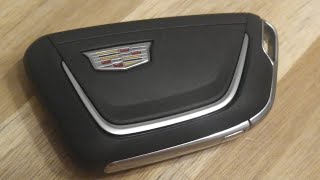
Est. part cost: $0 - Weak or Dead Key Fob Battery 🟡 Medium Probability → Shop Vehicle Battery The key fob for the 2020+ CT5 is a new design shared with the C8 Corvette and other modern Cadillacs. Like any keyless system, a weak battery can cause intermittent communication.
How to confirm: Try the spare key fob. If the spare key works reliably, the primary key fob's battery is the likely culprit. You can also try placing the non-working fob in the designated transmitter pocket (inside the front of the center console storage area) which allows the car to start even with a weak battery.
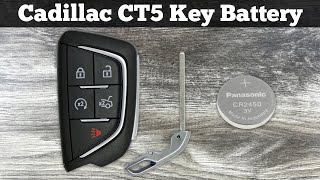
Typical fix: Replace the CR2450 battery inside 🎬 Watch: Step-by-step guide to replacing your CT5 key fob battery. the key fob.
Est. part cost: $5-$10
Rare But Worth Checking
- Body Control Module (BCM) Software Glitch: → Shop Body Control Module On related GM platforms, a similar issue with DTCs B3935 and B2955 was resolved with a BCM software update (TSB PI1180A). While not specific to the CT5, it's a known possibility in the GM ecosystem that requires dealer diagnosis to check for the latest calibrations.
- Faulty Key Fob: → Shop Keyless Entry Transmitter The internal transponder of the key fob can fail from being dropped or water damage. If a new battery doesn't solve the issue and the spare key works perfectly, the original key fob itself may be defective and require replacement and programming by a dealer or locksmith.
- Faulty Immobilizer Exciter Coil / Antenna: The antenna (exciter coil) that energizes the key fob's transponder can fail. This is a rare failure but can prevent the key from being read properly. This requires professional diagnosis to test the antenna circuit.
Diagnosis Steps
- Verify the symptoms: Confirm the no-start/start-stall condition and the security light is on.
- Scan for all DTCs: Use a quality OBD-II scanner to check for B3935 and any other codes (e.g., B3055, B3060, TPMS codes). Note any symptom bytes displayed by a professional tool.
- Perform RFI Isolation (Critical Step): Remove the CT5 key fob from its keychain. Unplug ALL aftermarket devices (phone chargers, dash cams, radar detectors, USB power banks, aftermarket LED lights). Remove any other key fobs, access cards, or RFID-blocking wallets from the car.
- Retest with Isolated Key: Attempt to start the vehicle with only the single CT5 key fob inside. If it starts, re-introduce items one by one to find the source of interference.
- Test with Spare Key: If the issue persists, try starting the vehicle with the spare key fob to rule out a faulty primary key.
- Check Key Fob Battery: If the spare key works, replace the battery in the non-working key fob with a new CR2450.
- Use Transmitter Pocket: If the battery is suspected to be weak or RFI is still suspected, place the key fob in the vehicle's transmitter pocket. For the CT5, this is located in the front of the center console storage bin. Attempt to start the vehicle. This should work even with a very weak battery 🎬 See how to use the transmitter pocket to start your car. or in the presence of some RFI.
- Seek Professional Diagnosis: If none of the above steps resolve the issue, the vehicle needs to be diagnosed by a professional with GM-specific tools to check for BCM software updates or potential module/wiring faults.
Parts You'll Likely Need
- Key Fob Battery
(OEM #CR2450)— A weak battery can cause intermittent communication issues, leading to an authentication failure. It's an inexpensive and easy first step. The correct battery for the 2020+ CT5 fob is CR2450.
Trusted brands: Energizer, Duracell, Panasonic
OEM price range: $8-$15
Aftermarket price range: $3-$7 - Keyless Entry Transmitter (Key Fob)
(OEM #13536990)— If the key fob is physically damaged or internally faulty, it will need to be replaced. This requires programming by a dealer or certified automotive locksmith.
Trusted brands: GM Genuine
OEM price range: $150-$250
Aftermarket price range: $50-$120
Related Codes That Often Appear With This One
- B3055 — This code for 'No Transponder Modulation' often appears with B3935 when RFI is present or the key is faulty, as cited in TSB #PIC5650M.
- B3060 — This code for 'Unprogrammed Transponder' can be triggered by communication errors during the failed authentication attempt and is also cited in TSB #PIC5650M.
- C0750, C0755, C0760, C0765, C0775 — These are Tire Pressure Monitor (TPM) sensor codes. Since the TPM system also uses radio frequencies managed by the BCM, a strong source of RFI can disrupt both systems simultaneously, as noted in TSB #PIC5650M.
- B2955 — This code for 'Security Sensor Data Circuit Malfunction' is mentioned in TSB PI1180A for other GM vehicles. When seen with B3935, it strongly points to a BCM software issue requiring a dealer reflash.
Technical Service Bulletins (TSBs) & Recalls
- PIC5650M: The most current TSB, which supersedes previous versions. It notes that intermittent no-crank/no-start with security light and DTCs B3055, B3060, B3935, and various C-codes are often caused by RFI. It provides an extensive list of potential RFI sources, including aftermarket LED lights and USB chargers.
- PIC5650L: An earlier version that explicitly states that technicians should not replace any parts for this concern and should ask the customer about the use of Radio Frequency Identification devices.
- PI1180A: Addresses a 'No Click, No Crank, No Start' condition on other 2014-2015 GM vehicles where DTCs B3935 and B2955 are set together, requiring a BCM software update. This serves as a precedent for a potential software fix.
Platform-Specific Known Issues
- This platform is highly susceptible to Radio Frequency Interference causing no-start conditions, as documented in TSBs #PIC5650M and #PIC5650L. The bulletins explicitly state not to replace parts for this concern until RFI from sources like phone chargers or other devices is ruled out. [TSB #PIC5650M, TSB #PIC5650L]
- The transmitter pocket for emergency starting is located inside the center console storage area, toward the front of the vehicle. Placing the fob here uses a low-power, direct-contact method to read the fob, bypassing most RFI issues.
Hidden / Shadow Codes Worth Checking
- B3935 57: Transponder Authentication Error. This is the most common symptom byte. It confirms the key was identified, but the cryptographic challenge/response calculation failed. This strongly points toward RFI or a faulty chip in the key itself, rather than an unknown key. (see via GM GDS2 or other professional-grade scan tool capable of reading manufacturer-specific symptom bytes.)
- B3935 71: Invalid Key. This symptom byte indicates the BCM read a transponder signal, but its value did not match any of the keys learned by the vehicle. This could occur if using a key from another vehicle. (see via GM GDS2 or other professional-grade scan tool capable of reading manufacturer-specific symptom bytes.)
- B3935 5A: Incorrect Immobilizer Key. Similar to '71', this means the transponder value is valid in format but does not match any learned keys. (see via GM GDS2 or other professional-grade scan tool capable of reading manufacturer-specific symptom bytes.)
Scan Tool Commands That Help
- GDS2 (Global Diagnostic System 2): Immobilizer Learn / Vehicle Theft Deterrent Learn — This function is required after replacing the BCM or a key fob. It guides the technician through the process of programming new keys/fobs to the vehicle's immobilizer system.
- GDS2 (Global Diagnostic System 2): Add/Replace Key Fobs — Found under the 'Remote Control Door Lock Receiver' module diagnostics, this function is used to program the remote functions (lock/unlock/start) of the fob. This is separate from the immobilizer programming but often done at the same time.
Wiring & Ground Locations
- K9 Body Control Module (BCM) — The BCM is the central computer for body electronics. While exact CT5 location requires a service manual, on similar GM sedans it is typically located behind the driver's or passenger's side of the dashboard, often accessible by removing the glove box or lower dash trim panels.. The BCM manages the entire Passkey III+ immobilizer system, including receiving signals from the key, performing the security calculations, and sending the fuel-enable password to the ECM. A poor ground or faulty connection at the BCM can cause this code.
- Immobilizer Antenna (Exciter Coil) — For keyless start systems like the CT5, the antenna is integrated into the push-to-start button assembly and also has a low-frequency antenna in the transmitter pocket (center console).. This antenna energizes the transponder chip inside the key fob so it can transmit its security code. A failure in the antenna or its wiring to the BCM will prevent the key from being read, directly causing a B3935.
Real Owner Repair Stories
- Reddit user Humble-Knowledge6859 (2022 Cadillac CT5 V, 23,000 miles) — Check engine light was on, remote start would not work.
❌ Tried (didn't work) Scan at AutoZone showed no codes., Dealer replaced the main 12V battery, but the check engine light returned.
✅ What actually fixed it The dealer diagnosed a faulty OnStar module that was draining the battery. They disconnected the module and ordered a replacement part. Although the check engine light came back again before the final repair, the root cause was identified as the OnStar module creating cascading electrical issues.
OEM Part Supersession History
13536990→13541988, 13548127, 13538860, 13592978, 13592985— Standard part revisions and supplier changes over the vehicle's production run.
Heads up: All listed part numbers are generally interchangeable for the 2020-2025 CT5, but a locksmith or dealer must program them to the vehicle. Always verify compatibility with the specific VIN before purchasing.
Helpful Videos
We Have This Part in Stock


The information in this article is provided for general reference and educational purposes only. Vehicle specifications, procedures, and part compatibility can vary by production date, trim level, and region. Always consult your vehicle's factory service manual and verify part numbers before purchasing or performing repairs. Safety-critical components such as airbags, seat belts, and braking systems should be installed by a qualified professional.
- Cadillac CT5:
- 🧭 Diagnostic Flowchart
- 🎬 Helpful Videos
- 🛍️ Shop This Part
- What's Unique About the 2020-2025 Cadillac CT5
- Symptoms You May Notice
- Most Likely Causes
- Rare But Worth Checking
- Diagnosis Steps
- Parts You'll Likely Need
- Related Codes That Often Appear With This One
- Technical Service Bulletins (TSBs) & Recalls
- Platform-Specific Known Issues
- Hidden / Shadow Codes Worth Checking
- Scan Tool Commands That Help
- Wiring & Ground Locations
- Real Owner Repair Stories
- OEM Part Supersession History
- 🎟️ Get 5% Off