

B3935 on 2015-2019 Cadillac CTS: No-Start, Security Light, and Fixes
Code B3935 on a 2015-2019 Cadillac CTS almost always indicates Radio Frequency Interference (RFI) is preventing the car from recognizing the key fob. The fix is typically free: remove aftermarket electronics (like phone chargers, dash cams, or even toll passes) from the car and key ring. Do not replace parts until all sources of RFI have been ruled out.
- B3935 almost always points to a problem with interference, not a broken part.
- Before seeking professional help, remove all aftermarket electronics from your car and key ring. This is the fix in the vast majority of cases.
- Do not let a mechanic replace the BCM or other expensive modules until RFI has been completely ruled out as the cause.
- If the car starts with the key fob in the designated transmitter pocket (inside the center console), it strongly suggests a signal interference issue.
- This is a known issue documented by GM in multiple service bulletins for the CTS and its platform mates, the Cadillac ATS and Chevy Camaro.
What's Unique About the 2015-2019 Cadillac CTS
The third-generation Cadillac CTS, built on the GM Alpha platform, shares its sensitive keyless entry system with the Cadillac ATS and Chevrolet Camaro. GM has released multiple Technical Service Bulletins (TSBs) specifically addressing code B3935 and related symptoms caused by RFI across this platform. This indicates a known platform sensitivity where common aftermarket electronic devices can easily 'jam' the signal between the key and the car, leading to a no-start condition that can be difficult for technicians to replicate once the interfering device is removed.
Diagnostic Flowchart
Tap your situation to follow the diagnostic path that matches what you're seeing on this vehicle.
Symptoms You May Notice
- Intermittent no-crank or no-start condition.
- Engine starts and immediately stalls.
- Security indicator light is illuminated or flashing on the dashboard. 🎬 Watch: How to reset or disable the Cadillac theft system
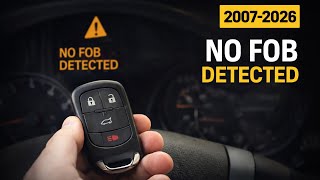
- A 'Service Theft Deterrent System' or 'No Fob Detected' message appears on the Driver Information Center.
- The vehicle will start when the key fob is placed in the dedicated transmitter pocket (fob pocket).
- Poor or no Remote Keyless Entry (RKE) range.
- Replacing the Body Control Module (BCM)
- Replacing the Theft Deterrent Module (TDM) or Remote Control Door Lock Receiver (RCDLR)
- Replacing the key fob(s) without ruling out RFI
- Replacing the starter or battery
Most Likely Causes
- Radio Frequency Interference (RFI) from Aftermarket Devices 🔴 High Probability The vehicle's security system operates at 125 kHz, and many modern electronics can emit interfering signals in or near this range. GM TSBs PIC5650L, PIC5650M, and subsequent revisions specifically call this out as the primary cause.
How to confirm: Remove all non-original electronic devices from the vehicle and the key ring. This includes aftermarket phone chargers (especially multi-port or fast chargers), dash cams, USB power banks, LED lighting, toll passes, and even key fobs for other vehicles. If the car starts consistently with these items removed, RFI was the cause.
Typical fix: Identify and permanently remove the interfering device from the vehicle or keychain. No parts replacement is needed.
Est. part cost: $0
Rare But Worth Checking
- BCM Software Glitch: In some cases, particularly when seen with code B2955, a BCM software update may be required to resolve a 'No Click, No Crank, No Start' condition. This is addressed in TSB PI1180A, though it applies to other 2015 GM models and may be relevant.
- Weak or Defective Key Fob: → Shop Keyless Entry Transmitter A key fob with a low battery (CR2032) or internal fault can cause authentication issues. Try the spare key first. If the spare key works reliably, the primary fob may be the problem. The FCC ID for the correct fob is HYQ2AB.
- Failing Theft Deterrent Module (TDM) or Body Control Module (BCM): → Shop Anti-Theft Control Module This is a rare cause and should only be considered after all sources of RFI and key fob issues have been exhaustively ruled out. The TSBs explicitly advise against replacing parts as a first step.
- Aftermarket Window Tint: Certain types of window tint, particularly those with metallic content, can interfere with RF signals and have been noted by GM as a potential cause of RKE and passive entry issues.
Diagnosis Steps
- Check for other stored DTCs. Note if codes like B3055, B3060, or any C-codes for the TPM system are present, as this strongly points to RFI.
- Remove ALL items from your key ring except the single CTS key fob. This includes other car keys, office access cards, and toll passes.
- Unplug all aftermarket devices from the vehicle's power outlets (12V and USB). This includes phone chargers, dash cams, GPS units, radar detectors, and any other non-factory electronics. Pay special attention to cheap, unbranded chargers.
- Check for any aftermarket LED lighting inside or outside the vehicle. These are a known source of RFI and are specifically mentioned in GM bulletins.
- Attempt to start the vehicle. If it starts and runs normally, one of the removed items was the source of the interference. Reintroduce items one by one to isolate the culprit.
- If the vehicle still won't start, try using the spare key fob.
- If the spare key works, the original key fob's battery (CR2032) or internal components may be faulty.
- If the no-start condition persists with all RFI sources removed and with a known-good key, place the fob in the vehicle's transmitter pocket and attempt to start. For the 2015-2019 CTS, this pocket is located inside the center console storage area, sometimes under a rubber mat. 🎬 Watch: How to open and start your CTS with a dead fob If it starts, this confirms a signal strength issue, likely still related to a subtle interference source or a weak fob.
- If all else fails, consult a dealer or qualified shop to check for available BCM software updates and perform advanced diagnostics, which may include using an RFI meter to find the source of interference.
Parts You'll Likely Need
- No Parts Needed — The most common cause is radio frequency interference, which is resolved by removing the interfering device, not by replacing parts.
OEM price range: $0
Aftermarket price range: $0 - Key Fob Battery
(OEM #CR2032)— A weak battery is a simple and common failure point for key fobs, causing weak signal and authentication issues.
Trusted brands: Energizer, Duracell, Panasonic
OEM price range: $5
Aftermarket price range: $2 - 5-Button Smart Key Fob
(OEM #13598507 (or 13580811, 13510254))— Rarely, the key fob itself can fail internally. Ensure the replacement has FCC ID HYQ2AB.
Trusted brands: ACDelco (OEM)
OEM price range: $150
Aftermarket price range: $60
Related Codes That Often Appear With This One
- B3055 — This is another key-related code ('No Transponder Modulation/No Transponder') often triggered by the same RFI or security system communication faults.
- B3060 — Also a security system code ('Un-ordered Transponder Value') that can be set alongside B3935 due to RFI.
- C0750, C0755, C0760, C0765, C0775 — These are Tire Pressure Monitor (TPM) sensor codes. The TPM system also uses RF signals (315 MHz or 433 MHz), and strong interference can disrupt it simultaneously with the keyless entry system, as noted in TSB PIC5650M.
Technical Service Bulletins (TSBs) & Recalls
- PIC5650L / PIC5650M / PIC5650K: Explicitly states that B3935 with no-start symptoms is often caused by Radio Frequency Identification/Interference and that parts should not be replaced. Lists common sources of interference including phone chargers, LED lights, toll passes, and even other keys on the same ring.
- PI1180A: Mentions a BCM software update for a no-start condition with B3935 and B2955 on some 2015 GM models.
Platform-Specific Known Issues
- The keyless start and entry system on this platform is documented by GM to be highly sensitive to RFI from common consumer electronics like phone chargers and aftermarket LED lights.
- The transmitter pocket used to start the car with a dead or unrecognized fob is located inside the center console storage area.
Hidden / Shadow Codes Worth Checking
- B3935 57: The '57' is a GM-specific symptom byte for 'Transponder Authentication Error', indicating the TDM received a valid key value but the challenge/response calculation between the key and module failed. This points to a data corruption or interference issue rather than a simple 'key not found' problem. (see via GM GDS2 or equivalent professional scan tool that can read manufacturer-specific DTC symptom codes.)
Scan Tool Commands That Help
- GDS2: Immobilizer Learn (Add/Replace Keys) — This function is required after replacing the BCM or adding new keys. For this vehicle generation, it often involves a 30-minute procedure with three 10-minute wait cycles. The path is typically 'Module Diagnostics' -> 'Body Control Module' or 'Remote Control Door Lock Receiver' -> 'Configuration/Reset Functions' -> 'Immobilizer Learn'.
- SPS (Service Programming System): K9 Body Control Module “Special Data Reset A” — This is an advanced function used to reset the BCM in specific no-crank situations, particularly when DTC P0513 (Invalid Immobilizer Key) is present and fobs are unresponsive. It may be required to restore communication before attempting a standard key relearn.
Wiring & Ground Locations
- K9 Body Control Module (BCM) — Located under the driver's side of the dashboard, typically positioned above the accelerator pedal.. The BCM is the central module for the immobilizer system. All key authentication signals are processed here. A poor connection or faulty ground can cause intermittent communication issues mimicking RFI.
- BCM Power & Ground — Primary power is supplied to the BCM via a Red/Gray wire at pin 4 of the blue 27-pin connector. Ignition signal is a Violet/Black wire at pin 6 of the green 25-pin connector. A key ground point is G201, located behind the right-side kick panel. Another potential BCM ground is G103, on the cowl in the left rear of the engine bay.. A poor power or ground connection at these specific pins or ground points can cause the BCM to malfunction, leading to B3935. GM warns that the negative battery cable MUST be disconnected before servicing BCM grounds to prevent module damage.
- Passive Entry Antennas — This system uses multiple low-frequency antennas: one in each door handle, several inside the cabin (often in the center console and rear cargo area), and one near the ignition/start button area.. These antennas transmit the challenge to the key fob. While individual antenna failures usually set specific antenna DTCs, widespread interference (RFI) can overwhelm all of them, leading to the general B3935 code.
Real Owner Repair Stories
- YouTube User Experience (Cadillac CTS (similar generation)) — Multiple random electrical issues, including security light flashing, key getting stuck in ignition, and gauges not working.
❌ Tried (didn't work) Swapping the Body Control Module (BCM) / Dash Integration Module (DIM) with a used unit without programming.
✅ What actually fixed it The owner discovered that simply swapping the BCM did not fix the problem because the replacement module must be professionally programmed to the vehicle's VIN and security information. The security light continued to flash because the car did not recognize the unprogrammed module.
Model Year Variations Within This Range
- 2015-2019: The procedure to program new keys when all keys are lost requires a 30-minute process involving three 10-minute security wait cycles. This is initiated by turning the physical key blade in the driver's door lock five times. This is more complex than some earlier or later GM systems and requires dealer-level tools (GDS2) and online access (SPS) for module replacement.
- 2015-2019: During the production run, several different Body Control Module (BCM) part numbers were used. Some of these, such as 13535059 and 13536374, were later identified in TSB 21-NA-244 as being susceptible to a specific internal fault causing a 'No Fob Detected' condition.
Helpful Videos

We Have This Part in Stock



The information in this article is provided for general reference and educational purposes only. Vehicle specifications, procedures, and part compatibility can vary by production date, trim level, and region. Always consult your vehicle's factory service manual and verify part numbers before purchasing or performing repairs. Safety-critical components such as airbags, seat belts, and braking systems should be installed by a qualified professional.
- Cadillac CTS:
- 🧭 Diagnostic Flowchart
- 🎬 Helpful Videos
- 🛍️ Shop This Part
- What's Unique About the 2015-2019 Cadillac CTS
- Symptoms You May Notice
- Most Likely Causes
- Rare But Worth Checking
- Diagnosis Steps
- Parts You'll Likely Need
- Related Codes That Often Appear With This One
- Technical Service Bulletins (TSBs) & Recalls
- Platform-Specific Known Issues
- Hidden / Shadow Codes Worth Checking
- Scan Tool Commands That Help
- Wiring & Ground Locations
- Real Owner Repair Stories
- Model Year Variations Within This Range
- 🎟️ Get 5% Off