

B3935 on 2017-2024 Cadillac XT5: No-Start Causes and Fixes
Code B3935 on a Cadillac XT5 means the car's security system failed to authenticate the key. This often causes a no-start or stall. Before replacing any parts, remove all other radio-frequency (RF) devices like toll passes or other key fobs from your keychain, as they are a known cause of interference.
- B3935 means your car's security system can't recognize your key.
- The most common cause is not a broken part, but interference from other electronic items on your keychain.
- Before spending any money, try starting the car with the key fob completely isolated from other keys, cards, or fobs.
- If the issue continues, try your spare key or replace the key fob battery before seeking professional repair.
- Do not let a mechanic replace expensive modules like the BCM without first ruling out RFI and key fob issues.
What's Unique About the 2017-2024 Cadillac XT5
For this generation of Cadillac XT5 and other GM vehicles on the C1XX platform, the primary cause of a B3935 code is often not a faulty part. GM has issued multiple, evolving Technical Service Bulletins (TSBs) in the PIC5650 series warning that Radio Frequency Identification (RFID) devices can interfere with the key's signal. The TSBs specifically advise against replacing parts until RFI has been ruled out, as items like toll passes, other vehicle key fobs, or even building access cards on the same keychain can trigger this code. Aftermarket electronics, such as 12-volt USB chargers, are also cited as a common source of RFI that can cause this and other electrical issues.
Diagnostic Flowchart
Tap your situation to follow the diagnostic path that matches what you're seeing on this vehicle.
Symptoms You May Notice
- Intermittent no-crank, no-start condition.
- Engine stalls immediately after starting.
- Security indicator light is illuminated or flashing on the dashboard.
- "Service Theft Deterrent System" message on the driver information center.
- "No Fob Detected" message, even with the key inside the vehicle.
- Replacing the Body Control Module (BCM) or Theft Deterrent Module (TDM) unnecessarily. TSBs #PIC5650L and others in the series specifically warn technicians not to replace parts for this concern until RFI is ruled out.
- Replacing the starter motor. A starter issue typically presents as a 'click-no-start' or slow crank, whereas B3935 is an electronic security issue causing a 'no-crank' condition.
- Replacing the vehicle's main battery without proper testing. While a weak battery can cause various electrical issues, B3935 points specifically to a key authentication problem.
Most Likely Causes
- Radio Frequency Interference (RFI) 🔴 High Probability The vehicle's immobilizer system operates at 125 kHz, and other RFID devices (toll passes, other key fobs, access cards, gate passes) can operate in a similar range, causing signal interference. This is a well-documented issue acknowledged in multiple manufacturer TSBs, including the PIC5650 series (versions F, K, L, M). Aftermarket devices, especially 12V USB chargers, are also a known source of RFI.
How to confirm: Remove all other fobs, cards, and electronic devices from the keychain with the XT5 key. Unplug all aftermarket accessories like USB chargers or dash cams. Try starting the vehicle with the isolated key. If the vehicle starts consistently, RFI was the cause.
Typical fix: Permanently separate the interfering RFID device from the Cadillac key fob. In cases of persistent interference from onboard electronics, some owners on forums have had success adding ferrite chokes to the wiring of the offending device (e.g., an aftermarket camera) to suppress the noise.
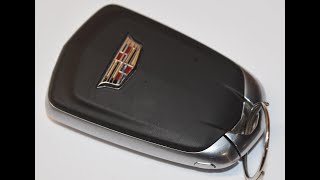
Est. part cost: $0 - $10 - Weak or Defective Key Fob 🟡 Medium Probability → Shop Keyless Entry Transmitter
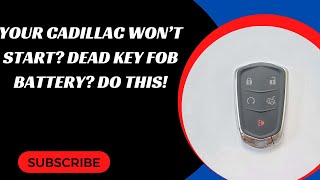
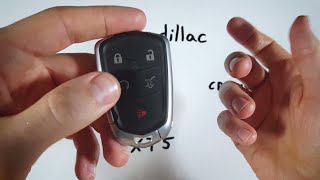
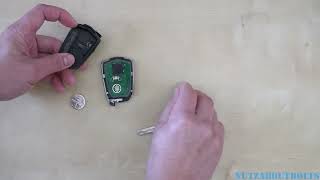
How to confirm: First, replace the battery in the key fob (typically a CR2032). If the issue persists, try using a spare key fob. If the spare key works reliably, the primary key is likely faulty. As a final check, place the non-working fob in the transmitter pocket in the center console and try to start the car; this can often overcome a weak signal.
Typical fix: Replace the key fob battery. If the fob itself is defective, it will need to be replaced and programmed by a dealer or automotive locksmith.
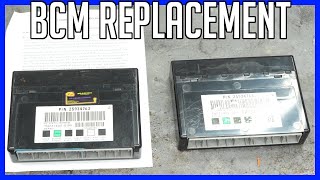
Est. part cost: $5-$15 for a battery, $110-$400 for a new key fob. - Body Control Module (BCM) Software Glitch ⚪ Low Probability → Shop Body Control Module Some GM vehicles have required a BCM software update to resolve intermittent no-start conditions. TSB PI1180A specifically addresses a no-start with codes B3935 and B2955, which is fixed by a BCM reprogram.
How to confirm: This requires a dealer or qualified shop with access to GM's Service Programming System (SPS) to check if a newer software calibration is available for the BCM based on the VIN and current symptoms.
Typical fix: Reprogram the BCM with the latest software calibration. This is a dealer or professional-level repair. The labor time is estimated at 0.5 hours per TSB PI1180A.
Est. part cost: $0 (if covered by a special policy), $100-$250 for labor otherwise.
Rare But Worth Checking
- Faulty Theft Deterrent Module (TDM) or Antenna Ring: → Shop Anti-Theft Control Module The TDM and the exciter coil/antenna ring around the ignition (or in the center console for push-to-start) are responsible for reading the key. While not common, a failure in either component can prevent key authentication. This is typically a last resort after ruling out RFI and key fob issues. Diagnostics may involve replacing the key first, and if the code returns, then replacing the TDM.
- Failed Security System Relearn Procedure: If the battery was disconnected or a new component was installed, the system may need to relearn the key. A failed or incomplete relearn procedure can set this code. A common DIY method is the "30-minute relearn procedure" which involves cycling the key and waiting for the security light to turn off over three 10-minute intervals.
Diagnosis Steps
- Check for other trouble codes. Note any codes that appear with B3935, especially B3055, B3060, or B2955.
- Question the driver about any aftermarket devices (USB chargers, dash cams, etc.) and remove them.
- Remove ALL other keys, fobs, access cards, and RFID-emitting devices from the keychain. Isolate the Cadillac XT5 key.
- Attempt to start the vehicle with the isolated key. If it starts, the problem is RFI from one of the removed items.
- If the vehicle still won't start, try the spare key fob. If the spare key works, the first key is likely faulty.
- Replace the battery (CR2032) in the non-working key fob and re-test.
- If neither key works, and RFI has been ruled out, place the key fob in the designated transmitter pocket in the center console (as described in the owner's manual) and attempt to start the vehicle. This can sometimes overcome a weak signal.
- If the problem persists, the vehicle should be taken to a professional for further diagnosis, which may include checking for BCM software updates or testing the Theft Deterrent Module and its antenna.
Parts You'll Likely Need
- Key Fob Battery
(OEM #CR2032)— A weak battery is a common cause for intermittent signal issues that can lead to authentication failure.
Trusted brands: Energizer, Duracell, Panasonic
OEM price range: $5-$15
Aftermarket price range: $2-$10 - Key Fob / Transmitter
(OEM #13510245, 13598516 (for 2017-2020 models, FCC ID: HYQ2EB); 13529634, 13544052 (for 2020-2024 models, FCC ID: HYQ2ES))— If the internal transponder chip in the key fob fails, it will need to be replaced and programmed to the vehicle. Part numbers vary by year and features.
Trusted brands: ACDelco
OEM price range: $110-$250
Aftermarket price range: $50-$150
Related Codes That Often Appear With This One
- B3055 — This code relates to a 'No Transponder Modulation or No Transponder' signal, often set alongside B3935 when there is RFI or a key problem. It is mentioned in TSBs #PIC5650M, #PIC5650L, and PIE0232.
- B3060 — This code indicates an 'Unprogrammed Transponder' and can also be triggered by RFI or key signal issues, as noted in TSBs #PIC5650M and #PIC5650L.
- C0750, C0755, C0760, C0765, C0775 — These chassis codes are related to tire pressure monitoring, but are listed alongside B3935 in TSB #PIC5650M and #PIC5650F, suggesting a potential link in how the vehicle's modules communicate or report errors during a security-related event, possibly due to widespread RFI.
- B2955 — This code is seen with B3935 in TSB #PI1180A, which points to a BCM software update as the fix for a specific no-start condition on some GM trucks and SUVs.
Technical Service Bulletins (TSBs) & Recalls
- PIC5650M: Mentions B3935 in relation to intermittent no-crank/no-start or stall conditions, often with other codes like B3055, B3060, and TPMS codes.
- PIC5650L: Explicitly states not to replace any parts for a B3935 concern and to investigate Radio Frequency Identification devices as a potential cause.
- PIC5650K: A version of the bulletin specifically mentioning the Buick Enclave (a platform mate) with the same RFI issue and B3935 code.
- PIC5650F: An older version that also lists TPMS codes and "No Fob Detected" messages as related symptoms of RFI.
- PI1180A: Addresses a BCM software update for a no-start condition with DTCs B3935 and B2955 on some GM trucks and SUVs.
Platform-Specific Known Issues
- This vehicle platform is known to be sensitive to Radio Frequency Interference, as documented in multiple GM service bulletins (e.g., PIC5650 series). The issue is so prevalent that GM explicitly warns technicians not to replace hardware before investigating external RFI sources.
- A buzzing sound from the steering column on 2022 XT5 models with RPO Y61 or N06 is considered normal operation of the Steering Column Lock Module (SCLM) and should not be mistaken for a fault related to this code.
Hidden / Shadow Codes Worth Checking
- B3935 with Symptom Byte 57: The generic B3935 code indicates a 'Transponder Authentication Error'. The symptom byte '57', visible on a professional scan tool like the GM GDS2, specifies that the transponder's calculation in response to the security challenge did not match the BCM/TDM's expected calculation. This points more specifically to a data mismatch rather than a complete lack of signal. (see via GM GDS2 or other professional-grade scan tool that can read manufacturer-specific symptom bytes.)
Scan Tool Commands That Help
- GDS2 (GM Dealer/Professional Scan Tool): Program Transponder or Remote Key (Add) — This function, found under 'K9 Body Control Module' in the SPS (Service Programming System) menu, is used to relearn existing keys or add new ones. TSB 23-NA-164 instructs technicians to use this procedure to recover from a BCM memory corruption event caused by a low-voltage situation, which can manifest as a B3935 code.
- GDS2 (GM Dealer/Professional Scan Tool): Immobilizer Learn — This is the master function for all key and immobilizer-related programming. It is required when a new BCM or key is installed. An incomplete or failed Immobilizer Learn process can be a direct cause of code B3935.
Wiring & Ground Locations
- K9 Body Control Module (BCM) — On the Cadillac XT5, the BCM is typically located in the passenger compartment, under the dashboard, often near the left-hand (driver's side) A-pillar or kick panel area.. The BCM is the central module for the vehicle's anti-theft system. It receives the key data from the immobilizer antenna/TDM and makes the decision to allow the vehicle to start. All related wiring and grounds connect back to this module.
- Keyless Entry Control Module / Antenna — The XT5 uses multiple antennas for the keyless entry system. The primary antenna for starting the vehicle when the fob battery is dead is located in the transmitter pocket inside the center console. Other antennas are located throughout the vehicle (e.g., in doors, rear bumper) for passive entry functions.. A failure of the antenna in the center console pocket could prevent the vehicle from starting even when using the backup procedure, directly leading to a B3935 code.
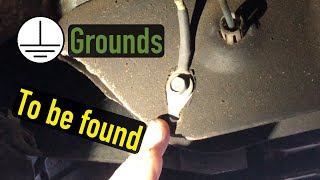
- G201 / G218 (Ground) — GM typically uses ground points designated G2xx for the instrument panel area. G201 is often located in the upper left corner of the instrument panel near the A-pillar, while G218 is a common designation for the ground point behind the driver's side kick panel. Verifying these grounds are clean and secure is critical.. A poor ground connection for the BCM or related modules can cause intermittent and difficult-to-diagnose electrical issues, including the communication and authentication failures that trigger B3935.
Real Owner Repair Stories
- Reddit user, r/Cadillac (2018 Cadillac XT5) — Vehicle would not start, and a second key fob (new and aftermarket) could not be programmed to the vehicle.
❌ Tried (didn't work) Following the owner's manual "30-minute relearn procedure" to program a second key., Replacing the battery in the non-working key fob., Using a new aftermarket key fob., Dealership attempting the same manual relearn procedure.
✅ What actually fixed it The dealership's diagnostic scan led them to conclude the Body Control Module (BCM) was faulty ('fried'). The final fix was the replacement and programming of the BCM by the dealership. The user suspected the initial key programming attempt may have somehow damaged the module.
Model Year Variations Within This Range
- 2020-2024: Starting with the 2020 model year refresh, the Cadillac XT5 transitioned to GM's new Global B electrical architecture (also known as Vehicle Intelligence Platform or VIP). This involves a more complex and secure Body Control Module. BCM replacement on these vehicles requires programming with GM's latest Techline Connect (SPS2) software; older tools will not work.
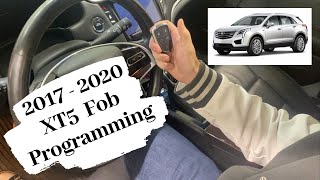
- 2017-2019 vs 2020-2024: The key fobs are different between the pre-refresh and post-refresh models, as indicated by the different OEM part numbers and FCC IDs. They are not interchangeable. The pre-refresh models (2017-2019) use FCC ID HYQ2EB, while the post-refresh models (2020-2024) use FCC ID HYQ2ES.
Helpful Videos

We Have This Part in Stock


The information in this article is provided for general reference and educational purposes only. Vehicle specifications, procedures, and part compatibility can vary by production date, trim level, and region. Always consult your vehicle's factory service manual and verify part numbers before purchasing or performing repairs. Safety-critical components such as airbags, seat belts, and braking systems should be installed by a qualified professional.
- Cadillac XT5:
- 🧭 Diagnostic Flowchart
- 🎬 Helpful Videos
- 🛍️ Shop This Part
- What's Unique About the 2017-2024 Cadillac XT5
- Symptoms You May Notice
- Most Likely Causes
- Rare But Worth Checking
- Diagnosis Steps
- Parts You'll Likely Need
- Related Codes That Often Appear With This One
- Technical Service Bulletins (TSBs) & Recalls
- Platform-Specific Known Issues
- Hidden / Shadow Codes Worth Checking
- Scan Tool Commands That Help
- Wiring & Ground Locations
- Real Owner Repair Stories
- Model Year Variations Within This Range
- 🎟️ Get 5% Off