

B3935 on 2013-2019 Cadillac XTS: Security System Fault, Causes, and Fixes
On a 2013-2019 Cadillac XTS, code B3935 almost always indicates Radio Frequency Interference (RFI) is confusing the car's security system, causing a no-start. The fix is often free: remove all other key fobs, access cards, aftermarket chargers, or electronic devices from your keychain and from near the ignition, then try starting the car again. Placing the key in the designated transmitter pocket in the center console can also overcome interference.
- B3935 on your XTS is a security code, not a mechanical engine problem.
- The most likely cause is interference from other electronic devices. Clean your keychain and remove aftermarket chargers before spending any money on diagnosis.
- Do not let a mechanic replace the BCM or other expensive modules without first thoroughly investigating RFI and checking for the software update mentioned in TSB PI1180A (if code B2955 is also present).
- A weak key fob battery can cause this issue and is an inexpensive item to replace as a first step.
What's Unique About the 2013-2019 Cadillac XTS
The Cadillac XTS and similar GM platforms of this era are known to be highly sensitive to Radio Frequency Interference (RFI). GM has issued multiple, evolving Technical Service Bulletins (TSBs) acknowledging this issue, with PIC5650 being the primary series (e.g., PIC5650B, L, M). These bulletins specifically warn technicians that the root cause of a B3935 code is often not a faulty part, but rather interference from aftermarket electronics, other RFID cards on the owner's keychain, or even non-OEM LED lights. The official advice is to investigate and eliminate these external signals before replacing any expensive modules.
Diagnostic Flowchart
Tap your situation to follow the diagnostic path that matches what you're seeing on this vehicle.
Symptoms You May Notice
- Intermittent no-crank or no-start condition
- Engine starts and immediately stalls
- Security indicator light is illuminated or flashing on the dashboard
- "Service Theft Deterrent System" message appears in the driver information center.
- "No Remote Detected" or "No remote key was detected" message appears, even with the key in the car.
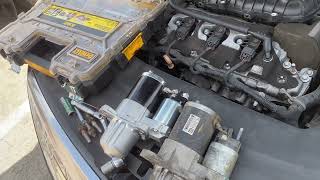
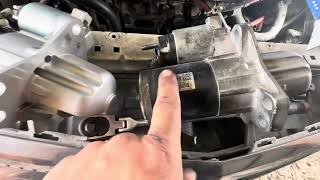
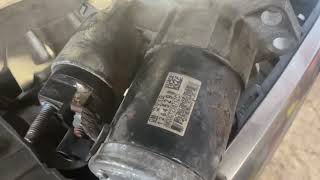
- Replacing the starter motor or battery when the security system is preventing the crank signal. 🎬 Watch: A professional walkthrough of the Cadillac XTS starter replacement.
- Replacing the Body Control Module (BCM) or keyless entry module without first investigating Radio Frequency Interference, as warned against in multiple versions of GM service bulletin PIC5650.
Most Likely Causes
- Radio Frequency Interference (RFI) 🔴 High Probability The vehicle's keyless entry and immobilizer systems operate on 125 kHz, 315 MHz, and 433 MHz frequencies that can be 'jammed' by other devices. GM TSBs PIC5650L and PIC5650M directly address this, listing common culprits like other vehicle fobs, building access cards, toll passes, aftermarket LED lights, and even certain USB phone chargers.
How to confirm: Remove ALL items from your keychain except the XTS key fob. Also remove any aftermarket chargers, dash cams, or other electronic devices from the car. If the car starts consistently, RFI was the cause. Placing the fob in the transmitter pocket inside the center console storage area can also bypass interference and confirm the diagnosis.
Typical fix: Isolate the Cadillac key fob from other fobs, RFID-enabled access cards, or aftermarket electronics. Avoid using cheap, unshielded USB chargers or aftermarket LED bulbs, which are known sources of RFI.
Est. part cost: $0 - Body Control Module (BCM) Software Glitch 🟡 Medium Probability → Shop Body Control Module A known software issue can cause the BCM to incorrectly read the immobilizer information, causing a no-start. This issue is specifically identified when both B3935 and B2955 are stored in memory.
How to confirm: A professional scan tool must be used to check for both B3935 and B2955 codes. If both are present with a no-click, no-crank condition, this is the likely cause.
Typical fix: The BCM needs to be reprogrammed with an updated software calibration by a dealer or qualified shop using the Service Programming System (SPS), as specified in TSB PI1180A. This is a software-only fix.
Est. part cost: $0 (parts), $100-$200 (labor for reprogramming) - Weak or Defective Key Fob ⚪ Low Probability → Shop Keyless Entry Transmitter
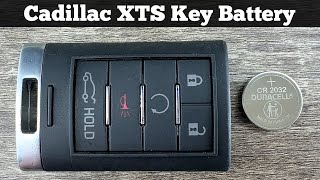
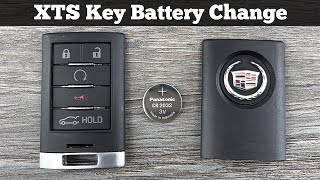
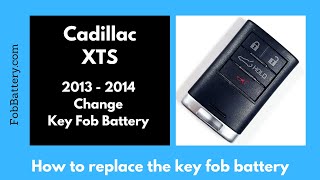
How to confirm: First, replace the CR2032 battery in the key fob. 🎬 Watch: How to replace the battery in your 2013-2014 key fob. If the problem persists, try starting the car by placing the fob in the transmitter pocket located in the center console storage area. If it starts there but not from your pocket, the fob's transmitter is weak. If it still fails, try the vehicle's second key fob. If the second fob works reliably, the first fob is likely faulty.
Typical fix: Replace the key fob battery. If the fob itself is defective, a new one must be purchased and programmed to the vehicle.
Est. part cost: $5-$15 for a battery, $150-$400 for a new programmed fob.
Rare But Worth Checking
- Faulty Theft Deterrent Module (TDM) or Body Control Module (BCM): → Shop Anti-Theft Control Module This is very rare. TSBs specifically advise against replacing these modules unless all other possibilities, especially RFI, have been exhaustively ruled out. In some cases, a used BCM can be installed, but it requires a dealer to program it to the car's VIN.
- Corroded Wiring or Connectors: In some cases, corrosion on wiring for the security system, particularly under the hood fuse block from battery acid leaks, can cause intermittent signal loss and trigger this fault or other no-start conditions.
Diagnosis Steps
- Check for other stored DTCs. If B2955 is present with B3935, consult a dealer about TSB PI1180A for a BCM software update.
- Remove the Cadillac key fob from your keychain. Ensure no other keys, fobs, or RFID-enabled cards (like building access or toll passes) are near the ignition or center console.
- Remove any aftermarket phone chargers, dash cams, LED lights, or other plugged-in electronics, as these are common sources of RFI.
- Attempt to start the vehicle. If it fails, place the isolated key fob into the designated transmitter pocket. For the XTS, this is located inside the center console storage area (you may need to lift a tray). If the car starts, RFI is confirmed as the issue.
- If the issue persists, try the vehicle's spare key fob.
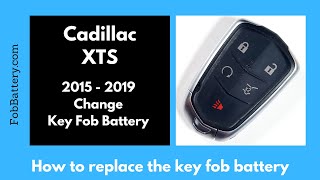
- Replace the CR2032 battery in the problematic key fob. 🎬 See this quick walkthrough for 2015-2019 key fob battery replacement.
- As a last resort before seeing a mechanic, you can attempt a 30-minute key relearn procedure if you have no working keys. This involves turning the ignition to ON for 10-11 minutes until the security light goes out, turning it OFF for 30 seconds, and repeating this cycle two more times for a total of about 30 minutes. Note: This is typically for adding keys or after module replacement and may not resolve an RFI or software issue.
- If the vehicle still won't start, professional diagnosis is required to inspect the TDM/BCM and related wiring.
Parts You'll Likely Need
- Key Fob Battery
(OEM #CR2032)— A weak battery can cause an intermittent signal, leading to authentication failure. This is the cheapest and easiest first step.
Trusted brands: Energizer, Duracell, Panasonic
OEM price range: $5-$10
Aftermarket price range: $2-$8 - Keyless Entry Remote Fob
(OEM #22856930 (for 2013-2014 models, verify by VIN))— If the fob's internal transponder has failed, the fob itself will need to be replaced and programmed by a dealer or automotive locksmith.
Trusted brands: ACDelco (OEM)
OEM price range: $150-$250
Aftermarket price range: $70-$150
Related Codes That Often Appear With This One
- B3055 — Relates to the key transponder. Often set alongside B3935 during an immobilizer fault event, as noted in TSB PIC5650M.
- B3060 — Another transponder-related code that indicates a communication issue within the security system, often triggered by the same RFI problems.
- B2955 — When seen with B3935, this combination specifically points to a BCM software glitch that can be fixed with a dealer-installed update per TSB PI1180A. This TSB is for a specific 'no click, no crank, no start' condition.
Technical Service Bulletins (TSBs) & Recalls
- PIC5650M / PIC5650L: Addresses intermittent no-start/stall with B3935, identifying Radio Frequency Interference (RFI) as a primary cause and advising against premature parts replacement. Lists specific interference sources like other fobs, toll passes, and aftermarket electronics.
- PI1180A: Provides a specific BCM software update to fix a no-start condition when codes B3935 and B2955 are set together.
Platform-Specific Known Issues
- This platform is subject to Technical Service Bulletin PIC5650M, which describes an intermittent no-crank/no-start or stall condition with code B3935 due to Radio Frequency Interference. It explicitly warns against replacing parts for this concern without first investigating RFI sources like aftermarket chargers and other fobs on the keychain.
- TSB PI1180A identifies a specific software fault that causes a no-start with both B3935 and B2955 present, which is correctable with a BCM software update.
- The designated key fob transmitter pocket for overcoming interference is located inside the center console storage area, sometimes under a removable tray.
Hidden / Shadow Codes Worth Checking
- B3935 57: Indicates 'Transponder Authentication Error'. This is the most common symptom byte and confirms the BCM has received a key value but the cryptographic challenge-response has failed. (see via GM GDS2 or other professional-grade scan tool capable of reading body module symptom codes.)
- B3935 00: Indicates 'Transponder Authentication Error' on some related platforms. The core meaning is the same: the key's security handshake failed. (see via GM GDS2 or other professional-grade scan tool.)
Scan Tool Commands That Help
- GM GDS2: Immobilizer Learn — This function is required after replacing the BCM or a key fob. It guides the technician through the process of programming new keys/transponders to the vehicle's immobilizer system.
- GM GDS2: Module Diagnostics > BCM > Data Display — To monitor live data from the BCM, such as 'Immobilizer Key Status' or 'Number of Programmed Keys'. This can help determine if the BCM is recognizing key-related events correctly before a fault is set.
- GM Service Programming System (SPS): BCM Reprogramming — Used to apply software updates to the Body Control Module. This is the specific fix for the condition where both B3935 and B2955 are set, as per TSB PI1180A.
Wiring & Ground Locations
- K9 Body Control Module (BCM) — Located on the left side of the instrument panel, accessible from the driver's footwell area.. The BCM integrates the Theft Deterrent Module (TDM) functionality for the Passkey III+ system. All key authentication signals are processed here.
- G203 / G305 — Both are ground points located at the base of the left (driver's side) kick panel.. These are primary ground points for the Body Control Module and other instrument panel components. A poor ground here can cause a variety of erratic electrical issues, including communication errors that could trigger a B3935.
- Keyless Entry Antenna (Transmitter Pocket) — Inside the center console storage area. This is the designated pocket for starting the car if the key fob battery is dead or if there is RFI.. This internal antenna provides a very short-range, powerful signal to read the passive transponder chip in the fob, bypassing the normal longer-range antennas that are susceptible to interference.
- BCM Connector X1, Pin 21 — On the K9 Body Control Module.. This pin, with a Gray wire, is the 'Security Indicator Control' circuit. A technician could probe this circuit to see if the BCM is commanding the security light on, confirming the fault originates from the BCM.
Real Owner Repair Stories
- YouTube - 'CADILLAC Won't Start....2014 XTS Won't Crank...Clicks...Solved...' (2014 Cadillac XTS) — No-crank, no-start condition. A faint click could be heard. All vehicle electronics (lights, radio) worked perfectly. Battery was tested and confirmed good.
❌ Tried (didn't work) Jump starting the vehicle., Cleaning the battery terminals.
✅ What actually fixed it The starter motor was the ultimate cause. The owner was able to get the car to start one time by hitting the starter with a hammer, but it failed again immediately after. Replacing the starter motor resolved the no-crank condition permanently.
Model Year Variations Within This Range
- 2013-2014: These models typically use a key fob with FCC ID NBG009768T.
- 2015-2019: These models typically use a key fob with FCC ID HYQ2AB. It is critical to match the FCC ID from the original remote when purchasing a replacement, as they are not interchangeable despite looking identical.
Helpful Videos
We Have This Part in Stock



The information in this article is provided for general reference and educational purposes only. Vehicle specifications, procedures, and part compatibility can vary by production date, trim level, and region. Always consult your vehicle's factory service manual and verify part numbers before purchasing or performing repairs. Safety-critical components such as airbags, seat belts, and braking systems should be installed by a qualified professional.
- Cadillac XTS:
- 🧭 Diagnostic Flowchart
- 🎬 Helpful Videos
- 🛍️ Shop This Part
- What's Unique About the 2013-2019 Cadillac XTS
- Symptoms You May Notice
- Most Likely Causes
- Rare But Worth Checking
- Diagnosis Steps
- Parts You'll Likely Need
- Related Codes That Often Appear With This One
- Technical Service Bulletins (TSBs) & Recalls
- Platform-Specific Known Issues
- Hidden / Shadow Codes Worth Checking
- Scan Tool Commands That Help
- Wiring & Ground Locations
- Real Owner Repair Stories
- Model Year Variations Within This Range
- 🎟️ Get 5% Off