

B3935 on 2011-2018 Chevrolet Camaro: Causes and Fixes for No-Start Issues
On a 2011-2018 Camaro, code B3935 almost always means something is interfering with your key's security signal, causing a no-start. Before buying parts, remove all phone chargers, dash cams, and other electronic devices from the car and take all other fobs off your keychain. This simple step often fixes the problem for free.
- B3935 means your car's security system is preventing it from starting.
- The most likely cause is interference from a device like a phone charger. Unplug everything before you panic.
- If removing interference doesn't work, try your spare key next.
- Do not replace expensive modules like the BCM unless you are certain RFI and key issues are not the cause.
- For 2016+ models, putting the fob in the console pocket is a key diagnostic step to bypass interference.
What's Unique About the 2011-2018 Chevrolet CAMARO
What's unique to this Camaro and other GM vehicles of this era is how frequently this code is caused by Radio Frequency Interference (RFI), not a failed part. GM has issued multiple Technical Service Bulletins (TSBs) warning technicians not to replace modules for this code until all sources of RFI are eliminated. The issue spans both the 5th generation (key ignition) and 6th generation (push-to-start) Camaros, as both rely on sensitive radio frequency communication for security.
Diagnostic Flowchart
Tap your situation to follow the diagnostic path that matches what you're seeing on this vehicle.
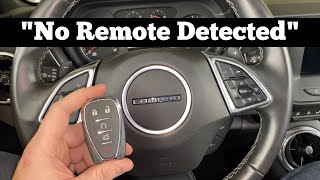
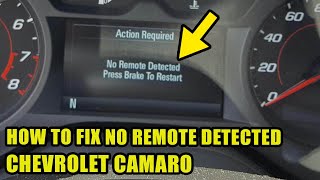
Generation note: This issue affects both the 5th generation (2011-2015) and 6th generation (2016-2018) Camaros. For 6th-gen models with keyless start, a helpful diagnostic step is to place the key fob in the designated transmitter pocket (usually in the center console); 🎬 Watch: How to find the key fob pocket location. if the car starts, it strongly suggests RFI is the problem or the fob battery is weak.
Symptoms You May Notice
- No-crank, no-start condition.
- Engine starts and immediately stalls.
- Security indicator light is illuminated or flashing on the dashboard.
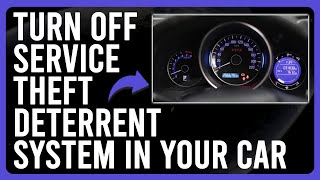
- "Service Theft Deterrent System" message on the Driver Information Center (DIC).
- For 5th Gen switchblade keys, the car may not start if the key does not fully click open into the straight position.
- Replacing the BCM or TDM before ruling out RFI. Manufacturer TSBs explicitly warn against this.
- Replacing the starter, as the symptom is a no-crank, which can be mistaken for a starter issue. 🎬 See this diagnosis for Gen 5 no-start issues.
Most Likely Causes
- Radio Frequency Interference (RFI) 🔴 High Probability The vehicle's security system operates at 125 kHz, which can be easily 'jammed' by common aftermarket electronics plugged into the car's power outlets, such as USB phone chargers. GM TSBs specifically call this out as the most common cause.
How to confirm: Unplug all aftermarket devices (phone chargers, dash cams, GPS, etc.) from the power outlets. Remove any other key fobs, access cards, or electronic devices from the keychain. Try starting the vehicle again. If the vehicle starts, one of the removed items was the source of interference.
Typical fix: Remove the interfering device from the vehicle or keychain.
Est. part cost: $0 - Defective or Damaged Ignition Key/Fob 🟡 Medium Probability → Shop Keyless Entry Transmitter The internal transponder chip in the key can fail, or in the case of 5th Gen switchblade keys, become dislodged or damaged internally. Aftermarket keys are particularly susceptible to failure. One owner on Camaro5 forums confirmed their issue was a 'dead' switchblade key, which was resolved by a mobile locksmith with a new key.
How to confirm: Try starting the vehicle with a known-good spare key. If the spare key works reliably, the original key is faulty. This is the most definitive test.
Typical fix: Replace the faulty key and have the new one professionally cut and programmed to the vehicle. This may involve a 30-minute relearn procedure.
Est. part cost: $75-$250 - Weak Car Battery or Poor Ground Connection ⚪ Low Probability → Shop Vehicle Battery Low system voltage can cause various electronic modules, including the BCM and security system, to behave erratically. 6th Gen models in particular have noted no-start issues related to poor engine-to-body ground cables.
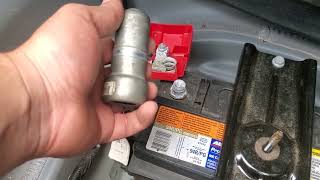
How to confirm: Test the battery voltage; it should be above 12.4V. Check the battery terminals for corrosion and ensure all ground cable connections (at the battery, chassis, and engine) are clean and tight. A Camaro6 owner fixed a no-start by discovering a blown 200A mega fuse at the battery terminal and a disconnected ground.
Typical fix: Clean battery terminals and ground points. Charge or replace the vehicle's 12V battery if it fails a load test. Add or replace grounding cables if necessary.
Est. part cost: $0-$250
Rare But Worth Checking
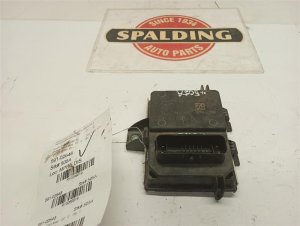
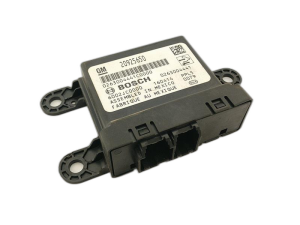
- Faulty Body Control Module (BCM) or Theft Deterrent Module (TDM): → Shop Anti-Theft Control Module This is a last resort after all other causes, especially RFI and key issues, have been definitively ruled out. A BCM may fail due to internal faults or external factors like water damage. Manufacturer TSBs explicitly warn against replacing modules before eliminating RFI.
- BCM Software Glitch: On related GM platforms from 2014-2015, TSB PI1180A was issued to address a no-start with code B3935 by reprogramming the BCM with updated software. While not specific to the Camaro, it indicates a known software issue in the same era, making a software update a possible fix, especially for 2014-2015 models.
- Wiring Issues: A Camaro5 owner reported a persistent 'Service Theft Deterrent System' issue that was ultimately traced by the dealer to loose relay wires going to the Driver Information Center (DIC) after a faulty circuit board had blown several fuses.
Diagnosis Steps
- Question the driver about any new electronic devices in the vehicle (phone chargers, dash cams, etc.).
- Remove ALL aftermarket devices from the vehicle's power ports.
- Remove all other keys, fobs, and access cards from the keychain with the Camaro key.
- Attempt to start the vehicle. If it starts, the issue was RFI.
- If the vehicle is a 6th Gen (2016+), place the fob in the designated transmitter pocket and attempt to start. If it starts, this points to RFI or a weak fob battery.
- Try starting the vehicle with a known-good spare key. If the spare works, the primary key is faulty.
- Inspect the vehicle's main battery terminals for corrosion and tightness. Test the battery's state of charge and health.
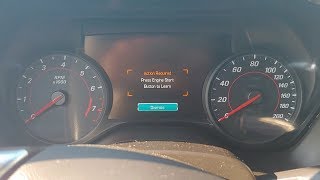
- If a new key is needed and no working key is available, attempt the 30-minute relearn procedure. Turn the key to the 'ON' position (do not start) and wait ~10-11 minutes for the security light to turn off. Turn the key 'OFF' for 5-10 seconds. Repeat this process two more times for a total of three cycles. 🎬 Watch: How to reset your Chevrolet anti-theft system. After the third cycle, the new key should be learned.
- If the problem persists, the vehicle needs to be diagnosed by a professional with a scan tool to check communication with the BCM/TDM and determine if a module, software, or wiring fault is present.
Parts You'll Likely Need
- Ignition Key / Key Fob
(OEM #5th Gen (2011-15): 13531362 (Switchblade); 6th Gen (2016-18): 13508777 (Smart Key).)— The transponder chip within the key is a common point of failure. If a spare key works, the original key needs replacement.
Trusted brands: ACDelco, GM Genuine
OEM price range: $150-$250
Aftermarket price range: $75-$150 - Body Control Module (BCM)
(OEM #5th Gen (2014-15): 13592376 / 13594564; 6th Gen (2016-18): 13534186.)— A rare but possible cause. The BCM is the central computer for the security system. It should only be replaced after all other possibilities are exhausted and may require a software update first.
Trusted brands: ACDelco, GM Genuine
OEM price range: $300-$600
Aftermarket price range: $200-$450
Related Codes That Often Appear With This One
- B3055 — This code relates to 'No Transponder Modulation or No Transponder' and is often set alongside B3935 when there is a security communication issue, frequently caused by RFI.
- B3060 — Another transponder key-related code ('Unprogrammed Transponder') that indicates a problem in the security system, often triggered by the same RFI or key faults.
- B2955 — This code for 'Security Sensor Data Circuit Malfunction' is specifically mentioned in TSB PI1180A alongside B3935 as being caused by a BCM software issue on related GM platforms.
- C0750, C0755, C0760, C0765, C0775 — These are Tire Pressure Monitoring System (TPMS) codes. Since the TPMS also uses radio frequency, the same RFI source that triggers B3935 can also disrupt the TPMS, causing these codes to appear simultaneously.
Technical Service Bulletins (TSBs) & Recalls
- PIC5650 (All revisions, e.g., L, M, K): Explicitly warns against replacing parts for this concern and points toward Radio Frequency Identification (RFI) interference as a likely cause across many GM vehicles.
- PI1180A: While for GM Trucks/SUVs, this TSB is highly relevant as it addresses a no-start with DTCs B3935 and B2955, fixed by a BCM software update, indicating a known software-related cause for this code on similar-era GM vehicles.
Platform-Specific Known Issues
- This platform is highly susceptible to Radio Frequency Interference causing no-start conditions, as documented in TSBs #PIC5650M and #PIC5650L.
- The 5th Gen switchblade-style key (P/N 13531362) is a known failure point, where the internal transponder can be damaged or lose connection, requiring key replacement.
- Related GM platforms from 2014-2015 have a known BCM software issue causing B3935 that is fixed with a re-flash, suggesting Camaros of this vintage may benefit from a BCM software check.
Mechanic-Grade Diagnostic Values
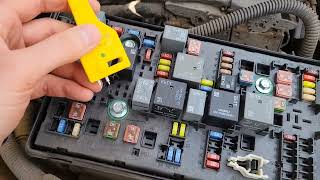
- Transponder Exciter Coil Check — expected: A simple, non-powered LED coil tester placed over the ignition switch (5th Gen) or transmitter pocket (6th Gen) should flash briefly when the ignition is turned to ON or the start button is pressed.. Failure: If the LED tester does not flash, it indicates the BCM is not sending a signal to energize the transponder coil, pointing to a problem with the BCM or its wiring rather than the key.
Scan Tool Commands That Help
- GDS2 (GM Global Diagnostic System 2): Immobilizer Learn — This function is required after replacing the BCM, keys, or other theft-related components. It guides the technician through the necessary key relearn procedures.
- GDS2 (GM Global Diagnostic System 2): BCM Data Display — Used to monitor live data from the theft deterrent system, such as 'Key in Ignition' status, transponder state, and security data signals. This helps determine if the BCM is receiving the correct inputs.
- GDS2 (GM Global Diagnostic System 2): Module Programming (SPS2) — Used to update the BCM software to the latest calibration, which can resolve software-related glitches causing B3935, as noted in TSBs for similar platforms.
Wiring & Ground Locations
- G205 / G206 — Located behind the driver's side (G205) and passenger's side (G206) kick panels for 5th Gen Camaros.. These are primary cabin ground points. A poor connection here can cause erratic behavior in the Body Control Module (BCM), which controls the theft deterrent system.
- 6th Gen Dash Grounds — On 6th Gen Camaros, there are two ground points on both the driver and passenger sides behind the lower kick panels.. A Camaro6 owner reported that cleaning these ground points resolved widespread electrical issues, including module communication problems that could trigger security faults.
- BCM Connectors (5th Gen) — The BCM is located on the left side of the dash. The security indicator control wire is a gray wire in pin 21 of the X1 connector.. Knowing the specific pinout allows a technician to test for continuity and proper voltage signals between the BCM and the instrument panel's security light.
- Keyless Entry Module (6th Gen) — The main module (KESS - Keyless Entry and Start System) that controls the antennas is located in the rear driver's side of the trunk, behind the carpet trim.. A loose connection at this module can cause a loss of communication with the key fob antennas, leading to a no-start and various keyless system error messages. Reseating the connectors fixed the issue for one owner.
Real Owner Repair Stories
- Camaro5 Forums user 'RedTexasSS' (2012 SS Camaro) — No-crank, no-start with "Service Theft Deterrent System" message on the DIC. The car would start with the remote start feature but would die as soon as the key was inserted and turned.
❌ Tried (didn't work) Disconnecting and reconnecting the battery., Checking all fuses., Attempting a 30-minute key relearn procedure with the faulty key.
✅ What actually fixed it A Snap-on scanner revealed code B3935 (Transponder Authentication Error). The owner confirmed the original switchblade key had failed. A locksmith cut a new, inexpensive standard key, and a successful 30-minute relearn procedure (3 cycles of key-on for 10 min) allowed the car to start. A new OEM-style switchblade key was then programmed using the 'add key' procedure. - Camaro6 Forums user 'squish72' (2016 2SS Camaro) — "Service Keyless Start System" message, doors would not unlock via proximity sensor.
❌ Tried (didn't work) Replacing the keyless entry antenna located behind the dash panel (Antenna 4, P/N 13580788), even though a scan tool showed a code for it (B3122).
✅ What actually fixed it The owner located the main keyless entry control module in the driver's side of the trunk, behind the carpet. After disconnecting and reconnecting the two plugs on the module, all keyless functions were restored, indicating the root cause was a poor connection at the module.
Model Year Variations Within This Range
- 2011-2015 (5th Gen): Uses a traditional switchblade key with a transponder chip. The vehicle reads the chip via an exciter coil ring around the ignition lock cylinder. A common failure is the key itself, where the transponder becomes damaged or intermittent.
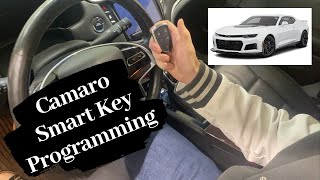
- 2016-2018 (6th Gen): Uses a keyless entry smart fob and a push-to-start system. The vehicle communicates with the fob via multiple antennas. There are four antennas: one in the center dash, one in the rear of the center console (this is the transmitter pocket for emergency starts), one in the trunk near the seats, and one under the rear bumper for trunk access. A failure or poor connection at any of these antennas or their control module can cause security issues.
Helpful Videos

We Have This Part in Stock

The information in this article is provided for general reference and educational purposes only. Vehicle specifications, procedures, and part compatibility can vary by production date, trim level, and region. Always consult your vehicle's factory service manual and verify part numbers before purchasing or performing repairs. Safety-critical components such as airbags, seat belts, and braking systems should be installed by a qualified professional.
- Chevrolet CAMARO:
- 🧭 Diagnostic Flowchart
- 🎬 Helpful Videos
- 🛍️ Shop This Part
- What's Unique About the 2011-2018 Chevrolet CAMARO
- Symptoms You May Notice
- Most Likely Causes
- Rare But Worth Checking
- Diagnosis Steps
- Parts You'll Likely Need
- Related Codes That Often Appear With This One
- Technical Service Bulletins (TSBs) & Recalls
- Platform-Specific Known Issues
- Mechanic-Grade Diagnostic Values
- Scan Tool Commands That Help
- Wiring & Ground Locations
- Real Owner Repair Stories
- Model Year Variations Within This Range
- 🎟️ Get 5% Off