

B3935 on 2007-2012 Chevrolet Colorado: Start & Security Issues Explained
This code means your truck's security system is preventing it from starting. The most likely causes are radio frequency (RF) interference from other keys on your keychain or a failing ignition switch. Start by isolating your truck key; if that fails, the ignition switch is the next most common part to replace.
- B3935 means your truck's anti-theft system is preventing it from starting due to a key authentication failure.
- The easiest and first thing to check is RF interference from other fobs on your keychain; isolate the truck key and try again.
- The most common hardware failure is the ignition switch (Passlock sensor); if a security relearn works temporarily, the switch is likely bad.
- A 30-minute, 3-cycle security relearn procedure can often get the truck started temporarily.
- This is a very common problem on the 2007-2012 Colorado, GMC Canyon, and Hummer H3 platform.
What's Unique About the 2007-2012 Chevrolet COLORADO
The first-generation Colorado and its twins, the GMC Canyon and Hummer H3, are well-known for issues with the GM Passlock security system. While the system is used across many GM vehicles, this platform seems particularly susceptible to intermittent failures of the ignition switch components, leading to the common 'crank, no-start' complaint. A GM Technical Service Bulletin specifically advises that radio frequency interference can cause this code and that technicians should not replace parts until this is ruled out. [Bulletin #PIC5650L, 4]
Diagnostic Flowchart
Tap your situation to follow the diagnostic path that matches what you're seeing on this vehicle.
Symptoms You May Notice
- Engine cranks but will not start
- Engine starts and then immediately stalls
- Flashing 'Security' or padlock icon light on the instrument cluster
- Intermittent no-start condition
- Starter does not engage at all (no crank)
- Replacing the starter
- Replacing the fuel pump (The TDM disables the fuel pump, making it seem like the pump is bad)
- Replacing the battery without addressing the underlying security issue
Most Likely Causes
- Radio Frequency (RF) Interference 🔴 High Probability As noted in GM TSB #PIC5650L and its successors, the Passlock system's key transponder signal can be disrupted by other electronic devices. This is the first thing to check and is considered a primary cause by the manufacturer, who warns against replacing any parts before ruling out RFI.
How to confirm: Remove all other keys, key fobs, and RFID-enabled cards (like office access cards) from your keychain. Try starting the truck with only the single Colorado key near the ignition. Also check for aftermarket accessories like phone chargers or LED lights that could be emitting interference.
Typical fix: Keep the vehicle key on its own ring, separate from other electronic fobs.
Est. part cost: $0 - Faulty Ignition Switch / Passlock Sensor 🔴 High Probability → Shop Ignition Switch This is the most widely documented hardware failure point on this platform. The switch, which contains the Passlock sensor components, wears out, causing intermittent signal loss. Many owners on forums and YouTube report that the 30-minute relearn procedure provides only a temporary fix, and the problem returns until the switch is replaced. 🎬 Watch: How to perform a permanent Passlock system bypass fix.
How to confirm: If removing RF interference doesn't work, and the security relearn procedure temporarily fixes the issue, the ignition switch is the most likely hardware culprit. A Reddit user noted their issue returned weeks after replacement, suggesting it can be a persistent problem.
Typical fix: Replace the ignition switch/lock housing located on the steering column. A security relearn procedure must be performed after replacement.
Est. part cost: $20-$70 - Worn or Damaged Ignition Key 🟡 Medium Probability → Shop Ignition Switch The transponder chip embedded in the key head can be damaged from being dropped or can simply fail with age. The service manual itself points to trying a spare key as a primary diagnostic step.
How to confirm: Try starting the vehicle with a known-good spare key. If the spare key works reliably over multiple attempts, the original key is faulty.
Typical fix: Replace the faulty key. A new key will need to be cut and programmed to the vehicle.
Est. part cost: $50-$150 - Corrupted Security Data / Need for Relearn ⚪ Low Probability A low battery event or intermittent hardware faults can sometimes cause the Theft Deterrent Module to lose its synchronization with the key. This is often a symptom of a failing ignition switch rather than the root cause itself.
How to confirm: Perform the manual security relearn procedure. If this allows the vehicle to start, it confirms a security data mismatch was the immediate problem.
Typical fix: Perform the 30-minute security relearn procedure. Note that if the problem returns, an underlying hardware issue is likely.
Est. part cost: $0
Rare But Worth Checking
- Failing Theft Deterrent Module (TDM) or Body Control Module (BCM): → Shop Anti-Theft Control Module This is rare and should only be considered after all other possibilities (key, RF interference, ignition switch) have been exhausted. Replacement requires programming with a GM-specific scan tool. Service manuals state to replace the TDM if a brand new, properly programmed key still triggers the code.
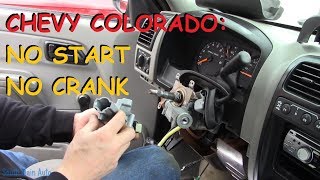
- Wiring Damage in Steering Column: Damage to the wires leading from the ignition switch to the TDM/BCM can cause an intermittent signal. This could be from previous repairs or chafing over time. A no-start, no-communication issue on a 2007 Colorado was traced to a bad ground for the PCM, after the owner had already replaced the starter and ignition switch. 🎬 See how to diagnose a tricky no-start, no-crank electrical issue.
- BCM Software Anomaly (On Similar Platforms): While not specific to the 2007-2012 Colorado, TSB PI1180A was issued for 2014-2015 GM trucks for a no-start condition with B3935 and B2955, which was fixed with a BCM software update. This highlights that module software can be a cause, though it's less likely for the older Colorado platform.
Diagnosis Steps
- Isolate the ignition key. Remove all other keys, fobs, and RFID cards from the keychain and attempt to start the vehicle.
- If the no-start condition persists, try using a spare key if available.
- Try a simple workaround suggested by Hummer H3 owners: Insert the key, turn it to the 'ON' position, wait 3-4 seconds for all dash lights to cycle, and then attempt to start. Some owners report this gives the sluggish system time to recognize the key.
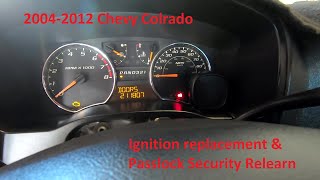
- Attempt the manual Security Relearn Procedure: Turn the key to 'ON' (without starting) and wait about 10 minutes for the security light to stop flashing and either turn off or go solid. Turn the key 'OFF' for 10-30 seconds. Repeat this cycle three times. On the fourth attempt, the truck should start. 🎬 Watch: Step-by-step guide to the 30-minute security relearn procedure.
- If the relearn procedure works but the problem returns, the ignition switch/Passlock sensor is the most likely cause.
- Inspect the wiring and connector at the ignition switch for any visible damage or looseness.
- If a known-good key and a new ignition switch do not solve the problem, the issue may be with the Theft Deterrent Module (TDM) or its wiring, which requires professional diagnosis with an advanced scan tool.
Parts You'll Likely Need
- Ignition Switch / Ignition Lock Housing
(OEM #D1462G)— This component houses the Passlock sensor and is the most common hardware failure point for this issue on the 2007-2012 Colorado/Canyon platform.
Trusted brands: ACDelco (GM Genuine), Standard Motor Products (US589)
OEM price range: $40-$70
Aftermarket price range: $20-$50
Related Codes That Often Appear With This One
- B3055 — This code means 'Key Not Present'. It often appears with B3935 as part of the same security system fault, as cited in TSB #PIC5650M and engineering bulletin PIE0232.
- B3060 — This code means 'Unprogrammed Key'. It can also be triggered during a Passlock system fault event, as noted in TSB #PIC5650M and engineering bulletin PIE0232.
- B2955 — This code for 'Security Sensor Data Circuit Malfunction' is seen alongside B3935 on newer GM trucks (2014+) and was addressed by a BCM software update, indicating it is part of the same fault logic family.
Technical Service Bulletins (TSBs) & Recalls
- PIC5650M: Mentions B3935 in the context of a no-crank/no-start/stall concern with the security light on, along with other security codes.
- PIC5650L: An earlier version of the same bulletin that explicitly warns against replacing parts and suggests investigating Radio Frequency Identification interference as a cause.
- PIE0232: An engineering bulletin for 2013 GM trucks seeking information on low-mileage vehicles with B3935, B3055, or B3060, showing the issue persists on newer platforms and is of interest to GM.
Platform-Specific Known Issues
- A permanent but advanced 'fix' discussed by owners involves bypassing the Passlock sensor with a resistor. This requires measuring the resistance of the Passlock system's yellow data wire, then cutting it and soldering in a resistor of the correct value (often around 2.2k Ohms, but it must be measured) to permanently send an 'OK' signal to the BCM. This is a last resort, makes the vehicle easier to steal, and will likely leave the security light on permanently.
- Another permanent fix is to have the Passlock system programmed out of the Powertrain Control Module (PCM) by a specialty tuning company like PCM of NC. Owners report this is a reliable fix, though the security light may still flash for a period after starting before turning off.
- A simple, non-invasive workaround reported by some owners of platform-mates (Hummer H3) is to turn the key to the 'ON' position and pause for 3-4 seconds before turning to 'START'. This can sometimes give the aging security module enough time to properly read the key and avoid a fault.
Mechanic-Grade Diagnostic Values
- Passlock Signal Wire Voltage — expected: A specific voltage between 1.5V and 9V when the key is turned to ON/CRANK. The BCM learns this specific value. With the key out, the signal wire may show a 5V reference voltage.. Failure: A voltage that is unstable, outside the expected range, or does not match the value learned by the BCM will trigger the security system. A solid security light can indicate a short or open in this wire.
- Passlock Bypass Resistor Value — expected: Any resistor between 470 Ohms and 11.8k Ohms can typically be learned by the BCM. A common choice is a 2.2k Ohm resistor.. Failure: This is not a failure indicator, but a value needed for a permanent bypass. The BCM must perform a relearn procedure to accept the new fixed resistance.
Scan Tool Commands That Help
- Tech 2 / GDS2: VTD Re-Learn or Theft Module Re-Learn — This function is found under 'Service Programming' and is used to initiate the security relearn procedure after replacing a key, ignition switch, or TDM/BCM. It is a faster alternative to the 30-minute manual relearn procedure.
Wiring & Ground Locations
- BCM (Body Control Module) — Located behind the right-hand (passenger side) kick panel.. The BCM receives and interprets the signal from the Passlock sensor/TDM to enable or disable the engine start.
- Ignition Switch Passlock Connector — A small 3-wire harness coming directly off the ignition lock cylinder inside the steering column.. This connector contains the critical wires for the Passlock system. The wires are typically Yellow (Passlock Signal), Orange/Black (Ground Reference on trucks), and a third power wire (e.g., Red/White).
- Passlock Bypass Wire — A white wire with a blue stripe, located in a harness connected to a module under the driver's side dash.. In some YouTube-documented permanent bypass procedures for the Colorado, this specific wire is cut *while the engine is running* to permanently disable the Passlock system.
- G300 / G301 — G300 is located under the driver's seat carpet. G301 is under the front passenger seat carpet.. These are major chassis ground points. A poor ground connection can cause a variety of electrical issues, including problems with the BCM and security system.
Real Owner Repair Stories
- Camaro5 Forum user 'RedTexasSS' (2012 Chevrolet Camaro SS) — No start, 'Service Theft Deterrent System' message, DTC B3935 found with a scanner.
❌ Tried (didn't work) Disconnecting the battery.
✅ What actually fixed it The original switchblade key had failed. A new, inexpensive standard key was cut and programmed using the 30-minute manual relearn procedure, which resolved the starting issue. - YouTube channel 'AverageAutomotiveEnthusiast' (2004-2012 Chevrolet Colorado) — Intermittent no-start with flashing Passlock light.
❌ Tried (didn't work) Repeatedly trying to start, waiting.
✅ What actually fixed it The Passlock sensor, which is part of the ignition lock housing (ACDelco D1462G), was replaced. After replacement, the 3-cycle, 30-minute relearn procedure was performed successfully, and the truck started and ran correctly. - Reddit user in r/chevycolorado (2012 Chevrolet Colorado) — Passlock system trips every morning, requiring a 10-minute wait with the key in the 'ON' position before the truck will start.
❌ Tried (didn't work) Owner was considering replacing BCM or PCM.
✅ What actually fixed it A responding user, claiming to have done a dozen of these repairs, stated the most likely cause is the ignition switch itself, specifically a worn depressing pin. The final fix is to replace the ignition switch/housing assembly. Trying a new key first is recommended as a diagnostic step.
OEM Part Supersession History
15795321→D1462G (ACDelco Part Number)— This is the service part number from ACDelco for the GM Genuine part.
Heads up: The part ACDelco D1462G is the ignition lock housing which contains the Passlock sensor. It is widely cited as the correct replacement for 2004-2012 Chevrolet Colorado and GMC Canyon models.
Model Year Variations Within This Range
- 2007-2012: The security system is largely consistent across this generation. It is sometimes referred to as an 'ION type Passlock' system, which may differ from Passlock 1 or 2 systems on other GM cars by not having a traditional starter wire circuit involved in the security logic.
Helpful Videos

The information in this article is provided for general reference and educational purposes only. Vehicle specifications, procedures, and part compatibility can vary by production date, trim level, and region. Always consult your vehicle's factory service manual and verify part numbers before purchasing or performing repairs. Safety-critical components such as airbags, seat belts, and braking systems should be installed by a qualified professional.
- Chevrolet COLORADO:
- 🧭 Diagnostic Flowchart
- 🎬 Helpful Videos
- What's Unique About the 2007-2012 Chevrolet COLORADO
- Symptoms You May Notice
- Most Likely Causes
- Rare But Worth Checking
- Diagnosis Steps
- Parts You'll Likely Need
- Related Codes That Often Appear With This One
- Technical Service Bulletins (TSBs) & Recalls
- Platform-Specific Known Issues
- Mechanic-Grade Diagnostic Values
- Scan Tool Commands That Help
- Wiring & Ground Locations
- Real Owner Repair Stories
- OEM Part Supersession History
- Model Year Variations Within This Range
- 🎟️ Get 5% Off