

B3935 on 2007-2011 Chevrolet HHR: Transponder Error and No-Start Fixes
This code means the car's security system failed to authenticate your key, causing a no-start. The most likely cause, per GM TSBs, is radio frequency interference (RFI) from other items on your keychain. Before replacing parts, remove all other keys, fobs, and RFID cards and try again.
- B3935 means your HHR's anti-theft system is preventing the engine from starting due to a key authentication failure.
- Before spending any money, try starting the car with the ignition key completely isolated from any other keys, fobs, or RFID cards.
- Your next step should be to try a spare key, if you have one. If that works, the original key is bad.
- If simpler methods fail, the 30-minute key relearn procedure is a free DIY step that can often resolve the issue.
- Do not replace the BCM or other expensive parts unless a professional has confirmed the failure with proper diagnostic tools, as the cause is often much simpler and cheaper to fix.
What's Unique About the 2007-2011 Chevrolet HHR
The Chevrolet HHR and its GM Delta platform-mates (like the Cobalt and G5) are particularly sensitive to security system issues. What's unique here is that General Motors issued Technical Service Bulletins (TSBs) specifically advising technicians *not* to replace parts for this code initially. [Bulletin #PIC5650L] The primary suspect is often Radio Frequency Interference (RFI) from other devices on the owner's keychain, a detail that can save hundreds of dollars in unnecessary parts replacement. This issue was investigated by GM Engineering under bulletin PIE0232, which explicitly calls out checking for RFI devices near the ignition cylinder.
Diagnostic Flowchart
Tap your situation to follow the diagnostic path that matches what you're seeing on this vehicle.
Symptoms You May Notice
- Engine does not crank (no-crank)
- Engine starts and immediately stalls
- Security light is on or flashing on the dashboard
- Remote start is disabled
- Multiple, seemingly unrelated warning lights on the dash (ABS, Traction Control) if the BCM is failing.
- Replacing the Body Control Module (BCM) or ignition switch before checking for Radio Frequency Interference (RFI) or trying a spare key.
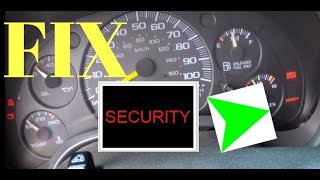
- Replacing the starter motor, assuming the no-crank is a starter issue without checking for security-related trouble codes first. 🎬 Watch: How to fix a flashing security light no-crank issue.
Most Likely Causes
- Radio Frequency Interference (RFI) 🔴 High Probability As documented in GM TSBs PIC5650L and PIE0232, the Passkey III+ immobilizer system in these vehicles is sensitive to interference from other transponder keys or RFID-enabled cards.
How to confirm: Remove all other keys, key fobs, and RFID-enabled cards (office badges, gas station cards) from the keychain. Use the ignition key by itself. If the car starts, RFI was the cause.
Typical fix: Isolate the ignition key from other electronic devices. Do not keep other transponder keys or RFID cards on the same ring.
Est. part cost: $0 - Faulty or Damaged Ignition Key 🟡 Medium Probability → Shop Ignition Switch The transponder chip embedded in the key head can be damaged by being dropped or exposed to strong magnetic fields. The key itself is a standard GM PK3+ transponder key.
How to confirm: Attempt to start the vehicle with a second, known-good programmed key. If the second key works consistently, the first key is faulty.
Typical fix: Replace the faulty key and have the new key cut and programmed to the vehicle by a dealer or qualified locksmith. An ACDelco or Strattec key is recommended.
Est. part cost: $50-$150 - Failing Ignition Switch / Lock Cylinder ⚪ Low Probability → Shop Ignition Switch The HHR was subject to a major ignition switch recall (NHTSA #14V047). While the recall addressed the switch moving out of the 'Run' position, general wear and tear on the switch and the lock cylinder's transponder exciter coil can cause intermittent connection issues. Owners report a variety of electrical issues after the recall was performed, indicating the sensitivity of this area.
How to confirm: Wiggle the key gently in the ignition while attempting to start. If this allows the car to start intermittently, the switch or lock cylinder assembly is likely worn. A video guide shows the replacement process involves removing the steering column covers.
Typical fix: Replace the ignition lock cylinder (which contains the transponder reader) and/or the electrical ignition switch. A key relearn procedure will be required. An example OEM part number for the lock cylinder assembly is 23233198.
Est. part cost: $60-$200 - Failing Body Control Module (BCM) ⚪ Low Probability → Shop Body Control Module Electrical issues, including parasitic battery drain and strange lighting behavior, are known symptoms for this platform, sometimes pointing to a failing BCM. A GM TSB (#PI1180A) also notes that a BCM software update was released for some GM models to address this specific code, though the bulletin primarily lists newer trucks. Corrosion on the BCM fuse block connectors is a known HHR issue that can cause similar symptoms.
How to confirm: This requires professional diagnosis with a scan tool to check for communication with the BCM/TDM and to see if a software update is available. Look for a cluster of unrelated electrical issues like erratic lights, malfunctioning wipers, or random warning messages.
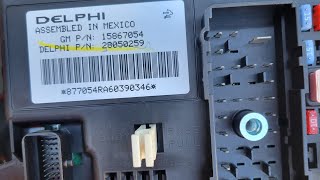
Typical fix: First, inspect the BCM and its fuse block connectors for corrosion. 🎬 See this guide on how to locate and remove the BCM. If clean, attempt a BCM software update. If that fails or is not applicable, the BCM must be replaced and programmed by a professional.
Est. part cost: $150-$400
Rare But Worth Checking
- Damaged wiring harness to the ignition lock cylinder. One owner on chevyhhr.net reported that an attempted theft involved cutting these exact wires, leading to a B3935 code and a failed relearn procedure until the wiring was perfectly repaired.
Diagnosis Steps
- Scan for all trouble codes in all modules. Note any other security (B-codes) or communication (U-codes) codes.
- Isolate the Key: Remove the ignition key from the keychain. Ensure no other keys (especially other car keys), fobs, or RFID cards are near the ignition switch. This is the most common and cheapest fix.
- Attempt to start the vehicle with the isolated key. If it starts, the problem is RFI. Keep the key separate going forward.
- If the vehicle still won't start, try a spare programmed key. If the spare key works, the original key's internal transponder chip is faulty and the key must be replaced.
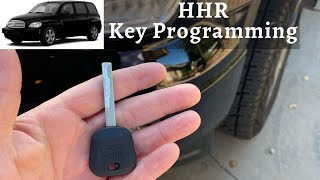
- If no spare key is available or it also fails, perform the GM 30-minute key relearn procedure. Insert the key, turn to 'ON' (not start), and wait for the security light to turn off (approx. 10-11 minutes). Turn the key off for 5-30 seconds. Repeat this process two more times for a total of three ~10-minute cycles. 🎬 Watch this video for a step-by-step key programming walkthrough. On the fourth attempt, the car should start. Note: If the security light never turns off during the 10-minute cycles, the relearn has failed and there is a deeper hardware or wiring issue.
- Inspect the wiring and connector at the ignition lock cylinder for any damage or loose connections. The lock cylinder houses the transponder antenna ring.
- If all else fails, the issue is likely a faulty ignition lock cylinder/transponder reader or a faulty Body Control Module, requiring professional diagnosis with a specialized scan tool like a GM Tech2.
Parts You'll Likely Need
- Ignition Key with Transponder — If the original key's internal transponder chip has failed, a new key is the only solution.
Trusted brands: ACDelco, Strattec
OEM price range: $40-$80
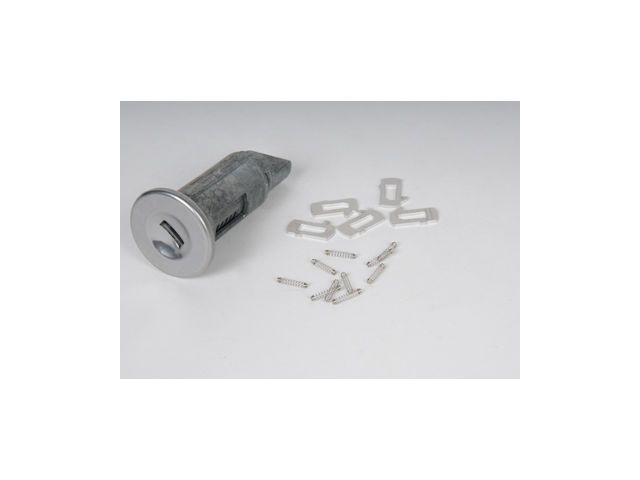
Aftermarket price range: $20-$50 - Ignition Lock Cylinder
(OEM #23233198, 15815961 (supercedes 12472980))— The lock cylinder housing contains the transponder pickup coil (exciter coil). If this coil fails, it cannot energize the key chip to read it. Replacement requires key programming.
Trusted brands: ACDelco (OEM), Dorman, Locksmart
OEM price range: $70-$120
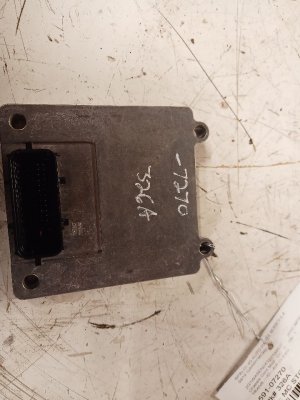
Aftermarket price range: $40-$80 - Body Control Module (BCM)
(OEM #25844480 (one of several common numbers for this platform))— In cases where the module itself has failed or requires a software update that doesn't resolve the issue, replacement is necessary. This is a last resort after all other causes are eliminated. It requires professional programming.
Trusted brands: ACDelco (OEM)
OEM price range: $250-$400
Aftermarket price range: $150-$250
Related Codes That Often Appear With This One
- B3055 — Also a key-related immobilizer code, often indicating a problem reading the key transponder itself. TSB PIC5650M and an early information bulletin list B3055 alongside B3935.
- B3060 — Another immobilizer code related to the transponder system, often set along with B3055 and B3935.
- U-codes (e.g., U2137) — Indicates a loss of communication with the Theft Deterrent Module (TDM) or BCM, which can be a cause or a symptom of the B3935 fault.
- B2955 — This code, related to the security sensor data circuit, is mentioned along with B3935 in TSB PI1180A, which points to a BCM software update as a fix on some GM models.
Technical Service Bulletins (TSBs) & Recalls
- PIC5650M
- PIC5650L
- PIE0232
- PI1180A
Platform-Specific Known Issues
- The GM Technical Service Bulletin PIC5650L explicitly warns against replacing parts for this code until RFI has been ruled out as the cause.
- The HHR was part of a massive recall for faulty ignition switches (NHTSA #14V047) which can cause symptoms (sudden shut-off) that may be confused with security system issues.
- Corrosion in the under-hood fuse block and on the BCM connectors (located in the passenger footwell) is a common HHR problem that can cause a wide range of electrical faults, including no-start conditions that mimic a security failure.
Hidden / Shadow Codes Worth Checking
- B3935 57: The '57' is a symptom byte that specifies 'Transponder Authentication Error'. This confirms the issue is not with reading the key's presence, but with the cryptographic challenge-response failing after the key has been successfully read. (see via A professional GM-level scan tool like a Tech2 or high-end aftermarket scanner capable of reading manufacturer-specific symptom codes.)
Scan Tool Commands That Help
- GM Tech2 / GDS2: BCM/TDM Module Setup — This function is required after replacing the Body Control Module (BCM) or Theft Deterrent Module (TDM). It syncs the new module to the vehicle's VIN and existing components.
- GM Tech2 / GDS2: Add/Replace Keys — Used to program new or additional keys to the vehicle's immobilizer system. This is necessary if a key is replaced due to a faulty transponder. The Tech2 provides a guided procedure.
- GM Tech2 + TIS2Web: Service Programming System (SPS) — Used to update the software/firmware of the BCM or other modules. A software update could potentially fix logic errors that lead to B3935, as suggested by TSBs for other models. This requires a subscription to GM's online service.
Wiring & Ground Locations
- BCM Location — Located in the center console, on the passenger side, often accessible by removing the passenger side kick panel.. The BCM is the central module for the theft deterrent system. All related wiring, including power, grounds, and the antenna signal from the ignition cylinder, terminates here. Physical inspection for corrosion or loose connectors is critical.
- G203 — Behind the left (driver's side) end of the dashboard.. This is a major instrument panel ground point. A poor connection at G203 can cause a host of intermittent electrical issues, including problems with the BCM and instrument cluster, which could mimic or cause security system faults.
- G301 — Under the driver's seat, attached to the floor pan.. This is a body ground point. While less directly tied to the BCM than G203, poor body grounds can create unpredictable electrical behavior throughout the vehicle.
- G107 — On the front left corner of the transmission case.. This is a primary ground for the Transmission Control Module (TCM). While not directly related to B3935, a bad TCM ground is a very common issue on HHR/Cobalt platforms causing a loss of power steering, no speedometer, and shifting problems. These dramatic symptoms can be confused with a major BCM failure, making it a critical point to check during a general no-start/electrical diagnosis.
Real Owner Repair Stories
- Camaro5 Forums user 'RedTexasSS' (2012 Chevrolet Camaro SS (Uses a similar GM Passkey system)) — No crank, 'Service Theft Deterrent System' message on the DIC. Remote start worked, but the engine would die when the key was inserted and turned to 'Run'.
❌ Tried (didn't work) Disconnecting and reconnecting the battery., A 30-minute relearn procedure with the original, faulty key.
✅ What actually fixed it A Snap-on scanner revealed code B3935. The owner had a locksmith cut a new, inexpensive, non-remote key. He then successfully performed the 30-minute relearn procedure with the new key, which allowed the car to start and run normally. This confirmed the original switchblade key's transponder had failed.
OEM Part Supersession History
15237853, 15854953, 15854955, 15896639, 22730242→23233198— Part consolidation and potential design revisions for the Ignition Lock Cylinder Housing (which includes the transponder exciter coil).
Heads up: Part 23233198 is the current service replacement for a wide range of 2005-2009 GM vehicles including the HHR, Cobalt, and G5. No incompatibility is noted when using the newest part number on an older vehicle.
Model Year Variations Within This Range
- 2006-2008: The Body Control Module (BCM) part numbers changed across these years. For example, a 2007 HHR may use P/N 25910845, which was superseded by 25906892 for the 2008 model year. While they are not directly interchangeable without correct programming, this indicates internal hardware or software revisions that could affect diagnosis or the applicability of software updates.
Helpful Videos
Used OEM Parts in Stock
New Aftermarket Parts Available

The information in this article is provided for general reference and educational purposes only. Vehicle specifications, procedures, and part compatibility can vary by production date, trim level, and region. Always consult your vehicle's factory service manual and verify part numbers before purchasing or performing repairs. Safety-critical components such as airbags, seat belts, and braking systems should be installed by a qualified professional.
- Chevrolet HHR:
- 🧭 Diagnostic Flowchart
- 🎬 Helpful Videos
- 🛍️ Shop This Part
- What's Unique About the 2007-2011 Chevrolet HHR
- Symptoms You May Notice
- Most Likely Causes
- Rare But Worth Checking
- Diagnosis Steps
- Parts You'll Likely Need
- Related Codes That Often Appear With This One
- Technical Service Bulletins (TSBs) & Recalls
- Platform-Specific Known Issues
- Hidden / Shadow Codes Worth Checking
- Scan Tool Commands That Help
- Wiring & Ground Locations
- Real Owner Repair Stories
- OEM Part Supersession History
- Model Year Variations Within This Range
- 🎟️ Get 5% Off